

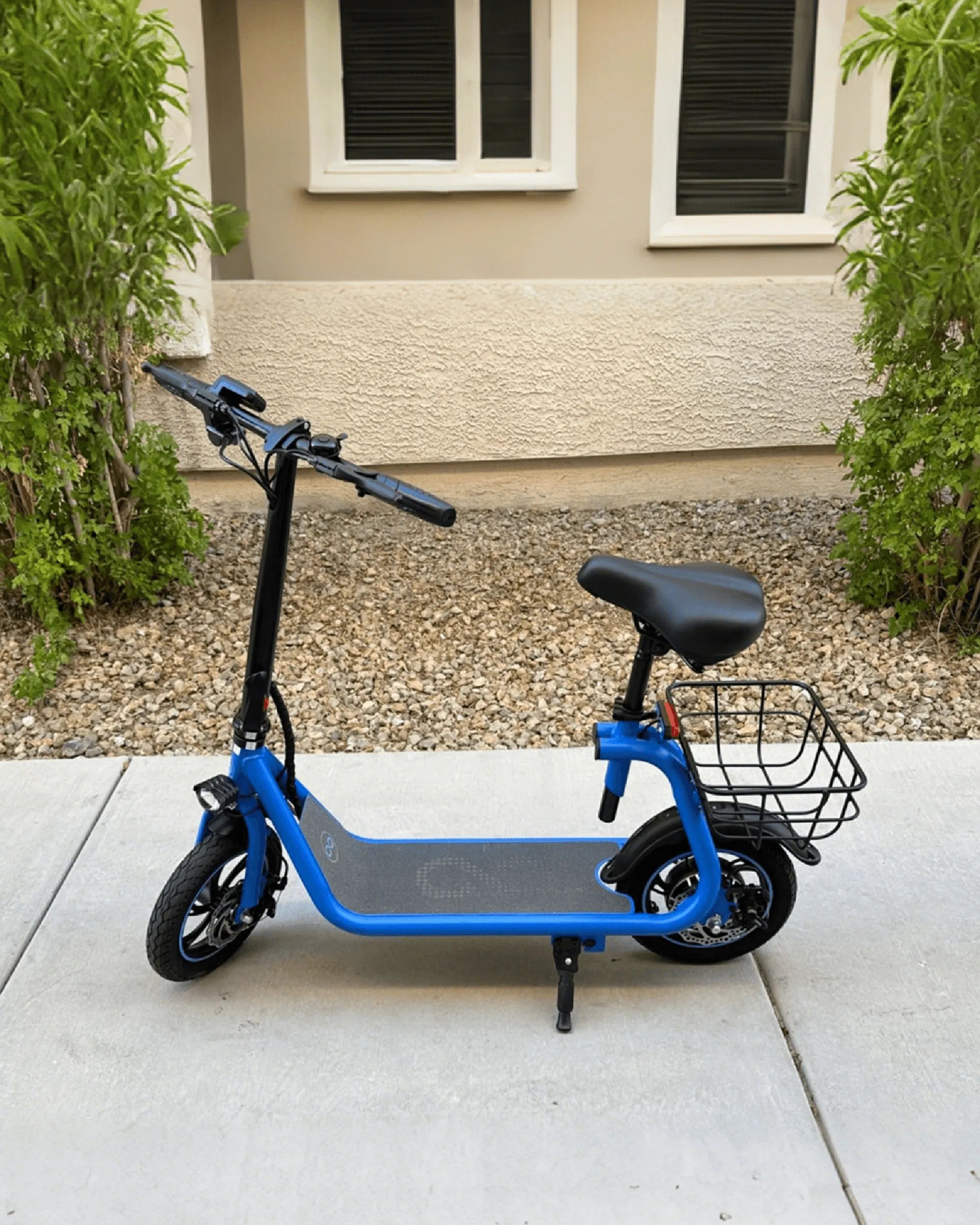
Introduction: The Rise of the Electric Kick Scooter for Adult Commuters
Urban mobility is undergoing a fundamental shift. Electric kick scooters for adults have emerged from niche novelty to a mainstream, practical solution for navigating congested city streets. They offer a compelling blend of efficiency, cost-effectiveness, and environmental sustainability that directly addresses the frustrations of the modern commuter. This article will dissect the electric scooter phenomenon, providing a data-driven analysis of its benefits, a detailed guide to selecting the right model, and insights into how safety-focused engineering, as seen in brands like Gyroor, builds trust for over 100,000 riders.
We will explore the tangible advantages that make electric kick scooters for adults the ultimate urban commuting solution. You will learn how to evaluate critical specifications, understand real-world performance versus marketing claims, and navigate the practicalities of city riding. The goal is to equip you with the knowledge to choose a scooter that is not just a gadget, but a reliable daily transportation tool.
Key Benefits of Choosing an Electric Scooter for Your Commute
Adopting an electric kick scooter for your daily travel delivers measurable advantages across financial, temporal, and environmental dimensions. Unlike cars or inconsistent public transit, an e-scooter provides a predictable, point-to-point personal mobility solution.
The primary appeal lies in door-to-door convenience without the search for parking or adherence to fixed schedules. For distances between 1 and 10 miles, electric kick scooters for adults often prove to be the fastest mode of transport in dense urban cores, bypassing gridlocked traffic with ease.
Financial and Time Savings in the City
The cost savings are substantial when compared to car ownership or even monthly transit passes. Consider the annual costs: fuel, insurance, parking, maintenance, and depreciation for a car, or a $100-$150 monthly transit pass. In contrast, the electricity cost to charge a scooter battery is negligible, often less than $0.30 per full charge.
Time efficiency is equally transformative. A 2023 urban mobility study found that for trips under 5 miles in high-density areas, electric scooters were 20-30% faster than cars during peak hours due to their ability to use bike lanes and bypass congestion. This reclaims hours per week for the average commuter.
Environmental Impact and Sustainability
Electric kick scooters for adults operate with zero direct emissions, contributing to cleaner air and reduced urban noise pollution. Their carbon footprint is primarily tied to electricity generation and manufacturing. However, a lifecycle analysis shows their environmental impact is a fraction of that of a personal automobile.
When charged using an average grid mix, an e-scooter produces about 0.05 kg of CO2 per passenger kilometer, compared to approximately 0.21 kg for a bus and over 0.27 kg for a single-occupancy car. This makes them one of the most energy-efficient electric vehicles available for personal use.
What to Look for When Buying an Electric Scooter for Adults
Selecting the right electric kick scooter requires moving beyond flashy marketing to assess core specifications that impact safety, performance, and durability. An adult commuter needs a robust machine, not a toy. Key decision factors include motor power, battery quality, braking systems, build construction, and water resistance.
Prioritize models designed explicitly for adult commuting, which typically feature higher weight capacities, larger decks, and more powerful motors. The ideal scooter balances performance with portability, offering enough power for hills without becoming too heavy to carry up a flight of stairs if needed.
Safety First: Motor Power, Brakes, and Lights
Adequate motor power is essential for safety. A minimum of 350W is recommended for flat urban terrain, while 500W or more provides confident acceleration and the ability to handle moderate inclines. Dual-motor models offer maximum torque for steep hills. The braking system is critical; a combination of electronic (regenerative) braking and a mechanical disc or drum brake provides reliable, fade-resistant stopping power in all conditions.
Integrated lighting is non-negotiable for urban commuting. Look for a bright front headlight (200 lumens minimum), a rear brake light, and deck-side or wheel lighting for 360-degree visibility. Reflective stickers on the stem and deck add another layer of safety. These features are not optional; they are fundamental for being seen in traffic.
Range, Battery, and Real-World Performance
Manufacturer range claims are based on ideal conditions: a lightweight rider on flat ground at low speed. Real-world range is typically 60-70% of the advertised figure. Calculate your needed range by doubling your one-way commute distance to account for battery degradation over time and extra errands. A 15-mile real-world range is a practical minimum for most commuters.
The battery is the scooter's heart. Insist on a battery pack with recognized safety certifications, most notably UL 2271. This certification involves rigorous testing for electrical, mechanical, and environmental hazards, drastically reducing fire risk. Brands like Gyroor use these UL-certified battery packs, tested for over 500 charge cycles, ensuring long-term reliability and safety.
Build Quality, Portability, and Weather Resistance
The frame should be constructed from aerospace-grade aluminum alloy, offering an optimal strength-to-weight ratio. Inspect the folding mechanism; it should lock securely with no wobble. Weight is a key portability factor—models between 30-45 lbs offer a good balance of stability and liftability.
Weather resistance is quantified by the IP (Ingress Protection) rating. For reliable all-weather commuting, an IPX5 rating is recommended. This means the scooter is protected against water jets from any direction, allowing you to ride confidently in rain and through puddles. A scooter without a clear IP rating should be avoided for daily commuting use.
Gyroor Electric Scooters: Engineered for Reliable Adult Commuting
Gyroor has established itself as a leader in the personal electric vehicle space by focusing on the core needs of adult commuters: safety, durability, and consistent performance. With a product range of over 20 models and a customer base exceeding 100,000 riders in North America and Europe, their approach is built on engineering reliable solutions rather than chasing fleeting trends.
Every design decision addresses a common urban commuting pain point. From robust frames that support adult riders to intuitive controls that reduce cognitive load in traffic, Gyroor scooters are built for the real world. This commitment is backed by a 4.5/5 average customer rating, reflecting satisfaction with performance and post-purchase support.
UL-Certified Battery Safety: Peace of Mind on Every Ride
The most critical differentiator for Gyroor is its unwavering commitment to battery safety. Every scooter in their lineup utilizes UL 2271-certified lithium-ion battery packs. This certification is not a mere marketing term; it is the result of passing a stringent set of tests by Underwriters Laboratories, a global safety science leader.
These tests simulate abuse scenarios like overcharging, short-circuiting, and impact. By using certified cells and robust battery management systems (BMS), Gyroor ensures stable temperatures, balanced charging, and protection from electrical faults. This provides riders with fundamental peace of mind, whether the scooter is charging at home or parked at the office—a non-negotiable feature for a device used daily.
Built to Last: IPX5 Water Resistance and Comprehensive Warranty
Understanding that commutes happen rain or shine, Gyroor designs its flagship commuter scooters with an IPX5 water-resistant rating. This engineering protects vital electrical components from water jets, meaning a sudden downpour or wet city streets won't end your ride or damage your investment. It’s a feature that defines a true commuting tool versus a fare-weather toy.
This durability is reinforced by a reliable 1-year warranty on the vehicle and a 6-month warranty on the battery, supported by a US-based customer service team. This warranty structure demonstrates confidence in the product's longevity and provides a clear solution path should any issues arise, a level of support crucial for a primary mode of transportation.
Electric Scooter vs. Other Commute Options: A Practical Comparison
To understand the value proposition of electric kick scooters for adults, a direct comparison with other common urban transport modes is essential. The table below evaluates key metrics including cost, convenience, and physical effort.
| Mode of Transport | Avg. Cost per Mile* | Door-to-Door Time (5 mi trip) | Parking/Storage Convenience | Physical Effort | Environmental Impact |
|---|---|---|---|---|---|
| Electric Kick Scooter | $0.03 - $0.05 | 20-25 min | Excellent (Folds & carries) | Low (Standing) | Very Low |
| Personal Car | $0.60 - $0.70 | 30-50+ min | Poor (Costly/Search time) | Very Low | High |
| Public Transit (Bus/Train) | $0.25 - $0.35 | 35-55 min | Good (No parking) | Medium (Walking/Waiting) | Low-Medium |
| Traditional Bicycle | $0.01 (Maintenance) | 25-30 min | Good (Lock-up required) | High (Cardio) | Zero |
| Ride-Hailing (Uber/Lyft) | $2.50 - $4.00 | 20-40 min | Excellent | Very Low | High (Empty miles) |
*Cost per mile includes operational costs (fuel/electricity, maintenance, parking/tickets, depreciation for car).
This comparison highlights the electric scooter's unique position. It offers the speed and direct routing of a personal vehicle without the cost and parking hassle. It provides greater schedule freedom than public transit with less physical exertion than a bicycle, making it accessible to a wider range of commuters regardless of fitness level.
Navigating Regulations and Riding Safely in the City
Responsible ownership of electric kick scooters for adults requires understanding and adhering to local laws, which vary significantly by city and state. Common regulations include age restrictions (typically 16+ or 18+), prohibitions on sidewalk riding, speed limits in bike lanes (often 15-20 mph), and helmet requirements, which are strongly recommended for all riders regardless of law.
Always ride in bike lanes where available. On streets without bike lanes, ride in the traffic lane, as far right as practicable, following the flow of traffic. Never ride against traffic. Use hand signals for turns and stops. Assume that drivers do not see you; defensive riding is paramount.
Essential safety gear includes a properly certified bicycle or multi-impact helmet, reflective clothing or a vest, and gloves. Consider a rearview mirror attached to the handlebar for increased situational awareness. Regularly perform a pre-ride check: tire pressure, brake function, light operation, and secure folding mechanisms.
Practice proper scooter etiquette. Yield to pedestrians, give an audible warning (a bell is essential) when passing, and avoid sudden maneuvers. When parking, do not block sidewalks, ramps, or building entrances. Use designated bike/scooter parking when possible.
Frequently Asked Questions (FAQ)
Q1: How far can I really go on a single charge with an electric scooter?
A: Real-world range depends on rider weight, terrain, temperature, and riding style (frequent acceleration reduces range). A scooter with a 500Wh battery may claim 25 miles but will typically achieve 16-20 miles for a 180 lb rider on mixed terrain. Always buy a scooter with a rated range 30-40% higher than your longest regular trip.
Q2: Are electric scooters safe to ride in the rain?
A: Scooters with a high IP water-resistance rating (IPX5 or higher, like many Gyroor models) are designed to withstand rain and wet roads. However, traction is reduced. Ride slower, avoid painted road markings and metal surfaces, and use gentle braking. Never submerge a scooter in water, and avoid deep puddles.
Q3: Where am I legally allowed to ride my electric scooter?
A> Laws vary. In most US cities, e-scooters are permitted in bike lanes and on streets with speed limits at or below 35 mph. Riding on sidewalks is prohibited in most urban areas. Always check your specific city and state Department of Transportation websites for the most current regulations.
Q4: What maintenance does an electric scooter require?
A: Regular maintenance includes checking and inflating tires to the recommended PSI, testing brake function and adjusting cable tension (for mechanical brakes), ensuring all bolts are tight, and cleaning the deck and frame. Keep the battery charged between 20-80% for long-term health if storing for more than a week.
Q5: Can I take my electric scooter on public transit?
A> Policies differ by transit authority. Many buses and trains allow folded electric scooters if they do not block aisles, especially during off-peak hours. It is always best to check with your local transit provider's rules for "personal mobility devices" beforehand. A lightweight, compact-folding scooter is advantageous for multi-modal commuting.
Your Smarter, Greener Commute Awaits
The evidence is compelling: electric kick scooters for adults are a transformative tool for modern urban life. They solve tangible problems—cost, time, congestion, and pollution—with an elegant, efficient solution. The key to a positive experience lies in selecting a scooter engineered for the task, prioritizing certified safety, durable construction, and reliable performance over mere specifications.
By choosing a brand like Gyroor, with its foundation in UL-certified battery safety, IPX5 weather resistance, and robust warranty support, you invest in more than a product; you invest in dependable daily freedom. This is the true promise of the electric kick scooter for adults: a reclaiming of your time, your money, and your commute, all while making a positive choice for your city's environment.
Ready to transform your urban commute? Browse the full Gyroor collection of UL-certified, high-performance electric scooters and e-bikes engineered for adults at gyroorboard.com.
Best Electric Scooters for Adults 2025: Top Picks for Commuters and Enthusiasts
Are Electric Scooters Legal in the UK? A Complete Guide to Laws & Rules