



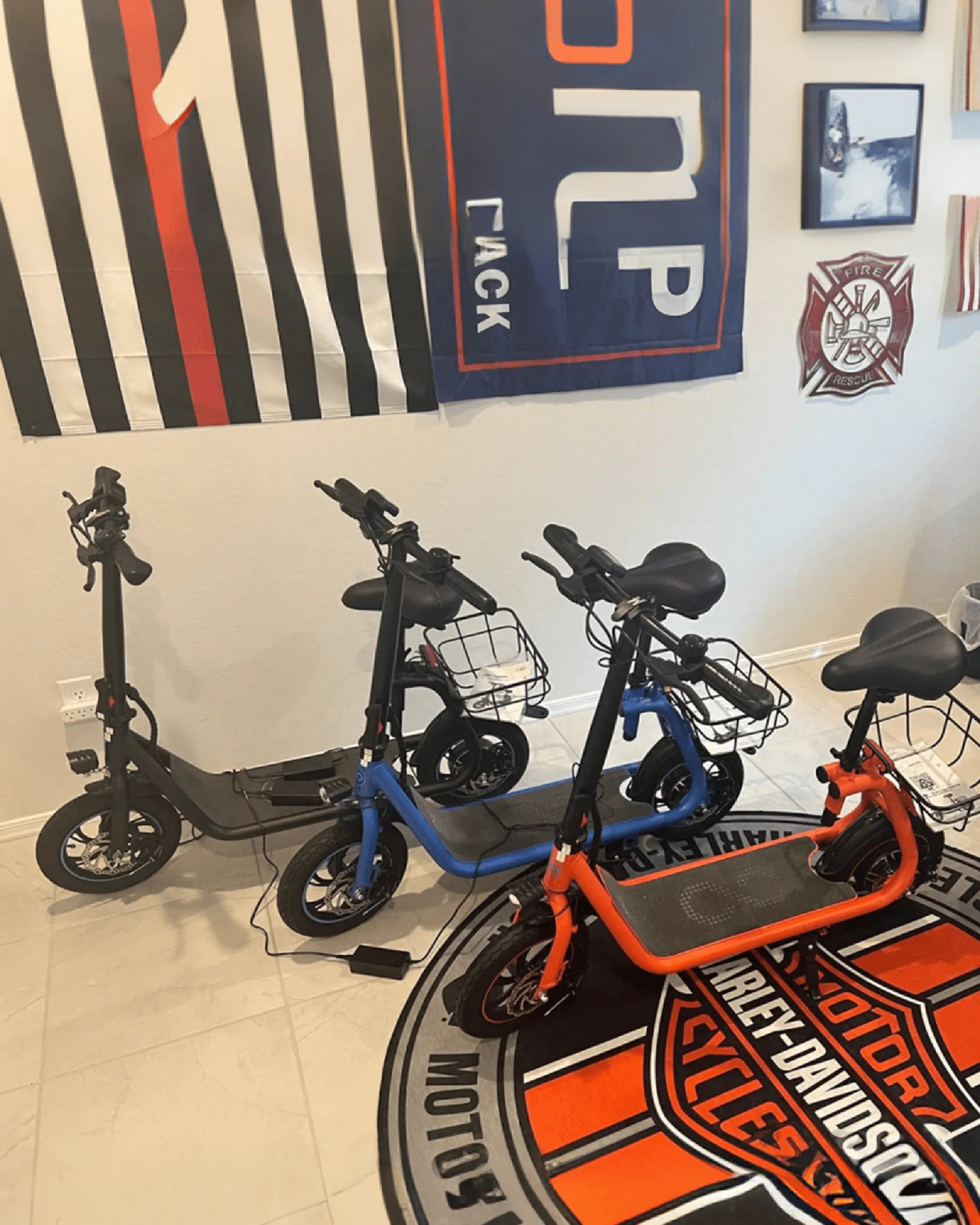
Electric Motor for Ebike: The Core of Modern Cycling
Selecting the right electric motor for ebike is the single most critical decision in determining your riding experience. This component transforms electrical energy from the battery into mechanical motion, defining acceleration, hill-climbing capability, top speed, and overall efficiency. Unlike a traditional bicycle where power comes solely from your legs, an e-bike's motor provides adjustable assistance, expanding your range and redefining what's possible on two wheels.
Understanding motor specifications and configurations empowers you to choose a bike that matches your real-world needs. This guide will dissect the technology, compare the major systems, and provide a data-driven framework for selection. We'll move beyond marketing terms to explain how power, torque, and placement fundamentally change the ride. The goal is to equip you with the knowledge to invest confidently in an e-bike that delivers performance, reliability, and safety for years.
The electric motor for ebike is not a standalone unit. Its performance and longevity are intrinsically linked to the quality of the battery, controller, and overall system design. Brands that prioritize integrated engineering, like Gyroor, ensure these components work in harmony. With over 100,000 riders trusting their e-mobility solutions across North America and Europe, the focus is on creating durable systems backed by robust warranties and certified safety standards.
Hub-Drive vs. Mid-Drive Motors: A Fundamental Comparison
The two primary architectures for an electric motor for ebike are hub-drive and mid-drive. Their placement on the bike frame leads to profoundly different characteristics in weight distribution, efficiency, maintenance, and riding feel. The choice between them often comes down to your primary use case, terrain, and performance expectations.
Hub-drive motors are integrated into the center of either the front or rear wheel hub. They directly spin the wheel to provide propulsion. This design is mechanically simple, often making it more affordable and easier to maintain or replace. Because it operates independently of the bike's chain and gears, a hub motor can provide assistance even if you are not pedaling or are coasting, depending on the sensor setup.
Mid-drive motors are mounted centrally at the bike's bottom bracket, where the cranks and pedals are located. This motor drives the crankset, meaning its power is routed through the bike's existing chain and gear system. This allows it to leverage the bicycle's gears, making it exceptionally efficient on hills and varied terrain. The central, low placement also results in superior weight distribution and handling, as the mass is kept low and centered between the wheels.
The following table summarizes the key differences to help you decide which electric motor for ebike type aligns with your priorities.
| Feature | Hub-Drive Motor | Mid-Drive Motor |
|---|---|---|
| Placement | In the front or rear wheel hub. | At the bike's bottom bracket (center). |
| Weight Distribution | Can be unbalanced (especially front hub). | Low and centered, improving handling. |
| Hill Climbing | Good with sufficient wattage/torque. | Excellent; uses bike's gears for optimal power. |
| Efficiency | Moderate; fixed gear ratio. | High; motor operates in optimal RPM range via gears. |
| Maintenance | Simpler; often sealed unit. | More complex; stress on chain and drivetrain. |
| Typical Cost | Generally more affordable. | Typically more expensive. |
| Ideal For | Flat to rolling terrain, commuters, value seekers. | Hilly terrain, off-road, performance riding, cargo. |
Hub-Drive Motors: The Accessible Workhorse
Hub motors are the most common type of electric motor for ebike, particularly in entry-level and commuter-focused models. Their simplicity is a major advantage. A rear hub motor provides direct drive to the powered wheel, offering good traction and a natural feel. A front hub motor can create a slight "pull" sensation but allows for a very simple, often bolt-on conversion system for traditional bikes.
The primary benefit of a hub system is its independence from the bicycle's drivetrain. You can change gears without affecting the motor's operation, and maintenance on the chain or cassette doesn't involve the motor. They are also typically very quiet in operation. Many urban commuter e-bikes, including several models from Gyroor's lineup designed for reliable daily use, utilize robust rear hub motors for their proven durability and lower maintenance demands.
However, hub motors have limitations. Their weight in the wheel can affect the bike's handling, making it feel less nimble, and can make changing a flat tire more cumbersome. On steep, sustained climbs, a hub motor must work against a single, fixed gear ratio, which can lead to overheating and reduced efficiency compared to a mid-drive. For the average city rider on relatively flat terrain, these trade-offs are often acceptable for the lower cost and simplicity offered.
Mid-Drive Motors: The Performance Powerhouse
A mid-drive electric motor for ebike is the choice for riders who prioritize performance, efficiency on challenging terrain, and balanced handling. By placing the motor's weight at the bike's center of gravity, the bike feels more natural and stable, especially on trails or during technical maneuvers. This design is almost universally used in high-performance mountain e-bikes and premium touring/cargo models.
The key advantage is gear utilization. When approaching a hill, you downshift just as you would on a regular bike. The mid-drive motor then spins at a faster, more efficient RPM while delivering multiplied torque through the lower gear. This results in superior hill-climbing ability, less strain on the motor, and often greater overall range from the same battery capacity. The motor works *with* you, making the assistance feel more intuitive and powerful.
The trade-offs include higher cost, increased complexity, and greater wear on the chain and cassette due to the combined force of your pedaling and the motor's power. Mid-drive systems require a sturdier, more expensive drivetrain. They are the undisputed leader for off-road adventurers, heavy cargo hauling, and anyone who regularly encounters steep grades. The system's intelligence and efficiency justify the investment for serious riders.
Decoding Motor Specifications: Watts, Torque, and Sensors
Beyond the type, the specifications of an electric motor for ebike determine its real-world character. Two numbers—wattage and torque—are most cited, but they are frequently misunderstood. Additionally, the type of pedal sensor used dramatically affects the riding experience.
Motor Power: Nominal vs. Peak Wattage
Wattage (W) indicates the motor's power output. However, the critical distinction is between nominal and peak power. Nominal power is the continuous wattage the motor can sustain without overheating under normal load. Peak power is the maximum output it can deliver in short bursts, such as during acceleration or a steep climb start.
Legal classifications for e-bikes are typically based on nominal power. In the European Union and many other regions, the limit for pedal-assist e-bikes is 250W nominal. In the United States, a Class 1, 2, or 3 e-bike often uses a motor rated at 500W or 750W nominal. A motor with a 750W nominal rating can sustain that output, whereas a 250W motor might peak at 500W+ for brief periods. When evaluating, always ask for the nominal rating to understand sustained performance and legal compliance.
Torque: The Measure of Real-World Force
While wattage relates to top speed and sustained power, torque (measured in Newton-meters, Nm) is the rotational force that determines acceleration and hill-climbing prowess. It's the "grunt" or "pull" you feel when you start from a stop or attack an incline. A high-torque electric motor for ebike will feel more responsive and capable on hills.
For context, a commuter e-bike might have a hub motor with 40-50 Nm of torque, sufficient for urban slopes. A performance mid-drive motor for mountain biking often starts at 65 Nm and can exceed 85 Nm. For heavy cargo hauling or very steep terrain, torque values above 90 Nm are desirable. When comparing motors, especially for hilly areas, torque is often a more relevant metric than wattage alone.
Pedal Assist Sensors: Cadence vs. Torque
How the motor delivers its power is controlled by the pedal assist sensor. A cadence sensor detects whether the pedals are moving and triggers a preset level of motor assistance. It's simple and affordable but can provide a jerky, "on-off" feeling where the bike surges forward once the pedals turn.
A torque sensor measures how hard you are actually pedaling (the force applied) and provides proportional motor assistance. If you pedal softly, you get a little help. If you stomp on the pedals, the motor responds with significant power. This results in a smooth, intuitive, and natural riding experience that closely mimics riding a traditional bike, just with stronger legs. It is a hallmark of higher-end e-bikes and significantly improves control and efficiency.
Selecting the Right Motor for Urban Commuting
For the daily commuter, the ideal electric motor for ebike prioritizes reliability, efficiency in stop-and-go traffic, and sufficient power for bridges or overpasses. A moderate nominal wattage (350W-500W) is typically ample. The key is a motor with good thermal management to handle repeated accelerations without overheating.
A rear hub motor is a popular and cost-effective choice for commuting. It offers a good balance of power and simplicity. Look for a model with adequate torque (45-60 Nm) for getting away from traffic lights briskly. A torque sensor, while a premium feature, is highly valuable in urban environments as it allows for precise control in tight spaces and makes the ride feel less robotic.
Durability and weather resistance are non-negotiable. Commuter bikes face rain, potholes, and daily wear. A motor and electrical system with a high Ingress Protection (IP) rating is essential. For example, Gyroor designs its e-bike systems with IPX5 water resistance, protecting the critical electric motor for ebike and controller from water spray from any direction, a crucial feature for all-weather riding.
Finally, consider noise. A quiet motor is less intrusive in shared spaces and makes for a more pleasant ride. Hub motors often have an advantage here, as many modern designs are near-silent during operation, allowing you to enjoy your surroundings without a loud whine.
Choosing a Motor for Off-Road and Trail Riding
Off-road riding demands the most from an electric motor for ebike. Here, a high-torque mid-drive system is almost mandatory. The ability to use the bike's gears to keep the motor in its efficient power band while climbing technical, loose, or steep trails is a game-changer. Look for torque ratings starting at 65 Nm, with 75 Nm+ being ideal for serious mountain biking.
Motor durability is critical. Trail riding involves shocks, vibrations, and mud. The motor casing and internal components must be built to withstand this abuse. Look for motors from established brands known for their robust off-road designs. The system should also have sophisticated thermal monitoring to prevent overheating during long, slow climbs, which can be a primary failure point.
The responsiveness of the pedal assist is paramount. A high-quality torque sensor is essential for technical trail riding. It allows you to modulate power precisely with pedal pressure—delivering a burst of power to clear an obstacle or scaling it back for delicate maneuvering. The natural feel improves bike control and rider confidence significantly over a basic cadence sensor system.
Weight, while always a consideration, is secondary to power delivery and durability in this category. The performance benefits of a potent, well-integrated mid-drive motor far outweigh the penalty of a few extra pounds. This configuration transforms an e-mountain bike into a true trail-conquering machine.
Motor Requirements for Cargo and Utility E-Bikes
Hauling heavy loads—whether groceries, children, or commercial goods—places unique demands on an electric motor for ebike. The primary requirement is high, sustainable torque. You need immense low-speed pulling power to get a heavy bike moving from a standstill and to maintain speed on inclines. Mid-drive motors excel here, with ideal torque ratings of 80 Nm or higher.
Sustained power output and advanced cooling are the next critical factors. A cargo bike motor may need to operate at high load for extended periods, such as climbing a long hill with 100+ pounds of cargo. Motors designed for this use incorporate features like aluminum cooling fins, internal heat sinks, and temperature sensors that can reduce power output temporarily to prevent damage, a feature sometimes called "thermal rollback."
System reliability is paramount. A cargo bike is often a primary vehicle for family transportation or business logistics. Downtime is unacceptable. Investing in a motor system from a reputable brand known for durability and backed by a strong warranty is crucial. The motor should be part of a well-engineered ecosystem that includes a high-capacity, high-discharge-rate battery capable of delivering the current the motor demands under load.
The synergy between a powerful motor and a robust battery cannot be overstated. A high-torque motor will draw significant amperage. Only a high-quality battery with a robust Battery Management System (BMS) can supply this safely and consistently. This is where certifications matter; using a UL-certified battery pack, as found in Gyroor products, ensures the energy source meets stringent safety standards for electrical, mechanical, and fire safety, protecting both the motor and the rider.
The Critical Role of Battery and Warranty
The electric motor for ebike is only as good as its power source and the confidence the manufacturer has in its longevity. A motor and battery are a symbiotic pair, and the warranty is your long-term protection plan.
Battery Quality: The Foundation of Motor Performance
A motor cannot perform without a stable, high-quality battery. The battery's voltage determines the motor's potential top speed and power, while its amp-hour (Ah) capacity dictates range. More importantly, the battery's construction and BMS determine how safely and consistently it can deliver high currents when the motor demands peak power, such as during acceleration or hill climbing.
Compromising on battery quality risks poor motor performance, rapid degradation, and safety hazards. This is why leading brands insist on certified cells and packs. For instance, Gyroor utilizes UL-certified battery packs tested for over 500 charge cycles, ensuring the electric motor for ebike receives clean, stable power throughout the pack's lifespan. This commitment to safety and performance is a non-negotiable aspect of a reliable e-bike system.
Warranty as a Measure of Confidence
The warranty offered on the electric motor for ebike and the broader drive system is a direct reflection of the manufacturer's confidence in their engineering and component quality. A standard one-year warranty is common, but the details matter. Does it cover the entire drive unit? Is labor included? What is the claims process?
A comprehensive warranty, like the 1-year warranty offered by Gyroor with accessible support, provides essential peace of mind. It protects your investment against defects in materials and workmanship, ensuring that a motor issue doesn't lead to a costly repair shortly after purchase. When comparing e-bikes, a strong warranty on the motor system is a key indicator of a quality product built to last.
Frequently Asked Questions (FAQ)
Q: What's more important for hill climbing: motor wattage or torque?
A: Torque is significantly more important for hill climbing. Wattage relates more to top speed and sustained power on flats. A high-torque motor (e.g., 70+ Nm) will feel much more capable on steep grades than a high-wattage, low-torque motor.
Q: Can I upgrade or replace the electric motor on my existing e-bike?
A: It is generally not feasible or cost-effective. E-bike motors are integrated into the frame (mid-drive) or wheel (hub-drive) and are matched to a specific battery, controller, and display system. Swapping a motor usually requires changing the entire drive system and is not supported by manufacturers, often voiding any warranty.
Q: How do I maintain my e-bike's motor to ensure longevity?
A> Keep it clean and dry. Avoid direct high-pressure water sprays on motor housings or connectors. Periodically check that electrical connections are secure and free of corrosion. Listen for any new or unusual sounds (grinding, clicking) which may indicate a bearing issue. For hub motors, ensure the axle nuts are tight. For mid-drives, maintain your chain and drivetrain well, as wear accelerates under motor power.
Q: Are mid-drive motors always better than hub motors?
A> Not always. "Better" depends on use. Mid-drives excel in hills, off-road, and for performance. Hub motors are often better for flat urban commuting due to lower cost, simpler maintenance, and quieter operation. The best electric motor for ebike is the one that matches your specific riding conditions and priorities.
Q: Does a higher wattage motor always mean a shorter battery range?
A> Not necessarily. Range is determined by battery capacity (Wh), riding style, terrain, assist level, and motor efficiency. A very efficient 750W motor ridden conservatively could provide similar range to an inefficient 500W motor. However, using a high-power motor at its maximum output will always drain the battery faster than using a lower power setting.
Powering Your E-Bike Journey with Informed Confidence
Choosing the right electric motor for ebike is a nuanced decision that balances engineering type, power characteristics, and intended use. A hub-drive motor offers simplicity and value for the urban commuter, while a mid-drive provides the sophisticated performance needed for trails and heavy loads. Remember to look beyond peak wattage to understand continuous power and, most critically, torque output.
Your motor's performance and safety are inextricably linked to a high-quality battery and robust system design. Prioritizing components from reputable brands that invest in safety certifications like UL and stand behind their products with strong warranties is the surest path to a satisfying and reliable e-bike experience. This approach ensures that the heart of your e-bike—the electric motor—delivers consistent, safe power for thousands of miles.
Ready to explore e-bikes built with this philosophy of integrated quality and reliability? Browse the full Gyroor collection at gyroorboard.com to discover models featuring durable motor systems, UL-certified batteries, and the confidence of a 1-year warranty, all designed to empower your ride.
Error Code 24 Ebike: Complete Diagnosis and Fix Guide
Error Code 24 Ebike: Complete Diagnosis and Fix Guide