



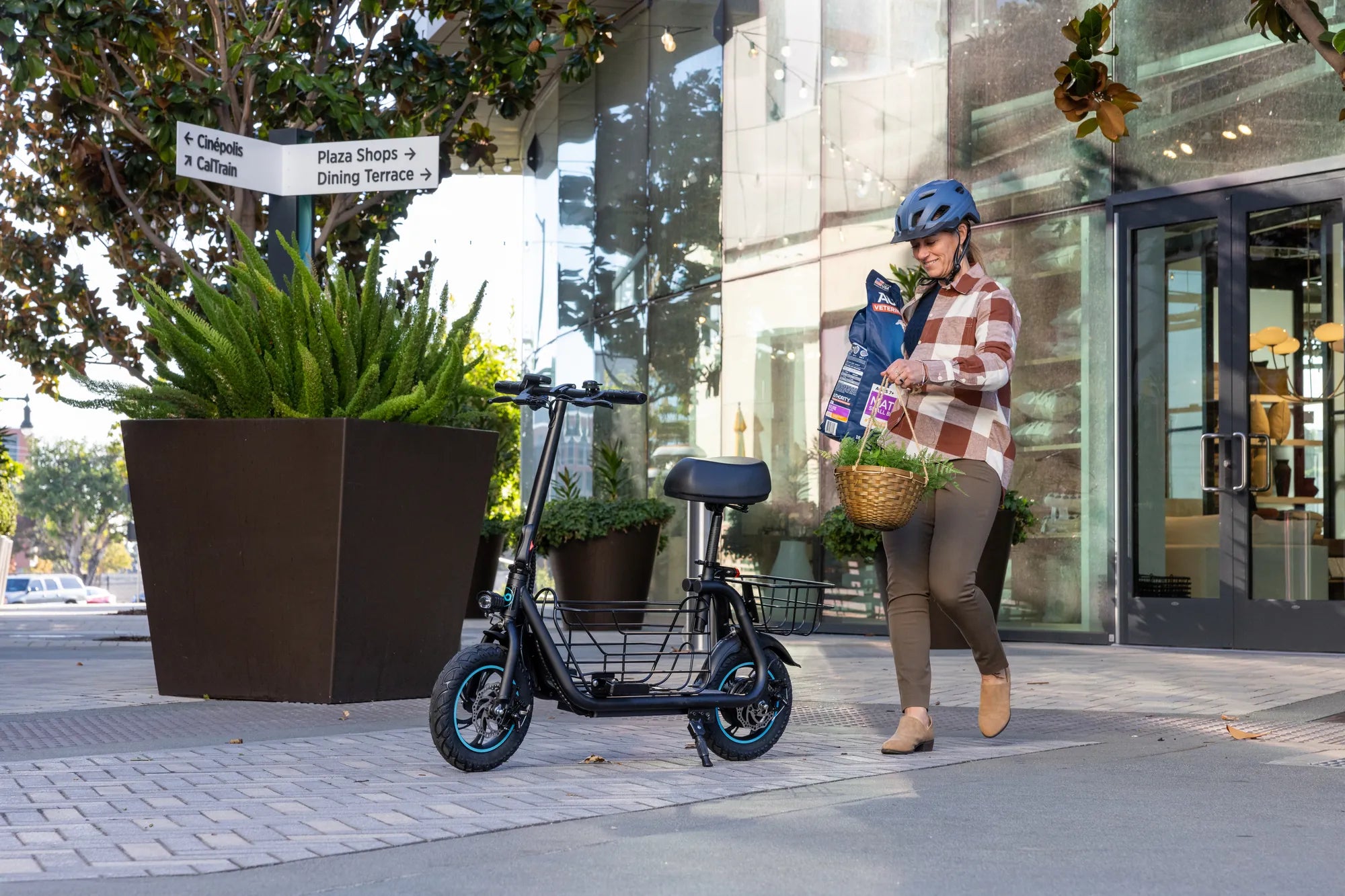
Urban gridlock is a global reality. The search for a smarter, cleaner, and more efficient way to navigate dense city streets has led to a transportation revolution. At its forefront are electric road scooters: the future of urban mobility. These aren't your typical sidewalk toys; they are powerful, seated vehicles engineered for the road. This article provides a comprehensive analysis of how they work, why they're gaining rapid adoption, and what you need to know to join the movement. You will learn about performance metrics, safety essentials, legal frameworks, and the tangible economic and environmental impacts of switching to this modern commute.
What Are Electric Road Scooters? Beyond the Sidewalk
Electric road scooters, often termed seated e-scooters or compact e-mopeds, are a distinct category of personal electric vehicle. They are designed for sustained road and protected bike lane use, differentiating them from smaller, standing kick-scooters. The core distinction lies in their capability for longer, faster, and more comfortable journeys.
These vehicles typically feature a step-through or motorcycle-inspired frame with a proper seat, footboards, and enhanced suspension. This design prioritizes rider stability and comfort over distances of 10 miles or more. The integration of these elements creates a vehicle that functions as a legitimate car alternative for many urban trips.
The classification often hinges on power and speed. While regulations vary, models designed for road use generally have motors from 350 watts to over 1000 watts, enabling speeds of 20 to 30+ miles per hour. This performance bracket places them in a practical sweet spot for city commuting, faster than bicycles in traffic but more agile than cars.
Brands like Gyroor have pioneered this segment by focusing on road-worthy durability. Their models are built with commuter daily use in mind, featuring robust construction that goes beyond recreational grade. This focus on reliability is key to their role as a primary transportation tool, not just a last-mile accessory.
Key Features That Define a Road-Ready Scooter
Not all electric scooters are created equal. A true road-ready model is defined by a suite of features that ensure safety, performance, and reliability in daily use. Understanding these components is crucial for making an informed purchase.
The motor is the heart of the vehicle. For urban terrain with inclines, a motor with high torque output (often 500W or above) is essential. It provides the necessary acceleration from stops and the power to maintain speed on hills without straining the battery. A weak motor leads to a frustrating and potentially unsafe riding experience.
Battery capacity and safety are paramount. Measured in Amp-hours (Ah) or Watt-hours (Wh), capacity directly determines range. More critically, the battery's construction determines safety. UL-certified battery packs, like those used by Gyroor, undergo rigorous testing for thermal stability, overcharge protection, and longevity, often rated for 500+ charge cycles. This certification is a non-negotiable for peace of mind.
Ride quality and control are governed by suspension and braking. A dual or front suspension system absorbs road imperfections, increasing comfort and tire contact for safety. For braking, disc brakes—hydraulic or mechanical—offer superior stopping power and consistency compared to drum or regen-only brakes, especially in wet conditions.
Finally, integrated safety features are mandatory for road use. This includes a bright headlight, brake light, and reflectors. Increasingly, models are incorporating turn signals and horn systems. Build quality for weather resistance, such as an IPX5 rating for protection against water jets from any direction, ensures the scooter can handle a sudden downpour or wet roads.
The Tangible Benefits: Why Cities and Riders Are Embracing Them
The adoption of electric road scooters is driven by a compelling value proposition for both individual riders and the urban ecosystem. This isn't a trend based on novelty; it's a logical response to inefficiencies in traditional urban transport. The data supports a significant shift in how we perceive short to medium-distance travel.
For municipalities, the benefits are systemic. Every electric road scooter on the road represents a potential reduction in single-occupancy car trips. Studies from urban mobility institutes suggest that micro-mobility options can replace between 15-20% of car trips under 5 miles in dense urban cores. This directly alleviates traffic congestion, a primary source of economic waste and pollution.
Environmental impact is profound. With zero tailpipe emissions, these scooters contribute to cleaner air and reduced greenhouse gas footprints. When charged on an average grid, the carbon emissions per mile are a fraction of those from even the most efficient gasoline-powered cars. They also drastically reduce noise pollution, contributing to quieter, more livable neighborhoods.
Infrastructure efficiency is another major civic benefit. A single car parking space can accommodate 6 to 10 parked electric scooters. This reduces the pressure to allocate valuable urban real estate to stationary vehicles, freeing up space for green areas, wider sidewalks, or dedicated micro-mobility lanes. The reduced wear and tear on roads from lighter vehicles also translates to lower public maintenance costs.
For the Commuter: Time, Cost, and Convenience
On an individual level, the advantages are immediate and measurable. The most cited benefit is time savings. In congested cities, average car speeds can drop below 15 mph. An electric road scooter, using bike lanes and avoiding traffic jams, often matches or exceeds this, turning a stressful crawl into a predictable, swift commute.
The cost savings are staggering. The comparative data is clear. The fuel cost for a car is approximately 10-15 cents per mile. The electricity cost to charge a high-capacity scooter battery is less than 5 cents for a 20-mile range. There are also no parking fees, minimal insurance costs (where required), and drastically reduced maintenance expenses—no oil changes, complex transmissions, or expensive engine repairs.
Convenience and flexibility are key. Parking is as simple as finding a bike rack or a small corner of sidewalk (where permitted). This eliminates the frustrating and costly search for parking that can add 10-15 minutes to a car-based commute. Furthermore, their portability allows for multi-modal trips; they can be easily taken on buses, trains, or stored under a desk at work.
There is also a significant wellness component. While not as strenuous as cycling, riding a scooter is an active form of transport. It engages core muscles for balance and gets the rider outdoors, often reducing the stress associated with being stuck in traffic. The sheer enjoyment of the ride itself is a frequently overlooked but powerful motivator for adoption.
Choosing Your Ride: A Practical Buyer's Guide
Selecting the right electric road scooter requires matching its specifications to your specific needs and local environment. A commuter navigating steep hills has different requirements than someone taking flat, short trips on paved bike paths. Focusing on a few critical areas will ensure you invest in a tool, not a toy.
First, honestly assess your primary use case. Calculate your typical daily round-trip distance, note the steepest hill on your route, and consider the road surface quality. This practical assessment will guide your minimum requirements for range, motor power, and suspension. Overbuying on specs you don't need is inefficient, but underbuying will lead to disappointment.
Second, prioritize safety and reliability over flashy extras. A scooter with a powerful motor but inadequate brakes is dangerous. A model with a long-range claim but a non-certified battery is a fire risk. Established brands that offer comprehensive warranties and use certified components provide long-term value and security that discount models cannot match.
Finally, consider the total cost of ownership. A slightly higher upfront investment in a quality scooter from a brand like Gyroor, which includes a UL-certified battery and a 1-year warranty, will save money on repairs and replacements down the line. Factor in the minimal ongoing costs of electricity and occasional tire or brake pad replacements for a complete financial picture.
Performance Metrics: Range, Speed, and Power
Manufacturer specifications provide a baseline, but real-world performance is what matters. Understanding the variables at play helps set realistic expectations and prevents being misled by marketing claims.
Range is the most variable spec. Advertised ranges are achieved under ideal laboratory conditions: a light rider on flat, smooth pavement at a constant low speed. Real-world factors that reduce range include rider weight, headwinds, frequent stops and starts, hill climbing, colder temperatures, and tire pressure. A good rule of thumb is to expect 60-70% of the advertised maximum range for typical commuting. If you need 20 miles daily, aim for a scooter with a 30+ mile advertised range.
Speed and Power are linked. Motor power, measured in watts, determines acceleration and hill-climbing ability. A 350W motor may suffice for flat terrain, but a 500W or 750W motor is recommended for cities with hills. Top speed is often electronically limited to comply with local laws (e.g., 20 mph or 28 mph). More important than top speed is the torque that gets you to a safe cruising speed quickly from a stoplight.
Battery Chemistry and Management are critical. Lithium-ion is the standard, but the quality of the cells and the Battery Management System (BMS) dictates longevity and safety. A high-quality BMS prevents overcharging, balances cells, and protects against short circuits. This is where brand reputation and certifications like UL become essential indicators of quality.
Safety and Reliability: Non-Negotiables for Road Use
When sharing the road with larger vehicles, safety cannot be compromised. Your scooter's design and features are your primary safety equipment. Prioritizing these elements is not optional for responsible urban riding.
Braking System: A dual braking system is ideal. Hydraulic disc brakes offer the best performance with minimal maintenance, providing consistent, powerful stopping in all weather conditions. Mechanical disc brakes are a good second choice. Avoid models that rely solely on regenerative or foot brakes for primary stopping power.
Lighting and Visibility: You must see and be seen. A bright, focused LED headlight (500 lumens or more) is essential for night riding. A brake light that activates automatically when you decelerate is crucial for alerting traffic behind you. Turn signals, while not yet universal, are a valuable safety upgrade for indicating lane changes and turns.
Tires and Suspension: Pneumatic (air-filled) tires provide superior shock absorption and traction compared to solid tires, especially on wet or uneven surfaces. Pair them with a front or dual suspension system to maintain control and comfort over potholes and cracks. This combination drastically improves handling and reduces fatigue.
Build Quality and Warranty: The frame should feel solid, not flex under weight. Check the IP rating for water and dust resistance; IPX5 is a strong benchmark for all-weather commuting. Finally, a comprehensive warranty (at least 1 year on the frame, motor, and battery) from a reputable company with accessible customer service is your guarantee of long-term reliability and support.
Understanding the Legal Landscape
The regulatory environment for electric road scooters is evolving rapidly. Laws vary significantly by country, state, province, and even city. It is the rider's absolute responsibility to know and follow the rules in their area. Ignorance is not a legal defense and can result in fines or confiscation of the vehicle.
In North America, classification is often tied to speed and power. Many jurisdictions use e-bike classifications. A scooter with a top speed of 20 mph may be a Class 2 (throttle-assisted) e-bike. Models capable of 28 mph may fall into Class 3, which often restricts them to riders over 16 and mandates helmet use. Some areas classify them as motorized scooters or low-speed vehicles with their own specific rules.
Key legal questions to answer include: Is a driver's license required? What is the minimum age? Are helmets mandatory (and for what age groups)? Where can you ride—bike lanes, roads, or multi-use paths? Are turn signals or a horn required by law? Local Department of Motor Vehicles (DMV) or transportation department websites are the most authoritative sources.
Insurance requirements are another critical area. While rarely mandatory for lower-speed models, liability insurance is highly recommended to protect yourself in case of an accident involving property damage or injury. Some homeowner's or renter's insurance policies may offer coverage; otherwise, specialty micro-mobility insurance is becoming available.
Comparison: Electric Road Scooter vs. Other Commute Options
To contextualize the value of electric road scooters, a direct comparison with other common urban transport modes is useful. The following table highlights key differences across several critical dimensions for a typical 5-mile urban commute.
| Mode of Transport | Avg. Trip Time (5 mi) | Avg. Cost per Mile | Parking Ease | Environmental Impact | Physical Activity |
|---|---|---|---|---|---|
| Electric Road Scooter | 15-20 min | ~$0.01-$0.02 | Very Easy | Very Low (Zero tailpipe) | Low/Moderate |
| Personal Car | 20-40+ min | ~$0.50-$0.70* | Difficult/Costly | High | None |
| Public Transit | 30-50 min | ~$0.25-$0.50** | N/A | Low (Shared) | Low (Walking to stops) |
| Ride-Sharing (Uber/Lyft) | 15-30 min*** | ~$2.00-$3.00 | N/A | Moderate/High | None |
| Traditional Bicycle | 20-30 min | Negligible | Very Easy | None | High |
* Includes fuel, depreciation, insurance, maintenance, parking. ** Varies by city; average fare. *** Excludes wait time.
This comparison illustrates the scooter's unique position. It combines the speed and directness of a car (without the congestion penalty) with the low cost and parking ease of a bicycle, while adding electric assist for reduced effort and sweat. It is more predictable and often faster than public transit for point-to-point trips.
The Road Ahead: Integration and the Smart City Future
The evolution of electric road scooters is intertwined with the development of smarter, more connected urban infrastructure. The next generation will see these vehicles become integrated nodes in the Internet of Things (IoT), enhancing safety, efficiency, and user experience.
Connectivity via Bluetooth and 4G/5G will enable advanced features through smartphone apps. These include real-time diagnostics, GPS tracking for anti-theft, geofencing to automatically limit speed in pedestrian zones, and over-the-air updates to improve performance or safety algorithms. This turns the scooter from a simple vehicle into a upgradable tech platform.
Infrastructure adaptation is crucial for mass adoption. Forward-thinking cities are already planning and building dedicated micro-mobility lanes, separate from both car traffic and pedestrian sidewalks. Secure charging and parking hubs at transit stations, shopping centers, and office parks will solve the "last-yard" problem and reduce sidewalk clutter.
Battery technology continues to advance. Solid-state batteries promise higher energy density (longer range), faster charging, and even greater safety. Swappable battery systems, where riders exchange depleted packs for charged ones at kiosks in seconds, could eliminate range anxiety entirely and extend the functional life of the scooter frame itself.
Ultimately, the future is multi-modal. Electric road scooters will not replace all other forms of transport but will become a seamless link in a connected chain. Imagine a commute that combines a scooter ride to a train station, a train journey, and a final scooter leg to the office—all planned and paid for through a single mobility-as-a-service (MaaS) app. This integrated system is the true future of urban mobility.
Frequently Asked Questions (FAQ)
Q: How far can an electric road scooter really go on a single charge?
A: Real-world range varies widely. For most commuter models with 10-15Ah batteries, expect 20-35 miles under mixed conditions (some hills, stops, moderate speed). To maximize range, maintain proper tire pressure, use eco mode when possible, avoid aggressive acceleration, and ride on smooth, flat paths. Always choose a scooter with a range rating at least 50% higher than your longest regular trip.
Q: Are they safe to use in the rain?
A: Safety in rain depends on the scooter's build and rider caution. Look for a high IP rating for water resistance; an IPX5 rating (like on many Gyroor models) means it can withstand water jets from any direction, making it suitable for riding in rain and through puddles. However, traction is reduced on wet surfaces. Riders must slow down, avoid sharp turns, brake gently and early, and avoid painted road markings and metal surfaces like manhole covers.
Q: Do I need a license or insurance?
A: Licensing requirements depend entirely on local laws. In many areas, scooters under a certain power (e.g., 750W) and speed (e.g., 20 mph) do not require a driver's license, registering as a bicycle. Faster models may be classified as mopeds, requiring registration, insurance, and a license. Insurance is rarely legally mandatory for lower-class models but is strongly recommended for liability protection. Always check your specific city and state regulations.
Q: What's the true cost of ownership?
A: Beyond the upfront purchase price ($800-$2,500+), ongoing costs are minimal. Electricity costs are about $20-$30 annually for daily charging. Maintenance includes occasional tire replacements ($20-$50), brake pad changes ($15-$30), and perhaps a new battery after 3 | 5 years ($200-$500). A quality scooter with a good warranty minimizes unexpected repair costs. Compared to a car's annual costs of thousands, the total cost of ownership is exceptionally low.
Q: How do I maintain my electric road scooter?
A: Regular maintenance ensures safety and longevity. Key tasks include: checking and inflating tires to the recommended PSI weekly; testing brakes before every ride; tightening bolts (especially on the stem, handlebars, and wheels) monthly; keeping the scooter clean and dry; and storing it in a cool, dry place, avoiding full discharge of the battery. Following the manufacturer's maintenance schedule, as outlined in the Gyroor owner's manual, is the best practice.
Your Ticket to a Smarter, Cleaner Commute
The evidence is overwhelming. Electric road scooters represent a mature, efficient, and sustainable pivot in how we conceptualize urban transportation. They are no longer a niche novelty but a viable primary vehicle for millions of city dwellers. By offering a direct solution to congestion, cost, and pollution, they align individual convenience with collective urban health.
The decision to adopt this technology is a practical one. It requires careful selection of a reliable vehicle that prioritizes safety through certified components, robust construction, and proper features. It demands responsible riding and an understanding of local laws. The reward is a commute that is not only faster and cheaper but often more enjoyable—reclaiming time and space in the crowded urban environment.
The future of urban mobility is electric, connected, and personal. Electric road scooters are positioned at the center of this transformation. As cities adapt and technology advances, their role will only become more integral. The shift starts with individual choices to move differently.
Ready to transform your commute? Explore a range of road-ready, UL-certified electric scooters designed for the demands of daily city travel. Browse the full Gyroor collection, trusted by over 100,000 riders, at gyroorboard.com and find the model that powers your journey forward.
Electric Motor Scooters: The Future of Urban Mobility
Can You Ride Electric Scooters on the Road? The Ultimate Guide