



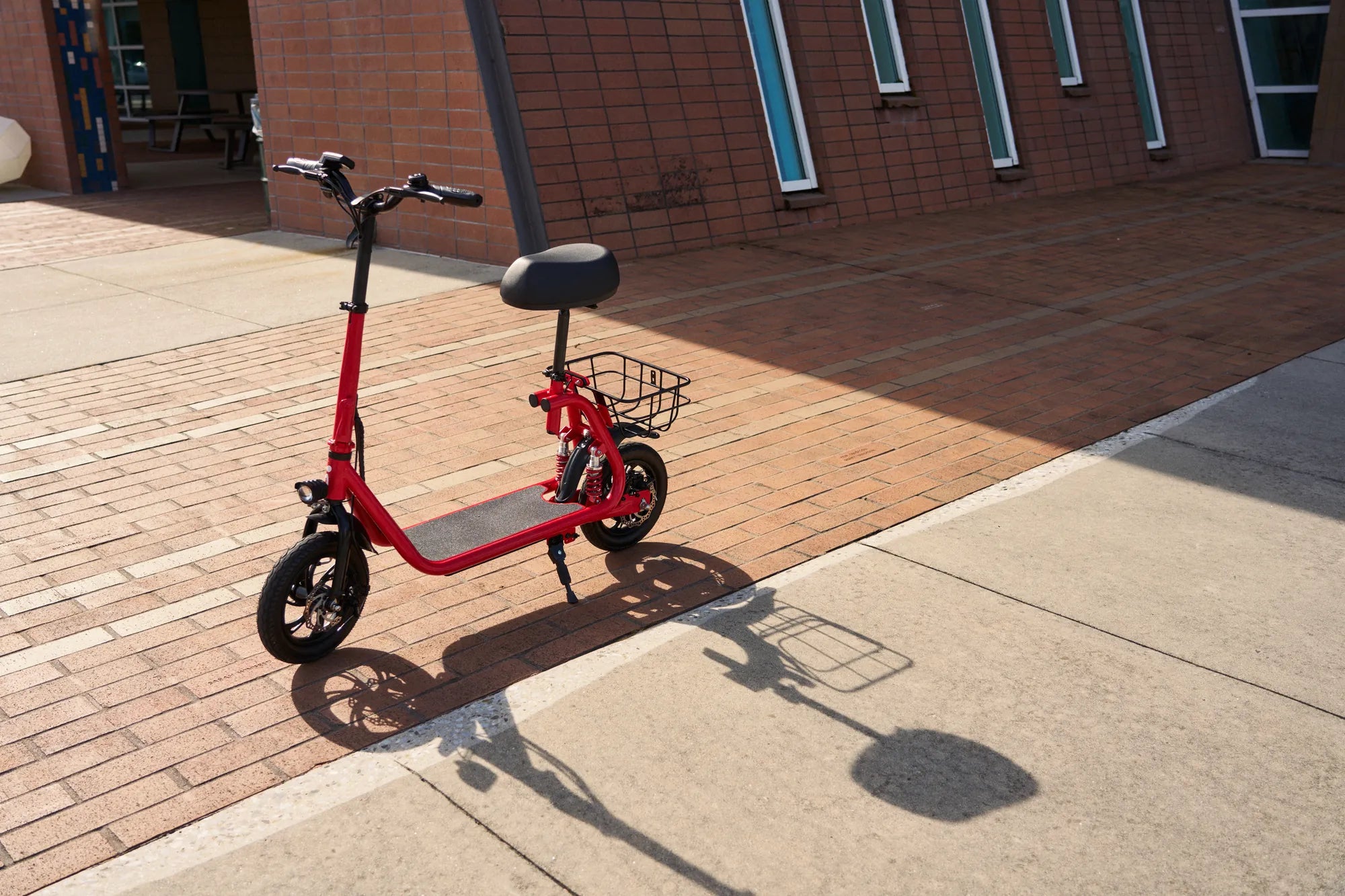
Introduction: The Need for Speed in Modern Commuting
The urban mobility landscape is shifting toward faster, more efficient personal electric vehicles. For commuters seeking to replace car trips or cover longer suburban distances, speed is a critical factor. The electric scooter 30 mph represents a pivotal performance tier, balancing thrilling acceleration with practical daily use.
This speed class transforms a scooter from a last-mile solution into a genuine car alternative. Riders can maintain pace with city traffic, significantly reducing commute times. The demand for these capable machines is driven by eco-conscious commuters, thrill-seekers, and anyone tired of traffic congestion.
Not all fast scooters are created equal. Achieving and safely maintaining 30 mph requires specific engineering in motors, batteries, and frames. This guide will dissect what defines this category. We'll examine the key features that separate true high-performance models from merely fast ones.
Brands like Gyroor have invested heavily in this segment, understanding that riders need reliability alongside speed. With over 100,000 riders trusting their vehicles, the focus is on certified safety and durable construction. The 30 mph electric scooter is more than a toy; it's a serious transportation tool.
The 30 MPH Electric Scooter: Defining the Performance Tier
A genuine 30 mph electric scooter is defined by its sustained performance envelope, not just a peak speed reading. This category sits distinctly above entry-level models (15-20 mph) and below specialized, ultra-high-speed electric motorcycles. It's the sweet spot for urban and suburban practicality.
The distinction lies in consistent power delivery. A true 30 mph scooter can reach and hold that speed on flat terrain with a typical adult rider. It also maintains strong performance on moderate inclines, often only dropping a few miles per hour on hills where slower scooters would struggle significantly.
This performance requires a holistic engineering approach. The motor must provide ample torque, the battery must support high discharge rates without overheating, and the frame must be rigid enough for stability. Compromising on any one of these elements results in an unreliable or unsafe riding experience.
For many jurisdictions, 30 mph also represents a regulatory threshold. In numerous cities and states, electric scooters capable of exceeding certain speeds may face different classification, requiring use on roads rather than bike paths. Understanding your local laws is crucial before investing in this performance tier.
Key Features to Look for in a 30 MPH Scooter
Selecting a high-speed scooter requires careful evaluation of its core components. Speed amplifies every aspect of the riding experience, including the consequences of component failure. Prioritizing quality and proven engineering in these key areas is non-negotiable for safety and longevity.
Motor Power & Drive System
Motor wattage is the starting point, but torque is the true hero for 30 mph performance. While a single 500W motor might briefly touch 30 mph downhill, consistent achievement requires a robust 1000W motor or dual-motor setup. Dual motors provide exceptional acceleration and superior hill-climbing capability.
The type of motor also matters. Brushless hub motors are standard for their efficiency and low maintenance. For a 30 mph electric scooter, look for motors rated for continuous high-power output, not just peak power. This ensures the motor won't overheat during a sustained commute at top speed.
Real-world performance means accelerating quickly from a stoplight to merge safely with traffic and climbing steep urban bridges without slowing to a crawl. A dual-motor scooter with a combined 1000W+ output typically excels in these scenarios, making the 30 mph rating genuinely useful.
Gyroor's high-performance models often feature precisely this dual-motor configuration. This engineering choice ensures that the advertised top speed is accessible under real load conditions, providing the power needed for a confident and practical commuting experience.
Battery Capacity & Range at Speed
Speed consumes energy exponentially due to increased aerodynamic drag. Therefore, the battery in a 30 mph scooter must be significantly larger than that in a 20 mph model to offer a practical range. Expect a minimum of a 48V 15Ah (720Wh) battery for realistic performance.
Manufacturer range claims are often based on lower test speeds. A scooter rated for 40 miles at 15 mph may only achieve 20-25 miles when ridden consistently at 30 mph. It's critical to interpret range specifications with this in mind and prioritize high-capacity battery packs.
Battery safety becomes paramount at high discharge rates. This is where UL-certification is critical. A UL-certified battery pack, like those used in Gyroor scooters, has undergone rigorous testing for thermal stability, short-circuit protection, and longevity over 500+ charge cycles, ensuring safe operation even when delivering maximum power.
Look for batteries with high-quality lithium-ion cells from reputable manufacturers. The battery management system (BMS) should protect against over-current, over-voltage, and over-temperature. A robust battery is the heart of any reliable high-speed electric scooter 30 mph.
Frame, Build Quality & Suspension
At 30 mph, frame rigidity is a safety feature. A flexing frame can cause unpredictable handling. Aerospace-grade aluminum alloy frames are the standard for this category, providing an optimal strength-to-weight ratio. The welding and joint construction should be clean and robust.
Suspension is no longer a luxury; it's essential for control and comfort. A combination of front and rear suspension—whether spring-based or hydraulic—absorbs impacts from potholes and uneven pavement, keeping the tires in contact with the road for better braking and steering.
Tire choice is equally important. Wide, air-filled (pneumatic) tires, typically 10 inches in diameter, provide superior shock absorption, traction, and stability compared to smaller solid tires. They smooth out the ride and improve safety, especially on wet or imperfect road surfaces.
The deck should be wide enough for a stable footing and covered with a grippy, non-slip surface. Every aspect of the build must communicate durability, as the forces at play at 30 mph will quickly expose poor craftsmanship or substandard materials.
Braking Systems for High-Speed Control
Stopping power must match acceleration power. From 30 mph, a rider needs confident, fade-resistant braking. Hydraulic disc brakes are the gold standard, offering powerful, modulated stopping with minimal hand effort and consistent performance in various weather conditions.
Mechanical disc brakes are a good secondary option, though they may require more frequent adjustment. Drum brakes or electronic (regenerative) braking alone are generally insufficient as a primary system for a true 30 mph electric scooter; they should only be used as a supplement to physical disc brakes.
A dual braking system—one on each wheel—is highly recommended. This provides redundancy in case one system fails and distributes braking force to prevent skidding. The brakes should feel responsive and progressive, not grabby or weak.
Testing the brakes is a critical part of any pre-ride check. At high speeds, the ability to stop safely and predictably is the most important safety feature on the vehicle, bar none.
Safety & Regulatory Features
High-speed riding demands enhanced visibility and communication. A bright LED headlight (500+ lumens) is essential for seeing the road ahead at night, while a taillight with an integrated brake light alerts drivers behind you when you are slowing down. Turn signals are increasingly common and highly valuable for road use.
An audible horn or bell is a necessary tool for alerting pedestrians and other vehicles of your presence. Given the potential for road use, these scooters should be equipped like a vehicle, not a toy.
Rider gear is a personal safety imperative. A full-face helmet is strongly recommended for 30 mph travel, along with gloves, knee pads, and elbow pads. The clothing should be bright or reflective, especially for night riding.
Finally, understand your local laws. Many areas limit electric scooters to 15-20 mph on bike paths. A 30 mph model may be restricted to road use, similar to a moped. Some jurisdictions may require a driver's license, registration, or even insurance for vehicles of this speed class. Always check local regulations.
Gyroor's 30 MPH Commitment: Engineering for Speed and Reliability
Gyroor approaches the 30 mph category with a philosophy centered on certified safety and rider trust. The brand's engineering prioritizes components that can handle sustained high performance without compromising on durability or user safety, a commitment reflected in their core technologies.
The foundation is the UL-certified battery system. This certification is not merely a marketing point; it verifies that the battery cells, BMS, and enclosure are designed to safely manage the high discharge rates required for 30 mph travel, mitigating risks of thermal runaway—a critical concern at this performance level.
Further protection comes from an IPX5 water-resistant rating. This engineering standard means the scooter's core electronics can withstand water jets from any direction, safeguarding against rain, puddles, and street spray encountered during real-world commuting. This is a key differentiator for all-weather reliability.
This robust engineering is backed by a clear promise: a comprehensive 1-year warranty. This warranty coverage on the motor, battery, and frame gives riders confidence that their investment is protected. It signals Gyroor's belief in the long-term durability of its high-speed models, a trust earned from over 100,000 riders globally.
By integrating these principles—certified batteries, water resistance, and strong warranty support—into scooters designed for 30 mph performance, Gyroor delivers a product that is both thrilling to ride and practical for daily use. The focus is on creating a vehicle that riders can depend on, mile after high-speed mile.
30 MPH vs. Other Speed Tiers: A Practical Comparison
Choosing the right scooter means understanding how different speed tiers match different needs. The 30 mph electric scooter occupies a distinct middle ground, offering capabilities that both slower and faster models lack. The following table breaks down the key differences.
| Feature | Entry-Level (15-20 MPH) | Performance Tier (30 MPH) | High-Performance (40+ MPH) |
|---|---|---|---|
| Primary Use Case | Last-mile travel, short errands, campus mobility | Full commutes (5-15 miles), car replacement for urban/suburban trips | Long-distance commuting, enthusiast riding, off-road use |
| Typical Motor | 250W - 500W single motor | 800W - 1200W single or dual motor | 1500W+ dual motor, often with sine-wave controllers |
| Real-World Range | 10-15 miles | 18-30 miles (varies greatly with speed) | 25-50 miles (requires very large battery) |
| Weight & Portability | Lightweight (25-40 lbs), often foldable | Heavier (45-65 lbs), foldable but less portable | Very heavy (65-100+ lbs), often not practical to carry |
| Legal & Path Use | Generally permitted on bike paths & lanes | Often restricted to roads; may require license/registration | Frequently classified as a motor vehicle; road use only |
| Rider Experience Level | Suitable for beginners | Recommended for experienced riders | For advanced riders only; full safety gear mandatory |
| Relative Price Point | $300 - $700 | $800 - $1,800 | $2,000 - $5,000+ |
The 30 mph scooter is the optimal balance for the serious commuter. It provides meaningful speed to keep pace with traffic, enough range for most one-way urban commutes, and a form factor that remains somewhat portable. It demands more investment and responsibility than an entry-level model but avoids the extreme cost, weight, and regulatory hurdles of ultra-high-performance models.
Frequently Asked Questions (FAQ)
Q: Is a special license or registration required to ride a 30 mph electric scooter?
A: Laws vary dramatically by city, state, and country. In many U.S. jurisdictions, vehicles capable of exceeding 20-28 mph may be classified as "motorized scooters" or "mopeds," which can require a driver's license, registration, and even insurance. They are also more likely to be restricted from bicycle paths. Always check your specific local and state regulations before riding.
Q: How far can I realistically travel on a single charge at top speed?
A> Realistic range at a constant 30 mph is typically 50-70% of the manufacturer's claimed maximum range, which is usually calculated at a slower, optimal speed (e.g., 15 mph). For a scooter with a 48V 15Ah battery, expect 18-25 miles of real-world range at top speed, depending on rider weight, terrain, and temperature. For longer commutes, consider a model with a larger battery capacity.
Q: Are 30 mph scooters safe for everyday commuting?
A> They can be very safe when three conditions are met: 1) The scooter is well-engineered with quality brakes, suspension, and lights. 2) The rider wears appropriate safety gear, including at minimum a certified bicycle or better yet a full-face helmet. 3) The rider follows traffic laws, practices defensive riding, and avoids roads or conditions beyond their skill level. The machine's safety is only one part of the equation; rider behavior is equally critical.
Q: Can they handle hills and different weather conditions?
A> A true 30 mph scooter with a powerful motor (1000W+ or dual motors) will handle moderate hills (10-15% grade) with only a modest speed reduction. Steeper hills will slow it down more significantly. Regarding weather, water resistance (like an IPX5 rating) is key for light rain and wet roads. However, riding in heavy rain, snow, or on icy surfaces is dangerous and not recommended due to reduced traction and visibility.
Q: What is the most important maintenance tip for a high-performance scooter?
A> Beyond regular checks of tire pressure, bolt tightness, and brake function, the single most important maintenance habit is proper battery care. Avoid draining the battery to 0% regularly. Store the scooter in a cool, dry place. Use only the manufacturer-provided charger. For scooters with pneumatic tires, carrying a small repair kit and portable inflator is wise to handle flats, which are the most common roadside issue.
Conclusion: Is a 30 MPH Electric Scooter Right for You?
The decision to invest in a high-speed electric scooter hinges on your specific transportation needs and riding environment. If your daily commute is between 5 and 15 miles, involves roads where keeping pace with traffic is safer, and you desire a fun, efficient alternative to a car, then a 30 mph model is an excellent choice. It provides a tangible upgrade in utility over slower scooters.
This performance tier demands a corresponding commitment to safety and responsibility. Prioritizing a scooter from a reputable brand that uses certified batteries, robust braking systems, and offers a strong warranty is non-negotiable. The engineering behind the speed is what ensures it can be enjoyed reliably and safely for years.
Gyroor's approach exemplifies this responsible performance, combining the thrill of 30 mph travel with the assurance of UL-certified batteries, IPX5 water resistance, and comprehensive customer support. It’s a formula designed for riders who value both excitement and dependability in their daily travel.
Ready to experience the perfect balance of speed, safety, and practical commuting? Explore Gyroor's collection of high-performance electric scooters engineered for the demands of the modern rider. Browse the full Gyroor collection at gyroorboard.com to find the model that matches your need for speed and your commitment to quality.
Automatic Scooter Price: The 2024 Buyer's Guide to Value & Cost
Automatic Scooter Price: The 2024 Buyer's Guide to Value & Cost