


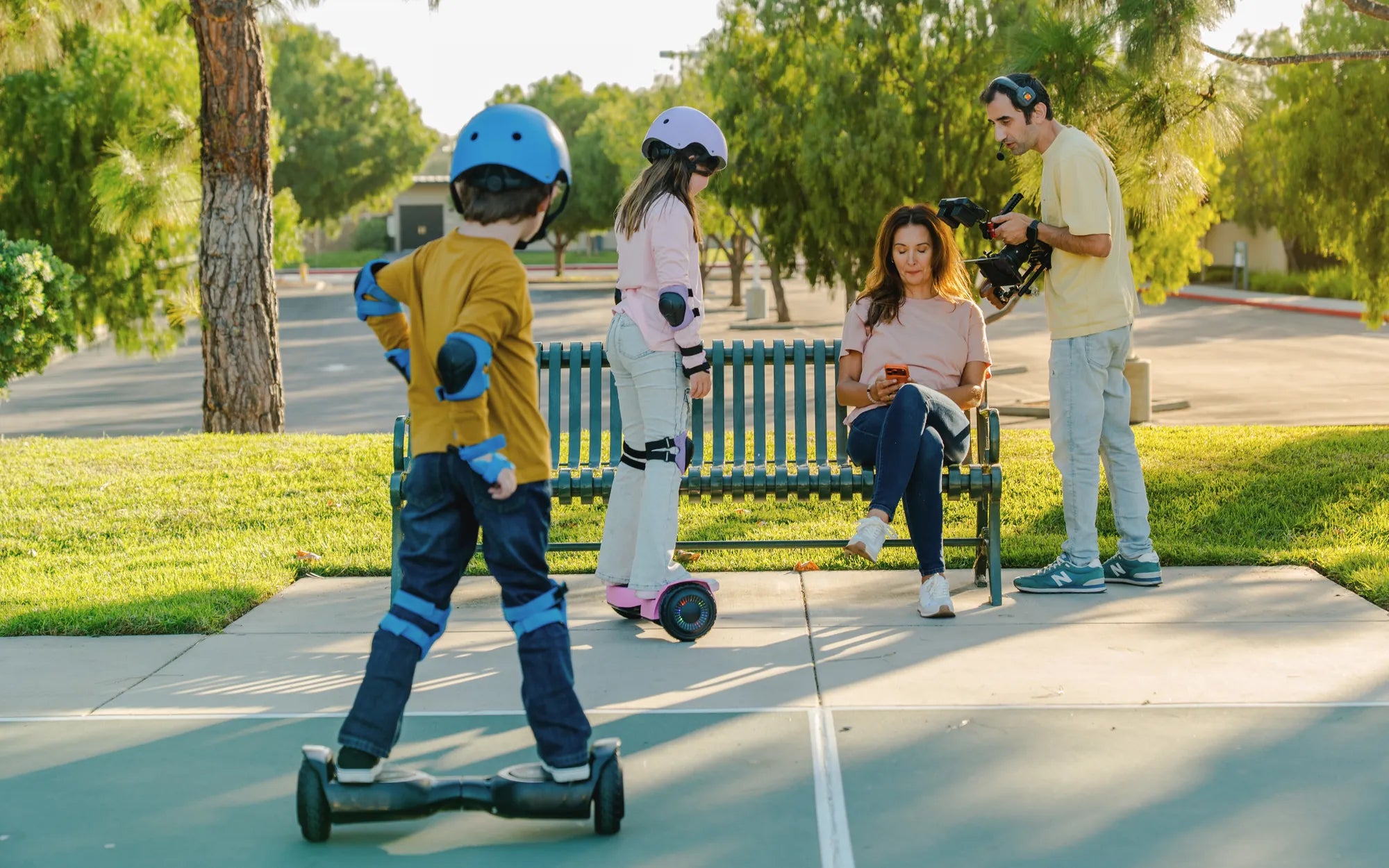
Introduction: The World of 20 mph Kids' Electric Scooters
An electric scooter for kids 20 mph represents a significant step up in performance and capability for young riders. These are not beginner toys; they are advanced personal mobility devices designed for older children and teenagers who have mastered basic scooter operation. This guide will explore how a 20 mph electric scooter can foster advanced coordination, confidence, and a sense of responsibility, all while prioritizing absolute safety.
Choosing a scooter in this speed category requires careful consideration. It demands a commitment from both parent and child to rigorous safety practices and responsible riding habits. The focus shifts from simple play to skill-based adventure, where the journey and the control are as important as the destination.
Brands like Gyroor, a leading electric scooter and e-bike brand trusted by over 100,000 riders, engineer models for this tier with a clear understanding of the required safety-performance balance. Their commitment to UL-certified batteries, robust construction, and reliable warranties makes them a key consideration for parents navigating this high-performance category.
This ultimate guide will equip you with the knowledge to make an informed decision. We will dissect safety features, compare critical specifications, and provide a clear framework for supervision, ensuring that the pursuit of 20 mph fun is matched by an unwavering commitment to security.
Why Consider a 20 mph Electric Scooter for Your Child?
The decision to move to a 20 mph electric scooter for your child is about more than just increased speed. It's about recognizing their growing skills and providing a tool for further development. For a responsible and experienced young rider, this upgrade can be highly rewarding.
These scooters build advanced coordination and reflexes. Operating a vehicle at 20 mph requires sharper anticipation, smoother braking control, and better balance than slower models. This can enhance proprioception and reaction times in a controlled, engaging environment.
They also foster confidence and independence. Mastering a more powerful machine within set boundaries can be a significant confidence booster for a teenager. It teaches respect for machinery, the importance of following rules, and the rewards of responsible behavior.
The ideal user is typically a teenager or a very mature pre-teen (12+ years is a common recommendation). Crucially, they should have significant experience riding lower-speed electric scooters or bicycles, demonstrating consistent responsibility, good judgment, and an understanding of basic safety rules.
Parental assessment is paramount. You must honestly evaluate your child's maturity, physical size (they should be able to comfortably handle the scooter's weight and size), and adherence to instructions. A 20 mph scooter is a privilege earned through demonstrated responsibility, not an automatic right of age.
Safety First: Non-Negotiable Features and Precautions
When speed increases to 20 mph, safety features transition from important to non-negotiable. The kinetic energy involved is substantially higher, making robust engineering and proactive precautions essential. Every component must be designed to handle the stresses of faster travel.
The foundation is a UL-certified battery. This is not a mere specification; it is a critical safety benchmark. UL certification means the battery pack has undergone rigorous independent testing for electrical, mechanical, and fire safety. At 20 mph, you cannot compromise on the power source's integrity.
Braking systems must be highly reliable. A single, weak braking mechanism is insufficient. Look for models with dual or triple braking systems, such as a combination of electronic (regenerative) braking and a high-performance mechanical disc or drum brake. This provides redundancy and maximum stopping power.
The frame and construction must be exceptionally sturdy. A lightweight, folding frame designed for adult commuters may not withstand the demands of an active teen. A robust, often welded, aluminum alloy frame designed for youthful use is crucial for stability and durability at higher speeds.
Essential Safety Gear
Safety gear is the rider's personal protective system and is mandatory for every ride. This is non-negotiable for a 20 mph electric scooter for kids.
A certified multi-impact helmet is the most critical item. Look for CPSC (U.S.) or CE (Europe) certification. Helmets with MIPS (Multi-directional Impact Protection System) technology are highly recommended, as they provide added protection against rotational forces during a crash.
Knee and elbow pads are essential. These joints are extremely vulnerable in a fall. High-quality, durable pads with hard plastic shells and secure straps can prevent serious abrasions, cuts, and fractures.
Riding gloves and closed-toe shoes complete the ensemble. Gloves protect palms during a fall and improve grip. Sturdy, closed-toe shoes (like skate shoes or sneakers) provide proper foot protection and grip on the scooter deck—no sandals or flip-flops.
Pre-Ride Safety Checklist
Establishing a consistent pre-ride checklist instills discipline and catches potential issues before they become hazards. Both parent and child should follow this routine.
First, check the battery charge. Ensure it has sufficient charge for the intended ride, plus a margin. Never start a ride with a nearly depleted battery. Inspect the battery compartment for any signs of damage or moisture.
Test the brakes thoroughly. While stationary, roll the scooter forward and apply the brakes to ensure they engage smoothly and powerfully. Listen for any unusual grinding or squealing noises that indicate wear.
Inspect tires and fasteners. Check tire pressure (if pneumatic) for proper inflation and look for cuts or embedded debris. Manually check that the stem, handlebars, and all folding mechanisms (if present) are securely tightened and locked.
Finally, verify lighting. Test the headlight and taillight/brake light to ensure they are fully functional for visibility. Confirm the electronic controls and display are working correctly.
Key Features to Look for in a 20 mph Kids' E-Scooter
Selecting the right 20 mph electric scooter involves analyzing specific features that directly impact performance, safety, and longevity. Understanding these specifications will help you differentiate between a well-built machine and a poorly suited one.
The overall build should communicate durability. Look for wide, textured decks for secure footing, reinforced stems, and quality finishings. An IPX5 water resistance rating is a strong indicator of robust construction, protecting the electronics from water splashes from puddles or wet roads.
Suspension is highly beneficial at this speed. Front or dual suspension absorbs vibrations from uneven pavement, providing a smoother ride and better control. It reduces fatigue for the rider and lessens stress on the scooter's frame and components.
Consider the weight capacity. The scooter should have a maximum load rating well above your child's weight to ensure a safety margin and account for a backpack. A higher capacity often indicates a stronger frame and components.
Motor Power, Battery & Range
The motor and battery are the heart of the performance. A sustained 20 mph top speed typically requires a motor in the 350W to 500W range. More wattage generally means better acceleration and an easier time maintaining speed on slight inclines.
Battery capacity, measured in Watt-hours (Wh) or often described by Voltage (V) and Amp-hours (Ah), determines range. A larger capacity (e.g., a 36V 10Ah battery = 360Wh) will provide a longer range, reducing charge frequency. Always prioritize models with UL-certified battery packs for safety.
Real-world range is less than the theoretical maximum. Factors like rider weight, terrain, temperature, and use of throttle vs. kick-assist significantly affect it. For a 20 mph scooter, expect a practical range of 10-18 miles per charge depending on these variables and the battery size.
Braking System & Stability
Effective braking is the most critical safety system on a 20 mph scooter. A dual-braking system is strongly recommended, combining two independent methods for redundancy.
A common and effective setup pairs an electronic (E-ABS or regenerative) brake on the rear wheel with a mechanical disc or drum brake on the front. The electronic brake helps slow the scooter and recharge the battery slightly, while the mechanical brake provides powerful, consistent stopping force.
Stability is derived from wheel size, deck size, and geometry. Larger wheels (8.5 to 10 inches in diameter) roll over cracks and small obstacles more smoothly than tiny wheels, improving safety and comfort. A longer wheelbase and a wide, anti-slip deck contribute to a stable, confident riding platform at speed.
The Parent's Guide to Supervision and Rule Setting
Owning a 20 mph electric scooter is a partnership between parent and child. Active, informed supervision and clear, consistent rules are the frameworks that make high-speed riding safe and sustainable.
Start with supervised training sessions in a completely controlled environment, like an empty parking lot. Practice starting, stopping, turning, and using the brakes at gradually increasing speeds before allowing independent rides. Your role is coach and safety officer.
Maintain open communication about every ride. Know the planned route, duration, and who they will be with. Use technology like GPS trackers or shared location services if appropriate for your family's rules and the child's age.
Periodically review the rules and conduct "spot checks" on gear and scooter condition. This reinforces the seriousness of the responsibility and ensures standards don't slip over time.
Choosing the Right Riding Environment
Terrain selection is a primary safety control. Not all pavement is created equal for a 20 mph electric scooter for kids.
Ideal environments include smooth, paved bike paths, empty school or church parking lots on weekends, and wide, quiet residential sidewalks (where legal and with extreme caution for pedestrians). The surface should be clean, dry, and free of major cracks, gravel, or sand.
Strictly prohibited zones include public roads with vehicle traffic, busy intersections, steep hills, off-road trails with rocks and roots, and wet or icy pavement. Riding at dusk or in the dark is also a major hazard unless the scooter has exceptional lights and the rider wears reflective gear.
Establishing Household Riding Rules
Clear, written rules leave no room for ambiguity. Post them in the garage and have your child agree to them verbally and in writing.
Rule 1: Full safety gear is mandatory for every single ride, no exceptions. Rule 2: Riding is only permitted in pre-approved areas. Rule 3: The scooter must be set to a lower speed mode (if available) when riding near pedestrians, in crowded areas, or for initial learning.
Rule 4: No passengers ever. Electric scooters are designed for one rider. Rule 5: Daylight-only riding, unless specific permission is granted for a short, well-lit trip. Rule 6: Absolutely no phone use, headphones, or other distractions while riding.
The consequences for breaking rules should be clear, immediate, and significant, such as loss of riding privileges for a week or more. Consistency is key to enforcing these critical safety protocols.
Comparing 20 mph Scooters: What Sets Gyroor Apart?
The market for higher-speed kids' scooters varies widely in quality and safety focus. A comparative analysis highlights why certain features are benchmarks. Gyroor's engineering philosophy emphasizes the safety and durability required for this performance tier.
Many generic or budget scooters may advertise a 20 mph top speed but achieve it with under-sized batteries, poor brake systems, and no meaningful safety certifications. They often lack the robust construction to handle the repeated stress of faster riding, leading to premature failure or safety hazards.
Gyroor models designed for this market segment are built to different standards. The integration of UL-certified battery packs is a fundamental differentiator, addressing the foremost safety concern for parents. The IPX5 water-resistant rating ensures the scooter can handle real-world conditions like morning dew or unexpected puddles.
The 1-year comprehensive warranty, backed by U.S.-based customer support, provides peace of mind that is rare in the youth electric vehicle space. It signals confidence in the product's durability. Furthermore, features like dual braking systems, wide pneumatic tires, and sturdy aluminum alloy frames are engineered as a cohesive system for safe, high-speed operation.
| Feature | Common Market Offerings | Gyroor 20 mph-Class Scooters |
|---|---|---|
| Battery Safety Certification | Often uncertified or with vague claims | UL-Certified battery packs (tested for 500+ cycles) |
| Water & Dust Resistance | IPX4 or unspecified | IPX5 Rating for protection against water jets |
| Warranty & Support | 90 days or less, difficult-to-reach support | 1-Year Warranty with accessible U.S. support |
| Braking System | Often single brake (foot or electronic) | Dual/Triple Braking Systems (E-ABS + disc) |
| Frame Construction | Thin-gauge aluminum, focus on portability | Robust Alloy Frame designed for youthful durability |
Frequently Asked Questions (FAQs)
Q: What is the appropriate age for a 20 mph electric scooter?
A: Age is less important than maturity, size, and experience. Most manufacturers recommend ages 12 and up, but this is a guideline. The child must be physically large enough to control the scooter (check the manufacturer's recommended height/weight), have extensive riding experience, and consistently demonstrate responsible judgment and rule-following. A mature 14-year-old beginner is not a good candidate, while a very responsible 11-year-old with years of scooter experience might be, though rare.
Q: Can I limit the top speed on a 20 mph scooter?
A: Yes, and this is a critical feature to look for. Most quality scooters, including those from Gyroor, offer multiple speed modes (e.g., Beginner: 8 mph, Eco: 13 mph, Sport: 20 mph). These are controlled via the display or a companion app. You can lock the scooter into a lower mode during the learning phase or for riding in more constrained areas, using a parental PIN if available.
Q: How do I maintain the scooter to keep it safe?
A: Regular maintenance is simple but vital. Keep tires properly inflated (for pneumatic tires). Regularly check and tighten all bolts and fasteners, especially on the stem and folding mechanisms. Clean the scooter with a damp cloth; avoid high-pressure water. Store it in a dry place, away from extreme temperatures. Periodically check brake pads for wear and have them replaced if they become thin. Follow the manufacturer's specific guidelines for battery care, like avoiding full discharges.
Q: Is the 20 mph speed too fast for a child?
A: It is a substantial speed that demands respect, but it is not inherently "too fast" for a responsible, properly geared, and well-trained older child or teenager in a safe environment. Context is everything. A bicycle can easily exceed 20 mph on a downhill. The key is the ecosystem: a high-quality scooter with excellent brakes, mandatory full protective gear, strict parental rules, and supervised riding in appropriate areas makes this speed manageable and exhilarating for a skilled young rider.
Q: What is the real-world range I can expect, and how long does it take to charge?
A: Real-world range varies. For a typical 360Wh battery on a 20 mph scooter with a teen rider, expect 10-15 miles under mixed use (some hills, stop-and-go). On flat terrain with consistent cruising, you might achieve 18+ miles. Charging time depends on the charger's output. A standard 2A charger for a 36V 10Ah battery will take about 5-6 hours for a full charge. Always use the manufacturer-provided charger and never leave the battery charging unattended for extended periods or overnight.
Conclusion: Empowering Responsible Adventure
A 20 mph electric scooter for kids represents a gateway to advanced fun and personal development, but it is a privilege that comes with serious responsibility. The thrill of the ride must be inseparably linked to a culture of safety, built on quality equipment, comprehensive gear, and active parental guidance.
By choosing a scooter with non-negotiable safety features like UL-certified batteries, dual braking systems, and robust construction, you lay a secure technical foundation. Brands that prioritize these elements, such as Gyroor with its focus on certified safety and durable design, provide the reliable platform necessary for this level of performance.
The ultimate success of this adventure depends on the partnership between you and your child. Your commitment to enforcing rules, selecting safe environments, and modeling a safety-first mindset will determine whether this high-speed tool becomes a source of positive growth or an unnecessary risk.
Ready to explore high-performance, safety-focused options for your responsible young rider? Browse the full Gyroor collection, featuring UL-certified, durable electric scooters designed for the next level of adventure, at gyroorboard.com.
Self Balancing Scooter with Handle: The Future of Personal Mobility
Electric Hoverboard for Adults: The Ultimate Guide to Choosing and Riding Safely