



Navigating the World of Electric Scooters for Young Riders
Selecting an electric scooter for a 6 year old requires a careful balance between exhilarating fun and uncompromising safety. This age marks a pivotal point where children develop the coordination and cognitive skills for supervised micromobility, making it a popular entry point. This guide cuts through the marketing noise to deliver a data-driven, parent-focused analysis. You will learn to decode specifications, identify essential safety engineering, and establish foundational riding rules. We will reference the engineering standards of leading brands like Gyroor, a manufacturer trusted by over 100,000 riders, to illustrate what true safety-first design entails.
Why a 6-Year-Old is Ready for an Electric Scooter: Developmental Milestones
Six years old is often considered a baseline age for electric scooters due to key developmental achievements. Children at this age typically possess significantly improved gross motor skills, including dynamic balance and coordinated leg movements essential for scooting and braking. Their reaction times and ability to process simple instructions allow them to learn and follow safety rules under supervision.
Cognitively, a six-year-old can understand cause-and-effect relationships, such as pulling a brake lever to stop. This period is prime for building confidence through mastered physical challenges. An electric scooter, when introduced correctly, becomes a tool for promoting outdoor activity, spatial awareness, and a sense of responsibility. It is not about raw speed, but about controlled, progressive skill development.
The decision hinges on the individual child's maturity and physical size, not just age. A child who is cautious, listens well, and has experience with balance bikes or non-motorized scooters will likely adapt more quickly. The parent's commitment to consistent supervision and training is the most critical variable in this equation, more so than any scooter feature.
The Gyroor Safety Standard: Features Designed for Peace of Mind
Safety is not a single feature but a system of integrated engineering choices. For a 6-year-old, this system must be robust. Leading brands build their reputation on these foundations. Gyroor, for instance, implements a multi-point safety protocol beginning with UL-certified battery packs. These batteries undergo rigorous testing for over 500 charge cycles, drastically reducing risks associated with thermal runaway, a primary concern for parents.
Further protection comes from IPX5 water-resistant construction. This rating means the scooter can withstand water jets from any direction, safeguarding the electrical system against puddles, wet pavement, and light rain. This durability is paired with a reliable 1-year warranty, ensuring long-term support against manufacturing defects. These are not premium features; they are the baseline requirements for a child's product.
The physical design must also prioritize stability. A lower deck height lowers the center of gravity, making mounting and dismounting safer. Wide, textured footboards provide secure footing. Bright LED lights on the front and rear are essential for visibility during dusk rides. Every component, from the brake cable housing to the deck grip tape, must be chosen for reliability.
Speed Control and Parental Oversight Tools
Absolute speed control is the most crucial feature for a beginner rider. Models suitable for this age group must offer a beginner or "turtle" mode with a maximum speed capped at or below 6 mph (10 km/h). This allows the child to learn handling and braking reflexes in a controlled environment.
Advanced parental oversight tools provide an extra layer of security. Some models include a remote control that allows a parent to limit speed or initiate a gradual stop from a distance. Others may offer Bluetooth app connectivity to set geofencing boundaries or track riding history. The goal is to give parents graduated control, matching the scooter's capabilities to the child's evolving skill level through multiple speed modes (e.g., 3-speed settings).
Choosing the Right Model: A Comparison for 6-Year-Olds
Not all scooters marketed for kids are appropriate for a 6-year-old beginner. The key is matching specifications to the child's size and the parent's safety requirements. The following table compares hypothetical models based on the type of engineering and specs a brand like Gyroor would employ in its youth-focused lines.
| Feature / Model | Beginner Urban Cruiser | All-Terrain Explorer |
|---|---|---|
| Target Age & Weight | 5-8 years, up to 120 lbs | 6-10 years, up to 140 lbs |
| Max Speed (Adjustable) | 3.5 mph, 7 mph, 10 mph | 4 mph, 8 mph, 12 mph |
| Motor Power | 100W | 150W |
| Battery & Range | UL-Certified, 5-7 miles | UL-Certified, 8-10 miles |
| Braking System | Regenerative + Disc Brake | Dual Disc Brakes |
| Wheel Type & Size | 6.5" Solid Rubber (Puncture-Proof) | 8" Air-Filled Tires |
| Key Safety Feature | Remote Parental Speed Limit | IPX5 Rating, Enhanced Suspension |
The Beginner Urban Cruiser is optimized for pavement stability and simple parental control, ideal for first-time riders. The All-Terrain Explorer, with its air-filled tires and suspension, offers a smoother ride on varied surfaces but may have a higher top speed that requires closer supervision.
Key Specs Decoded: What the Numbers Mean for Your Child
Understanding specifications transforms them from jargon into safety insights. A motor rated between 100W and 150W provides adequate power for gentle inclines without excessive acceleration that could startle a young rider. The weight capacity should have a significant margin over your child's current weight to account for growth and ensure structural integrity.
Wheel size and type directly impact safety and comfort. Smaller solid rubber wheels (6.5") offer low maintenance but transmit more vibration from cracks and bumps. Larger air-filled tires (8"+) provide better shock absorption and traction, offering a more stable and comfortable ride, which can boost a beginner's confidence. A lower deck height makes it easier for a 6-year-old to place feet firmly on the ground when stopping.
The Essential Pre-Ride Checklist: Gear, Ground, and Guidance
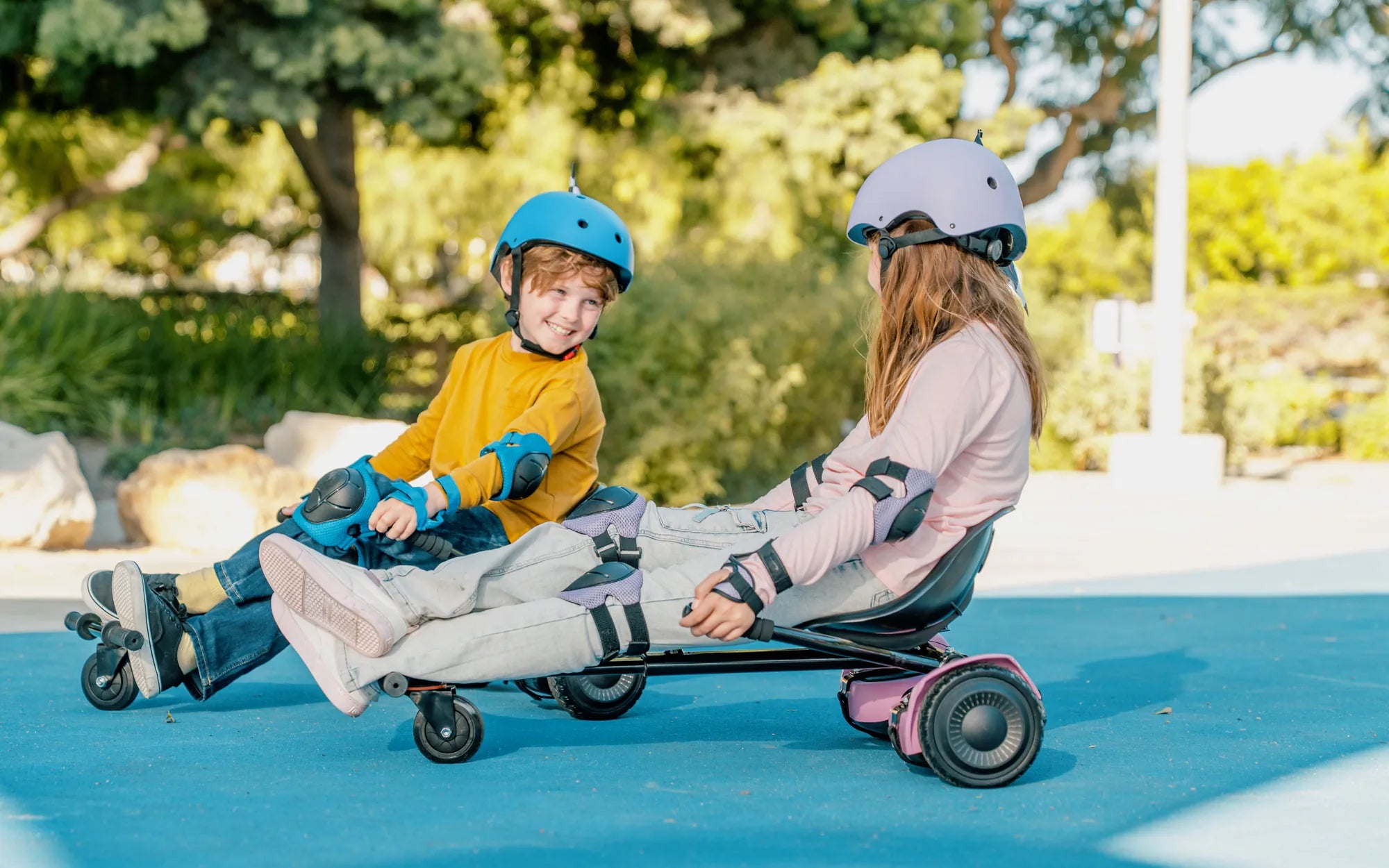
Before the first ride begins, a non-negotiable safety protocol must be established. This starts with personal protective equipment (PPE). A properly fitted helmet certified to ASTM or CPSC standards is mandatory. Elbow and knee pads are highly recommended, as falls are a likely part of the learning process. Closed-toe shoes with good grip are essential.
The riding environment must be carefully selected. Initiate training in a completely flat, smooth, and car-free area. An empty tennis court, basketball court, or a quiet cul-de-sac are perfect locations. The surface should be clean and dry, free of gravel, sand, or significant cracks that could catch a small wheel. This controlled environment allows the child to focus solely on operating the scooter.
A pre-ride mechanical check takes 60 seconds but is critical. Verify tire pressure (if applicable) and inspect for damage. Test the function of both the throttle and brake. Ensure the folding mechanism (if present) is fully locked. Confirm the battery has adequate charge so the scooter doesn't lose power unexpectedly mid-ride.
Teaching Moments: Establishing Rules and Supervision
The first lessons are not about speed, but about control and rules. Demonstrate and practice starting, gentle acceleration, and braking to a full stop while dismounted. Then, have your child walk alongside the scooter, operating the throttle and brake to develop muscle memory.
Establish clear, non-negotiable rules before the first solo push-off: always wear a helmet, never ride near roads or driveways, be hyper-aware of pedestrians and obstacles, use the brake to slow down (not dragging feet), and both feet must remain on the deck at all times. Constant, active adult supervision is required for every ride at this age. Position yourself where you can observe and intervene quickly, turning the session into a shared, focused activity.
Maintenance and Care: Ensuring Long-Term Safety and Fun
Regular maintenance is a safety practice. Before each ride, perform the quick mechanical check. Monthly, inspect the scooter more thoroughly: check for loose bolts or fasteners, examine brake pads for wear, ensure all electrical connections are secure and ports are covered, and look for cracks in the frame or deck.
Battery care is paramount for longevity and safety. Follow the manufacturer's charging instructions precisely. Use only the provided charger. Do not leave the battery to charge unattended or overnight once fully charged. Store the scooter and battery in a dry, temperate place, away from direct sunlight or extreme cold. Avoid draining the battery completely before recharging.
Keep the scooter clean by wiping it down with a damp cloth. Avoid high-pressure hoses which can force water into electrical components despite an IPX5 rating. Adhering to these simple practices not only extends the scooter's life but also ensures every component functions as designed, which is the core of ongoing safety. The 1-year warranty is a backup for defects, but proactive care is the primary tool.
Frequently Asked Questions (FAQs) for Concerned Parents
Q1: Is 6 years old too young for an electric scooter?
A: It can be an appropriate starting age for a mature, physically coordinated child under strict parental supervision and with a scooter specifically designed for beginners (low speed, stable build). It is not about age alone, but the child's individual readiness and the parents' commitment to training.
Q2: How do I know if the battery is safe?
A> Insist on scooters that explicitly state they use UL, CE, or RoHS-certified battery packs. These certifications mean the battery cells and management system have passed independent safety tests for electrical, mechanical, and thermal performance. Avoid any product with vague or no battery certification details.
Q3: Can the scooter handle slight inclines or grass?
A: A scooter with a 100W+ motor can typically handle gentle slopes. However, grass, gravel, or uneven terrain is challenging and unsafe for small-wheeled scooters, even with more power. It drastically increases the risk of losing traction and falling. Stick to smooth, paved surfaces for beginners.
Q4: What is the realistic range, and how does weight affect it?
A> Manufacturer range estimates are based on ideal conditions: lightweight rider, flat terrain, moderate speed. For a 6-year-old, expect 60-80% of the advertised range. Heavier weight, hills, frequent stopping/starting, and colder temperatures all reduce range. Teach your child to recognize the low-battery indicator.
Q5: What happens if we need repair support?
A> This highlights the importance of purchasing from a reputable brand with clear customer service channels. A company like Gyroor offers a 1-year warranty covering manufacturing defects. Before buying, review the brand's warranty policy and locate their service contact information. Understand what parts are user-replaceable and which require professional service.
Fostering Responsibility and Joy on Two Wheels
Introducing an electric scooter to a 6-year-old is a meaningful step that, when approached with diligence, fosters independence, physical activity, and responsible habit-building. The joy on a child's face from mastering a new skill is unparalleled, but it must be built on a foundation of safety-first engineering and engaged parenting. By prioritizing certified components like UL batteries, water-resistant construction, and adjustable speed limits, you select a tool designed for secure learning. The ultimate guide for parents emphasizes that the right scooter is not the fastest, but the one that best matches your child's abilities and your safety standards, enabling countless adventures under your watchful eye. For a curated selection of youth models built to these rigorous standards, browse the full Gyroor collection at gyroorboard.com.
Best Christmas Gift for Teenage Girls: Top Picks for 2023
2 Wheel Self Balancing Scooter: The Future of Personal Transportation