



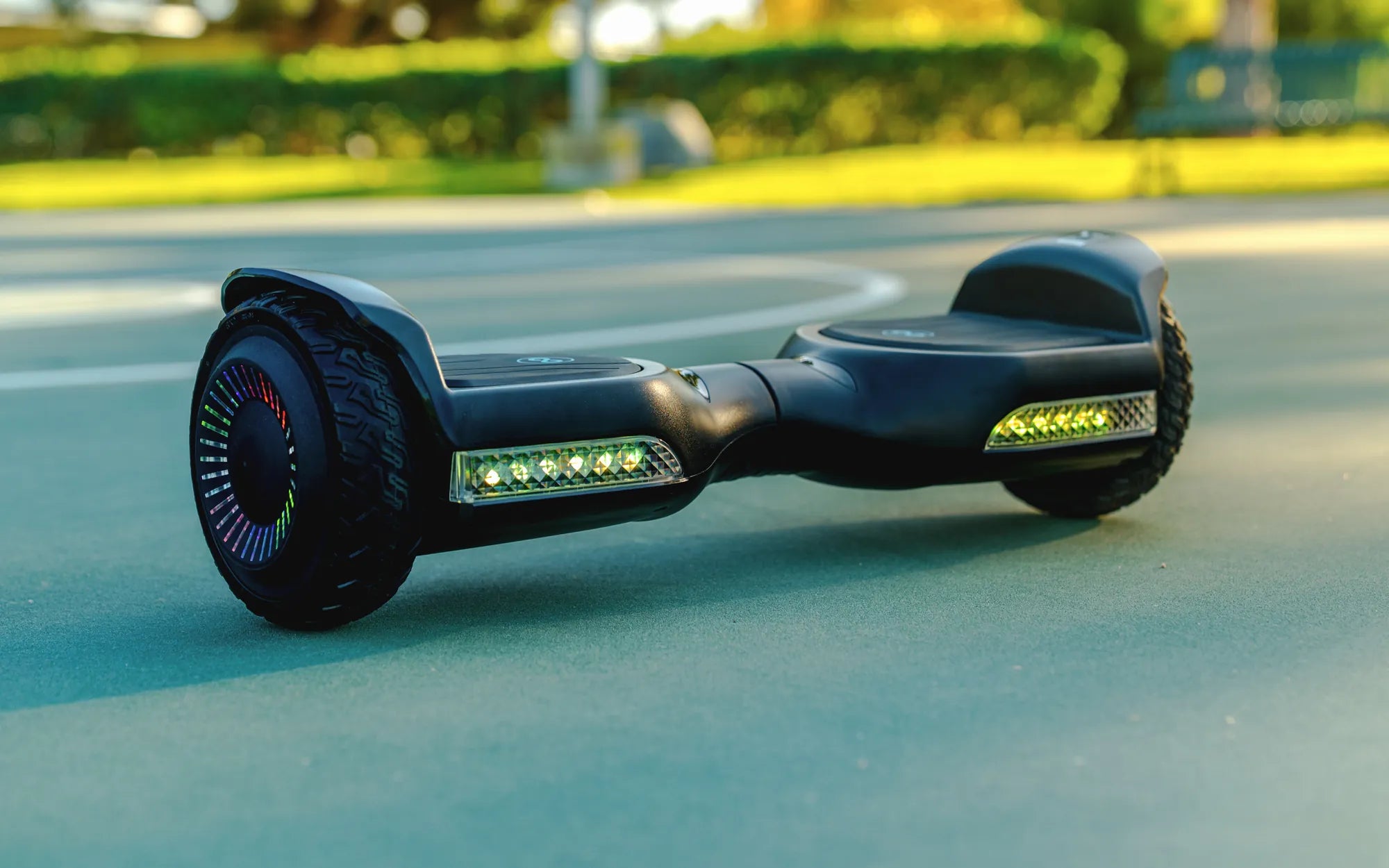
Finding a fun, exciting electric scooter that fits a family budget can be a real challenge for parents. The desire to provide that thrilling first taste of independent mobility often clashes with the high price tags of many popular models. This guide is dedicated to exploring the realistic possibilities of finding an electric scooter for kids under $90. We'll set clear expectations, highlight crucial safety benchmarks, and provide a practical framework for making a smart purchase. You'll learn what features are essential, where compromises are acceptable, and how brands like Gyroor—known for UL-certified batteries and robust safety standards—set the bar for what to look for, even in more affordable options.
Understanding the Sub-$90 Electric Scooter Market for Kids
The sub-$90 price point represents the entry-level tier for kids' electric scooters. It's crucial to understand what this budget typically includes and, more importantly, what it often excludes. Realistically, you can expect basic functionality designed for younger or first-time riders on flat, smooth surfaces.
Common specifications in this range often include lower-wattage motors (typically 80W to 120W), batteries with smaller capacities offering 30-60 minutes of ride time, and basic construction materials like aluminum alloy frames and polyurethane wheels. Advanced features such as suspension systems, digital displays, Bluetooth connectivity, or high-speed motors are almost always absent.
The primary trade-off at this price is between premium materials and advanced engineering versus fundamental, no-frills mobility. A key takeaway is that while features can be basic, core safety and build integrity should never be the compromise. A scooter must be fundamentally sound and appropriate for your child's size and skill level.
This market segment is highly competitive, with many brands vying for attention. This makes diligent research and a focus on verified, detailed customer reviews more important than ever to separate passable products from those that may be unsafe or fall apart quickly.
Key Features to Prioritize (and What to Compromise On)
When shopping in this category, a sharp focus on non-negotiable safety elements is paramount. The must-have features include a sturdy, wobble-free frame and stem, a reliable braking system (a rear foot brake is standard and effective for this age group), and stable, durable wheels (typically 5-6 inches in diameter).
You should also prioritize a speed that is appropriate for a child. For riders under 10, a maximum speed capped at or below 9 mph (15 km/h) is a safety feature, not a limitation. A low-speed start or kick-to-start function is also highly desirable, as it prevents sudden jerky acceleration.
Areas where you can safely compromise include riding range and charge time. A 5-mile range is often sufficient for neighborhood use. You can also compromise on extra features like LED light shows, audio systems, or app controls, which are nice-to-haves but not essential for safety or basic fun.
Never compromise on the quality of the brake, the integrity of the folding mechanism (if present), or the overall weight capacity. The scooter must support your child's weight with a significant margin for safety.
The Importance of Age-Appropriate Specifications
Matching the scooter to your child is the single most important factor for safety and enjoyment. A scooter that is too powerful or too large can be intimidating and difficult to control, while one that is too small will be outgrown quickly and may be unstable.
For children aged 5-8, look for scooters with a motor under 100W, a speed limit of 6-8 mph, and a low deck height for easy mounting. The weight capacity should be at least 120 lbs. For kids aged 9-12, motors up to 120W and speeds up to 10 mph may be appropriate, with a recommended weight capacity of 140 lbs or more.
Consider your child's coordination and experience with non-motorized scooters or bikes. An electric scooter is not the place to learn balance and steering fundamentals. They should be confident on a traditional scooter first.
The physical size matters. Your child should be able to comfortably stand on the deck with feet shoulder-width apart, reach the handlebars without overextending, and operate the brake and throttle easily. A proper fit ensures control and confidence.
How to Vet Safety and Quality on a Tight Budget
Scrutinizing product details and reviews becomes your most powerful tool when shopping with a budget constraint. Look for transparent specifications and real-world feedback from other parents. This practical checklist will help you separate potential gems from risky purchases.
Start with the product description. Reputable sellers will list specific details like motor wattage, battery voltage and capacity (in Ah or Wh), wheel material and size, and the type of braking system. Vague language like "powerful motor" or "long-lasting battery" without numbers is a red flag.
Examine all available product images closely. Look for solid construction at the stem hinge and where the deck meets the frame. Check the deck surface for a non-slip texture. Assess the overall finish and assembly quality shown in the photos.
Finally, and most importantly, dive into the customer reviews. Focus on verified purchase reviews that mention durability over time, battery performance in real use, and any recurring issues with components like brakes, throttles, or tires. A pattern of similar complaints is a major warning sign.
Deciphering Battery and Motor Claims
Battery safety is the most critical technical aspect. In the under-$90 range, explicit UL certification for the battery pack is rare, but you should still look for clues of responsible manufacturing. Specifications listing a reputable battery cell brand (like Samsung or LG) are a strong positive, though uncommon at this price.
Look for a stated battery capacity in Ampere-hours (Ah) or Watt-hours (Wh). A typical range is 4-5 Ah for a 24V system. Be wary of inflated claims of "20-mile range" on a small battery; for kid-sized scooters on flat ground, 5-7 miles is a more realistic maximum. The charger should be a certified, low-voltage model designed for the specific battery.
For the motor, a brushless DC motor is more efficient and longer-lasting than a brushed motor, though both are found in budget models. Motor power between 80W and 120W is standard and sufficient for kid-friendly acceleration and handling small inclines on driveways.
The key is to manage expectations: this motor power is designed for safe, controlled fun for a child, not for climbing steep hills or carrying adults. It should provide a smooth start and consistent power delivery, not a sudden jolt of acceleration.
Build Quality and Warranty: Reading Between the Lines
Physical durability is what determines whether the scooter lasts for one season or several. Pay close attention to the frame material. Aluminum alloy is standard and offers a good strength-to-weight ratio. The welding or joining points at the stem and deck should look clean and robust in product images.
The folding mechanism, if the scooter has one, is a critical stress point. It should have a secure locking pin or latch that is easy for an adult to operate but impossible for a child to accidentally release while riding. A wobbly stem is a sign of poor engineering and a safety hazard.
The warranty is a direct signal of the manufacturer's confidence in their product. A comprehensive 1-year warranty covering parts and labor, like the standard offered by Gyroor, is the gold standard. In the budget market, a 90-day to 6-month warranty is more common but still valuable.
A warranty, even a short one, provides a recourse if the scooter arrives defective or fails prematurely. The absence of any stated warranty is a significant risk, suggesting the seller does not stand behind the product's longevity or safety.
Top Considerations Before You Buy: A Parent’s Checklist
Combine all your research into this actionable checklist before making a final decision. Print it out or keep it handy on your phone while you shop online or in stores.
- Verify Age & Weight Suitability: Confirm the recommended age range and that the maximum weight limit exceeds your child's weight by at least 20-30 lbs for a safety margin.
- Check Core Safety Features: Ensure it has a responsive, easy-to-use brake (foot or hand) and a speed limit appropriate for your child's age (under 10 mph for most).
- Assess Build for Durability: Look for a non-slip deck, solid welds, a secure folding lock, and sturdy wheels (at least 5 inches, air-filled or high-quality PU).
- Research Battery & Charger Safety: Prefer models with clear battery specs (Volts and Ah). Ensure the charger is UL-listed or has other safety certifications.
- Read Verified Reviews for Real-World Performance: Look for patterns in reviews about battery life, component failure, and overall satisfaction after several weeks of use.
- Budget for Essential Safety Gear: The scooter cost must include a properly fitted CPSC-certified helmet. Knee and elbow pads are highly recommended for beginners.
Smart Shopping: Where to Find Reliable Deals Under $90
Knowing where to look can be as important as knowing what to look for. Major online retailers like Amazon and Walmart often have the widest selection and competitive pricing for entry-level models. Use their filtering tools to narrow by price, age range, and brand.
Check the "Deals" or "Clearance" sections of reputable sporting goods stores or toy retailers, especially during off-season periods like late fall or after major holidays. You might find last season's model from a known brand at a significant discount.
Consider certified refurbished options directly from established manufacturers or their authorized resellers. These products have been inspected, repaired if necessary, and often come with a short warranty, offering better value and more peace of mind than a brand-new model from an unknown source.
Exercise extreme caution with used scooters from online marketplaces or garage sales. The battery's health and history are unknown, and it could be degraded or damaged, posing a safety risk. Without a warranty and with potential hidden wear, the savings are rarely worth the potential hazard.
Comparison of Budget Scooter Features vs. Premium Benchmarks
| Feature | Typical Under-$90 Scooter | Premium Benchmark (e.g., Gyroor Youth Models) | Parent's Takeaway |
|---|---|---|---|
| Battery & Safety | Basic lithium-ion, often uncertified; 4-5 Ah capacity. | UL-Certified battery pack (e.g., Samsung/LG cells); higher capacity (7.5+ Ah). | Safety certification is paramount. Budget options require extra scrutiny of charger and battery specs. |
| Motor & Performance | 80W-120W brushless; max speed ~9 mph. | 150W-250W brushless; variable speed modes with parental controls. | Budget motors are sufficient for flat terrain and young riders. Premium offers more control and growth. |
| Build & Durability | Aluminum alloy frame; basic folding mechanism; PU wheels. | Aerospace-grade aluminum; patented locking mechanisms; pneumatic or reinforced PU tires. | Check weld points and stem stability rigorously on budget models. Premium builds are designed for heavier use. |
| Braking System | Rear foot brake (standard). | Dual braking (electronic + disc or foot brake). | Ensure the foot brake is responsive. Dual brakes offer superior safety but are a premium feature. |
| Warranty & Support | 90 days to 6 months limited warranty. | Comprehensive 1-year warranty on frame, motor, battery. | A warranty is crucial. Its length reflects expected durability. |
| Additional Features | Basic LED wheel lights. | App connectivity, cruise control, integrated lighting, suspension. | Budget for fun basics. Premium features enhance experience but aren't essential for safety. |
Frequently Asked Questions (FAQ) About Budget Kids' E-Scooters
Are electric scooters under $90 safe for my child?
They can be safe if you carefully select a model that prioritizes core safety features: a sturdy frame, a reliable braking system, an age-appropriate speed limit, and a proper weight capacity. Safety is determined by the product's design and build quality, not its price alone. Always supervise initial rides and insist on helmet use.
How long does the battery typically last on a budget scooter?
You can generally expect 30 to 60 minutes of continuous ride time per full charge, translating to a range of 4 to 7 miles on flat, smooth pavement. Battery performance will gradually decrease over its lifespan (typically 300-500 charge cycles). Always follow the manufacturer's charging instructions to maximize battery health.
What is the most important safety feature on a kids' electric scooter?
The most critical feature is a responsive, easy-to-operate braking system that your child can use instinctively. A close second is a speed that is appropriately limited for your child's age and skill level. These two factors directly influence the rider's ability to control the scooter and stop safely in any situation.
Can these scooters handle hills or rough pavement?
Capability is very limited. Most budget scooters with 80W-120W motors are designed for flat or gently sloped surfaces like sidewalks, driveways, and smooth park paths. They will struggle on steep hills and can be unstable on rough, cracked, or gravel-covered pavement, increasing the risk of falls.
Does Gyroor make scooters in this price range?
Gyroor focuses on engineering higher-performance, UL-certified electric scooters and e-bikes designed for older kids, teens, and adults, which positions them above the entry-level $90 price point. However, their commitment to battery safety, robust construction, and comprehensive warranties provides an excellent benchmark for the quality and safety standards parents should seek when evaluating any youth scooter, regardless of budget.
Conclusion: Balancing Budget, Fun, and Peace of Mind
Finding a worthwhile electric scooter for kids under $90 is a realistic goal with informed, careful selection. The key is to shift the focus from finding the most feature-packed option to identifying the most durable and safely constructed scooter that matches your child's current abilities. A successful purchase provides exciting independence for your child and tangible confidence for you.
Use the guidelines, checklists, and comparison data in this guide as your toolkit. Prioritize fundamental safety and build integrity over flashy extras. Remember that the best first e-scooter is one that encourages fun through security and control, setting the stage for a lifelong love of responsible riding.
When your young rider is ready for more power, range, and advanced features as they grow, exploring models built to higher safety and performance standards is the natural next step. For those future upgrades, consider the engineering and reliability trusted by over 100,000 riders. Browse the full Gyroor collection at gyroorboard.com to see how premium safety and performance are designed.
Why Is My Hoverboard Not Working? Troubleshooting Common Issues
How Long Should a Hoverboard Battery Last: A Complete Guide