



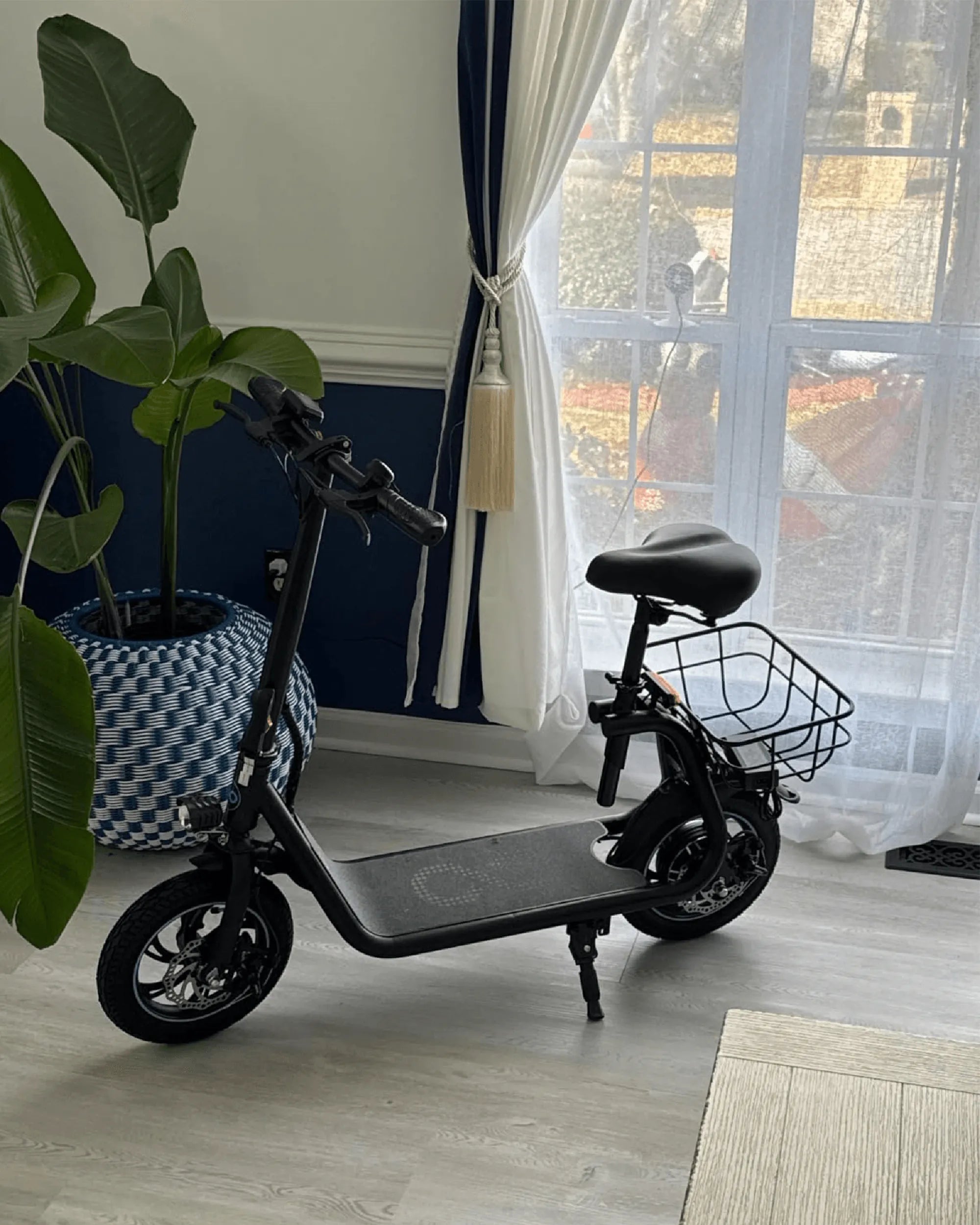
Introduction: Unleashing the 1600W Urban Commuter Revolution
For urban commuters tired of range anxiety on hills and sluggish acceleration in traffic, a new standard has emerged. The 1600W electric scooter delivers a transformative blend of muscle and utility, redefining what personal electric transportation can achieve. This isn't about raw speed alone; it's about accessible power that translates directly to real-world practicality and safety on complex city streets.
This guide will dissect exactly what makes Electric Scooters 1600W: Power, Performance, and Practicality for Urban Commuters such a compelling category. We'll move beyond marketing specs to explore how this wattage impacts your daily ride, from conquering steep inclines to ensuring you have power in reserve when you need it most. For brands leading in this space, like Gyroor, the focus extends beyond the motor to integrated systems—UL-certified batteries, water-resistant builds, and robust warranties—that make the power practical and trustworthy for over 100,000 riders.
What Does 1600W Really Mean? Decoding Motor Power
Wattage is the most cited—and often most misunderstood—specification for an electric scooter. A 1600W rating signifies a motor's power output capability, but it's crucial to distinguish between nominal and peak power. Nominal power is the continuous wattage the motor can sustain under normal load, while peak power is the maximum burst output, often reached during hard acceleration or on steep climbs.
A true 1600W nominal motor provides a substantial and consistent power base. This translates to tangible performance advantages over common 500W or 1000W commuter models. The higher wattage directly equates to greater torque, which is the rotational force that gets you moving. More torque means faster acceleration from a standstill and a much greater ability to maintain speed on an incline without straining the motor or rapidly depleting the battery.
In practical terms, while a 500W scooter might struggle on a 10% grade, slowing to a crawl, a 1600W model will maintain momentum, making hill-climbing a non-issue. This power reserve is not just about performance; it's about efficiency. A motor operating well within its limits on flat ground is quieter, runs cooler, and is less prone to wear than a lower-powered motor constantly pushed to its maximum.
The Gyroor Advantage: Engineering Power with Safety
Harnessing 1600W of power responsibly requires an engineering-first approach. Leading brands like Gyroor integrate high-output motors with systems designed for safety and longevity. The motor is not an isolated component; it must be perfectly matched with a high-discharge battery and a controller capable of managing the energy flow intelligently.
This is where Gyroor's commitment to UL-certified battery packs becomes critical. A powerful motor demands a battery that can deliver high current safely and consistently. UL certification involves rigorous testing for overcharge, short circuit, and thermal stability, ensuring the power source is as reliable as the motor it feeds. Furthermore, an IPX5 water-resistant rating means the scooter's electrical systems are protected against water jets from any direction, a key feature for all-weather commuters who might encounter rain-slicked streets.
This holistic design philosophy—where power, battery safety, and environmental protection are engineered in unison—is what separates a premium commuter vehicle from a mere powerful toy. It ensures that the performance you purchase on day one remains dependable for years of daily use.
Performance Deep Dive: Speed, Hills, and Range
Let's translate that 1600W rating into concrete riding expectations. A scooter in this class typically achieves a top speed of 25-35 mph (40-56 km/h), depending on local regulations, rider weight, and tuning. More importantly, its 0-15 mph (0-24 km/h) acceleration is brisk, often under 4 seconds, allowing you to merge confidently with urban traffic flow from a stoplight.
The most dramatic performance differentiator is hill-climbing capability. A robust 1600W motor can tackle gradients of 20-25% or more. To visualize, a 20% grade is a very steep hill that would challenge many cyclists. This capability effectively flattens your city, removing route planning constraints and opening up more direct paths to your destination.
Range is a function of battery capacity (measured in Watt-hours, Wh) and riding style. A 1600W scooter paired with a large 48V 20Ah (960Wh) battery can achieve a realistic range of 25-40 miles on a single charge. However, this is highly variable. Aggressive use of the higher speed and frequent hill climbing will consume more energy. Riding in a lower power mode on flatter terrain can significantly extend the distance. The table below compares key performance metrics across common motor power classes.
| Motor Power (Nominal) | Typical Top Speed | Hill Grade Capability | Real-World Range* | Best For Commuter Type |
|---|---|---|---|---|
| 350W - 500W | 15-18 mph | Up to 10% | 15-25 miles | Short, flat trips; ultra-portability |
| 800W - 1000W | 22-28 mph | Up to 15% | 20-30 miles | Moderate commutes with mild hills |
| 1600W | 25-35 mph | 20%+ | 25-40 miles | Longer commutes, hilly cities, riders seeking stability & power reserve |
*Range depends heavily on battery capacity, rider weight, terrain, and speed.
Power vs. Practicality: The Commuter's Balance
A common question arises: Is 1600W overkill for city commuting? The answer lies in redefining practicality. Practicality isn't just about portability; it's about capability and safety. Having substantial power in reserve is a practical safety feature. It allows for quick, decisive acceleration to avoid a potential hazard, to cross an intersection swiftly, or to match the speed of traffic when necessary.
Furthermore, a motor that isn't stressed provides a smoother, more controlled ride. The scooter feels stable and confident at cruising speeds. This reduces rider fatigue and increases overall enjoyment. The ability to climb any hill without a second thought is the ultimate practical luxury for an urban commuter, ensuring your travel time is consistent and predictable, regardless of the route's topography.
Key Features to Look for in a 1600W Commuter Scooter
A powerful motor is the heart of the scooter, but it requires a capable body. When evaluating a 1600W model, these features are non-negotiable for a safe, durable, and practical ownership experience. They form the checklist that separates a well-engineered vehicle from a poorly integrated one.
First, the braking system must be paramount. High speeds and high weight demand exceptional stopping power. Look for a dual or triple braking system, ideally combining a front hydraulic or mechanical disc brake with a rear disc or drum brake and electronic regenerative braking. This provides redundancy and maximum control.
Suspension and tires are critical for handling and comfort. A dual or front suspension system absorbs road imperfections, maintaining tire contact and control. Pneumatic (air-filled) tires offer superior shock absorption and traction compared to solid tires, especially on wet or uneven surfaces. Finally, build quality is evident in the frame material (aircraft-grade aluminum is standard), welding, and overall finish. A sturdy deck and stem with minimal flex at speed inspire confidence.
Battery & Range: The Power Source
The battery is the fuel tank for your electric scooter. For a 1600W motor, you need a high-capacity, high-quality battery. Capacity is measured in Watt-hours (Volts x Amp-hours = Wh). A larger Wh number means more potential range. For serious commuting, look for batteries in the 700Wh to 1000Wh range.
Quality is even more critical than capacity. This is the component where cutting corners is dangerous. Insist on a battery pack from a reputable manufacturer with clear safety certifications. Gyroor's use of UL-certified lithium-ion packs is a benchmark. These batteries are designed for hundreds of charge cycles with minimal degradation and include multiple protection circuits against overcharge, over-discharge, and short circuits. A quality battery not only ensures safety but also delivers consistent performance and longevity, protecting your investment.
Braking & Control: Taming the Power
With great power comes the need for great stopping power. The kinetic energy of a scooter and rider moving at 30+ mph is significant. A single, inadequate brake is a major safety risk. A comprehensive braking system is essential for a 1600W scooter.
A preferred setup includes a hydraulic disc brake on the front wheel and a mechanical disc or drum brake on the rear. Hydraulic brakes offer superior modulation (control over braking force) and require less maintenance than mechanical cables. Electronic (regenerative) braking adds another layer, often activated by the throttle release, which helps slow the scooter while putting a small charge back into the battery. This multi-brake system ensures you can stop powerfully, progressively, and safely in all conditions.
Build Quality & Warranty: Investing in Durability
The forces generated by a powerful motor demand a robust chassis. Look for a scooter with a reinforced stem, a wide, rigid deck, and solid folding mechanisms. Play or wobble in the stem at high speed is unnerving and dangerous. High-quality components like name-brand tires, precise throttle control, and bright, reliable lighting are indicators of a well-built machine.
This is where the manufacturer's warranty and support become a direct reflection of their confidence in the product's durability. A comprehensive 1-year warranty on the motor, battery, and frame, like that offered by Gyroor, provides essential peace of mind. It signals that the company stands behind the integration of its powerful components and is committed to supporting you long after the purchase. For a daily commuting tool, this support is not a luxury; it's a practical necessity.
The Urban Commuter's Verdict: Who is the 1600W Scooter For?
The 1600W electric scooter is the ideal tool for a specific, and growing, type of urban rider. It is for the commuter with a journey of 5-15 miles each way, especially in a city with notable hills like San Francisco, Seattle, or Pittsburgh. It's for the rider who values a stable, car-like presence on bike lanes and shared paths, and who doesn't want to worry about whether their scooter can handle the next incline.
It's also perfect for heavier riders (over 220 lbs / 100 kg) who need the extra torque for adequate acceleration and hill climbing. Conversely, it is likely overkill for someone with a very short (under 2-mile), completely flat commute where ultra-portability and lower cost are the highest priorities. For them, a lighter, lower-wattage model may suffice. The 1600W class is for those who view their scooter as a primary transportation solution and refuse to compromise on performance, safety, or range.
Frequently Asked Questions (FAQs)
Q: Is a 1600W electric scooter legal for use on city streets and bike lanes?
A>Legality varies by municipality, state, and country. Many regions regulate electric scooters by top speed (often 15-20 mph) rather than motor wattage. Most 1600W scooters have speed modes that can be limited to comply with local laws. It is the rider's responsibility to know and obey the regulations in their area regarding speed limits, helmet use, and where scooters are permitted to operate.
Q: How does the increased power affect the scooter's weight and portability?
A>Increased power and the larger required battery do add weight. A typical 1600W commuter scooter weighs between 55-75 lbs (25-34 kg). While this makes lifting and carrying more challenging, most models in this class feature a robust folding mechanism and often a hook or trolley function to roll the scooter when folded. They are designed for "last-meter" portability (into an office or onto transit) rather than frequent carrying up multiple flights of stairs.
Q: Are 1600W scooters like those from Gyroor safe for rainy day commuting?
A>With an IPX5 water resistance rating, Gyroor scooters are protected against low-pressure water jets from all directions, making them safe for riding in rain and through puddles. However, no electric scooter is fully waterproof or submersible. It is always advised to avoid deep standing water, dry the scooter after a wet ride, and never charge it while it is wet. Proper water resistance is a key feature that makes a powerful scooter a practical all-weather vehicle.
Q: What is the real-world maintenance difference between a 1600W scooter and a less powerful one?
A>The core maintenance principles are similar: keeping tires properly inflated, checking brake function, and keeping the scooter clean. However, due to higher speeds and stresses, wear items on a 1600W scooter may need more frequent attention. Brake pads may wear faster, and tires may need replacement sooner. The mechanical components, like folding mechanisms and bearings, should be checked periodically for tightness. The benefit of a brand with strong support is access to spare parts and clear maintenance guides.
Q: Can I carry a 1600W scooter on public transportation?
A>Policies vary greatly by transit authority. The size and weight of a folded 1600W scooter may be an issue during peak hours on buses or trains. Some systems have explicit rules about electric vehicle batteries. Always check with your local transit agency's regulations regarding electric scooters before planning a multi-modal commute.
Conclusion: Power Meets Purpose on Your Daily Ride
The 1600W electric scooter category delivers a definitive answer for commuters who have outgrown the limitations of entry-level models. It represents the sweet spot where exhilarating power converges with everyday practicality. This isn't just about going faster; it's about riding with more confidence, conquering any urban terrain, and arriving at your destination consistently and without compromise. The power reserve enhances safety, the performance expands your route options, and the robust build ensures reliability.
Choosing a scooter in this class requires a focus on the total system—not just the wattage figure. It demands a commitment to quality brakes, a high-capacity safe battery, water-resistant construction, and a manufacturer that supports its product. For those ready to upgrade their commute, the combination of power, performance, and practicality offered by a well-engineered 1600W scooter is unmatched. Discover how a scooter built to this standard can transform your urban travel. Browse the full Gyroor collection at gyroorboard.com to explore models that bring this powerful, practical vision to life.
Common Troubleshooting Problems With Electric Scooters Not Moving: A Complete Guide
Why Are Electric Scooters Illegal in the UK? Exploring the Legal Landscape