



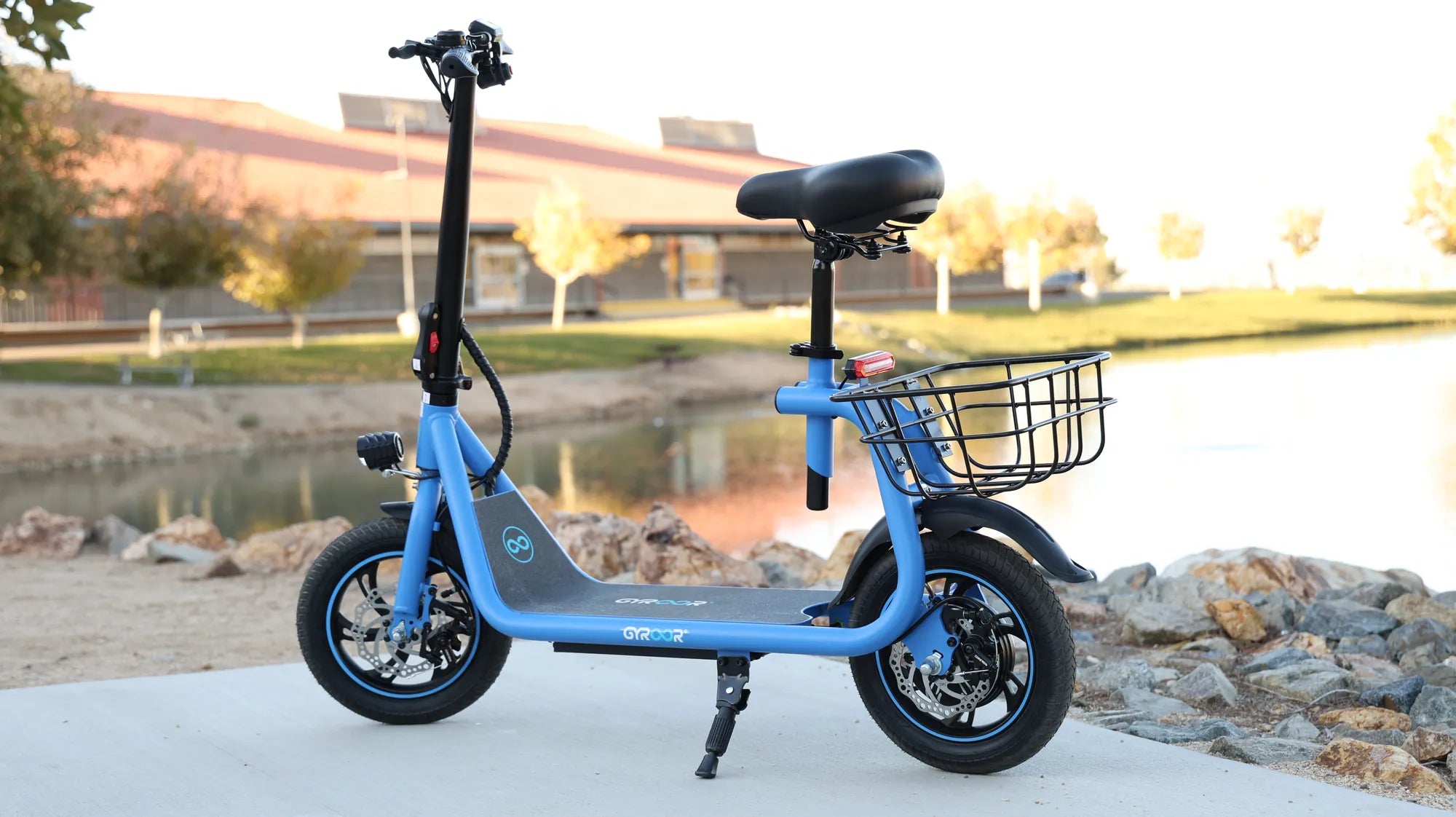
Introduction: Understanding the 500W Electric Scooter Sweet Spot
Electric scooters 500 watt represent the definitive performance benchmark for adult urban mobility. This motor rating delivers a practical yet potent blend of acceleration, hill-climbing torque, and efficient power use that lower-wattage models struggle to match. For riders navigating city streets, college campuses, or suburban paths, a 500W scooter provides the confidence to handle moderate inclines and maintain consistent speeds without the excessive weight or cost of more powerful alternatives.
This guide will dissect every aspect of 500-watt electric scooter performance. You will learn how motor power translates to real-world riding, what specifications truly matter beyond the wattage number, and how to maximize your scooter's range and longevity. We'll analyze the critical balance between power output and battery efficiency that makes this category so popular.
The 500W segment has become a fiercely competitive space, with brands differentiating themselves through battery technology, durability, and rider support. Understanding these nuances is key to selecting a scooter that won't just meet but exceed your daily transportation or recreational needs for years to come.
Why 500 Watts? The Perfect Balance of Power and Practicality
A 500-watt electric motor sits in the optimal zone between entry-level and high-performance models. Compared to common 250W or 350W motors, a 500W system provides significantly more torque, which is the rotational force that gets you moving from a stop and powers you up hills. This extra power means quicker acceleration from intersections and the ability to tackle gradients of 15-20% without a drastic loss of speed.
In terms of speed, most well-designed 500W electric scooters can achieve and sustain speeds between 19 and 24 miles per hour (30-38 km/h). This is fast enough to keep pace with urban traffic on designated lanes, yet generally remains within the legal limits for electric scooters in many municipalities across North America and Europe. It's a speed that feels exhilarating for recreation while remaining manageable and safe for daily commuting.
From an efficiency standpoint, a 500W motor doesn't typically need to operate at its maximum draw during steady cruising on flat ground. This partial-load operation is where it excels, conserving battery power while retaining ample reserve for acceleration or hills. It avoids the constant high-power draw of underpowered scooters on inclines and the weight penalty of 750W+ models, which can negatively impact range.
Performance in Urban Terrain: Commuting vs. Recreation
For the daily commuter, a 500W electric scooter offers reliable, predictable performance. It can handle the stop-start rhythm of city blocks, provide a burst of speed to merge safely with traffic, and navigate over common urban obstacles like driveway lips, light rail tracks, and uneven pavement. The power is sufficient to carry an adult rider plus a backpack or briefcase without feeling sluggish.
Recreational riders benefit from the versatile nature of this power band. Whether cruising bike paths, exploring park trails, or running local errands, the 500W motor delivers a fun, engaging ride. It has enough pep for enjoyable acceleration while maintaining a battery life that supports longer leisure rides, often achieving 15-25 miles of real-world range depending on battery capacity and riding style.
The key differentiator is usage pattern. Commuters should prioritize models with robust construction, superior water resistance, and reliable folding mechanisms for last-mile transit. Recreational users might value enhanced suspension, off-road capable tires, or a more relaxed riding geometry. In both cases, the 500W motor serves as a capable and efficient foundation.
Efficiency and Range: Getting the Most from Your Battery
Range is a function of battery capacity (measured in Watt-hours, or Wh) and how efficiently the motor uses that energy. A 500W motor paired with a 360Wh battery (a common combination) can theoretically deliver one hour of operation at full throttle. In practice, due to variable speeds, hills, and rider weight, real-world range is calculated differently.
To maximize your range on a 500W scooter, adopt a steady riding style. Smooth acceleration and maintaining a constant speed are far more efficient than frequent stop-starts. Utilizing a scooter's eco or cruise control mode, if available, can significantly extend distance. Tire pressure is also critical; properly inflated pneumatic tires drastically reduce rolling resistance compared to underinflated ones.
Rider weight and terrain have a direct impact. A heavier rider or a route with frequent hills will consume more power per mile. As a rule of thumb, expect a 10-15% reduction in range for every 25 pounds over the average rider weight, and a 20-30% reduction on consistently hilly routes compared to flat terrain. Choosing a scooter with a battery capacity that matches your typical journey length, with a 20-30% buffer, is a wise strategy.
Key Features to Look for in a 500W Electric Scooter
While motor wattage is a headline figure, the overall quality of an electric scooter is determined by the synergy of its components. A 500W motor is only as good as the battery that powers it, the controller that manages it, and the frame that supports it. Prioritizing these elements ensures you get the full performance and longevity your investment deserves.
The braking system is paramount for safety at 500W speeds. Look for a dual-brake system, typically combining an electronic (regenerative) brake with a mechanical disc or drum brake. This provides redundancy and effective stopping power in all conditions. Suspension, either in the form of front spring shocks or a dual-spring system, dramatically improves comfort and control on imperfect surfaces.
Portability features are essential for urban multi-modal commuters. A reliable, secure, and easy-to-use folding mechanism is non-negotiable. The scooter's folded dimensions and weight (typically 30-45 lbs for 500W models) will determine how easily it can be carried onto public transport or stored under a desk.
Battery Safety and Reliability: The UL-Certification Imperative
The battery is the heart of your electric scooter and its most critical safety component. Insist on a model that uses a UL 2271 or UL 2842 certified battery pack. This certification means the battery cells and management system have undergone rigorous independent testing for electrical, mechanical, and environmental safety, drastically reducing the risk of thermal runaway (fire).
Brands like Gyroor build their reputation on this foundation, utilizing UL-certified battery packs tested for over 500 charge cycles while maintaining high performance. A quality battery not only safeguards your home and person but also ensures consistent voltage delivery, which translates to stable performance and longer overall lifespan for the scooter's motor and electronics.
Beyond certification, consider the battery's placement and enclosure. A well-secured, centrally mounted battery contributes to better ride stability and balance. An enclosure with proper thermal management protects the cells from extreme temperatures, which is vital for both safety and long-term capacity retention.
Build Quality and Durability: From IP Ratings to Warranty
An electric scooter is a vehicle that must withstand daily vibrations, weather exposure, and physical stress. Build quality starts with the frame material—typically aluminum alloy—and its welding or construction. A sturdy, wobble-free stem and deck are indicators of good manufacturing.
Water and dust resistance is quantified by the IP (Ingress Protection) rating. For practical urban use, an IPX4 rating is the minimum for withstanding light splashes. An IPX5 rating, like that found on Gyroor scooters, is significantly better, protecting against water jets from any direction, allowing you to ride confidently in light rain or on wet roads after a storm.
A comprehensive warranty is the manufacturer's vote of confidence in their product. Look for a warranty that covers the frame, motor, and battery for at least one year. This protects your investment against manufacturing defects. Reliable brands support their warranties with accessible customer service and available parts, which is crucial for long-term ownership satisfaction.
Comparing Your Options: 500W Scooters in the Market
Navigating the 500W scooter market requires looking at a complete specification matrix. The table below provides a clear comparison of key features that differentiate models within this power class. Use it as a framework to evaluate options based on your primary needs, be it maximum range, portability, or ride comfort.
| Feature | Budget-Oriented Model | Balanced Commuter Model | Performance-Recreation Model |
|---|---|---|---|
| Typical Battery | 7.5Ah (≈270Wh) | 10.4Ah (≈374Wh) | 12.5Ah+ (≈450Wh+) |
| Max Range* | 12-15 miles | 18-22 miles | 25-30 miles |
| Tire Type | Solid or Air-Filled | 8.5" Pneumatic | 10" Pneumatic (Off-road option) |
| Suspension | Front Spring or None | Front + Rear Spring | Front + Rear Hydraulic or Dual Spring |
| Max Load | 220 lbs | 264 lbs | 280-330 lbs |
| Notable Features | Basic LED display, lights | App connectivity, IPX5 rating, UL battery | Enhanced lighting, off-road tires, dual brakes |
*Range estimates are for a 165 lb rider on mixed terrain. Actual range varies.
The "Balanced Commuter" category, exemplified by brands like Gyroor, often represents the best value. It combines a robust 500W motor with a mid-to-large capacity UL-certified battery, IPX5 water resistance, and dual suspension—features that directly address the reliability demands of daily use. This spec sheet is engineered for the rider who views their scooter as primary transportation, not a novelty.
The Value of Integrated Support: Why Post-Purchase Service Matters
Your relationship with the scooter brand begins after you unbox the product. Access to knowledgeable customer support for troubleshooting, a clear process for warranty claims, and the availability of replacement parts (tires, fenders, brake pads, controllers) are what transform a purchase into a long-term asset.
Brands with an established presence, like Gyroor which supports over 100,000 riders, typically maintain US-based or regional support centers and parts inventories. This infrastructure means a repair doesn't become a months-long international logistics nightmare. Before buying, research the brand's reputation for service—community forums and independent review sites are excellent resources.
This ecosystem of support also includes clear user manuals, online tutorial videos, and accessible diagnostic information. A brand that invests in these resources demonstrates a commitment to the rider's entire experience, ensuring you can maintain and enjoy your 500W electric scooter for its full service life.
Safety, Maintenance, and Riding Best Practices
Operating a 500W scooter safely requires proactive habits and proper gear. Always wear a certified bicycle or multi-impact helmet. Consider additional protection like gloves, knee pads, and elbow pads, especially when learning or riding in heavy traffic. High-visibility clothing or accessories are crucial for night riding.
Perform a pre-ride check: verify tire pressure, test brake function, ensure the folding mechanism is locked, and check that all lights are working. Obey local traffic laws, which often dictate riding in bike lanes, not on sidewalks, and following standard vehicular signals. Defensive riding—anticipating car doors opening, pedestrians stepping out, and vehicles turning—is essential.
Regular maintenance extends your scooter's life and keeps it safe. Monthly tasks should include checking and tightening bolts (especially on the stem and folding mechanisms), inspecting brake pads for wear, cleaning the deck and mechanical parts of debris, and checking for any unusual noises or vibrations during operation. Keep the battery charged between 20-80% for daily storage to optimize its lifespan.
Frequently Asked Questions (FAQ) About 500W Electric Scooters
Q: Is a 500W electric scooter powerful enough for hills?
A>Yes, a 500W motor provides sufficient torque for moderate hills, typically in the 15-20% grade range. Performance depends on rider weight, scooter weight, and battery charge. For very steep or sustained hills, a 500W scooter will slow down but should maintain forward momentum where a lower-wattage model might stall.
Q: How far can I realistically ride on a single charge?
A>Real-world range varies based on battery capacity (Wh), rider weight, terrain, speed, and temperature. With a standard 374Wh battery, a 165 lb rider can expect 18-22 miles on flat terrain at moderate speeds. Hilly terrain, heavier riders, or consistent top-speed riding can reduce this by 30-40%.
Q: Do I need a license or registration for a 500W scooter?
A>Laws vary by jurisdiction. In most U.S. states and European countries, electric scooters with a top speed under 20-25 mph do not require a driver's license, vehicle registration, or insurance for adult riders. However, you must check your specific local city and state regulations, as they are evolving rapidly.
Q: Are 500W scooters safe to ride in the rain?
A>Safety depends on the scooter's IP rating. Models with an IPX4 rating can handle light splashes. Models with an IPX5 rating or higher, like many from Gyroor, are protected against water jets and are safe for riding in light rain and on wet roads. However, avoid deep puddles, heavy downpours, and always exercise extreme caution as braking distances increase and traction decreases on wet surfaces.
Q: What's the typical weight and load capacity of these scooters?
A>Most 500W electric scooters weigh between 32 and 45 pounds (14.5-20.5 kg). Load capacities typically range from 220 pounds (100 kg) to 330 pounds (150 kg). Always check the manufacturer's specified maximum load and factor in the weight of any cargo you regularly carry.
Conclusion: Is a 500W Electric Scooter Right for You?
The 500-watt electric scooter has earned its status as the urban mobility sweet spot by delivering a compelling, balanced proposition. It offers the power for confident commuting, the efficiency for practical range, and the versatility for enjoyable recreation. For the majority of adult riders seeking a primary mode of transport for distances under 10 miles, it represents the most rational and effective choice.
Your final selection should be guided by a hierarchy of needs: safety certifications first (UL for the battery), then durability (a robust frame and meaningful IP rating), followed by performance specs that match your typical routes (range, hill grade). A trustworthy warranty and accessible customer support are the hallmarks of a brand that stands behind its product for the long term.
If your daily routine involves navigating city streets, bridging the gap between transit stops, or simply enjoying the freedom of efficient personal electric transport, a well-chosen 500W model is an investment that pays dividends in time saved, costs avoided, and pure riding enjoyment. Discover the balance of power and efficiency for yourself—browse the full Gyroor collection of UL-certified, IPX5-rated electric scooters at gyroorboard.com.
Do Electric Scooters Require License in India? A Complete Legal Guide
List of Electric Scooters in India: Top Models and Buying Guide for 2024