



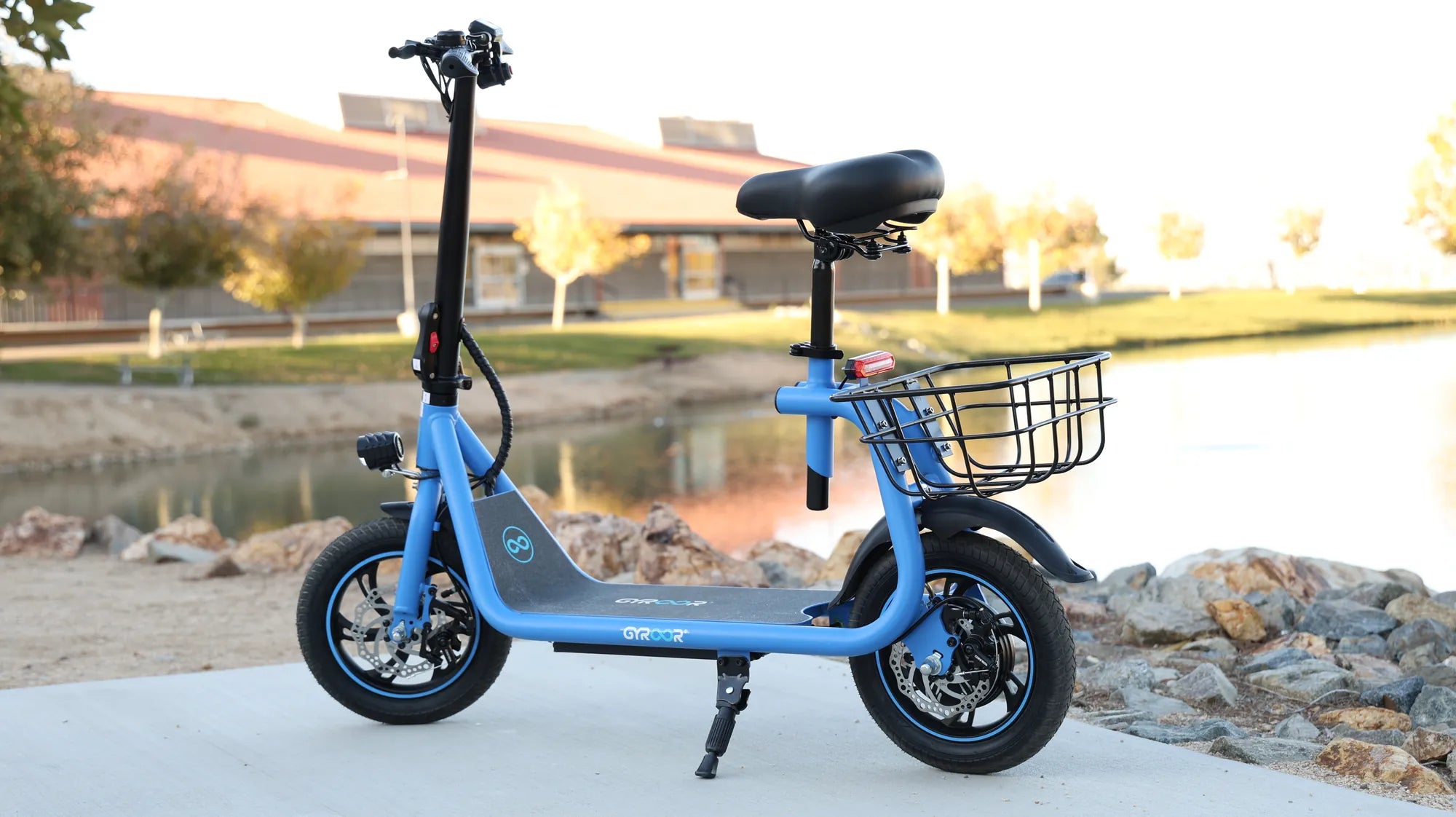
The 80 mph Electric Scooter – Redefining Speed and Urban Mobility
The emergence of electric scooters capable of 80 mph marks a paradigm shift in personal electric vehicles (PEVs). No longer confined to last-mile solutions or casual recreation, these machines challenge the very definition of urban transport, offering motorcycle-rivaling performance in a compact, emissions-free package. This evolution speaks to growing demand for rapid, efficient personal mobility that bypasses traditional traffic congestion.
For commuters and enthusiasts alike, the promise of an electric scooter 80 mph capable is compelling. It transforms a 20-mile commute from a lengthy ordeal into a sub-20-minute journey, assuming legal and safe pathways exist. This performance tier represents the bleeding edge of PEV technology, where advanced materials, sophisticated electronics, and high-density power systems converge.
Brands like Gyroor are at the forefront of this innovation, developing platforms that prioritize not just raw speed but integrated safety and reliability. The conversation around electric scooters 80 mph must balance the undeniable thrill and utility of high speed with a sober assessment of infrastructure, regulation, and rider responsibility. This article provides a comprehensive, data-driven exploration of this fascinating niche.
The future of high-speed urban mobility isn't just about going faster; it's about smarter engineering, enhanced safety systems, and a clear understanding of where such performance is appropriate. We will dissect the technology, applications, and realities of owning and operating an electric scooter 80 mph model.
The Technology Behind the Speed: Engineering an 80 mph E-Scooter
Achieving a stable, controllable 80 mph on a scooter platform is an immense engineering challenge far beyond typical e-scooter design. It requires a holistic approach where every component is upgraded to handle extreme stresses. The core triad enabling this performance is a high-output powertrain, an ultra-robust chassis, and a sophisticated battery system capable of immense discharge rates.
The powertrain typically features dual high-torque hub motors, often exceeding 2000W each, or a single powerful mid-drive motor. Combined peak power can reach 5000W or more. This power is meaningless without control; thus, advanced sine-wave or FOC (Field Oriented Control) controllers are essential for smooth, efficient power delivery and heat management. Gearless direct-drive or planetary gear systems must be precision-engineered for high RPMs.
The battery system is the heart of the performance. To sustain 80 mph, the scooter must draw immense current. This necessitates high-performance, UL-certified lithium-ion battery packs using premium cells (like LG, Samsung, or Panasonic) with high discharge ratings (C-rates). Battery management systems (BMS) must be exceptionally robust to monitor cell health, temperature, and voltage sag under extreme load, preventing catastrophic failure.
Chassis and suspension are equally critical. The frame is constructed from aerospace-grade aluminum alloys or reinforced steel, employing truss or monocoque designs for torsional rigidity. A long wheelbase and low center of gravity enhance high-speed stability. Suspension transitions from basic spring or rubber systems to high-performance hydraulic or air forks and shocks, with adjustable preload and damping to absorb road imperfections at speed.
Finally, braking systems are paramount. Cable-actuated disc brakes are wholly inadequate. High-performance electric scooters 80 mph models employ full hydraulic disc brakes with large, vented rotors (often 160mm+) and multi-piston calipers. Regenerative braking assists but is not a primary stopping mechanism at these speeds. This entire technological ecosystem must work in perfect harmony to deliver safe, repeatable performance.
Safety Systems at High Velocity
At 80 mph, safety is engineered, not an afterthought. Beyond the robust chassis and brakes, electronic safety systems become the rider's digital guardian. Advanced Electronic Stability Control (ESC) or traction control systems prevent wheel slip during acceleration by modulating power, while anti-lock braking systems (ABS) prevent wheel lock-up during hard stops, maintaining steering control.
Lighting and visibility are non-negotiable. High-speed scooters feature ultra-bright LED headlights (1000+ lumens), often with multiple beams (low/high), accompanied by daytime running lights (DRLs). Brake lights are integrated with the braking system and are highly visible. Turn signals and reflective accents are standard. The electrical system must be sealed to a high ingress protection rating; an IPX5 water-resistant rating, as found on Gyroor models, ensures reliability in rain and wet conditions.
Tire technology is specialized. Unlike standard commuter scooter tires, high-speed models use wide, tubeless, street-performance tires with specific rubber compounds for grip and durability at high speeds. Some may even feature reinforced sidewalls or run-flat technology. The rider interface—the deck—is large, textured, and designed for a secure, planted stance, often with rubberized or grip-tape surfaces.
These integrated systems—electronic, mechanical, and structural—create a safety net. However, they complement, never replace, rider skill and protective gear. The engineering philosophy for an electric scooter 80 mph model must treat safety as the primary performance metric, with speed as a controlled output of that safe platform.
Practical Applications: Who Needs an 80 mph Scooter and Where Can You Ride It?
The practical use case for an 80 mph electric scooter is highly specialized. It is not a tool for the casual rider or typical urban errand-runner. Its primary users are performance enthusiasts, long-distance commuters with access to appropriate roads, and individuals in regions with permissive PEV laws who seek a car alternative for medium-range travel. The appeal lies in combining the agility and parking ease of a scooter with the open-road capability of a motorcycle.
For the enthusiast, the application is often recreational or for closed-course use. Similar to high-performance sports bikes, the thrill of acceleration, top speed, and handling on a private track or designated area is the primary draw. These riders value the engineering, the performance metrics, and the pure riding experience that an electric scooter 80 mph model delivers, often investing in full racing gear and treating the machine as a high-end hobbyist vehicle.
The realistic commuter application exists only under specific conditions: a rider with a longer-distance commute (15-40 miles) where a significant portion can be traveled on roads with higher speed limits (40-55 mph), and where local law explicitly permits such high-powered PEVs. In this scenario, the scooter's ability to safely keep pace with traffic, rather than be a hindrance in bike lanes, is a major safety and practicality benefit.
It is crucial to understand that for the vast majority of urban and suburban environments, an 80 mph capability is excessive and illegal to use. Their true utility is as a versatile performance vehicle: capable of low-speed maneuvering when needed but with a vast reserve of power for appropriate zones. This duality defines their niche appeal, serving a rider who demands maximum performance for specific segments of their journey.
Legal Landscape and Regulatory Considerations
The legal framework for high-speed electric scooters is complex and restrictive. In nearly all jurisdictions in North America and Europe, vehicles are classified by maximum speed, power output, and sometimes vehicle weight. Most standard e-scooter laws cap speed at 15-25 mph for use on bike lanes or roads.
An electric scooter 80 mph model almost always exceeds every threshold for a "low-speed electric bicycle" or standard e-scooter. It typically falls into the legal category of a moped, motorized scooter, or even a motorcycle. This triggers a host of requirements: a driver's license (often a motorcycle endorsement), vehicle registration, license plates, insurance, and mandatory helmet use (usually a DOT-certified full-face motorcycle helmet).
In the United States, state laws vary wildly. Some states have no explicit law for such powerful scooters, creating a legal gray area, while others explicitly ban them from public roads if not registered as motorcycles. In the European Union, vehicles exceeding 25 km/h (15.5 mph) and 250W are generally classified as L1e-B (moped) or L3e (motorcycle), requiring type-approval, registration, and insurance.
Prospective buyers must conduct meticulous local research. Assuming a high-performance scooter can be ridden like a standard model is a grave error with legal, financial, and safety consequences. Responsible ownership means understanding and adhering to the regulations that classify your vehicle, which for an strong>electric scooter 80 mph model, is almost certainly as a motor vehicle.
Performance Deep Dive: 80 mph Scooters vs. Standard Commuter Models
To understand the gulf between performance tiers, a direct comparison of specifications is revealing. The following table contrasts the typical profile of a high-speed performance scooter with that of a robust commuter model and a mainstream entry-level option.
| Specification | High-Performance (80 mph Target) | Advanced Commuter (e.g., Gyroor F1 Pro) | Entry-Level Commuter |
|---|---|---|---|
| Top Speed | 70-85 mph | 25-28 mph (Class 3) | 15-18 mph |
| Max Range* | 40-70 mi (varies heavily with speed) | 35-45 mi | 15-20 mi |
| Motor Power | Dual 2000W+ (5000W+ peak) | Single 500W-750W (Peak 1000W+) | Single 250W-350W |
| Battery Capacity | 60V 30Ah+ (1800Wh+) | 48V 15Ah (720Wh) | 36V 7.5Ah (270Wh) |
| Braking System | Hydraulic Disc (Dual) + ABS | Mechanical or Hydraulic Disc | Electronic + Drum |
| Suspension | Full Hydraulic, Adjustable | Front Spring / Rear Shock | Basic Spring or None |
| Weight | 80-120 lbs | 45-65 lbs | 30-40 lbs |
| Primary Use Case | Performance / Long-Range Commute (where legal) | Daily Urban Commuting | Last-Mile / Short Trips |
| Legal Classification | Moped / Motorcycle | Class 3 E-Bike / Regulated E-Scooter | Class 2 E-Bike / Standard E-Scooter |
*Range is highly dependent on rider weight, terrain, and speed. High-performance scooter range at 80 mph is a fraction of its range at 20 mph.
The data shows a clear stratification. High-performance electric scooters 80 mph models are in a different league regarding power, weight, and component quality. They are engineered for different stresses and a different riding experience. The commuter scooter, like those in Gyroor's lineup, is optimized for reliability, portability, and compliance with urban speed limits and regulations.
The weight difference is particularly significant, impacting portability and practicality. An 80+ lb scooter is not designed for frequent carrying up stairs or onto public transit. It is a vehicle meant to be ridden from point A to B. The commuter model strikes a balance, offering robust performance for city use while remaining relatively manageable.
This comparison isn't about declaring a winner but defining purpose. The performance scooter excels at its specific, narrow mission of high speed and power. The advanced commuter scooter excels at the broader mission of reliable, safe, and legal daily urban transportation. Understanding this distinction is key to a satisfying purchase.
The Gyroor Commitment to High-Performance Innovation
As a leader in the personal electric vehicle space, trusted by over 100,000 riders, Gyroor approaches the high-performance segment with a foundation built on core safety principles. While pushing the boundaries of speed and capability, the brand's philosophy remains anchored in reliability, rider safety, and robust customer support. This means integrating proven technologies from their commuter lines into more powerful platforms.
Central to this is the unwavering use of UL-certified battery packs. In a high-performance electric scooter 80 mph context, battery safety is paramount. Gyroor's commitment to certified batteries, tested for 500+ charge cycles, ensures a fundamental layer of protection against thermal runaway, even under the high-stress, high-discharge conditions of extreme performance riding. This is a non-negotiable standard that separates responsible manufacturers from spec-chasing brands.
Durability in real-world conditions is another pillar. An IPX5 water-resistant rating is engineered into relevant models, protecting critical electronics from water jets from any direction. This means a sudden downpour or wet roads don't equate to a stranded rider or electrical failure, a critical feature for a vehicle that may be used for longer-distance travel where weather can change.
This performance and safety promise is backed by a clear 1-year comprehensive warranty and supported by US-based customer service. For riders investing in advanced technology, having direct access to technical support for diagnostics, maintenance advice, and parts is invaluable. Gyroor's position is that high speed must be partnered with high reliability and high support standards, creating a responsible ecosystem for the performance rider.
Frequently Asked Questions (FAQ) About 80 mph Electric Scooters
Q1: Are 80 mph electric scooters street legal?
A: In most public road contexts, no, not as simple "e-scooters." Their speed and power typically cause them to be classified as mopeds or motorcycles. Street legality requires meeting all regulations for those vehicle classes: registration, insurance, a driver's license (often with a motorcycle endorsement), and adherence to equipment standards (lights, mirrors, horn). Always check your state/provincial and local laws exhaustively.
Q2: What safety gear is mandatory for riding at high speeds?
A> At a minimum, a full-face DOT or ECE-certified motorcycle helmet is non-negotiable. Full-finger motorcycle gloves, a armored motorcycle jacket (with shoulder, elbow, and back protectors), abrasion-resistant pants (like motorcycle jeans with armor), and over-ankle protective boots (motorcycle boots) are considered essential safety equipment, not optional gear. This is the same protective ensemble used by motorcyclists.
Q3: How does the range compare to slower scooters when riding at top speed?
A: Range plummets at top speed. Aerodynamic drag increases with the square of velocity. While a performance scooter with a 1800Wh battery might achieve 70 miles at 20 mph, riding constantly at 80 mph could reduce that range to 20-25 miles or less. The large battery is needed to deliver high power, not just for long range at top speed. Planning for frequent charging is necessary for high-speed travel.
Q4: What is maintenance like on a high-performance electric scooter?
A: Maintenance is more intensive and critical than on a commuter scooter. Regular checks include: brake pad and hydraulic fluid inspection, tire pressure and tread wear monitoring (tires wear faster at high speeds), bolt torque checks on critical components (stem, handlebars, wheels), suspension inspection, and thorough cleaning of brake rotors and calipers. Annual professional servicing is highly recommended.
Q5: How does Gyroor's warranty apply to high-stress components on performance models?
A> Gyroor's standard 1-year warranty covers defects in materials and workmanship. For high-performance models, this applies to the frame, motor, and controller under normal use. Wear items like brake pads, tires, and tubes are not covered. It's crucial to follow the recommended maintenance schedule, as failure to do so (e.g., ignoring brake wear) can void coverage for related components. The warranty underscores the brand's confidence in its core build quality.
Conclusion: Speed with Responsibility – The Balanced Future of Urban Mobility
The development of electric scooters 80 mph models showcases the incredible potential of electric propulsion, pushing personal mobility into realms once reserved for internal combustion engines. They are marvels of modern engineering, offering a glimpse into a future where electric vehicles dominate not just in efficiency but in outright performance. For the enthusiast and the specific-use-case commuter, they deliver an unmatched combination of thrill and utility.
However, this future must be built on a foundation of responsibility. Unbridled speed without context is a liability. The sustainable path forward for high-speed urban mobility integrates three pillars: stringent adherence to legal frameworks, an uncompromising commitment to rider safety through gear and education, and vehicles engineered with reliability as a core feature—exemplified by UL-certified batteries, IPX5 water-resistance, and robust warranties.
For most urban dwellers, the practical sweet spot remains in the advanced commuter segment—scooters and e-bikes that offer robust, legal speeds (20-28 mph), reliable range, and practical portability. These vehicles, like those offered by Gyroor, are transforming cities today by providing a genuine car-alternative for daily trips, reducing congestion and emissions without venturing into legally complex territory.
The true evolution of urban mobility is not a single top-speed number, but a spectrum of solutions tailored to different needs, all sharing the principles of safety, sustainability, and smart design. Whether your journey calls for high-performance exhilaration or dependable daily transport, choosing a brand that prioritizes these principles is the first step toward a better ride.
Explore the spectrum of electric mobility solutions engineered for reliability and performance. Browse the full Gyroor collection at gyroorboard.com.
Best Electric Scooters in Nepal: Top Picks for Eco-Friendly Commuting
Best Electric Kick Scooters: The Ultimate Guide for Urban Commuters