

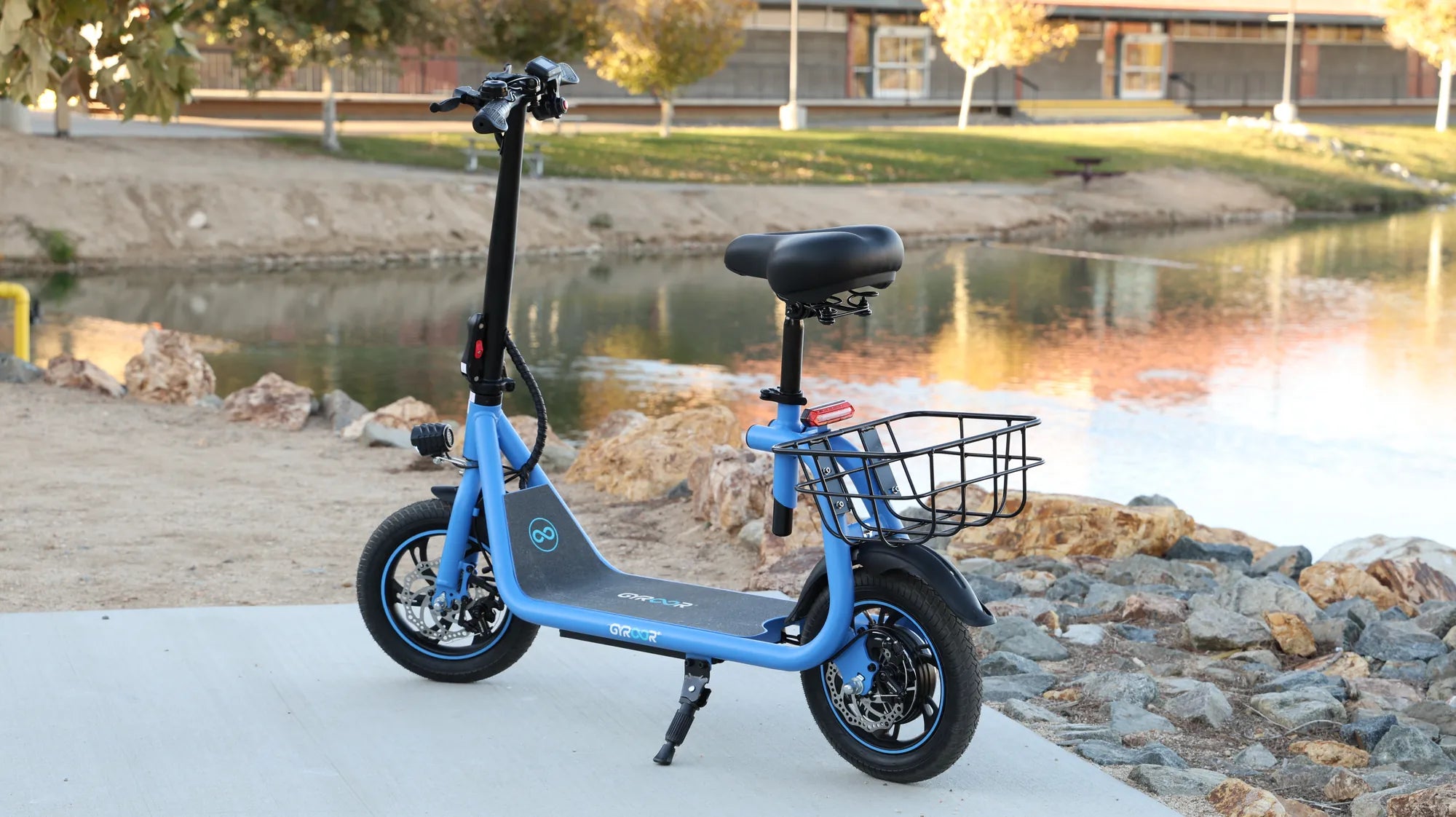
Introduction to Electric Scooters in Exeter
Exeter stands at a transport crossroads. Its historic core, bustling university campuses, and expanding suburbs create a complex mobility puzzle characterised by traffic congestion, limited parking, and a strong civic drive towards carbon neutrality. Electric scooters have emerged as a compelling, timely solution to these intertwined challenges. For students, commuters, and residents alike, they offer a swift, silent, and zero-emission alternative for short urban trips.
The conversation around Electric Scooters Exeter: The Future of Urban Mobility is no longer theoretical. Private ownership is growing steadily, and while public rental trials await national legislation, the infrastructure and public appetite are aligning. This shift represents more than a new gadget; it's a fundamental rethinking of how we navigate our city's streets, from the Quayside to the University of Exeter's Streatham Campus.
This article provides a data-driven, practical analysis of e-scooters in Exeter. We will dissect the city's unique terrain, outline the critical specifications for local riders, and explore the safety and legal frameworks. The goal is to equip you with the knowledge to understand how this technology integrates into Exeter's transport ecosystem and to make an informed choice if you decide to invest.
Why Exeter is Perfect for E-Scooter Adoption
Exeter's urban form and demographics create an almost ideal environment for electric scooter integration. The city's compact centre, with many key destinations within a 3-mile radius, is perfectly suited for e-scooter range capabilities. Furthermore, Exeter City Council's ambitious Net Zero 2030 plan explicitly prioritises active travel and reducing car dependency, creating a policy landscape favourable to micro-mobility solutions.
The demographic mix is equally significant. A large student population, often living in peripheral areas like St. James or Newtown, requires affordable, flexible transport to campus and the city centre. Professionals commuting from suburbs such as Countess Wear or Topsham seek reliable alternatives to congested routes like Topsham Road. Electric scooters directly address these needs, offering door-to-door convenience without the cost and hassle of parking.
Infrastructure investments are also paving the way. The expansion of cycle lanes, the implementation of Low Traffic Neighbourhoods (LTNs), and routes like the Exe Estuary Trail provide a growing network of safer, separated paths that can be utilised by e-scooter riders. This existing framework reduces the need for massive new infrastructure spending, allowing e-scooters to slot into the current transport matrix with relative ease.
Navigating Exeter's Terrain: Hills, Paths, and Cycle Lanes
Exeter's topography presents a specific test for any personal electric vehicle. The climb from the city centre or St. David's station up to the university campus is a notable incline that demands adequate motor power. A scooter with a sustained power output of 350W or more is recommended to handle such hills comfortably without excessive battery drain or reduced speed.
Fortunately, the city offers numerous scooter-friendly routes. The flat, scenic paths along the Quayside and the Exe Estuary Trail are ideal for longer, leisurely rides. For commuters, dedicated cycle lanes on major routes like Heavitree Road provide a degree of separation from traffic. The key for riders is to plan journeys using these available paths, prioritising safety and adhering to the rules of shared-use spaces, always giving way to pedestrians.
Understanding the terrain also means preparing for varied surfaces. While many cycle paths are smooth tarmac, riders may encounter cobbled areas, such as parts of the Cathedral Close, or slightly rougher surfaces on some shared trails. This makes choosing a scooter with good suspension and pneumatic (air-filled) tyres crucial for maintaining comfort, control, and safety on Exeter's diverse streets and paths.
Choosing the Right Electric Scooter for Exeter's Streets
Selecting an e-scooter for Exeter is not a generic purchase; it requires matching specifications to local conditions. The ideal model balances hill-climbing power, sufficient range for daily errands or commutes, and portability for mixed-mode travel or secure storage. This decision directly impacts your daily experience, safety, and the long-term value of your investment.
A common mistake is prioritising low cost over essential performance features. A scooter that struggles on Exeter's hills or whose battery depletes before a return trip from, for example, Monkerton to the High Street, becomes a source of frustration, not liberation. The following sections break down the non-negotiable specs and features for the discerning Exeter rider.
Key Specs for Exeter Riders: Range, Power & Portability
Range is the foremost practical concern. Manufacturers often advertise maximum range under ideal conditions. For real-world Exeter use—factoring in hills, stop-start traffic, and rider weight—a scooter with a manufacturer-stated range of 15-20 miles is a prudent minimum. This typically ensures a reliable 8-12 mile real-world range, covering most cross-city return journeys without range anxiety.
Motor Power dictates performance on inclines. A 350W motor is a good baseline for handling Exeter's gradients. For those living in steeper areas or desiring quicker acceleration, a 500W or dual-motor system provides ample power. This translates to maintaining a safe, consistent speed up Fore Street Hill or Pennsylvania Road, rather than crawling and potentially becoming a hazard.
Portability is frequently overlooked. A scooter's weight and foldability determine if you can easily carry it onto a bus or train for a combined commute, take it into your office or lecture hall, or store it securely at home. Models weighing under 15kg are manageable for most adults. The folding mechanism should be robust and simple to operate with one hand.
The Importance of Safety and Durability Features
Urban riding demands robust safety systems. Reliable braking is non-negotiable. A combination of electronic (regenerative) braking and a mechanical disc or drum brake offers controlled stopping power in all weathers, essential for navigating sudden stops in busy areas like Sidwell Street. Never compromise on brake quality.
Durability is defined by build quality and ingress protection. Exeter's weather is famously changeable. An IPX5 water-resistance rating means the scooter can withstand water jets from any direction, protecting it against rain, puddles, and road spray. This is a critical feature for year-round practicality. Additionally, bright front and rear lights, reflectors, and a loud bell are essential for visibility and communication on shared paths, especially during gloomy winter afternoons.
Gyroor E-Scooters: Engineered for Cities Like Exeter
When evaluating brands for the rigours of daily commuting in a city like Exeter, Gyroor stands out by engineering its products against core urban challenges: safety, reliability, and all-weather capability. As a leading electric scooter and e-bike brand trusted by over 100,000 riders across North America and Europe, Gyroor's design philosophy aligns directly with the needs identified for Exeter's streets.
Their models, such as those in the Gyroor S1 and S2 series, are built with specifications that meet and exceed the baseline requirements for local terrain. With powerful motors (up to 500W), ranges exceeding 20 miles, and integrated safety lighting, they provide the performance profile Exeter riders need. The focus is on creating a dependable, safe, and enjoyable riding experience that integrates seamlessly into daily life, from the university run to a weekend trip to the Quayside markets.
What truly differentiates a brand like Gyroor in a competitive market is its commitment to foundational engineering principles that are often sacrificed in cheaper alternatives. These principles directly address the primary concerns of new and experienced riders alike, offering peace of mind that is worth far more than a slight upfront saving.
UL-Certified Safety: Peace of Mind on Every Commute
The battery is the heart of an electric scooter and its greatest potential risk if poorly made. Gyroor's use of UL-certified battery packs is a critical differentiator. UL certification involves rigorous independent testing for electrical, mechanical, and environmental safety, including overcharge, short circuit, and impact tests.
For an Exeter rider, this means unparalleled safety when charging at home, in a flat, or in student accommodation. It also correlates with long-term battery health and consistent performance. A UL-certified battery is engineered to maintain its capacity over hundreds of charge cycles (500+), ensuring the scooter's advertised range remains a reality for years, not just months. This certification is a non-negotiable benchmark for quality and safety that should be a priority for any serious buyer.
Built for British Weather: The IPX5 Water-Resistance Advantage
Gyroor's IPX5-rated water-resistant design is a feature born from practical necessity. An IPX5 rating certifies that the scooter's critical electronics can withstand low-pressure water jets from any direction. In practical terms, this translates to reliable operation during a typical Devon drizzle, when riding on damp roads, or through unavoidable puddles.
Contrast this with lower IP-rated or unrated models where moisture ingress can lead to sudden failure, corrosion, or even electrical shorts. For a daily commuter, the confidence to ride without constant anxiety about the weather is invaluable. It transforms the e-scooter from a fair-weather novelty into a genuine, year-round transport solution, perfectly suited to Exeter's climate.
Unmatched Support: The 1-Year Warranty & Local Service Promise
Investing in personal electric transport is a long-term decision. Gyroor backs its products with a comprehensive 1-year warranty covering manufacturing defects, coupled with accessible customer support. For Exeter residents, this means a direct channel for troubleshooting, advice, and access to genuine parts.
This support structure protects your investment. Should an issue arise, you are not left with an expensive, unusable piece of hardware. Instead, you have a clear pathway to resolution. This level of after-sales care is characteristic of brands that stand behind their products and view the sale as the beginning of a customer relationship, not the end. It's a hallmark of a reputable manufacturer versus an anonymous online seller.
The Practical Rider's Guide to Exeter E-Scooter Laws & Etiquette
The legal landscape for privately owned e-scooters in the UK is currently clear but restrictive. As of now, it is illegal to ride a privately owned e-scooter on public roads, pavements, cycle lanes, or in any public space. Their use is permitted only on private land with the landowner's permission. This is a crucial point for all Exeter residents to understand before purchase.
Discussions and trials for legalising regulated e-scooter use on public roads are ongoing at a national level, but no change has been enacted. Therefore, any current use of private e-scooters on Exeter's public highways is unlawful and can result in a fine, penalty points, or seizure of the vehicle. Responsible ownership means acknowledging and respecting this legal framework while advocating for sensible future regulation.
Looking ahead, potential legalisation will undoubtedly come with rules. These will likely include a minimum rider age (likely 16+), a maximum speed limit (potentially 15.5 mph), requirements for insurance, and bans on pavement riding. Proactive riders should already adopt these as principles of good etiquette.
Responsible Riding Etiquette (for use on private land/future guidance):
- Pedestrian Priority: Always yield to pedestrians. Slow down and give a wide berth, using a bell or polite voice to alert them if necessary.
- Speed Awareness: Control your speed according to the environment. Slow down in crowded areas, near junctions, and on shared paths.
- Parking Courtesy: If and when public use is permitted, never park in a way that obstructs pavements, wheelchair access, building entrances, or cycle racks. Be considerate.
- Sobriety & Attention: Never ride under the influence of alcohol or drugs. Stay focused on the path ahead, not your phone.
Cost Analysis: E-Scooter vs. Traditional Commuting in Exeter
Beyond convenience and environmental benefits, electric scooters present a compelling economic case. When viewed as a replacement for frequent short trips, the long-term savings compared to traditional transport modes are significant. Let's break down the annual costs for a typical Exeter commuter.
The following table compares the estimated annual cost of a quality e-scooter (using a Gyroor model as a reference point) against common alternatives for a 5-mile round-trip commute, five days a week, 48 weeks a year.
| Transport Mode | Upfront Cost | Annual Running Cost (Est.) | Total 1st Year Cost | Total Cost Over 3 Years |
|---|---|---|---|---|
| Quality E-Scooter (e.g., Gyroor S2) | £500 - £700 | £15 (electricity) | £515 - £715 | ~£545 - £745 |
| Stagecoach Bus (Rider weekly ticket) | N/A | £780 | £780 | £2,340 |
| Car (Petrol & Parking) | Car ownership excluded | £1,200+ (Fuel, City Centre Parking) | >£1,200 | >£3,600 |
| Bicycle | £300 - £500 | £50 (maintenance) | £350 - £550 | £450 - £650 |
The data shows that while a bicycle has the lowest running cost, a quality e-scooter offers a similar financial profile with the added benefit of electric assistance for hills and longer distances. The bus, while convenient, is the most expensive option over the medium term. The e-scooter's break-even point compared to a bus pass can be less than a year. After the initial investment, the marginal cost per journey is negligible, offering tremendous financial freedom.
Frequently Asked Questions (FAQs) for Exeter Residents
Q: Can I legally ride my private e-scooter to work in Exeter?
A: No, not currently. It is illegal to ride a privately owned e-scooter on any public road, cycle lane, or pavement in Exeter. Legal use is confined to private land with permission. This is a national law, not a local bylaw.
Q: What's a realistic range I need for getting across Exeter and back?
A> For a return trip from suburbs like Countess Wear or St. Thomas to the city centre and back (approx. 6-8 miles total), a scooter with a real-world range of 10-12 miles is sufficient. To account for hills, battery degradation over time, and errands, opting for a model with a 15-20 mile manufacturer-stated range is highly advisable.
Q: How do I handle Exeter's rainy days on an e-scooter?
A> First, ensure your scooter has a high water-resistance rating (IPX5 or higher). Wear appropriate waterproof clothing. Reduce your speed, increase braking distance, and avoid painted road markings, metal covers, and deep puddles which are extremely slippery. Assume cars have reduced visibility.
Q: Where can I charge my e-scooter in the city?
A> Privately owned e-scooters are designed to be charged at home or at your destination (e.g., workplace, if permitted). Use only the official charger provided. There is no public charging network for personal e-scooters akin to EV charging points. Always follow battery safety guidelines and never leave charging unattended for extended periods.
Q: Are e-scooters safe for tackling Exeter's hills, like to the university?
A> Yes, provided you choose a model with adequate motor power. A continuous power rating of 350W or more is recommended for consistent hill-climbing ability. High-torque motors maintain speed on gradients better. Always test the scooter's capability on a safe, private incline before relying on it for a regular hilly commute.
Conclusion: Embracing a Smarter Way to Navigate Exeter
Electric scooters represent a logical, efficient, and sustainable addition to Exeter's transport mix. They address specific local pain points: congestion, parking scarcity, and the need for low-carbon travel options. The city's terrain, infrastructure, and demographics create a fertile ground for their adoption, pending sensible legalisation.
The key to a positive future for Electric Scooters Exeter: The Future of Urban Mobility lies in responsible ownership and smart product choice. Investing in a well-engineered scooter from a reputable brand like Gyroor—with UL-certified safety, weather-resistant durability, and strong support—ensures reliability, safety, and long-term value. It transforms the purchase from a disposable trend into a serious transport tool.
As regulations evolve, Exeter has the opportunity to integrate this technology smoothly, reducing car dependency and enhancing urban livability. By choosing quality, riding responsibly, and advocating for clear laws, riders can be at the forefront of this shift. Explore how a purpose-built electric scooter can change your daily movement.
Ready to discover models built for cities like yours? Browse the full Gyroor collection, engineered with safety and performance for the modern urban commuter, at gyroorboard.com.
Can Electric Scooters Go in Bike Lanes? The Definitive Guide to Rules and Safety
Electric Mobility Scooters and Cars: The Future of Urban Transportation