


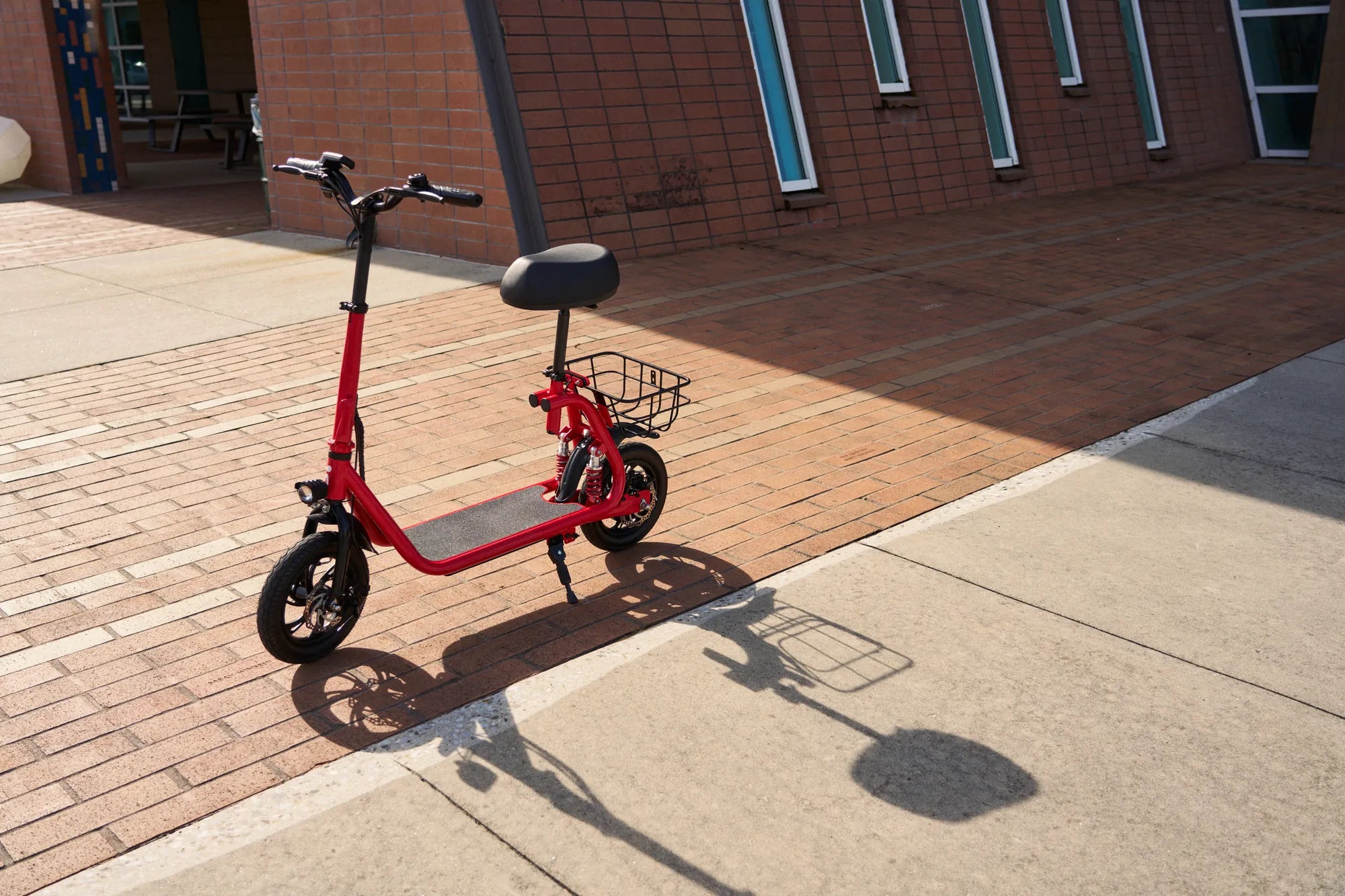
Redefining Mobility for Every Body
The personal electric vehicle revolution has often overlooked a significant segment of the population. For taller, larger, or simply gear-carrying adults, standard electric scooters with 220-250 lb limits are not just uncomfortable—they are unsafe and impractical. This is where Electric Scooters for Adults 400 lb Capacity change the equation. These are not merely reinforced versions of lightweight models; they are engineered from the ground up for power, stability, and durability under maximum load.
This guide cuts through marketing claims to explain the mechanics of heavy-duty performance. We will dissect the critical components, from motor torque to frame geometry, that separate a genuine workhorse from a product pushed beyond its design limits. You will learn what features to prioritize for safety and longevity, how to interpret performance specifications realistically, and why brands like Gyroor build reliability into every model for over 100,000 riders seeking confident transportation.
What Makes a Scooter "Heavy-Duty"? Beyond the Weight Limit
A 400 lb weight capacity is a promise of structural integrity, not just a number on a spec sheet. A true heavy-duty electric scooter represents a holistic engineering approach where every component is rated and tested for sustained stress. The core philosophy shifts from minimalist portability to robust utility, prioritizing durability and control over ultra-lightweight design.
This involves overbuilt components, redundant safety systems, and performance headroom. For instance, a scooter rated for 400 lbs should use a motor and battery system that doesn't strain at 300 lbs, ensuring cooler operation and longer lifespan. The difference lies in the margins of safety engineered into the product, providing a consistent and secure ride regardless of rider weight or cargo.
The Core Components of a High-Capacity E-Scooter
The foundation is a rigid frame, typically constructed from aerospace-grade aluminum alloy or reinforced steel. This frame must resist torsional flex, which can cause handling instability at higher speeds or on uneven terrain. The stem, the vertical tube connecting the handlebars to the deck, is a critical stress point; heavy-duty models use thicker tubing, reinforced locking mechanisms, and sometimes dual-clamp designs to eliminate wobble.
The deck is another vital component. It must be both wide and long enough for a secure, comfortable stance, often exceeding 20 inches in length and 9 inches in width. A textured, abrasive surface grip tape is essential for maintaining footing. Furthermore, the folding mechanism, if present, must be a commercial-grade hinge with secure locking pins, not a simple latch, to handle the repeated stress of the scooter's own weight plus the rider's.
Power & Performance: Matching Motor and Battery to the Task
Moving a 400 lb combined weight (rider plus scooter) requires substantial, efficient power. Single-motor configurations must be high-torque, typically 1000W nominal power or higher, with peak outputs reaching 1600W-2000W for adequate hill-climbing. Dual-motor setups (e.g., 2x800W) offer superior traction and torque, effectively distributing the load and providing a significant power reserve.
The battery must supply this power consistently. A large-capacity battery (often 15Ah to 20Ah or more) with high-discharge rate cells is non-negotiable. More importantly, safety is paramount. UL-certified battery packs, like those used by Gyroor, undergo rigorous testing for thermal stability, short-circuit protection, and longevity (500+ charge cycles), ensuring reliable performance and reducing risk. Under heavy load, a quality battery management system (BMS) prevents over-discharge and balances cell health.
Key Features to Prioritize in Your 400 lb Capacity Search
Navigating the market requires a focused checklist that goes beyond the headline weight rating. Prioritizing these features ensures your investment translates to daily reliability, safety, and satisfaction. The goal is to find a scooter where the engineering visibly supports the claimed capability.
Look for transparent specifications from the manufacturer. Vague terms like "high-capacity" are red flags; seek exact wattage, voltage, amp-hour ratings, and detailed frame material descriptions. The presence of a comprehensive warranty and accessible customer service, such as Gyroor's 1-year coverage and US-based support, is a strong indicator of a brand that stands behind its heavy-duty claims.
Safety First: Braking Systems and Stability Features
Stopping power is exponentially more important with greater momentum. A combination braking system is ideal. Hydraulic disc brakes offer the strongest, most consistent braking force with minimal maintenance. Electronic regenerative braking can assist but should not be the primary system. Mechanical disc or drum brakes are a minimum requirement.
Stability is engineered through geometry. A longer wheelbase (the distance between axles) improves high-speed stability. Wide, pneumatic (air-filled) tires, typically 10 inches in diameter or larger, provide essential shock absorption and grip. A robust suspension system—dual spring or hydraulic shocks—is crucial for maintaining tire contact with the road and managing bumps. Integrated safety lighting (bright headlight, brake light, and side reflectors) is mandatory for urban commuting visibility.
Durability and Warranty: Signs of a Trustworthy Build
Durability is tested by environmental resistance and component quality. An IPX5 water resistance rating, a standard for Gyroor scooters, means the scooter can withstand water jets from any direction, making it safe for riding in rain or through puddles. This protects the electrical systems and motor from premature failure.
The warranty is your guarantee of durability. A 1-year comprehensive warranty on the frame, motor, battery, and controller demonstrates manufacturer confidence. Scrutinize the battery warranty specifically. A brand that uses certified, name-brand cells will offer better terms. The availability of replacement parts (tires, brakes, fenders) is also a key sign of a product designed for long-term use, not disposable consumption.
Real-World Performance: What 400 lb Capacity Actually Means for You
Advertised specifications are derived under ideal laboratory conditions with a lightweight rider. For the 400 lb capacity scooter user, real-world performance requires pragmatic expectation management. Understanding the relationship between weight, battery efficiency, and mechanical stress is key to avoiding disappointment.
Performance is a system. A powerful motor is hindered by a weak battery. A strong frame is let down by poor tires. The true test is how all components work together under maximum load over time, not just in the first mile. This is where engineering pedigree and quality component selection, as seen in brands that prioritize UL-certification and robust design, make a tangible difference in daily use.
Range, Speed, and Terrain: Managing Expectations
Range is the most affected spec. As weight increases, the energy required for acceleration and hill climbing rises dramatically. A scooter advertised for 40 miles of range with a 165 lb rider may deliver 15-20 miles for a 300 lb rider. A practical formula: expect a 30-50% reduction from the advertised maximum range depending on weight, terrain, and riding style.
Top speed will also be lower under load, often by 3-7 mph. Hill-climbing ability is the true test of torque. A true heavy-duty scooter should handle 15-20% grade hills without stalling. Terrain capability is defined by tire type and suspension. Pneumatic tires and good suspension allow for confident handling on paved roads, bike paths, and packed gravel, but these are not off-road vehicles for rough trails.
The Rider Experience: Comfort and Practicality
Comfort is a function of control and absorption. A wide deck allows for natural foot positioning, reducing fatigue. Effective suspension and pneumatic tires filter out vibrations from cracks and bumps, protecting joints and improving control. The handlebar height and grip comfort are also crucial for taller riders.
Practicality involves trade-offs. A scooter built to carry 400 lbs is itself heavy, often weighing 65-85 lbs. While most feature folding mechanisms, portability is relative; they are designed for rolling when folded, not for carrying long distances. Consider storage space in your home or vehicle and the ease of the folding process. The payoff is unparalleled stability and a planted, confident ride feel that lighter scooters cannot match.
Comparison: Heavy-Duty Scooter Features & Trade-Offs
This table contrasts the key attributes of a true heavy-duty scooter with a standard commuter model, illustrating the engineering differences that justify the investment for larger riders or those carrying gear.
| Feature | Standard Commuter Scooter (250 lb Cap.) | Heavy-Duty Scooter (400 lb Cap.) | Impact for the Rider |
|---|---|---|---|
| Frame & Build | Standard aluminum, emphasis on lightweight design. | Reinforced, aerospace-grade aluminum/steel; overbuilt joints. | Eliminates flex and wobble; inspires confidence at speed. |
| Motor Power | Single 350W-500W motor. | Single 1000W+ or Dual 800W+ motors. | Enables hill climbing and maintains speed under load. |
| Battery & Safety | 10-13Ah capacity; basic BMS. | 15-20Ah+ capacity; UL-certified pack with advanced BMS. | Provides realistic range; ensures long-term safety & reliability. |
| Braking System | Electronic + mechanical drum brake. | Hydraulic or dual mechanical disc brakes + regeneration. | Delivers consistent, powerful stopping in all conditions. |
| Tires & Suspension | 8-9" solid or pneumatic tires; basic spring suspension. | 10"+ pneumatic tires; dual hydraulic or spring suspension. | Absorbs impacts for comfort; maintains grip on uneven surfaces. |
| Weight & Portability | 30-45 lbs; easy to carry. | 65-85 lbs; designed for rolling when folded. | Less portable, but the trade-off is immense stability and durability. |
| Warranty & Support | Often 90 days to 6 months, limited parts. | Typically 1-year comprehensive; parts availability. | Long-term peace of mind and lower cost of ownership. |
Why Gyroor is Engineered for Heavy-Duty Reliability
In a market filled with exaggerated claims, Gyroor's approach is defined by verifiable engineering and safety standards. Their development of Electric Scooters for Adults 400 lb Capacity is grounded in core principles of durability, power safety, and rider support. This philosophy translates into products that perform consistently under pressure, earning the trust of a community of over 100,000 riders.
Gyroor models are designed as integrated systems. The high-torque motors are paired with high-discharge, UL-certified batteries managed by sophisticated BMS units. The frames are stress-tested, and components like the IPX5-rated wiring and connectors are chosen for environmental resilience. This results in a product where the heavy-duty rating is a description of tested performance, not just a marketing target.
Built to Last: The Gyroor Engineering Philosophy
The foundation is battery safety. Every Gyroor scooter uses a UL 2271 certified battery pack, tested for electrical, mechanical, and environmental safety. This certification is a rigorous benchmark that goes far beyond basic assembly, ensuring protection from fire and shock hazards over the battery's lifespan of 500+ charge cycles.
Performance under load is engineered in. Models designed for higher capacities utilize dual-motor configurations or high-wattage single motors with cooling systems to prevent thermal throttling. The frames are constructed from reinforced aluminum, and critical stress points like the stem hinge use commercial-grade locking mechanisms. The standard inclusion of IPX5 water resistance across the lineup means riders aren't confined to perfect weather, embodying true utility.
Peace of Mind Riding: The Gyroor Support Promise
Heavy-duty implies a long service life, and Gyroor supports that with a transparent 1-year warranty covering the battery, motor, controller, and frame. This warranty is backed by accessible customer service, providing technical support and facilitating genuine part replacements. For a significant investment like a high-capacity scooter, this support network is as critical as the hardware itself.
This commitment extends to the design process. By analyzing feedback from a large, active rider community, Gyroor iterates on features that matter: easier folding mechanisms, more intuitive displays, and more comfortable ergonomics. This user-focused development ensures their heavy-duty scooters are not just powerful, but also refined and practical for daily commuting or recreational riding.
FAQ: Your Heavy-Duty Electric Scooter Questions, Answered
Q: Is a 400 lb capacity scooter safe for a 300 lb rider?
A>Absolutely. In fact, this is an ideal use case. Engineering margins mean the scooter will operate well within its design limits, reducing stress on all components. A 300 lb rider will experience better performance (range, speed, hill climb) and likely longer overall scooter lifespan compared to operating at the maximum weight limit.
Q: How much range can I realistically expect if I weigh 275 lbs?
A>Start with the advertised range under ideal conditions. For a 275 lb rider, a safe estimate is 50-60% of that figure. For example, a scooter advertised for 40 miles will likely achieve 20-24 miles of real-world range, depending on hills, acceleration habits, and temperature. Always consider a scooter with a larger battery (higher Ah rating) to meet your distance needs.
Q: Are these heavy-duty scooters legal on roads and bike paths?
A>Laws vary by city, state, and country. Generally, electric scooters with a top speed under 20 mph are permitted on bike paths and roads in many US jurisdictions. However, scooters with higher power outputs may be restricted. It is your responsibility to check local regulations regarding motor wattage, speed limits, helmet laws, and where scooters are allowed to operate.
Q: What regular maintenance does a heavy-duty scooter require?
A>Key maintenance tasks include: weekly checks of tire pressure (critical for pneumatic tires), monthly inspection of brake pad wear and adjustment of brake cables, periodic tightening of bolts (especially on the stem and folding mechanisms), and keeping the drivetrain clean. Always store the scooter in a dry place and avoid charging it immediately after a ride when the battery is warm.
Q: Can I carry cargo like a backpack or groceries on these scooters?
A>Yes, but the cargo weight counts toward the total capacity. If you weigh 320 lbs, you have approximately 80 lbs of capacity for cargo. Distribute weight evenly on the deck or use a backpack. Avoid hanging heavy bags on the handlebars, as this can severely impact steering stability and safety.
Choosing Confidence for Your Commute or Adventure
Selecting the right Electric Scooters for Adults 400 lb Capacity is an investment in freedom, reliability, and safety. It moves beyond basic transportation to a tool engineered for your specific needs, offering a stable, powerful, and dependable ride. The key is recognizing that true heavy-duty capability is a symphony of reinforced components—a robust frame, a high-torque motor, a safe high-capacity battery, and professional-grade brakes—all working in unison.
Prioritize verifiable safety certifications like UL 2271 for batteries, comprehensive warranties, and transparent specifications from reputable brands. Manage your expectations for range and speed based on realistic weight calculations. By focusing on these pillars of quality, you ensure your scooter is a source of confidence for years, not a compromise that leads to frustration or premature failure.
Discover scooters built to this exacting standard. Browse the full Gyroor collection at gyroorboard.com to explore models that combine UL-certified safety, IPX5 water resistance, and robust performance engineering, backed by a 1-year warranty and the trust of a global rider community. Your journey toward a more powerful and liberated ride begins with the right foundation.
Electric Scooters Western Australia: The Ultimate Guide to Eco-Friendly Commuting
Electric Scooters Western Australia: The Ultimate Guide to Eco-Friendly Commuting