


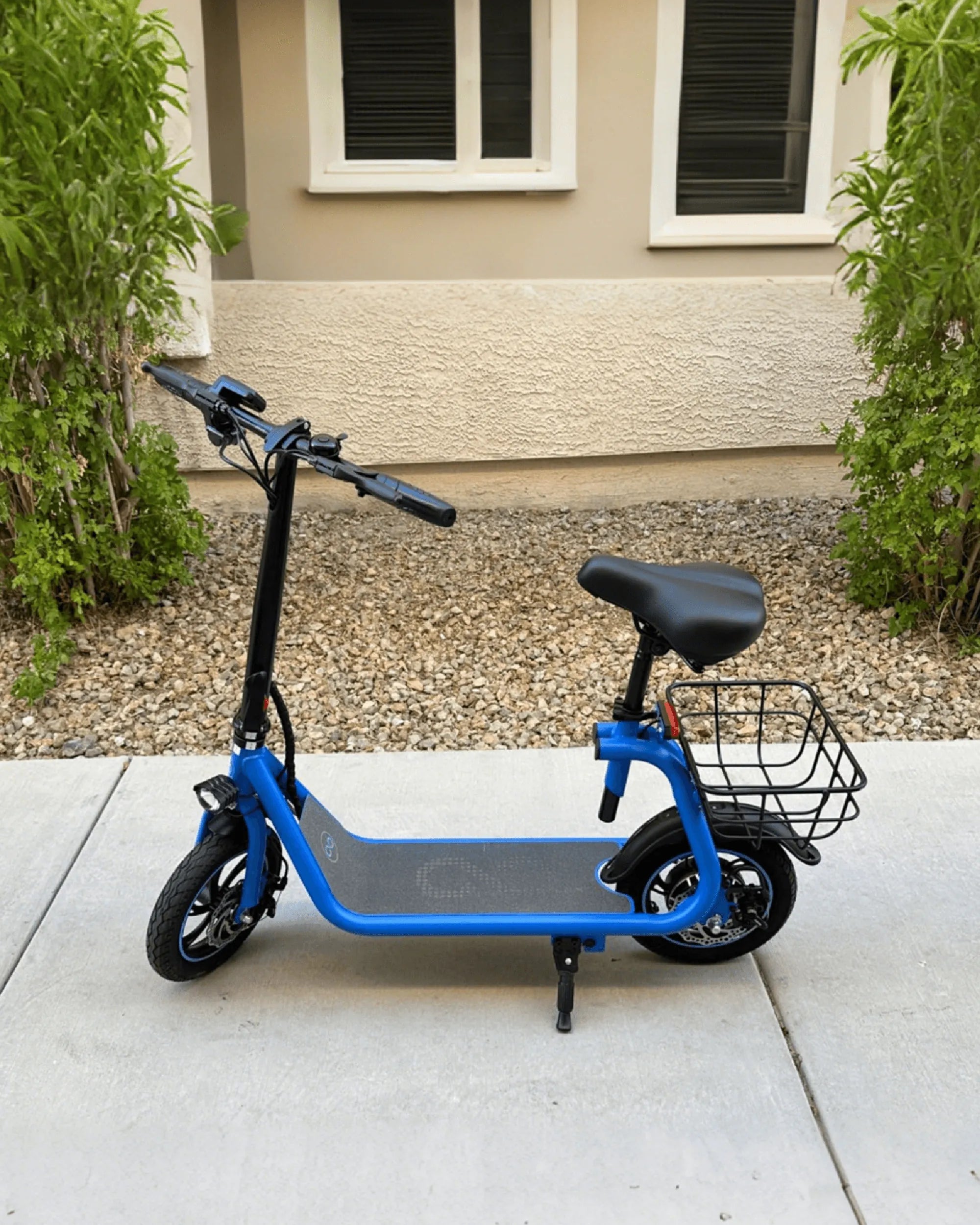
Introduction: The 50-Mile Range Revolution in Adult E-Scooters
The search for a practical, efficient, and enjoyable personal transportation solution ends with electric scooters for adults with a 50 mile range. This specific capability represents a fundamental shift, moving e-scooters from last-mile gadgets to legitimate primary vehicles for urban and suburban adults. A reliable 50-mile distance effectively eliminates daily range anxiety, enabling round-trip commutes, extended errands, and weekend exploration without the constant need for a charge.
This revolution is powered by advanced engineering focused on battery safety, motor efficiency, and durable construction. Leading this charge are brands like Gyroor, a trusted name in personal electric mobility. Gyroor designs its adult scooters around core principles of reliability, integrating UL-certified battery packs and IPX5 water-resistant designs to ensure the promised 50-mile range is both achievable and sustainable in real-world conditions.
The ultimate commuter solution isn't just about distance; it's about consistent performance. It means knowing your scooter will start every morning, handle a sudden rain shower, and maintain its battery health over hundreds of charge cycles. This article will dissect why the 50-mile benchmark is so transformative, what features are non-negotiable, and how to select and maintain a scooter that lives up to this promise.
Why 50 Miles is the Sweet Spot for Adult Riders
For the adult commuter, a 50-mile range is a pragmatic game-changer. It fundamentally alters the calculus of ownership from a novelty to a necessity. While shorter-range models (15-25 miles) suffice for very short trips, they tether the rider to a charger, often requiring daily plug-ins that degrade battery life faster and introduce logistical friction.
Consider the math for a typical urban commuter. A round-trip commute of 15 miles, plus a few extra miles for lunch or errands, can easily approach 20 miles daily. A scooter with a 25-mile maximum range would need charging every night, operating at 80% battery depth of discharge, which stresses the battery over time. A true 50-mile range scooter, however, can handle two full days of this usage on a single charge, or even a full week for shorter commutes.
This capacity drastically reduces "range anxiety," the persistent worry about being stranded with a dead battery. It provides a substantial buffer for detours, headwinds, colder weather, or heavier loads. This psychological freedom is as valuable as the physical distance, transforming the riding experience from one of calculation to one of spontaneity and confidence.
Furthermore, the 50-mile range opens the door to recreational use. Weekend rides along bike paths, exploring new neighborhoods, or leisurely tours become feasible without planning around charging stations. It elevates the electric scooter from a pure A-to-B machine to a genuine tool for enjoyment and expanded mobility, justifying its role as a centerpiece of an adult's personal transportation strategy.
Key Features to Look For in a 50-Mile Range Scooter
Achieving a consistent 50-mile range is a complex engineering challenge that depends on the harmonious integration of several high-quality components. It's not merely a function of a large battery; it's about how efficiently that battery's energy is used and protected. When evaluating electric scooters for adults with a 50 mile range, these are the critical subsystems that demand scrutiny.
First, the battery capacity, measured in Watt-hours (Wh), is the fuel tank. For a 50-mile range, you should expect a battery pack of at least 600Wh to 750Wh, depending on efficiency. However, capacity alone is meaningless without quality cells and sophisticated battery management systems (BMS) to ensure safety and longevity.
Second, the motor must be powerful enough to handle hills and acceleration without excessive energy waste. A 500W to 800W nominal motor is typically the sweet spot, providing ample torque while allowing for efficient cruising. The scooter's controller software, which manages power delivery, is equally important for maximizing range.
Finally, the physical design plays a crucial role. Aerodynamics, weight, tire type, and even the resistance in the wheel bearings all impact how far each watt-hour of battery power can take you. A scooter built for range will optimize these factors without sacrificing essential rider comfort and safety features.
Battery Technology & Safety: The Heart of the System
The battery is the most critical and safety-sensitive component. For a 50-mile range scooter, insist on a lithium-ion battery pack that is UL-certified. This independent certification, a standard upheld by Gyroor, means the battery has passed rigorous tests for electrical, mechanical, and environmental safety, drastically reducing risks of fire or failure.
Quality batteries use name-brand cells (like LG, Samsung, or Panasonic) that offer higher energy density and better cycle life. A reputable BMS protects these cells from overcharging, deep discharge, short circuits, and temperature extremes. This protection is vital for maintaining the battery's health over 500+ charge cycles, ensuring the 50-mile range doesn't diminish significantly after a year of use.
Always verify the battery's voltage and amp-hour (Ah) rating. A common configuration for this range class is a 48V system with a capacity of 12.5Ah to 15.6Ah (equating to 600Wh to 750Wh). This robust system provides the necessary power and reserve to deliver consistent performance, even as the battery charge depletes.
Motor Power & Efficiency: Balancing Speed with Endurance
The motor translates electrical energy into motion. For adult riders, a single 500W to 800W brushless hub motor is often ideal. This provides enough power for hills with a 15% grade and confident acceleration from a stop, while remaining efficient for steady cruising at 15-20 mph, the speed where range is maximized.
Efficiency is key. A well-designed motor and controller will offer multiple riding modes, such as an Eco mode. Eco mode limits top speed and smooths acceleration, potentially extending range by 15-25% compared to a Sport or Turbo mode. This allows the rider to choose between maximum range and maximum performance based on the day's needs.
Dual-motor scooters offer incredible torque and hill-climbing ability but typically consume battery energy at nearly twice the rate, making it challenging to achieve a true 50-mile range without a massive, heavy battery. For the ultimate commuter solution focused on range, a powerful, efficient single motor is often the more practical choice.
Build Quality & Weather Resistance: Built for the Real World
A commuter scooter faces daily punishment: potholes, curbs, rain, and dust. Build quality directly impacts longevity and reliability. Look for a frame constructed from aerospace-grade aluminum alloy, which offers an optimal balance of strength and light weight. Critical welds and folding mechanisms should be robust and rattle-free.
Weather resistance is non-negotiable. An IPX5 water resistance rating, standard on Gyroor scooters, means the scooter can withstand water jets from any direction. This protects the motor, battery compartment, and electronics from rain, road spray, and puddles. Never ride a non-water-resistant scooter in wet conditions, as water damage is a leading cause of failure and is rarely covered by warranty.
Attention to detail matters: sealed bearing hubs, waterproof connectors, and covered charging ports are all indicators of a scooter designed for real-world, four-season commuting, ensuring the electrical system remains protected to reliably deliver that 50-mile range.
Rider Comfort & Practicality: For Extended Journeys
Comfort is essential when riding distances up to 50 miles. The primary interface is the deck: a wide, long deck (at least 20 inches long) allows for a natural, stable stance, reducing fatigue. Large, pneumatic (air-filled) tires, typically 10 inches in diameter, are superior for range and comfort. They provide better shock absorption than solid tires, improving ride quality and maintaining better traction and rolling efficiency.
The suspension system complements the tires. A combination of front and rear spring or hydraulic suspension smooths out bumps and vibrations, making longer journeys less taxing on the body. Adjustable handlebar height is another critical feature for taller riders to achieve an ergonomic riding posture.
Practical features include bright front and rear LED lights, brake lights, and turn signals for visibility. A comprehensive digital display shows speed, battery level (preferably as a voltage or percentage, not just bars), riding mode, and trip distance. Ample braking power from a combination of disc and electronic brakes is vital for safety at higher speeds and over longer distances.
Gyroor’s 50-Mile Range Solutions: Engineered for Reliability
Gyroor approaches the challenge of building a true 50-mile range scooter with a focus on the foundational pillars of safety, durability, and rider-centric design. By prioritizing UL-certified batteries and IPX5 waterproofing as standard across its lineup, Gyroor ensures that its long-range promises are backed by robust engineering, not just optimistic lab tests.
The brand's philosophy centers on creating reliable transportation for over 100,000 riders. This means designing scooters where the electrical systems are protected, the mechanical parts are serviceable, and the performance is consistent. For the adult commuter investing in an electric scooter with a 50 mile range, this engineering rigor translates directly to peace of mind and lower total cost of ownership.
Gyroor models in this category are built to handle adult riders up to 275-330 lbs, acknowledging real-world user diversity. They integrate the comfort features necessary for extended use, such as wide pneumatic tires and suspension, while delivering the power needed for varied urban terrain. This holistic approach is what separates a true commuter solution from a disposable toy.
Model Spotlight: The Gyroor Hurricane 500
The Gyroor Hurricane 500 exemplifies the ultimate commuter solution. It is engineered from the ground up to reliably deliver extended range without compromising on power or safety.
- Advertised Range: Up to 50 miles (tested under specific conditions: 165 lb rider, 77°F, flat pavement, Eco mode).
- Motor: 500W peak brushless hub motor, providing strong acceleration and the ability to climb hills up to a 15% grade.
- Battery: 48V 12.5Ah (600Wh) UL-certified lithium-ion pack with advanced BMS. Engineered for 500+ charge cycles with minimal degradation.
- Water Resistance: IPX5 rating for full protection against rain and road spray.
- Max Load: 275 lbs, with a reinforced deck and stem.
- Top Speed: 22 mph, with selectable Eco and Sport modes to balance range and performance.
- Key Comfort Features: 10-inch pneumatic tires, front and rear suspension, wide deck, and an intuitive digital display.
This combination of specs shows a deliberate balance. The 600Wh battery provides the energy reservoir, while the efficient 500W motor and pneumatic tires maximize the use of that energy. The IPX5 and UL certifications ensure this performance is delivered safely, day after day, in real-world conditions.
The Gyroor Advantage: Warranty & Support
Investing in a high-performance scooter requires confidence in the manufacturer's support. Gyroor backs its products with a comprehensive 1-year warranty covering the frame, motor, battery, and electronic controller. This warranty is a testament to their confidence in the quality and durability of their components, particularly the UL-certified battery system.
Beyond the warranty, Gyroor maintains accessible customer support channels. For a commuter relying on their scooter daily, knowing that replacement parts, repair guidance, and technical assistance are readily available is crucial. This support structure protects your investment and ensures that your ultimate commuter solution remains on the road for years to come.
Maximizing Your Scooter's Range: Practical Tips & Real-World Expectations
Manufacturer range figures are achieved under ideal laboratory conditions. Your real-world range will vary based on several factors. Understanding and managing these factors is key to consistently achieving near the 50-mile potential.
Rider Weight and Cargo: This is the most significant variable. Heavier riders require more energy to accelerate and climb hills. Every extra 20 lbs of rider or cargo weight can reduce range by 5-10%. Pack light when aiming for maximum distance.
Terrain and Elevation Gain: Flat, smooth pavement is most efficient. Frequent stops/starts in city traffic, or riding on rough surfaces like brick or gravel, increases energy consumption. Hills are the biggest drain; climbing a hill uses exponentially more power than cruising on flat ground.
Riding Style: Aggressive acceleration and maintaining top speed (e.g., 22+ mph) dramatically increase wind resistance and energy use. Smooth, gradual acceleration and cruising at a moderate 15-18 mph in Eco mode can extend your range by 20-30%.
Temperature: Lithium-ion batteries are less efficient in cold weather. Range can drop by 15-30% in temperatures below 50°F (10°C). Store and charge your scooter indoors in a climate-controlled environment when possible.
Tire Pressure: Under-inflated pneumatic tires create higher rolling resistance. Check and maintain tire pressure weekly at the PSI recommended on the tire sidewall. This simple act can improve range by 5-10%.
The table below provides realistic estimated ranges for a scooter with a 50-mile ideal range under different common conditions:
| Riding Condition | Rider Weight | Primary Terrain | Riding Mode | Estimated Real-World Range |
|---|---|---|---|---|
| Optimal (Lab Test) | 165 lbs | Flat, Smooth | Eco (15 mph) | 45-50 miles |
| Typical Urban Commute | 180 lbs | Flat with Stop/Start | Standard (18 mph) | 35-40 miles |
| Hilly Suburban Ride | 200 lbs | Moderate Hills | Sport (20+ mph) | 25-30 miles |
| Colder Weather Commute | 180 lbs | Flat Urban | Standard | 28-33 miles |
Frequently Asked Questions (FAQ): Electric Scooters with 50-Mile Range
Q1: Is a 50-mile range realistic for a heavy rider or in hilly areas?
A: It is achievable, but with important caveats. A rider near the scooter's maximum weight limit (e.g., 275 lbs) should expect a realistic range of 25-35 miles under mixed conditions, not the full 50. In consistently hilly areas, range will be significantly reduced due to the high energy cost of climbing. For these use cases, selecting a scooter with a very powerful motor (600W+) and the largest battery possible (e.g., 750Wh+) is crucial to get as close to that target as possible.
Q2: How long does it take to fully charge a scooter with this range?
A: Charging time depends on the battery capacity and the charger's output. A standard charger for a 600Wh battery is typically 2A-3A. A full charge from empty for a 48V 12.5Ah (600Wh) battery with a standard 2A charger takes approximately 6-8 hours. Some models offer optional fast chargers (4A-5A) that can reduce this time to 3-4 hours. It's best practice to avoid consistently using fast chargers, as they can increase long-term battery wear.
Q3: Can I ride my IPX5-rated scooter in heavy rain?
A: An IPX5 rating means the scooter is protected against water jets from any direction, which covers heavy rain and driving through puddles. However, it is not rated for submersion. You can confidently commute in a rainstorm, but avoid riding through deep standing water where the deck or motor might be submerged. Always dry the scooter after a wet ride, and never submerge it or charge it while it is wet.
Q4: What does the 1-year warranty from Gyroor typically cover?
A: Gyroor's standard 1-year warranty is a comprehensive parts warranty. It covers defects in materials and workmanship for the frame, motor, battery, controller, and electronic display under normal use. It explicitly covers the UL-certified battery pack. The warranty does not cover wear-and-tear items (tires, brake pads), damage from accidents, misuse, neglect, or unauthorized modifications. Always register your product and retain your proof of purchase.
Q5: How do I maintain my scooter to ensure the battery lasts for 500+ cycles?
A: Proper battery care is essential. Avoid regularly draining the battery to 0%. Try to recharge when it reaches 20-30%. Similarly, avoid leaving it plugged in at 100% for extended periods (days). Store the scooter and battery in a cool, dry place, away from extreme heat or cold. Perform a full charge cycle (from near-empty to full) every 1-2 months to help calibrate the battery management system. Following these practices will help maximize the lifespan of your investment.
Conclusion: Redefining Your Commute with Confidence
The era of compromised personal electric transport is over. Electric scooters for adults with a 50 mile range represent a mature, viable, and profoundly liberating commuter solution. By prioritizing models built with UL-certified batteries, IPX5 water resistance, and robust construction from trusted brands like Gyroor, you invest in more than a vehicle—you invest in reliable, emission-free daily freedom.
This capability reshapes urban mobility, offering a cost-effective, fun, and efficient alternative to cars and public transit. The key is to look beyond the headline range number and evaluate the engineering integrity that supports it. Your choice should be driven by safety certifications, real-world durability features, and the manufacturer's commitment to support, as exemplified by a solid warranty.
Embrace the shift. A well-chosen 50-mile range scooter eliminates fuel costs, parking hassles, and traffic stress, replacing them with the simple joy of the ride and the confidence that you can go the distance. Ready to transform your commute? Browse the full Gyroor collection at gyroorboard.com to explore models engineered to deliver the ultimate commuter solution.
Powerful Electric Scooters With Seat: The Ultimate Commuting Solution
Electric Scooters Under 40000: Your Guide to Smart Urban Mobility