

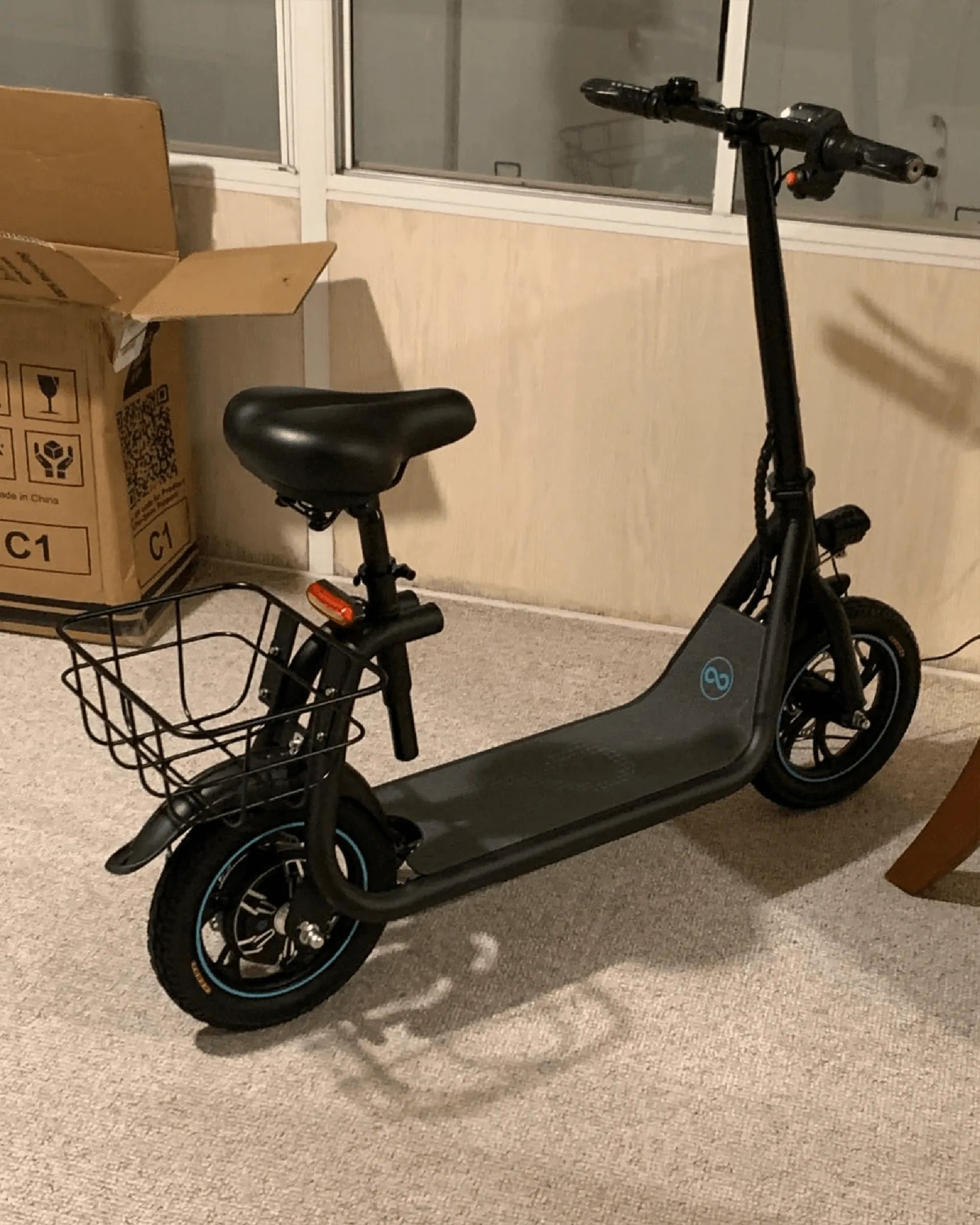
You need a commute that doesn't leave you fatigued, a way to run errands without circling for parking, and a vehicle that's genuinely fun to ride. The solution is increasingly clear: electric scooters for adults with seat. This guide will provide you with a complete, data-driven analysis of seated e-scooters. You'll learn why they are revolutionizing personal transport, what critical features to look for, how they stack up against standing scooters and e-bikes, and how to choose a model built for safety and longevity from reputable manufacturers.
Introduction: Why Seated Electric Scooters are Redefining Adult Commuting
The traditional standing electric scooter excels at last-mile travel but often falls short for longer, practical adult use. The integration of a seat transforms the entire proposition. A seated electric scooter merges the compact, agile form factor of a scooter with the sustained comfort traditionally associated with an e-bike.
This hybrid design directly addresses core adult needs: commuting distances of 5-15 miles, completing multiple errands in one trip, and enjoying recreational rides without leg strain. The market shift is evident, with seated models seeing accelerated adoption among commuters, urban dwellers, and leisure riders seeking a practical car alternative.
Brands leading this category, like Gyroor, focus on engineering these vehicles for daily reliability. With over 100,000 riders trusting their products across North America and Europe, the emphasis is on robust performance, certified safety, and user-centric design. The seated e-scooter is no longer a novelty; it's a legitimate tool for efficient urban mobility.
Understanding this vehicle's full potential requires looking beyond the simple addition of a seat. It's about enhanced utility, extended range usability, and a fundamentally more accessible riding experience for a wider demographic.
Understanding the Key Benefits: More Than Just a Seat
The primary advantage of a seat is obvious, but the secondary benefits profoundly impact real-world usability. These benefits translate directly into expanded use cases and greater return on investment for the rider.
Enhanced Comfort and Reduced Fatigue
Standing for extended periods, especially over uneven surfaces, leads to muscle fatigue in the legs and lower back. A seat eliminates this, allowing for comfortable rides of 30 minutes or more. This makes trips of 5-10 miles not just possible but pleasant.
Furthermore, a seated position promotes better posture and a lower center of gravity. This increases overall stability, particularly at cruising speeds of 15-20 mph. Riders can focus on the road ahead rather than managing their own balance, reducing cognitive load on longer journeys.
Increased Practicality and Utility
A seated scooter often evolves from a recreational device into a primary utility vehicle. The seated position makes it easier to carry a backpack, messenger bag, or even a small grocery bag between your feet or on a rear rack.
Many models integrate storage solutions, such as under-seat compartments or rear cargo baskets. This functionality positions the seated e-scooter as a genuine alternative for short urban car trips, reducing congestion and transportation costs for tasks like grocery shopping or visiting local businesses.
Safety and Stability for All Rider Levels
For new or apprehensive riders, sitting down can significantly boost confidence. The feeling of being more "planted" to the vehicle improves the initial learning curve. This accessibility opens up micro-mobility to individuals who may find balancing on a standing scooter challenging.
Enhanced stability is also a tangible safety feature. When navigating potholes, curbs, or wet surfaces, a seated rider with a wider stance is less likely to experience a loss of control. Brands like Gyroor complement this with wide, textured decks and advanced suspension systems to create a secure platform.
What to Look For: Essential Features in a Seated Adult E-Scooter
Choosing the right model requires scrutinizing specifications that directly affect performance, safety, and durability. Here is a data-driven checklist for your investment.
Motor Power & Hill Climbing Ability
Motor power is critical. A seated scooter carries more weight (rider + potential cargo) and needs ample torque. A minimum of 350W is recommended for flat terrain. For cities with inclines, a 500W or higher motor is essential to maintain speed and battery efficiency on hills.
Peak power ratings are also important. A motor with a 500W nominal but 800W peak output will handle short, steep climbs more effectively than a motor at its constant limit. Always match motor power to your local terrain and your body weight.
Battery Range & Real-World Performance
Manufacturer range claims are typically based on ideal conditions: a lightweight rider on flat, smooth pavement at low speed. A practical formula is to deduct 20-40% from the advertised range for real-world use.
For a seated scooter used for commuting, a minimum of 15 miles of real-world range is advisable. Key factors are battery chemistry and certification. Always prioritize models with UL-certified battery packs, like those used by Gyroor, which undergo rigorous testing for safety and longevity over 500+ charge cycles.
Build Quality, Weight Capacity, and Warranty
The frame must withstand daily use. Look for aircraft-grade aluminum or reinforced steel construction. The weight capacity is a non-negotiable spec; a quality adult scooter should support at least 280 lbs to accommodate the rider and any carried items safely.
A comprehensive warranty is your best indicator of a company's confidence in its product. A 1-year warranty on the frame, motor, and battery is industry standard for reputable brands. Reliable, accessible customer support for troubleshooting is equally vital for a vehicle used for daily transport.
Gyroor's Commitment: Safety and Reliability Built-In
As a leader with a 4.5/5 average customer rating, Gyroor's design philosophy directly addresses the core demands of seated scooter riders through engineering and certification.
The Importance of UL-Certified Batteries
Battery safety is paramount. UL certification involves independent testing for electrical, mechanical, and environmental hazards. For a seated scooter—a vehicle used for longer durations often stored in homes—this certification mitigates fire risk and ensures long-term performance reliability, providing essential peace of mind.
Weather Resistance for Everyday Use
Commuting means encountering weather. An IPX5 water-resistance rating means the scooter's electronics can withstand water jets from any direction. This allows riders to confidently traverse wet roads or light rain without fear of immediate damage, ensuring the scooter's longevity and readiness for daily use.
Peace of Mind with Comprehensive Support
Gyroor backs its products with a robust 1-year warranty and US-based customer support. For a primary transportation device, this support structure is critical. It ensures that any issues can be resolved promptly, minimizing downtime and protecting the rider's investment.
Making the Right Choice: Seated Scooter vs. Standing Scooter vs. E-Bike
Understanding where the seated e-scooter fits in the micro-mobility landscape is key. The following table provides a clear, comparative analysis.
| Feature | Seated E-Scooter | Standing E-Scooter | E-Bike |
|---|---|---|---|
| Best For | Medium-distance commutes (5-15 mi), errands, riders seeking comfort & agility. | Last-mile trips (1-5 mi), portability, multimodal transport. | Longer commutes (10+ mi), hauling cargo, recreational cycling. |
| Max Comfort | High (seated position reduces fatigue). | Moderate (standing can cause leg strain). | Very High (bicycle seating posture). |
| Portability | Moderate (foldable but heavier). | High (lightweight, easy to carry). | Low (bulky, rarely foldable). |
| Typical Price Range | $$$ (Mid to High). | $$ (Low to Mid). | $$$$ (High). |
| Storage Footprint | Compact when folded. | Very compact when folded. | Requires significant space. |
The seated electric scooter is the ideal compromise. It targets the commuter or urban resident who values the scooter's smaller storage footprint and agility but needs the comfort for longer daily trips that a standing scooter cannot provide, without stepping up to the higher cost and size of a full e-bike.
Frequently Asked Questions (FAQ)
Q: Are seated electric scooters legal on bike paths and roads?
A: Laws vary by city, state, and country. Typically, they are regulated similarly to standing e-scooters. Most localities allow them on bike paths and roads with speed limits under 25-35 mph. Always check your specific municipal codes for power, speed, and helmet requirements before riding.
Q: How difficult is it to assemble and fold a seated scooter?
A> Most models require minimal assembly—often just attaching the handlebars and seat. The folding mechanism is usually a single lever or latch, designed for quick deployment and storage. The added weight of the seat and reinforced frame means they are heavier than standing scooters, but folding remains straightforward.
Q: Can I remove the seat if I want to stand sometimes?
A> On most dedicated seated scooter models, the seat is a permanent or semi-permanent fixture integrated into the frame's structure for stability. Some models offer a quick-release seat post, allowing for removal. However, the geometry and handlebar height are often optimized for seated riding.
Q: What is the true maintenance cost for a scooter like this?
A> Annual maintenance costs are relatively low compared to a car or even a bicycle. Primary expenses include tire replacements (every 500-1000 miles), brake pad changes, and occasional battery care. Using a brand with readily available parts, like Gyroor, keeps these costs manageable, typically under $100 per year with normal use.
Q: Is a seated scooter safe for riders over 200 lbs?
A> Yes, provided you choose a model with a rated weight capacity that exceeds your weight. Look for scooters explicitly rated for 280 lbs or more. These models feature reinforced frames, wider decks, more powerful motors, and larger brakes designed to handle the load safely and maintain performance.
Conclusion: Embracing a Smarter, More Comfortable Way to Ride
The seated electric scooter represents a mature evolution in micro-mobility, expertly balancing efficiency, comfort, and practicality. It is a vehicle designed for the realities of adult life, enabling longer commutes, efficient errands, and enjoyable exploration without the physical strain of standing. The decision to invest in one should be guided by a focus on proven safety features like UL-certified batteries, durable construction with adequate weight capacity, and the backing of a reliable warranty.
As cities continue to evolve towards sustainable transport, vehicles like these offer a compelling, individual solution. They reduce congestion, lower transportation costs, and provide a genuinely enjoyable way to navigate urban spaces. By choosing a well-engineered model from a trusted brand, you're not just buying a scooter—you're investing in a new, more liberated way to move.
Ready to experience the ultimate blend of comfort and convenience? Explore Gyroor's range of high-performance, safety-focused seated electric scooters designed for the demands of adult riders. Browse the full Gyroor collection at gyroorboard.com to find the perfect model for your journey.
Electric Motorcycles and Scooters: The Future of Urban Mobility
Electric Scooters for Adults Fast: The Ultimate Guide to Speed and Efficiency