



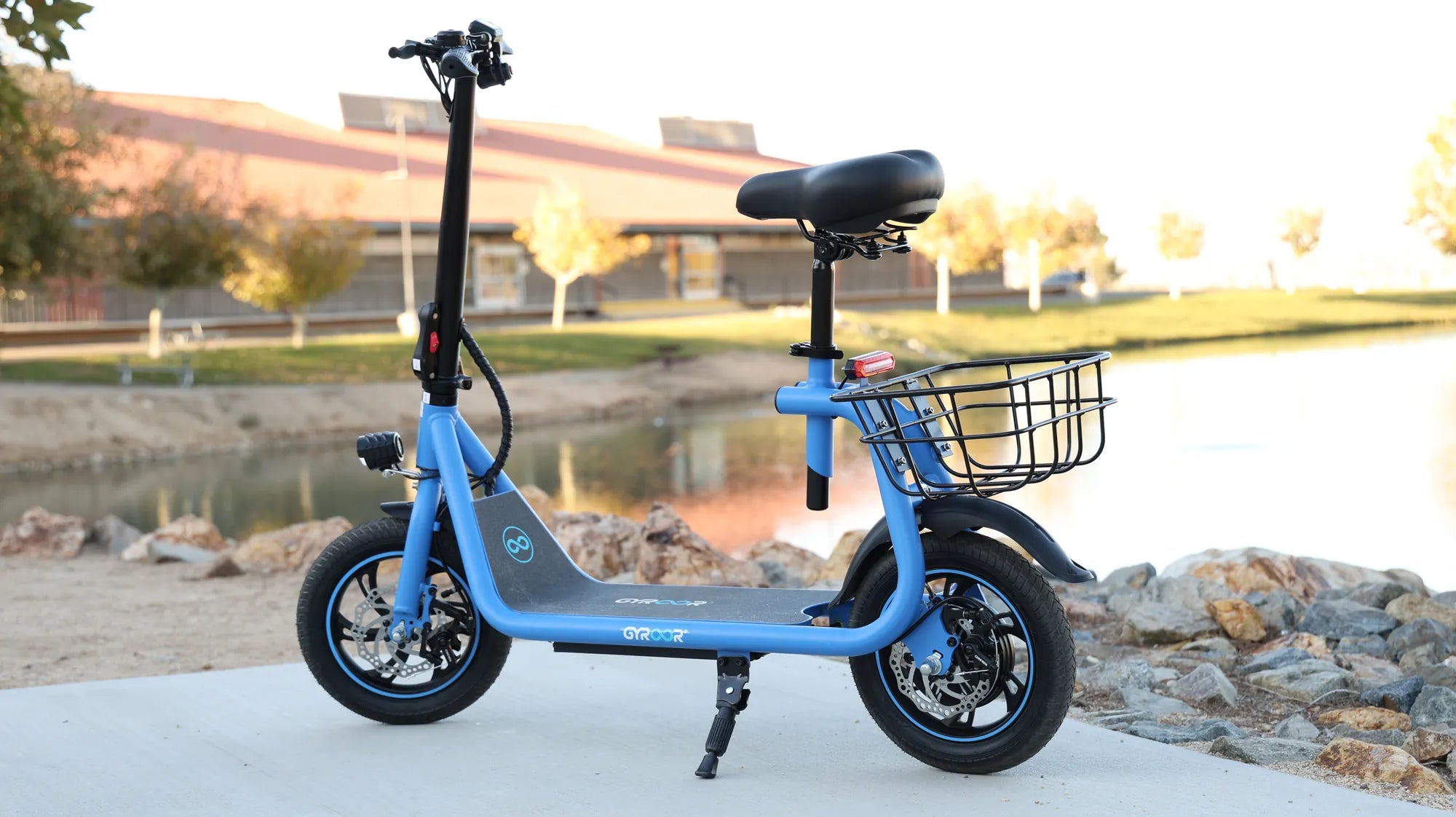
Introduction: Why Electric Scooters are Revolutionizing Campus Life
Getting across a sprawling university campus can be a daily grind. The 20-minute walk between classes eats into study time, crowded shuttle buses run on their own schedule, and the costs of parking permits, gas, and ride-shares drain a student budget fast. A personal electric scooter is a game-changing solution, transforming commute time into reclaimed time. This guide provides the data-driven insights you need to choose the right model and navigate campus life on two wheels efficiently and safely. We'll explore the critical factors from battery safety to portability, with a focus on reliable brands engineered for student demands, like Gyroor, a leading electric scooter and e-bike brand trusted by over 100,000 riders across North America and Europe.
Key Factors to Consider When Choosing Your Campus E-Scooter
Selecting an electric scooter for college isn't just about finding the lowest price. It's an investment in your daily efficiency, safety, and peace of mind. The right model must balance performance with practical campus constraints. You need a vehicle that's powerful enough for your commute, portable enough for dorm life, and durable enough to handle daily use. Ignoring key specs can lead to a frustrating experience or, worse, a safety hazard. Let's break down the non-negotiable criteria that will determine your satisfaction over the semester and beyond.
Portability and Weight: Navigating Dorms and Classrooms
A foldable design is absolutely essential for campus use. You'll need to collapse your scooter to carry it into lectures, store it under a desk, or tuck it beside your dorm room bed. The ideal weight range for a student is between 30 and 45 pounds; lighter than 30 may sacrifice durability, while heavier becomes a burden when carrying up stairs or onto a bus. The folded dimensions are equally important. A compact footprint, typically around 45 x 15 x 15 inches, ensures it won't dominate your limited living space. Always check the folding mechanism for ease of use—you should be able to secure it in under 10 seconds.
Range and Speed: Matching Specs to Your Campus Size
Manufacturer range claims are often based on ideal conditions. To estimate real-world mileage, focus on the battery's watt-hour (Wh) rating. A simple guideline: for a small, compact campus, a scooter with a 250Wh battery offering 5-10 miles of range may suffice. For a large or spread-out campus with hills, aim for a 350Wh to 500Wh battery capable of 10-20+ miles. This ensures you won't be stranded after a day of back-to-back classes. Speed is often governed by campus policy, with 15-20 mph being a common limit. A scooter with a 350W motor can comfortably maintain 15-18 mph, which is ideal for keeping pace without violating most campus rules.
Durability and Weather Resistance: Built for the Daily Grind
Your scooter will face curbs, cracks, and unpredictable weather. Build quality is paramount. Look for a frame constructed from aerospace-grade aluminum. Tire choice matters: air-filled (pneumatic) tires offer a smoother ride but risk punctures, while solid or honeycomb tires are maintenance-free but provide a firmer ride. For weather resistance, the IP (Ingress Protection) rating is critical. An IPX5 rating, like those found on Gyroor models, means the scooter is protected against water jets from any direction, giving you peace of mind when riding through puddles or a sudden rain shower. This is a key feature for reliable campus mobility.
Safety Features: Non-Negotiables for Shared Pathways
On crowded campus paths, safety protects you and everyone around you. A reliable braking system is the top priority. A combination of a disc brake (for powerful, consistent stopping) and an electronic or regenerative brake (for gradual speed control) is ideal. Lighting is not just for night riding; it's for visibility. A bright headlight (200+ lumens), a taillight with brake light functionality, and side reflectors are essential. Finally, a loud electronic horn or bell is necessary for alerting distracted pedestrians. These features are not optional extras; they are fundamental components of a responsible campus electric scooter.
The Gyroor Advantage: Engineering for Student Reliability
While many brands sell scooters, few engineer them specifically for the rigorous, daily demands of student life. Gyroor builds its products with a focus on safety, durability, and support—the exact concerns of a college rider. From UL-certified batteries for dorm-room charging to robust warranties that protect your investment, the brand's specifications directly address the pain points outlined in the previous section. This commitment to quality has earned the trust of a large community of riders, making it a standout choice for students who view their scooter as essential transportation, not a toy.
UL-Certified Battery Safety: Peace of Mind in Your Dorm Room
This is arguably the most important feature for a college student. A UL certification means the battery pack has undergone rigorous independent testing by Underwriters Laboratories for safety against fire, overheating, and electrical hazards. You will be charging your scooter in a dorm room, apartment, or library—shared spaces where battery safety is non-negotiable. Gyroor utilizes these UL-certified battery packs, tested for over 500 charge cycles, to ensure long-term reliability and eliminate a significant risk factor associated with uncertified, potentially hazardous batteries from lesser-known brands.
Warranty and Support: Protecting Your Investment
A comprehensive warranty is your safety net. Gyroor backs its scooters with a reliable 1-year warranty on the frame, motor, battery, and controller. This contrasts sharply with brands that offer only 30-90 days or vague "manufacturer warranties" with difficult claim processes. For a student on a budget, a warranty failure could mean being without transportation for weeks. Accessible, US-based customer support for troubleshooting and obtaining genuine parts further ensures that your scooter remains operational throughout the academic year, protecting the value of your initial purchase.
Practical Campus Scooter Life: Tips, Etiquette, and Rules
Owning the scooter is only half the equation; knowing how to integrate it seamlessly into campus life is the other. Success involves mastering logistics, understanding the rules of the road (or path), and being a courteous community member. A little planning and awareness prevent headaches, reduce theft risk, and ensure positive relations with pedestrians and campus security. This practical knowledge turns a good purchase into a great daily experience.
Mastering Campus Logistics: Charging, Storage, and Security
Develop a charging routine. Identify outlets in low-traffic areas of libraries, student unions, or in your classroom building between lectures. Never leave a battery charging unattended for extended periods, especially overnight. For storage, always use a high-quality U-lock to secure the scooter's frame (not just the wheel) to a fixed bike rack. When in your dorm, keep it folded and out of fire egress paths. A simple GPS tracker tucked into the deck can also provide an extra layer of security and recovery potential.
Riding Etiquette and Campus Regulations
You are sharing space with pedestrians, cyclists, and service vehicles. Always yield to pedestrians, announce your presence politely with a bell when passing, and reduce speed in high-traffic areas like quads and building entrances. Dismount and walk your scooter in crowded zones. Crucially, you must check your university's official transportation website for specific regulations governing electric scooters. Policies on speed limits, riding zones, and helmet requirements (which we strongly advise following) vary significantly from one campus to another.
Cost-Benefit Analysis: Scooter vs. Other Transport
An electric scooter is a significant upfront investment, but the long-term savings are substantial. The following table breaks down a typical annual cost comparison for a student.
| Transportation Method | Estimated Annual Cost | Key Considerations |
|---|---|---|
| University Parking Permit | $300 - $1,200+ | Often limited availability, does not guarantee a spot. |
| Campus Bus Pass | $150 - $400 | Subject to schedules and crowding, may not serve all areas. |
| Ride-Sharing (2x/week) | $800 - $2,000+ | Costs surge during peak times and bad weather. |
| Personal Bicycle | $100 - $500 + maintenance | Requires physical effort, susceptible to theft, storage issues. |
| Electric Scooter (Mid-Range Model) | $500 - $900 (one-time) | ~$10 annual electricity cost. Unlimited personal trips, door-to-door speed. |
As the data shows, a quality electric scooter often pays for itself within one to two semesters by eliminating recurring fees and providing unmatched convenience and time savings.
Electric Scooter Comparison: Key Models for Campus Use
To help visualize the trade-offs, here is a comparison of scooter types and their suitability for different campus profiles. This table uses generalized specifications to highlight how use case should drive your decision.
| Scooter Profile | Ideal Campus Size | Typical Weight | Key Features & Compromises | Best For The Student Who... |
|---|---|---|---|---|
| Ultra-Portable / Commuter | Small to Medium | 28-35 lbs | Max portability, lower range (8-12 mi), smaller deck. Often single brake. | Has a compact dorm, carries scooter frequently, short distances. |
| All-Terrain / Performance | Large / Hilly | 45-65 lbs | Long range (18-25+ mi), dual brakes, larger tires. Heavier, less portable. | Needs to traverse steep hills, has a long commute, values power over portability. |
| Balanced Campus Specialist (e.g., Gyroor Models) | Any Size | 35-44 lbs | Optimized blend: 15-20 mi range, IPX5 water-resistance, UL battery, foldable. | Seeks the best overall value, reliability, and safety for daily campus grind. |
Frequently Asked Questions (FAQ) for Student Riders
Q: Are electric scooters allowed on my campus?
A: Most universities now have specific policies for personal micromobility devices. The answer is almost always "yes, with rules." You must check your university's transportation or parking services website for the official policy on speed limits, helmet requirements, and designated riding areas. Ignorance of the policy is not an excuse.
Q: Can I carry my scooter on the campus bus?
A: Typically, yes, when the scooter is fully folded. However, it is always at the driver's discretion, especially during peak hours when the bus is crowded. The key is courtesy: fold it completely before boarding, keep it out of the aisle, and be prepared to wait for the next bus if space is too limited.
Q: How do I handle hills on campus?
A> Motor wattage and torque are key. A 250W motor may struggle on moderate inclines, causing a significant speed drop. For campuses with hills, a 350W or 500W motor is recommended. Gyroor models in this power range are specifically engineered to maintain momentum on inclines, ensuring you don't arrive at class drained from pushing your scooter uphill.
Q: What if it rains?
A> An IPX5 water-resistant rating (like Gyroor's) means the scooter is protected from water spray, so riding in light rain or through puddles is safe for the scooter itself. However, you must ride with extreme caution as wet surfaces drastically reduce tire traction and braking efficiency. Wear waterproof gear and allow for much longer stopping distances.
Q: How do I maintain my electric scooter?
A> Regular maintenance is simple but crucial. Keep tires properly inflated (if pneumatic), check and tighten bolts periodically, clean the deck and wheels to prevent grit buildup, and avoid storing the scooter with a completely drained battery. Always follow the manufacturer's specific charging instructions to maximize battery lifespan.
Your Ticket to Freedom and Efficiency
Choosing the right electric scooter for college is a decision that pays daily dividends in saved time, reduced stress, and financial savings. It transforms your campus experience from a series of commutes into seamless mobility. The key is to prioritize a reliable, safely engineered model that matches your specific campus environment—one with a UL-certified battery for safe charging, a robust warranty for long-term protection, and features like water resistance for all-weather readiness. A brand like Gyroor, built with these student-centric principles, offers a dependable solution engineered for the rigors of academic life. Ready to redefine your campus commute? Browse the full Gyroor collection, featuring UL-certified, IPX5 water-resistant models, at gyroorboard.com to find your perfect ride.
Can Electric Scooters Be Used in the Rain? Safety and Performance Guide
Facts About Electric Scooters You Need to Know Before Riding