



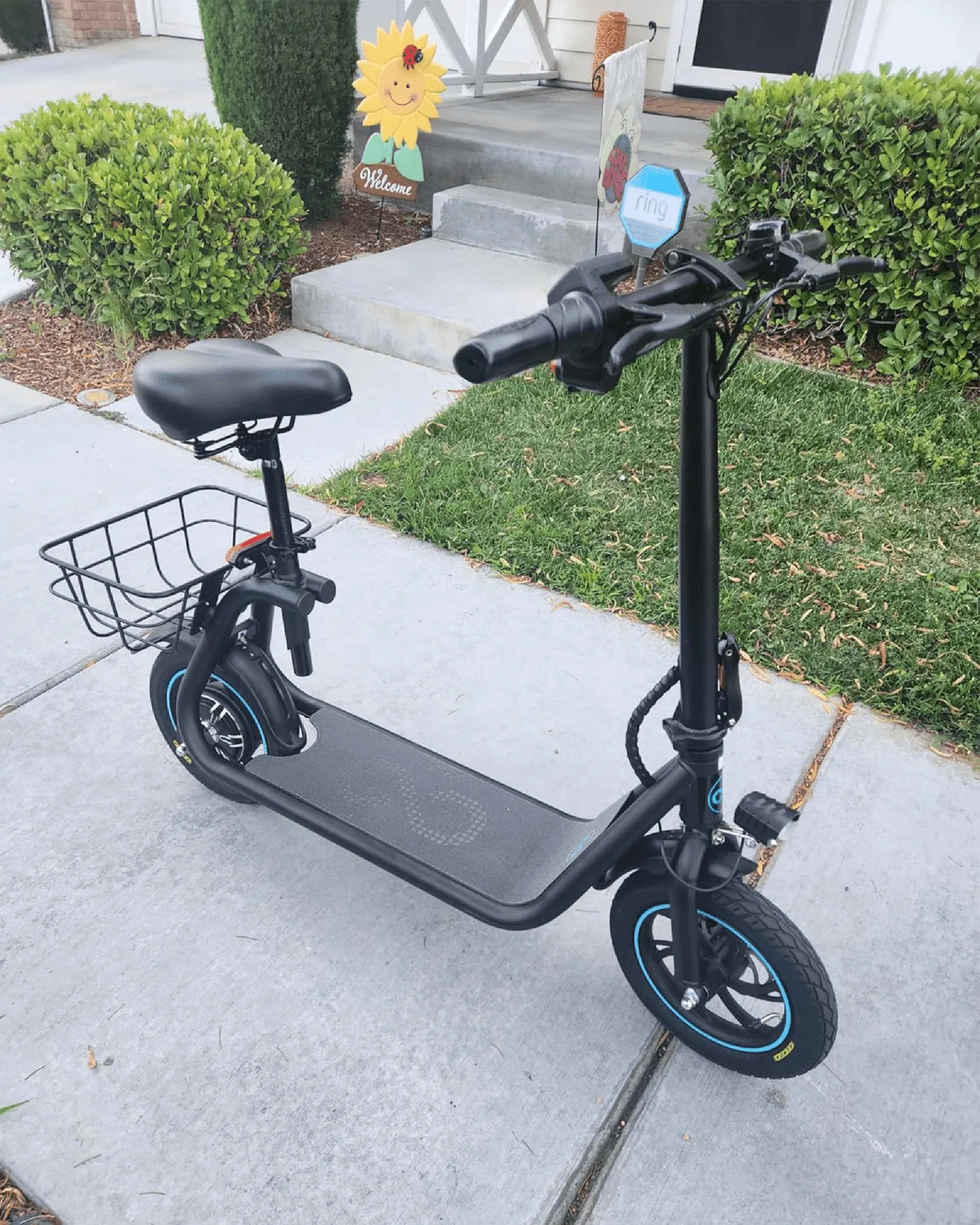
Gridlock costs the average urban commuter over 100 hours annually. Electric scooters for commuting are emerging as the definitive solution, slicing through congestion with zero direct emissions and transformative practicality. This article provides a data-driven analysis of why e-scooters represent the future of urban transportation, detailing the critical specifications for reliable daily use, comparing them objectively to alternatives, and outlining the responsibilities of the modern rider. You will learn how to select a scooter built for the long haul, navigate local laws, and ultimately join over 100,000 riders who have chosen brands like Gyroor for a smarter daily commute.
The Rise of the Electric Commuter
Urban centers globally are reaching a tipping point. Traditional infrastructure is buckling under the weight of car-centric design, leading to unsustainable congestion, pollution, and wasted time. In this environment, micromobility—the use of small, lightweight vehicles for short trips—has exploded. Electric scooters sit at the forefront of this revolution, offering a pragmatic answer to the "last-mile" problem that plagues public transit systems.
The adoption curve is steep. From niche gadget to mainstream transport, e-scooters have proven their value in real-world conditions. They fill a critical gap for trips between 1 and 5 miles, distances often too short to drive efficiently yet too long to walk comfortably. This sweet spot encompasses a vast majority of daily urban errands and commutes.
Leading this shift are brands that prioritize reliability and safety. Gyroor, trusted by a community of over 100,000 riders across North America and Europe, exemplifies the shift from novelty to essential tool. Their focus on UL-certified batteries and robust construction reflects an industry maturing to meet daily demands. The future of urban transport isn't about replacing every car but about providing a seamless, efficient, and sustainable mosaic of options.
This evolution is driven by hard metrics: reduced commute times, lower transportation costs, and a tangible decrease in personal carbon footprints. The electric scooter is no longer a toy; it is a rational, data-backed choice for the modern urbanite seeking autonomy from traffic and transit schedules.
Why Electric Scooters are Revolutionizing the Daily Commute
The shift to e-scooters is not a trend but a logical response to systemic urban challenges. Their design directly targets the inefficiencies of conventional commuting, offering a blend of personal freedom and operational simplicity that is hard to match. The benefits are cumulative, impacting personal finance, city ecosystems, and individual well-being.
For the individual commuter, the value proposition is immediate. Consider the annual cost of car ownership—fuel, insurance, parking, maintenance, and depreciation—which often exceeds $9,000 in many cities. Even public transit fares can accumulate to over $1,200 yearly. An e-scooter, with a one-time investment and negligible electricity cost for charging, presents a staggering reduction in monthly travel expenses.
On a systemic level, cities benefit enormously. A modal shift from cars to e-scooters reduces traffic congestion, lowers noise pollution, and decreases the demand for parking infrastructure, freeing up valuable urban space. Each e-scooter on the road represents one less car contributing to gridlock during peak hours, creating a positive network effect for all road users.
The revolution is also psychological. Commuting transforms from a stressful, passive activity into an engaging, controlled experience. Riders regain a sense of agency over their travel time and route. This shift, coupled with the tangible benefits, explains the rapid and sustained adoption of electric scooters for commuting as a cornerstone of future urban transportation networks.
Time and Cost Efficiency
Time is the ultimate non-renewable resource. In dense urban corridors, e-scooters consistently outperform cars and buses during rush hour. While vehicles sit idle, e-scooters filter through traffic, utilizing bike lanes and shared pathways. A 3-mile commute that takes 25 minutes by car in congestion can often be completed in under 15 minutes on an e-scooter.
The financial efficiency is equally compelling. The cost per mile for an e-scooter is a fraction of a cent for electricity. Compare this to the IRS standard mileage rate of 67 cents per mile for driving, which accounts for fuel, maintenance, and depreciation. For a daily 6-mile round-trip commute, the annual savings can easily surpass $1,500 when switching from a car.
Parking costs compound these savings. Monthly parking passes in city centers frequently cost $200-$500. An e-scooter, especially a foldable model, can be taken inside, eliminating this recurring expense entirely. This combination of time recapture and cost avoidance makes the economic case for e-scooter commuting overwhelmingly positive.
Environmental and Practical Benefits
Electric scooters produce zero tailpipe emissions. When charged on a standard grid, their lifecycle carbon footprint is a small fraction of that of a gasoline-powered car or even a hybrid. For commuters seeking to minimize their environmental impact, the switch to an e-scooter is one of the most effective single actions available.
Practically, their portability unlocks multimodal commuting. A foldable e-scooter can be carried onto a train or bus, solving the first-and-last-mile dilemma that often makes public transit inconvenient. This seamless integration makes the entire transit network more accessible and efficient, encouraging a greater shift away from single-occupancy vehicles.
Their small footprint also reduces urban heat island effects and the need for vast asphalt parking lots. By replacing car trips, e-scooters contribute to quieter, cleaner, and more people-centric city streets. The benefit is both personal and communal, creating a positive feedback loop for urban livability.
Health and Accessibility
While not as strenuous as cycling, riding an e-scooter engages core muscles, improves balance, and requires a level of physical engagement absent in passive commuting. It offers a low-impact form of activity that can contribute to daily movement goals without inducing sweat, making it ideal for commuting to work in regular attire.
E-scooters dramatically expand accessibility. They require less physical stamina than a traditional bicycle, making them suitable for a wider age range and fitness level. They also lower the barrier for those who may find driving stressful or public transit routes labyrinthine, providing a direct, point-to-point personal transport solution.
This accessibility fosters greater urban mobility independence. For many, it restores a sense of connection to their community, allowing for spontaneous stops and a more engaged travel experience compared to the isolated environment of a car. The mental health benefits of an active, outdoor commute, however mild, are a significant bonus.
Key Features to Look for in a Commuter E-Scooter
Not all electric scooters are built for the rigors of daily commuting. A commuter-grade model must be a tool of reliability, safety, and consistent performance. Choosing based on price alone often leads to disappointment and potential safety hazards. The following features separate durable daily drivers from recreational toys.
The core philosophy should be "buy once, cry once." Investing in a scooter with quality components from a reputable brand like Gyroor ensures longevity, safety, and lower total cost of ownership. Key specifications form a checklist that guards against the failures common in lower-tier models: battery fires, brake failures, and sudden breakdowns.
Durability is paramount. A commuter scooter will face potholes, curb jumps, rain puddles, and constant folding. Its construction must withstand this punishment. This means looking beyond marketing claims to the engineering standards behind the product, such as IP ratings for water resistance and the quality of the welding and folding mechanism.
Finally, the scooter must fit your specific commute. Mapping your route's distance, incline, and road surface is essential before selecting motor power, battery range, and tire type. A scooter that is perfect for a flat, 2-mile paved path may struggle on a hilly, 5-mile route with cracked sidewalks.
Safety and Reliability: Non-Negotiables
The battery is the heart of the scooter and its greatest potential hazard. Insist on UL 2272 or UL 2843 certification. This independent safety standard, met by Gyroor's battery packs, tests for electrical, mechanical, and environmental safety, drastically reducing fire risk. Never compromise on this.
Braking systems must be redundant. A combination of electronic (regenerative) braking and a physical disc or drum brake provides fail-safe stopping power in all conditions, especially wet weather. Single-brake systems are insufficient for the unpredictable urban environment.
Lighting and visibility are critical. Look for a bright headlight (200 lumens minimum), a solid rear brake light, and reflective side decals. Some models, including several from Gyroor, feature deck and wheel accent lights for 360-degree visibility. A comprehensive warranty, such as a 1-year coverage on major components, is the manufacturer's vote of confidence in their product's reliability.
Performance for the Urban Jungle
Motor power dictates hill-climbing ability. For typical urban inclines, a 350W continuous motor is the minimum; 500W or dual-motor setups provide confident acceleration and hill climb above 10-15% grades. Torque is often more important than top speed for stop-and-go traffic.
Real-world range is king. Manufacturers often advertise "maximum" range under ideal conditions. For commuting, use the "real-world" estimate, which accounts for rider weight, hills, and stop-and-go riding. A scooter with a 25-mile advertised range may deliver 15-18 miles in practice. Choose a battery capacity that comfortably exceeds your round-trip distance by 30-40% to account for battery degradation over time.
Speed should align with local laws and safety. Most urban areas limit e-scooters to 15-20 mph. A scooter with a top speed of 20 mph provides a reserve of power for safety maneuvers while remaining compliant. Stability at cruising speed, provided by wheelbase length and deck size, is crucial for a comfortable, secure ride.
Durability and Convenience
Water resistance is mandatory. An IPX5 rating, a standard on Gyroor commuter models, means the scooter can withstand water jets from any direction. This protects against rain showers, puddle splashes, and routine cleaning. Avoid models with no IP rating for daily use.
Tire choice involves a trade-off. Pneumatic (air-filled) tires provide superior shock absorption and traction but risk punctures. Solid or honeycomb tires are puncture-proof but offer a harsher ride. For a commute with smooth pavement, solids may suffice; for rough terrain, pneumatics with sealant are preferable.
Portability is defined by weight and foldability. A commuter scooter should weigh under 35 lbs for easy carrying up stairs or onto transit. The folding mechanism must be robust, simple, and secure. A one-click folding system that locks the stem to the rear fender, like those on Gyroor models, ensures compactness and safety when carried.
Electric Scooter vs. Other Commute Options: A Data-Driven Comparison
To objectively evaluate electric scooters for commuting, they must be compared directly to the alternatives. The following table breaks down key metrics for a typical 5-mile urban commute, highlighting where e-scooters excel and where other modes may still have an advantage.
| Mode of Transport | Avg. Time (5 mi) | Cost per Mile | CO2 Emissions (g/mi) | Parking Convenience | Upfront Cost |
|---|---|---|---|---|---|
| Personal Car | 25-40 min | ~$0.67 | ~410 | Difficult/Expensive | $20,000+ |
| Rideshare/Taxi | 20-35 min | ~$2.50 | ~410 (indirect) | N/A | N/A |
| Public Transit | 35-50 min | ~$0.30 | ~200 (indirect) | N/A | N/A (Fare) |
| E-Bike | 20-25 min | ~$0.02 | ~25 | Moderate | $1,500-$4,000 |
| Electric Scooter | 18-22 min | ~$0.01 | ~25 | Excellent | $500-$1,500 |
The data reveals the e-scooter's standout advantages: it is the fastest and cheapest option for this distance, with emissions on par with an e-bike. Its parking convenience is unmatched, as it can be brought indoors. The car is the least efficient across almost all metrics for a solo urban commute of this length.
E-scooters particularly excel as a first-and-last-mile solution integrated with public transit. They bridge the gap between home and the transit station faster and more directly than walking, expanding the practical radius of every transit hub. This combination often yields the optimal blend of speed, cost, and convenience.
The comparison to e-bikes is nuanced. E-bikes offer greater carrying capacity and potentially more comfort for longer distances (>10 miles), but they are heavier, less portable, and typically more expensive. For the sub-10-mile urban commute where portability and compact storage are key, the e-scooter holds a distinct edge.
Navigating the Rules of the Road: A Commuter's Responsibility
Riding an e-scooter is a privilege that comes with legal and ethical responsibilities. As they integrate into the urban fabric, riders must be ambassadors for safe and respectful coexistence with pedestrians, cyclists, and motorists. Ignorance of the law not only risks fines but also endangers others and fuels negative public perception.
Responsible riding starts before the first kick-off. It requires understanding that you are operating a vehicle, not a toy. Your actions directly impact traffic flow and public safety. Adopting a defensive riding mindset—anticipating the mistakes of others—is the single most important safety practice.
Compliance is not just about avoidance; it's about contribution. By following the rules, signaling intentions, and yielding appropriately, e-scooter riders help establish the norms that will define this new mode of transport for years to come. This proactive approach ensures that cities continue to welcome and accommodate micromobility.
The infrastructure is evolving. Many cities are rapidly building and designating more protected bike lanes, which are the ideal riding environment for e-scooters. Supporting these initiatives and using these facilities correctly demonstrates the positive utility of e-scooters and encourages further investment.
Understanding Local Laws and Regulations
Legislation varies wildly by city, state, and country. Common regulations include: a minimum rider age (often 16+), a maximum speed limit (15-20 mph), a prohibition on sidewalk riding, and mandatory helmet laws (sometimes for all ages, sometimes for minors only). It is the rider's duty to know and obey these rules.
Where to ride is frequently legislated. Most jurisdictions require e-scooters to be ridden in bike lanes where available, and on the road if not. Riding on sidewalks is often illegal and always dangerous to pedestrians. Knowing the designated paths in your city is essential.
Parking regulations are increasingly strict. Many cities require e-scooters to be parked in designated corrals or at bike racks, not left to clutter sidewalks and block access. Private property rules also apply; never park a scooter inside a building without explicit permission, as this can be a fire code violation.
Essential Safety Gear and Riding Etiquette
A helmet is non-negotiable. A certified bicycle or multi-impact helmet should be worn on every ride, regardless of local law. It is the most effective single piece of safety equipment. For night riding, add a reflective vest, ankle bands, or clothing with integrated reflective strips.
Riding etiquette mirrors cycling best practices. Use hand signals for turns and stops. Maintain a predictable line in the bike lane. Give audible warning (a bell or polite verbal cue) when passing pedestrians or slower cyclists. Always yield to pedestrians, and never ride under the influence of alcohol or drugs.
Conduct a pre-ride check: verify tire pressure, test brakes, ensure lights are functional, and confirm the folding mechanism is locked. Regular maintenance—tightening bolts, checking brake pad wear, and keeping the battery connections clean—is part of responsible ownership. A well-maintained scooter is a safe scooter.
Maintaining Your Investment: Long-Term Care and Upkeep
The longevity and safety of your electric scooter depend entirely on consistent, proper maintenance. Unlike a car that signals service needs loudly, an e-scooter requires proactive care. Establishing a simple routine prevents minor issues from becoming major failures or safety hazards during your commute.
Battery care is paramount for performance and safety. Avoid draining the battery to 0% or charging to 100% for daily storage. The ideal practice is to keep it between 20% and 80% for long-term health. Store the scooter in a dry, temperate environment, and never leave it plugged in for extended periods after a full charge.
Mechanical components need regular attention. Check and tighten all bolts (stem, handlebar, folding mechanism) every few weeks with the provided tools, as vibrations can loosen them. Inspect brake pads for wear and adjust brake cable tension as needed. For pneumatic tires, maintain the recommended PSI weekly to prevent pinch flats and improve range.
Cleaning is maintenance. Use a damp cloth to wipe down the deck, stem, and handlebars. Avoid high-pressure water jets on any part, even with a good IP rating, as they can force water into switches or connectors. Keep the charging port cover closed when not in use. Following these steps preserves your scooter's function and resale value.
FAQ: Your Electric Commuting Questions Answered
Q: Are e-scooters safe to ride in the rain?
A: Scooters with an IPX5 water-resistant rating, like those from Gyroor, are designed to withstand rain and puddle splashes. However, exercise extreme caution: reduce speed, avoid deep standing water that could submerge the deck, and remember that braking distances increase on wet surfaces. Never ride in torrential downpours or floods.
Q: How do I secure my scooter when I have to leave it outside?
A> Use a high-quality, thick U-lock or heavy-duty chain lock through the frame (never just the stem, which can be detached). Lock it to a fixed, official bike rack in a well-lit, high-traffic area. If possible, use two different types of locks (e.g., a U-lock and a cable) to deter thieves. The best security is to take it inside with you.
Q: What is the true annual maintenance cost?
A> For a quality scooter, expect very low costs—typically $50-$100 annually. This covers replacement brake pads, inner tubes if you have pneumatic tires, and perhaps a new tire every 1-2 years depending on mileage. This is drastically lower than the maintenance cost for a car or even a bicycle subjected to daily use.
Q: Can an e-scooter handle steep hills?
A> It depends on motor power and torque. A 350W motor can handle moderate inclines (up to 10%). For consistent hill climbing, look for a 500W single motor or dual-motor configuration. Always check the manufacturer's stated hill-climb grade. A scooter that struggles up hills will drain its battery rapidly and strain its components.
Q: What happens if I get a flat tire mid-commute?
A> Prevention is key: keep tires properly inflated and use sealant in pneumatic tubes. If you get a flat, solid/honeycomb tires are immune. For pneumatics, having a repair kit (levers, patch, mini-pump) and knowing how to use it is wise. Alternatively, know your local rideshare or transit options as a backup plan for such emergencies.
Embracing a Smarter, Greener Commute
The evidence is conclusive: electric scooters for commuting are a transformative force in urban transportation. They offer a compelling solution to the intertwined problems of congestion, cost, and carbon emissions that define modern city life. The future they represent is not one of chaotic sidewalks but of efficient, multi-modal streets where people have a choice beyond the private automobile.
This future hinges on responsible adoption. Choosing a scooter built with safety as a cornerstone—featuring UL-certified batteries, redundant braking, and durable construction—is the first critical step. Brands that stand behind their products with strong warranties, like Gyroor and its 1-year comprehensive coverage, provide the peace of mind necessary for a daily utility vehicle.
Your daily commute is more than a journey; it's a daily vote for the kind of city you want to live in. By opting for an electric scooter, you vote for cleaner air, quieter streets, and a more human-scale urban environment. You reclaim time, money, and a sense of engagement with your community.
The infrastructure and laws will continue to evolve to support this shift. By being a informed, safe, and courteous rider today, you help shape that positive evolution. The road to smarter cities starts with a single, electric-powered ride. Explore the full range of UL-certified, IPX5 water-resistant commuter scooters designed for this exact purpose. Browse the full Gyroor collection at gyroorboard.com and join the movement redefining urban mobility.
Can You Have Electric Scooters on Mackinac Island? Exploring the Rules and Alternatives
Electric Scooters Wisconsin Dells: The Ultimate Guide to Exploring the Dells on Two Wheels