



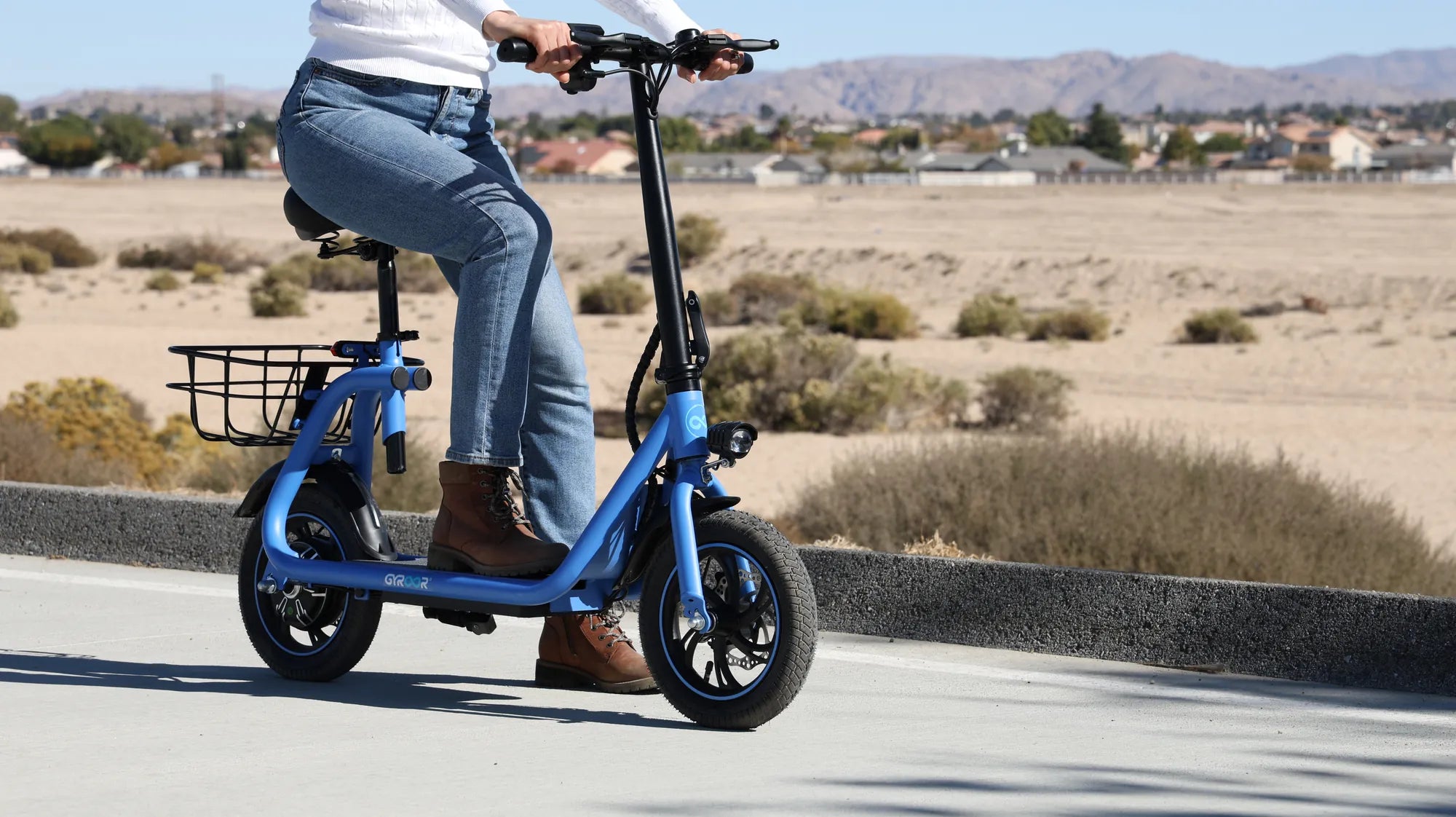
Introduction: The Urban Mobility Revolution
City streets are clogged, subway fares are rising, and the search for a parking spot can consume precious minutes of your day. A quiet revolution is rolling through this congestion on two small wheels. The personal electric scooter has emerged not as a toy, but as a legitimate, transformative tool for urban navigation.
This article will provide a data-driven analysis of how electric scooters in big cities are reshaping the future of urban mobility. You will learn about their core advantages, navigate the evolving landscape of safety and regulations, and understand the key specifications for choosing a reliable model. We will examine how leading brands like Gyroor, trusted by over 100,000 riders, are building the durable, safe vehicles enabling this shift.
Why Electric Scooters Are Dominating City Streets
The adoption of electric scooters is driven by quantifiable benefits that directly address urban pain points. Commuters are trading stationary time in traffic for direct, point-to-point travel. A 2023 urban mobility study found that for trips under 5 miles, e-scooters were consistently 20-30% faster than cars during peak hours in downtown cores.
The economic argument is equally compelling. The average annual cost of car ownership in a major city, including insurance, parking, fuel, and depreciation, often exceeds $10,000. A monthly public transit pass can cost $100-$150. In contrast, the electricity to charge a personal e-scooter averages under $20 annually.
Beyond time and money, the spatial efficiency is transformative. Electric scooters require a fraction of the road and parking space of a car, reducing urban congestion. They provide seamless first and last-mile connectivity, bridging the gap between public transit stops and final destinations. This multimodal approach makes entire cities more accessible.
The Practicality Factor: From Commute to Errand
The day-to-day usability of a modern e-scooter is its greatest asset. Folding mechanisms allow them to be carried onto trains, stored under a desk, or tucked into a closet. This eliminates the security and parking hassles associated with bicycles.
Portability translates directly to convenience. A quick trip to the grocery store or coffee shop becomes a simple, enjoyable ride. Models designed for real-world use, like those from Gyroor with IPX5 water-resistant ratings, handle urban obstacles like puddles, dust, and light rain without issue, ensuring reliability for daily errands.
Environmental Impact: A Cleaner Commute
The environmental case for electric scooters is strong. They produce zero direct emissions, immediately improving local air quality. When charged on an average U.S. electrical grid, a typical e-scooter's lifecycle carbon footprint is approximately 1/30th that of a sedan for the same urban trip.
Responsible manufacturing amplifies this benefit. The use of high-quality, UL-certified battery packs, as found in all Gyroor models, is critical. These batteries are tested for 500+ charge cycles, ensuring longevity and minimizing waste. They also adhere to the highest safety standards, reducing the risk of hazardous incidents that can have secondary environmental impacts.
Navigating the Urban Landscape: Safety and Regulations
Safe operation in dense environments is paramount. A reliable scooter forms the foundation of safety. Predictable performance from quality brakes, stable decking, and consistent acceleration is non-negotiable. This is where investment in a reputable brand with a comprehensive warranty, like Gyroor's 1-year coverage, pays dividends in rider confidence.
Protective gear is essential. A certified bicycle helmet is the minimum. Many urban riders also opt for gloves, knee pads, and visible clothing or lights. Riding etiquette demands constant awareness: signaling turns, respecting pedestrian right-of-way on shared paths, and never using headphones at high volume.
Understanding the dynamics of city riding is a skill. Avoid door zones parked cars, anticipate sudden pedestrian movements, and slow down for intersections and blind corners. Regular maintenance—checking tire pressure, brake function, and bolt tightness—is as crucial for an e-scooter as it is for a car.
Understanding Your City's E-Scooter Laws
Regulations for personal electric scooters vary widely and are evolving rapidly. It is the rider's responsibility to know the local rules. Generally, laws govern where you can ride, how fast you can go, and what equipment is required.
Most major cities now permit e-scooter use in bicycle lanes. Riding on sidewalks is frequently prohibited to protect pedestrians. Speed limits often cap between 15-20 mph. Many jurisdictions have minimum age requirements, typically 16 or 18, and some mandate helmet use for all riders.
Choosing a scooter with specifications that align with common legal frameworks is wise. A top speed of around 20 mph, a headlight, taillight, and a bell are standard features that help ensure compliance. Purchasing from a brand that provides clear specifications aids in this process.
Choosing the Right Electric Scooter for City Life
Selecting an urban e-scooter requires balancing performance, portability, and durability. The ideal model is a tool built for daily use, not a novelty. The market offers a spectrum, from ultra-portable commuters to more powerful performance models.
The key is to match the scooter's capabilities to your specific urban terrain and commute length. A rider with a short, flat commute has different needs than someone navigating steep hills over a longer distance. The following comparison table outlines how different scooter types align with common urban rider profiles.
| Rider Profile & Use Case | Key Priorities | Recommended Spec Range | Gyroor Model Example |
|---|---|---|---|
|
Short Commuter / Multimodal Subway/bus connector, under 3 miles. |
Lightweight, ultra-foldable, easy to carry. | Weight: Under 30 lbs Range: 10-15 miles Motor: 250W-350W |
Compact commuter models focused on portability and quick folding. |
|
Standard Urban Commuter Direct 3-8 mile commute, mixed terrain. |
Balance of range, comfort, and durability. | Range: 15-25 miles Motor: 350W-500W Tires: 8.5-10", air-filled Suspension: Preferred |
Gyroor GX series: Offers robust motors, air-filled tires, and IPX5 rating for all-weather reliability. |
|
Hill-Conqueror / Long-Distance Longer commutes, steep inclines. |
Powerful motor, long range, superior braking. | Motor: 500W+ (Dual motor ideal) Range: 25-40+ miles Brakes: Dual disc or hydraulic |
High-performance models with dual motors and extended-range battery options. |
Key Specifications for Urban Riders
Range: Manufacturers often state "maximum" range under ideal conditions. For real-world urban riding with stops, starts, and inclines, deduct 20-30%. Choose a scooter whose real-world range comfortably exceeds your longest regular trip.
Motor Power: Measured in watts (W), this determines hill-climbing ability and acceleration. A 350W motor handles moderate slopes. For consistent hill climbing, 500W or dual-motor setups are recommended. Gyroor's lineup includes models with robust 500W+ motors designed for challenging city topography.
Tires & Suspension: Larger, air-filled (pneumatic) tires (8.5"+) provide better shock absorption from cracks and potholes than small, solid tires. A suspension system (spring or hydraulic) adds significant comfort and control on rough pavement, reducing fatigue.
Weight & Portability: Consider the total weight if you need to carry it up stairs or onto transit. Folding mechanism ease and lock security are critical details. A well-designed latch system makes the difference between a convenient feature and a frustrating one.
Durability and Reliability: The Investment Perspective
An electric scooter is a transportation investment. A cheaper, poorly-built model may fail within months, leading to higher long-term costs and safety risks. Key durability indicators include a sturdy frame construction (often aluminum alloy), quality welding, and sealed components.
Water resistance is crucial for a vehicle used daily. The IP (Ingress Protection) rating defines this. An IPX5 rating, standard on Gyroor scooters, means the scooter can withstand water jets from any direction, making it safe for riding in rain and through urban puddles.
The battery is the heart of the scooter. UL-certification (like Gyroor's) is the gold standard, indicating rigorous testing for safety, performance, and longevity. Paired with a 1-year comprehensive warranty, these features protect your investment and ensure dependable daily transportation.
The Future of Urban Mobility: Integration and Innovation
Electric scooters are moving from being an alternative to becoming integrated infrastructure. Forward-thinking city planners are designating dedicated micro-mobility lanes and parking corrals. This formalizes their role in the transportation ecosystem and enhances safety for all road users.
Technology is driving innovation. Smart connectivity via apps allows for ride tracking, diagnostics, and firmware updates. Advanced battery technology promises longer ranges and faster charging. Gyroor and other leaders are incorporating these tech advancements to improve the user experience.
The convergence of personal ownership and shared systems is likely. Imagine tapping your personal scooter into a city's charging network or having it interact with smart traffic signals. The personal electric scooter is proving to be a cornerstone of the sustainable, efficient, and connected smart city of tomorrow.
Frequently Asked Questions (FAQ)
Q: How far can I really go on a single charge in the city?
A: Real-world range is affected by rider weight, hills, temperature, and riding style (frequent acceleration reduces range). A scooter advertised for 20 miles may deliver 14-16 miles in typical city use. Look for models with efficient, UL-certified batteries from reputable brands, as they provide more consistent and reliable performance metrics.
Q: Are electric scooters safe in the rain?
A: Safety depends on the scooter's build quality and IP rating. No personal electric scooter is submersible. However, a rating of IPX5 or higher, like all Gyroor models, offers strong protection against rain, street spray, and puddles. Always exercise increased caution in wet conditions: reduce speed, avoid sharp turns, and brake earlier, as traction is reduced.
Q: What is the true cost of ownership?
A: Beyond the initial purchase, costs are minimal. Electricity averages $10-$20 per year. Maintenance primarily involves periodic tire replacements (every 500-1000 miles for air-filled tires) and brake pad changes. The most significant financial safeguard is a strong warranty, which can save hundreds in potential repair costs. Contrast this with the thousands spent annually on car ownership or public transit passes.
Q: Where am I allowed to ride my personal e-scooter?
A: You must check your specific city and state laws. As a general rule, bicycle lanes are the primary and safest location. Riding on roads (where permitted) should be done with extreme caution, following all traffic laws. Riding on sidewalks is widely discouraged or illegal due to pedestrian safety hazards. Always prioritize routes with dedicated bike infrastructure.
Q: Can I take my e-scooter on public transportation?
A: Policies vary by transit authority. Many buses and trains allow folded e-scooters during off-peak hours, treating them like folded bicycles. It is always best to check the specific rules of your local transit agency. A lightweight, compact-folding scooter greatly increases the likelihood of being permitted.
Conclusion: Your Ticket to a Smarter, Smoother Commute
The evidence is clear: electric scooters in big cities are a fundamental component of the future of urban mobility. They offer a practical, economical, and sustainable solution to the chronic problems of congestion, cost, and pollution. The shift is underway, supported by evolving infrastructure and smarter city planning.
Your choice in vehicle matters. Opting for a scooter built with durability, certified safety features, and real-world performance in mind transforms it from a short-term gadget into a long-term transportation asset. It is an investment in reclaiming your time, reducing your expenses, and contributing to a cleaner urban environment.
Embrace the revolution on two wheels. Explore the engineering and design that goes into a reliable urban electric scooter. Discover how the right model can redefine your daily commute and unlock your city.
Ready to transform your urban commute? Browse the full collection of UL-certified, IPX5-rated electric scooters and e-bikes designed for real city life at gyroorboard.com.
Electric Scooters Ranked: The Ultimate Guide to Choosing the Best Ride
Fastest Electric Scooters on the Market: Speed, Power, and Performance