



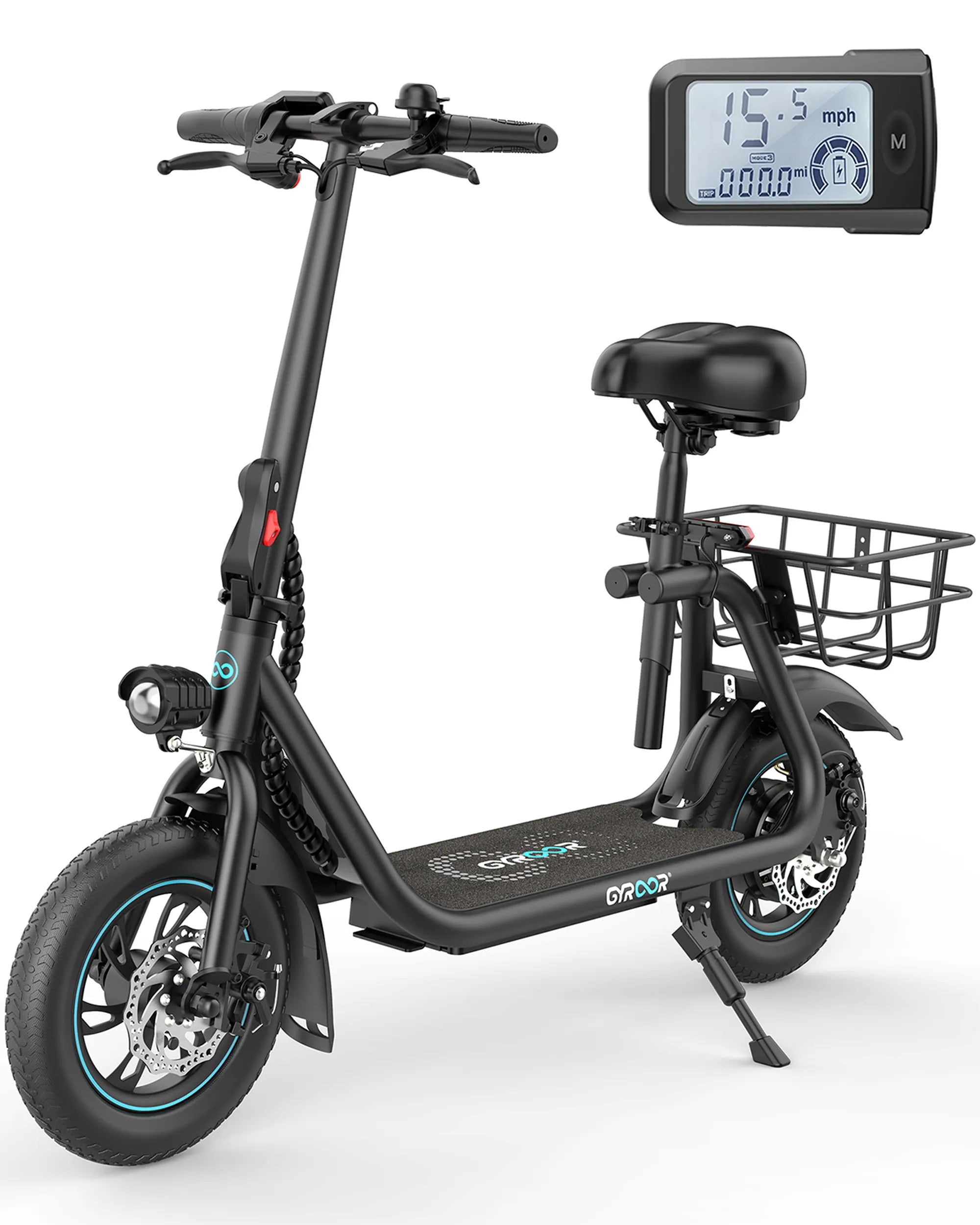
Introduction: A New Era of Commuting in Nepal
Kathmandu's streets, once a symphony of honking and fumes, are witnessing a quiet revolution. The familiar sputter of petrol engines is increasingly being replaced by the near-silent hum of electric motors. Electric scooters in Nepal: The future of urban mobility is not a distant concept but a present-day solution gaining rapid traction. For students, office-goers, and entrepreneurs navigating the capital's notorious traffic, the appeal is undeniable: dramatic cost savings, zero tailpipe emissions, and unparalleled agility.
This shift is driven by a perfect storm of local challenges—soaring fuel prices, debilitating congestion, and a growing public consciousness about Kathmandu Valley's air quality. Brands like Gyroor, with over 100,000 riders globally, are entering this market with vehicles engineered for these specific demands. Their focus on UL-certified battery safety, IPX5 water resistance, and robust warranties directly addresses the practical concerns of Nepali consumers. This article delves deep into why electric scooters represent a pragmatic and transformative choice for personal transport across Nepal's urban landscapes.
The State of Urban Mobility in Nepal: Challenges and Opportunities
Nepal's urban centers, particularly the Kathmandu Valley, face a multifaceted mobility crisis. Chronic traffic gridlock can turn a 5-kilometer commute into an hour-long ordeal, consuming time, fuel, and patience. The economic burden is substantial, with petrol and diesel prices subject to volatile international markets and taxation, directly impacting household budgets. Concurrently, the environmental cost is visible and health-impacting, with vehicular emissions being a primary contributor to the valley's hazardous particulate matter levels.
Public transport, while extensive, often suffers from overcrowding, irregular schedules, and limited last-mile connectivity. This gap between major transit routes and final destinations—home, office, college—is where the opportunity for micro-mobility shines. Traditional two-wheelers have long been a popular solution, but their operational costs and pollution output are significant drawbacks. The emergence of electric scooters presents a viable alternative to bridge this last-mile gap efficiently, offering a private, on-demand solution that alleviates rather than exacerbates the core problems of cost, congestion, and pollution.
The infrastructure for supporting this shift, while nascent, is developing. Awareness and adoption are growing in tandem. This creates a unique window where consumer choice, supported by reliable product offerings, can directly shape a more sustainable urban transport ecosystem. The potential for electric scooters to redefine daily commutes is immense, provided the solutions are tailored to local realities.
Why Electric Scooters Are the Practical Choice for Nepali Riders
The case for adopting an electric scooter in Nepal is built on a foundation of tangible, everyday benefits. It transcends being merely an eco-friendly alternative and positions itself as a financially savvy and highly practical mode of personal transport. For the average commuter, the advantages manifest in direct savings, navigational ease, and a contribution to cleaner air.
This practical value can be broken down into three core areas: direct economic impact, performance in urban terrain, and environmental responsibility. Each facet addresses a specific pain point of the Nepali urban experience, making the switch from a petrol scooter or reliance on public transport a logical upgrade for a growing number of riders.
Cost-Effectiveness: Rupees and Paise Analysis
The most compelling argument for many is the drastic reduction in running costs. A comparative analysis reveals a stark contrast. A typical 125cc petrol scooter in Nepal delivers around 40-50 km per liter. With petrol prices frequently above NPR 170 per liter, the fuel cost per kilometer hovers around NPR 3.5-4.
In contrast, a modern electric scooter like those from Gyroor consumes roughly 1.5-2 units of electricity to charge a depleted battery for a 50-60 km range. With household electricity costing approximately NPR 10 per unit (for simplicity), the energy cost per kilometer is a mere NPR 0.25-0.40. This represents a 90% reduction in fuel expenses. Maintenance costs further tilt the balance. Electric scooters have far fewer moving parts—no engine oil, spark plugs, air filters, or complex gearboxes to service regularly.
Primary maintenance involves brake pads, tires, and occasional suspension checks. This translates to lower annual upkeep costs and less downtime. The initial purchase price, while sometimes higher than entry-level petrol scooters, is quickly offset by these operational savings, often within the first 12-18 months of ownership.
Navigating Kathmandu's Terrain and Traffic
Electric scooters are engineered for urban agility. Their compact footprint and tight turning radius allow riders to filter through stationary or slow-moving traffic with ease, a critical advantage during peak hours in areas like New Road or Ring Road bottlenecks. Instant torque delivery from the electric motor provides brisk acceleration from a standstill, helping riders merge safely and navigate intersections more dynamically.
Concerns about performance on inclines are addressed by models with sufficient motor power (500W and above). A quality e-scooter with a robust motor and battery system can comfortably handle the gradients common in parts of Kathmandu, Lalitpur, and Pokhara. Furthermore, the near-silent operation reduces noise pollution, and the ability to park in smaller spaces alleviates a major urban headache. This combination of size, power, and simplicity makes the electric scooter an ideal tool for conquering the stop-start, crowded, and varied topography of Nepali cities.
Environmental Impact: Clearing the Air
The environmental benefit is direct and local. Electric scooters produce zero tailpipe emissions. Widespread adoption would immediately reduce the levels of carbon monoxide (CO), nitrogen oxides (NOx), and particulate matter (PM2.5) emitted by thousands of two-stroke and four-stroke engines daily. This directly contributes to improved air quality in the Kathmandu Valley, where vehicular emissions are a primary pollutant.
While the overall carbon footprint depends on Nepal's energy grid mix (which is increasingly hydropower-based), the shift to electric moves pollution away from dense population centers to generation sites. It also aligns with national climate goals and international commitments. Choosing an electric scooter is a personal step with a collective impact, allowing riders to be part of the solution to the visible environmental challenges facing their cities.
Key Features to Look for in an Electric Scooter for Nepal
Not all electric scooters are created equal, especially for the specific demands of the Nepali market. Discerning buyers must look beyond aesthetics and top speed to features that guarantee safety, durability, and long-term reliability. The local context—power grid reliability, road conditions, and monsoon weather—dictates a unique set of requirements.
Investing in a scooter with the right specifications from a reputable brand is crucial for a satisfying ownership experience. This section breaks down the non-negotiable features that should be at the top of every Nepali buyer's checklist, highlighting how brands like Gyroor design their products to meet these exact needs.
Battery Reliability and Range: Beating "Load Shedding" Anxiety
The battery is the heart of the electric scooter. The claimed range on a single charge is often based on ideal laboratory conditions. For Nepal, the real-world range is what matters, accounting for hills, passenger weight, and stop-start traffic. Look for a scooter that offers a minimum of 40-50 km of real-world range to cover most daily urban commutes with a comfortable buffer.
Most critically, battery safety and longevity are paramount. This is where UL-certified lithium-ion battery packs become essential. Certification from Underwriters Laboratories (UL) means the battery has passed rigorous tests for thermal stability, electrical safety, and durability. In a context of grid voltage fluctuations and the use of backup inverters during load shedding, this certified safety standard is not a luxury but a necessity. Gyroor's use of UL-certified batteries, tested for 500+ charge cycles, provides peace of mind that the power source is protected against overcharge, short circuit, and extreme temperatures.
Build Quality for Diverse Road Conditions
Nepali roads can present a mix of smooth asphalt, potholed sections, and occasional rough patches. A scooter's build must withstand this. Key elements include a sturdy, often aluminum-alloy frame, a front and/or rear suspension system (spring or hydraulic) to absorb shocks, and wide, pneumatic (air-filled) tires for better grip and comfort.
Weather resistance is equally critical. The monsoon season brings heavy rain, and dust is a perennial issue. An IPX5 water-resistant rating signifies the scooter's core electrical components can withstand low-pressure water jets from any direction, making it safe to ride through wet streets and puddles. This feature, integral to Gyroor's design philosophy, protects the motor, battery compartment, and controller from water ingress, ensuring reliability year-round.
After-Sales Support and Peace of Mind
The purchase is just the beginning of the ownership journey. Reliable after-sales support is arguably more important for an electric vehicle than for a conventional one. Buyers must inquire about the availability of a local service network, trained technicians, and the ready stock of common spare parts like tires, brake pads, and throttle assemblies.
A strong warranty is the brand's promise of confidence in its product. Gyroor's 1-year comprehensive warranty on the vehicle, including the motor, battery, and controller, provides significant peace of mind. It ensures that any manufacturing defects are addressed without significant cost to the owner, making the investment secure. Before purchasing, confirming the terms, scope, and accessibility of warranty service is a crucial final step.
Comparative Analysis: Electric vs. Petrol Scooters in Nepal
This table provides a side-by-side comparison of key ownership factors, highlighting the distinct advantages of electric scooters in the Nepali context.
| Factor | Electric Scooter (e.g., Gyroor Models) | Traditional 110-125cc Petrol Scooter |
|---|---|---|
| Fuel/Running Cost (per km) | ~ NPR 0.25 - 0.40 (Electricity) | ~ NPR 3.5 - 4.0 (Petrol) |
| Maintenance Complexity & Cost | Very Low. Few moving parts. No engine oil, filters. | Moderate to High. Regular engine oil, filter, spark plug changes. |
| Tailpipe Emissions | Zero | CO2, CO, NOx, Particulate Matter |
| Noise Pollution | Very Low (Quiet motor hum) | Moderate to High (Engine and exhaust noise) |
| Acceleration & Low-Speed Torque | Instant, high torque from standstill. | Requires engine revving, clutch engagement. |
| Typical Range | 40-80 km per charge (real-world) | 200-300 km per tank |
| Refueling/Recharging | 6-8 hours at home; possible fast-charging. | 5 minutes at a fuel station. |
| Long-Term Reliability | High (with quality battery & motor). | Variable (depends on engine maintenance). |
The Road Ahead: Infrastructure and Government Policy
The sustainable growth of electric mobility in Nepal hinges on parallel developments in infrastructure and supportive policy. Currently, the primary charging method is at home or office, utilizing standard wall outlets. This is sufficient for most daily use but points to a need for public charging points for longer trips or emergency top-ups. The development of a network of standard and fast-charging stations in commercial areas, parking lots, and along major corridors would significantly reduce range anxiety and boost adoption.
Government policy plays a pivotal role. While electric vehicles generally enjoy lower import duties compared to their fossil-fuel counterparts, clearer, long-term policies can provide a stronger impetus. Potential measures could include further reductions in customs duties on EVs and their components, subsidies on purchase price, and preferential road tax or registration fees. Municipalities could offer benefits like dedicated parking for electric two-wheelers or exemption from odd-even traffic rules during high pollution periods.
Integrating electric scooters into urban planning—by creating safer lanes for micro-mobility and ensuring building codes facilitate charging—will institutionalize their role. A collaborative approach between the government, private sector (including brands and charging infrastructure providers), and consumers is essential to build a robust ecosystem where electric scooters can truly fulfill their potential as the future of urban mobility in Nepal.
Frequently Asked Questions (FAQs) for Nepali Riders
Q1: What is the real-world range I can expect on Kathmandu's hilly roads?
A: Manufacturer claims are often for flat terrain. In Kathmandu, with its gradients and traffic, you should expect a 20-30% reduction. A scooter advertised for 50 km on a flat road will likely deliver 35-40 km. Choose a model with a battery capacity (Ah) and motor power (W) designed for hills, and always plan with a buffer.
Q2: How do I charge my scooter during scheduled power cuts (load shedding)?
A> Most households use inverters or battery backups. A standard e-scooter charger draws power similar to a laptop (around 100-200W) and can be easily connected to an inverter system. Charging from a solar setup is also a viable, sustainable option. The low power draw makes it compatible with common backup solutions.
Q3: Is servicing and finding spare parts a problem for electric scooters in Nepal?
A: This depends entirely on the brand. For established international brands with a local distributor (like Gyroor), a service network and parts inventory are a core part of their market entry. Before buying, confirm the location of service centers and ask about the availability of key consumables (tires, brakes). Avoid brands without clear after-sales support.
Q4: Are electric scooters legally allowed on all roads, and do I need a special license?
A: Regulations are evolving. Generally, electric scooters with a motor power below a certain threshold (often 250W or 500W, varying by jurisdiction) and a speed limit (e.g., 25 km/h) may be classified as bicycles. Higher-powered models may require registration, a license (typically a regular two-wheeler license), and insurance. Always check the latest rules with the Department of Transport Management or local traffic police for the specific model you intend to purchase.
Q5: How does the performance of an e-scooter compare to a 110-125cc petrol scooter?
A> In terms of acceleration from 0-40 km/h, a quality e-scooter often feels quicker due to instant electric torque. Top speed for most commuter e-scooters is adequate for city limits (40-50 km/h). The main difference is in sustained high-speed travel and range. A petrol scooter wins on long highway journeys and quick refueling. For urban commuting with frequent stops, the e-scooter's quiet operation, smooth acceleration, and lower running cost provide a superior experience.
Conclusion: Embracing a Smarter, Cleaner Commute
The evidence is compelling. Electric scooters in Nepal: The future of urban mobility is a reality being embraced by a growing number of commuters who value efficiency, economy, and environmental stewardship. They offer a direct, practical solution to the daily challenges of traffic, fuel expense, and pollution that define life in Kathmandu, Pokhara, and beyond. The transition is not just about adopting new technology; it's about choosing a smarter way to navigate urban life.
Success in this transition hinges on making an informed choice. Prioritizing a scooter with certified battery safety (UL), durable and water-resistant construction (IPX5), and backed by a reliable warranty and service promise is non-negotiable. These features ensure that your investment is protected and your commute remains reliable through monsoon rains, power fluctuations, and diverse road conditions. As infrastructure and policy catch up, early adopters are paving the way for a cleaner, quieter, and more efficient urban landscape.
The journey towards sustainable mobility in Nepal is accelerating. By choosing an electric scooter, you are not only optimizing your daily travel but also contributing to the collective well-being of your city. Explore models built for these demands and join the movement redefining how Nepal moves.
Ready to experience the future of your commute? Browse the full Gyroor collection, featuring UL-certified, IPX5 water-resistant electric scooters and e-bikes designed for reliability, at gyroorboard.com.
Electric Scooters for Kids Companies: A Guide to Safe and Fun Rides
Electric Scooters Derby: The Future of Urban Mobility and Fun