



Introduction: Nottingham's Evolving Commute
Nottingham's transport network, famed for its extensive tram system and bus services, faces a persistent challenge: the first and last mile. Navigating from the bustling Victoria Centre to a flat in Sneinton, or from the University Park campus to a meeting in the Lace Market, often involves a frustrating mix of waiting, walking, or expensive parking. This gap in seamless, point-to-point connectivity creates congestion, costs commuters time and money, and contradicts the city's strong sustainability ambitions.
Electric scooters in Nottingham are emerging as the timely, efficient solution to this urban mobility puzzle. These compact, electric-powered vehicles offer a practical answer for navigating the city's compact centre, historic streets, and growing suburbs. They represent not just a novel gadget, but a fundamental shift towards personalised, on-demand transport that complements existing public infrastructure.
This article provides a definitive, data-driven analysis of the e-scooter revolution in Nottingham. We will examine why the city's geography and demographics make it ideal for adoption, clarify the complex legal landscape, and offer a detailed guide to choosing and using a scooter for the Nottingham environment. The future of urban mobility in Nottingham is quiet, electric, and on two wheels.
Why Nottingham is Perfect for Electric Scooters
Nottingham's urban fabric is uniquely suited to electric scooter integration. The city centre's compact geography, with key commercial, educational, and cultural hubs within a 3-mile radius, makes journeys ideal for e-scooter range capabilities. A trip from Nottingham Railway Station to the Queen's Medical Centre, for example, is under 2.5 miles—a quick and direct e-scooter commute that avoids traffic snarls.
The city's investment in cycling infrastructure provides a ready-made network for safer e-scooter travel. Designated cycle lanes along major routes like the River Leen and the Nottingham Canal towpath, as well as on streets such as Castle Boulevard, offer relatively protected corridors. Furthermore, the city's 20mph zones in residential areas align perfectly with the typical 15.5mph speed limit of legal e-scooters, promoting safer shared-road use.
Demographic factors significantly drive demand. Nottingham is home to over 60,000 university students and a large population of young professionals—key demographics that are tech-savvy, cost-conscious, and environmentally aware. For these groups, the appeal of an affordable, zero-emission alternative to buses, taxis, or car ownership is compelling. The city's strong eco-conscious community also aligns with the clean energy credentials of personal electric transport.
Persistent traffic congestion, particularly on radial routes like the A60 and A6514, and the high cost of city-centre parking make the case for alternatives undeniable. An e-scooter can bypass stationary traffic, requires minimal parking space, and operates at a fraction of the per-mile cost of a car. This combination of geography, infrastructure, demographics, and transport pain points creates a perfect ecosystem for electric scooters in Nottingham to thrive.
Navigating Local Regulations: The Current Landscape
Understanding the legal framework is the most critical step for any prospective e-scooter rider in Nottingham. As of 2024, UK law strictly distinguishes between rental e-scooters in government-approved trials and privately owned e-scooters.
Privately owned electric scooters cannot legally be used on public roads, cycle lanes, or pavements. They are classed as Personal Light Electric Vehicles (PLEVs) and are only legal for use on private land with the landowner's permission. Riding a private scooter on public land risks a £300 fixed-penalty notice, six points on a driving licence, and potential vehicle confiscation.
Nottingham previously participated in a national rental e-scooter trial with operator Wind. This trial, which placed geofenced scooters around the city, has now concluded. As of this writing, there is no active, legal rental scheme operating on Nottingham's public highways. The future of such schemes depends on pending national legislation, which is expected to create a new vehicle category for approved, insured e-scooters.
This legal limbo underscores the importance of staying informed. Riders must monitor updates from the Department for Transport and Nottingham City Council. The anticipated new law is expected to set standards for scooter construction, mandate insurance, and require a driving licence for use on public roads, finally bringing clarity to the market for electric scooters in Nottingham.
Choosing Your Nottingham Ride: Key Features for City Terrain
Selecting the right e-scooter for Nottingham requires matching specifications to the city's specific challenges. Not all scooters are built for the subtle incline of Derby Road or the cobbled sections of the Lace Market. A data-driven approach ensures your investment delivers reliable daily performance.
Motor power and torque are paramount for Nottingham's varied topography. A sustained climb from the city centre up to The Park Estate requires a motor of at least 350W, with 500W or dual-motor setups providing confident performance on steeper gradients like Canning Circus. Torque, the force that gets you moving from a standstill, is crucial for pulling away safely at traffic lights on an incline.
Battery range and real-world performance are directly tied to commute length. Advertised ranges are often based on ideal lab conditions. For Nottingham's stop-start urban riding, factor in a 20-30% reduction. A scooter with a manufacturer-stated 25-mile range will reliably cover a 15-mile round trip, encompassing most city commutes from suburbs like West Bridgford or Sherwood. Look for batteries with high energy density (measured in Wh) from reputable cells.
Portability and weight impact mixed-mode journeys. If you plan to take your scooter on a tram (on private land, like a tram stop) or store it under a desk, a weight under 15kg is manageable. Folding mechanisms should be robust and simple. Conversely, heavier scooters often offer more power and range but sacrifice portability.
Durability and ride quality are non-negotiable for UK conditions. Air-filled (pneumatic) tyres provide vastly superior shock absorption on potholes and uneven surfaces compared to solid tyres. A robust deck and stem construction, combined with effective suspension (spring or hydraulic), smooths out rides on Nottingham's historic streets. These features reduce fatigue and increase safety.
The Gyroor Advantage: Built for British Urban Life
When evaluating scooters for the demands of Nottingham, leading brands design with these urban realities in mind. Gyroor, a brand trusted by over 100,000 riders across North America and Europe, engineers its models to meet the specific challenges of British city commuting.
Safety is foundational, starting with power systems. All Gyroor models utilise UL-certified battery packs, rigorously tested for over 500 charge cycles. This certification is a critical safety benchmark, especially important for riders storing scooters in shared accommodations or university halls, providing assurance against thermal risks.
Weather resistance is engineered for the British climate. With IPX5 water-resistant ratings on key models, Gyroor scooters are built to handle rainy commutes, wet roads, and spray from puddles—common conditions for any Nottingham rider. This protection extends the scooter's lifespan and ensures reliability day-in, day-out.
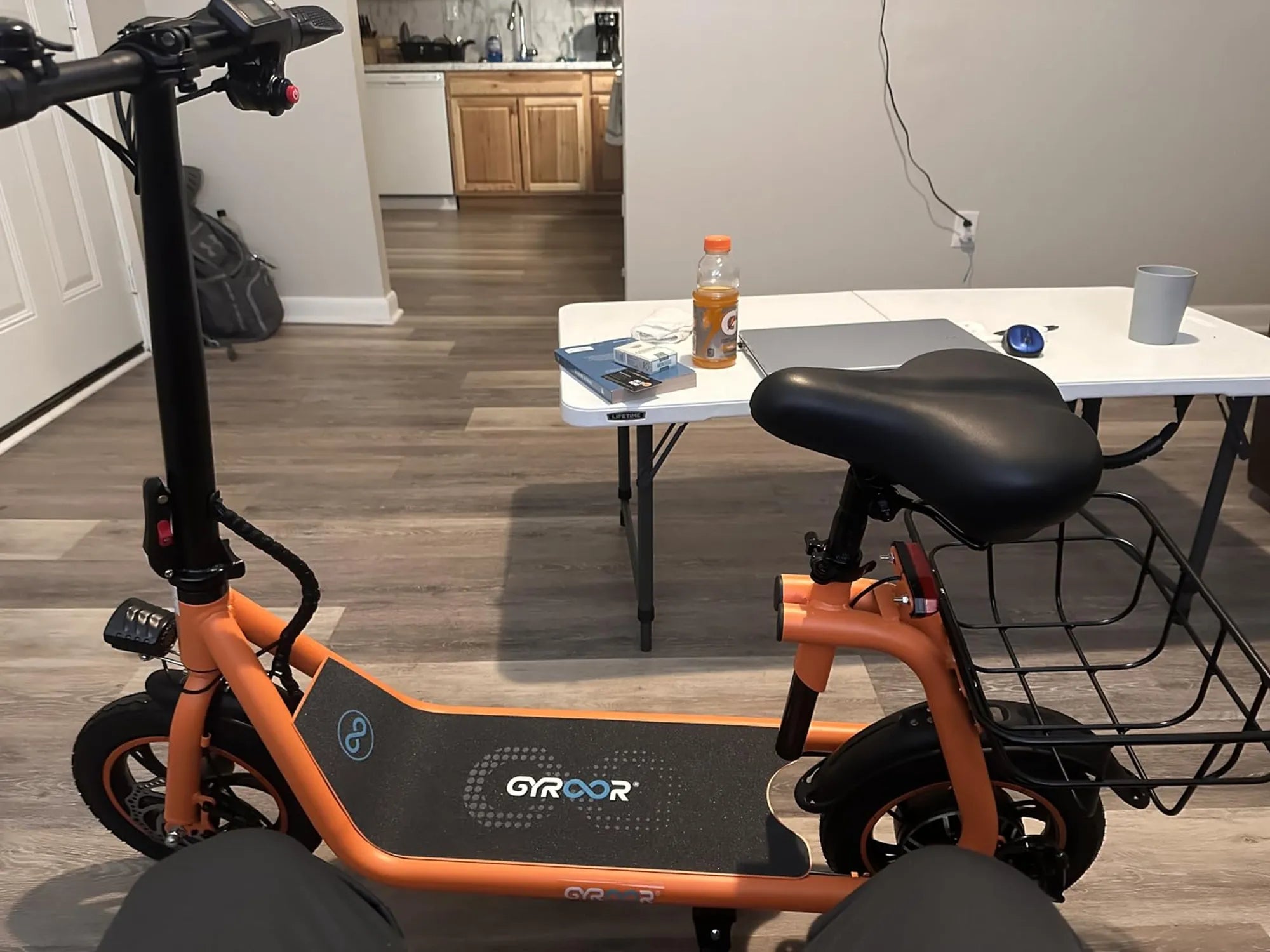
Performance meets Nottingham's terrain. Models like the Gyroor F1 Pro feature a 500W peak motor, delivering ample torque for the city's hills, while dual suspension systems and 10-inch pneumatic tyres ensure a stable, comfortable ride on varied surfaces. The brand's reliable 1-year warranty offers peace of mind for daily riders, underlining a commitment to durability that stands up to urban use.
Cost & Convenience Analysis: E-Scooter vs. Traditional Transport
The financial and practical case for electric scooters in Nottingham becomes clear when compared directly to traditional transport modes. The analysis moves beyond purchase price to consider total cost of ownership, time savings, and daily convenience.
| Transport Mode | Typical Nottingham Commute (5-mile round trip) | Annual Cost Estimate | Time & Convenience Factors |
|---|---|---|---|
| Private E-Scooter | Direct, point-to-point | ~£500-£900 (purchase) + ~£15 (electricity) | ~15-20 mins. No parking fees. Store at destination. |
| City Bus/Tram | Fixed routes, possible walking at ends | ~£650-£900 (annual pass) | ~25-40 mins inc. wait/walk. Subject to timetables. |
| Driving & Parking | Direct but congested | ~£1,500+ (fuel, insurance, tax, parking) | ~20-40 mins. High parking cost/stress (~£10+ daily). |
| Cycling | Direct, uses cycle paths | ~£300-£600 (bike) + maintenance | ~20-25 mins. Requires effort, shower facilities. |
The table reveals the e-scooter's compelling value proposition. While the upfront cost is significant, it is often less than a year's bus pass or a few months of city-centre parking fees. The operational cost is negligible—approximately 0.2p per mile in electricity, making it the cheapest powered mode of transport by a wide margin.
Time savings are substantial, especially for journeys under 3 miles where e-scooters are often faster than cars due to traffic avoidance and direct routing. The convenience of door-to-door travel without waiting for a bus or searching for a parking space translates into tangible daily benefits, reducing commute-related stress.
For students and professionals, the ability to integrate an e-scooter with other transport modes is key. Theoretically, one could ride to a tram stop (on private land), continue their journey, and have the scooter for the final leg—a seamless, multi-modal commute. This flexibility is unmatched by other personal transport options and positions the electric scooter in Nottingham as a central tool in a modern mobility mix.
Safety First: Riding Responsibly in Nottingham
Safe and considerate riding is essential for the long-term acceptance of e-scooters in any city. In Nottingham, this means adapting to a shared environment of pedestrians, cyclists, vehicles, and tram lines.
Personal protective equipment (PPE) is non-negotiable. A certified cycle helmet is the single most important safety item. Given Nottingham's weather and often low-light conditions, high-visibility clothing and ensuring your scooter has bright front and rear lights (always on) are crucial. Consider additional reflectors for the stem and deck.
Road etiquette and hazard awareness define a responsible rider. Always yield to pedestrians, especially on shared paths like those along the canal. Reduce speed in crowded areas like Clumber Street. Be hyper-aware of tram lines; cross them at as close to a 90-degree angle as possible to avoid wheels getting caught. Assume drivers may not see you—make eye contact at junctions and use clear hand signals.
Secure parking and theft prevention are practical necessities. Use a robust, hardened steel D-lock to secure the scooter's frame to an immovable object, even for short stops. If possible, take the scooter indoors. At home or work, storing it in a dry place and avoiding charging it unattended for long periods are best practices that protect both the scooter and property.
Regular maintenance is proactive safety. Before each ride, perform the "M-Check": inspect the handlebars, stem, brakes, tyres (for pressure and wear), lights, and folding mechanisms. Keep tyres inflated to the recommended PSI for better handling and range. Regular checks prevent minor issues from becoming major failures while riding in traffic.
The Future on Two Wheels: What's Next for Nottingham?
The trajectory for electric scooters in Nottingham points towards greater integration, smarter technology, and more formalised urban planning. The conclusion of the rental trial is not an end, but a pause before a more structured phase of micromobility adoption.
Future public policy will likely see the reintroduction of regulated, insured rental schemes, potentially integrated with the city's existing Robin Hood card payment system for multi-modal journeys. This could allow users to plan and pay for a trip combining a bus, tram, and e-scooter leg in a single transaction, dramatically improving connectivity to areas beyond the core tram network.
Technological advancements will enhance safety and user experience. Geofencing technology will automatically control scooter speed in sensitive zones like the Old Market Square or near schools. Improved battery chemistry will offer longer ranges and faster charging, making scooters viable for commutes from further-flung suburbs. Connectivity features via smartphone apps will provide diagnostics, anti-theft tracking, and route planning.
Infrastructure evolution is also on the horizon. The city may designate more "micromobility lanes" or widen existing cycle paths to safely accommodate the mix of bicycles, e-scooters, and cargo bikes. Secure, covered parking hubs with charging points at major transport interchanges like the Railway Station or Victoria Centre could solve the "last-yard" parking challenge and encourage uptake.
Ultimately, electric scooters are poised to become a cornerstone of Nottingham's smart city and carbon-neutral ambitions. By reducing car trips for short journeys, they lower emissions and congestion. Their efficiency supports a denser, more liveable urban centre where space is prioritised for people, not parked vehicles. The future of urban mobility in Nottingham is interconnected, electric, and personal.
FAQ: Your Nottingham E-Scooter Questions Answered
Q: Can I legally ride my own e-scooter on Nottingham's streets or cycle paths now?
A: No. As of 2024, it remains illegal to ride a privately owned e-scooter on any public road, cycle lane, pavement, or bridleway in the UK, including Nottingham. They are only legal for use on private land with permission.
Q: Where are the best and safest routes to practice or use an e-scooter on private land?
A> For practice, seek out large, empty private car parks (with owner consent). In terms of route planning for future legal use, the dedicated cycle paths along the River Leen, the Nottingham Canal, and through Wollaton Park offer relatively continuous, segregated routes away from main traffic.
Q: How do I handle Nottingham's hills on an e-scooter?
A> Choose a scooter with sufficient motor power (350W minimum, 500W+ recommended) and torque. Approach hills with maintained speed, but be prepared to reduce speed for control. Avoid stopping on a steep incline. Distributing your weight forward slightly can improve traction on the front wheel.
Q: What's the best way to store my scooter at work or university?
A> First, obtain permission. If allowed indoors, a discreet spot under a desk or in a dedicated storage cupboard is ideal. If outdoor storage is the only option, use a high-quality D-lock to secure it to a fixed, immovable object in a well-lit, CCTV-covered area. A waterproof cover is also advisable.
Q: Are e-scooters safe in Nottingham's rain?
A> Scooters with a high IP (Ingress Protection) rating, such as IPX5, are designed to withstand water jets and rain. However, all riders should exercise extreme caution in wet conditions: reduce speed, brake earlier and more gently, avoid metal surfaces (manhole covers, tram tracks), and be aware of reduced visibility for yourself and other road users.
Embracing a Smarter Way to Navigate Nottingham
The evidence is compelling: electric scooters in Nottingham offer a powerful solution to the city's specific urban mobility challenges. They bridge the first and last-mile gap in the public transport network, provide a cost-effective and time-efficient alternative to car travel for short journeys, and align perfectly with environmental goals. Nottingham's compact centre, growing cycle infrastructure, and demographic profile create an ideal environment for their adoption.
While the current regulatory landscape requires patience and vigilance from prospective owners, the direction of travel is clear. Pending legislation is set to formalise their place on our roads, making now the ideal time to research and understand this transformative mode of transport. The key is an informed approach—prioritising safety, understanding specifications for local terrain, and committing to responsible riding etiquette.
The transformation of Nottingham's streets is underway. It points towards a quieter, cleaner, and more efficient urban experience where multiple transport options coexist seamlessly. The electric scooter is not a passing trend but a fundamental component of this future, putting practical, personalised, and sustainable mobility within immediate reach of every citizen.
Ready to explore how an electric scooter could redefine your daily commute? For models built with the safety certifications, weather resistance, and reliable performance needed for city life, browse the full collection of UL-certified e-scooters and e-bikes at gyroorboard.com.
Outdoor Electric Scooters for Adults: The Ultimate Guide to Choosing the Right Ride
Electric Scooters for Road Use: The Future of Urban Mobility