



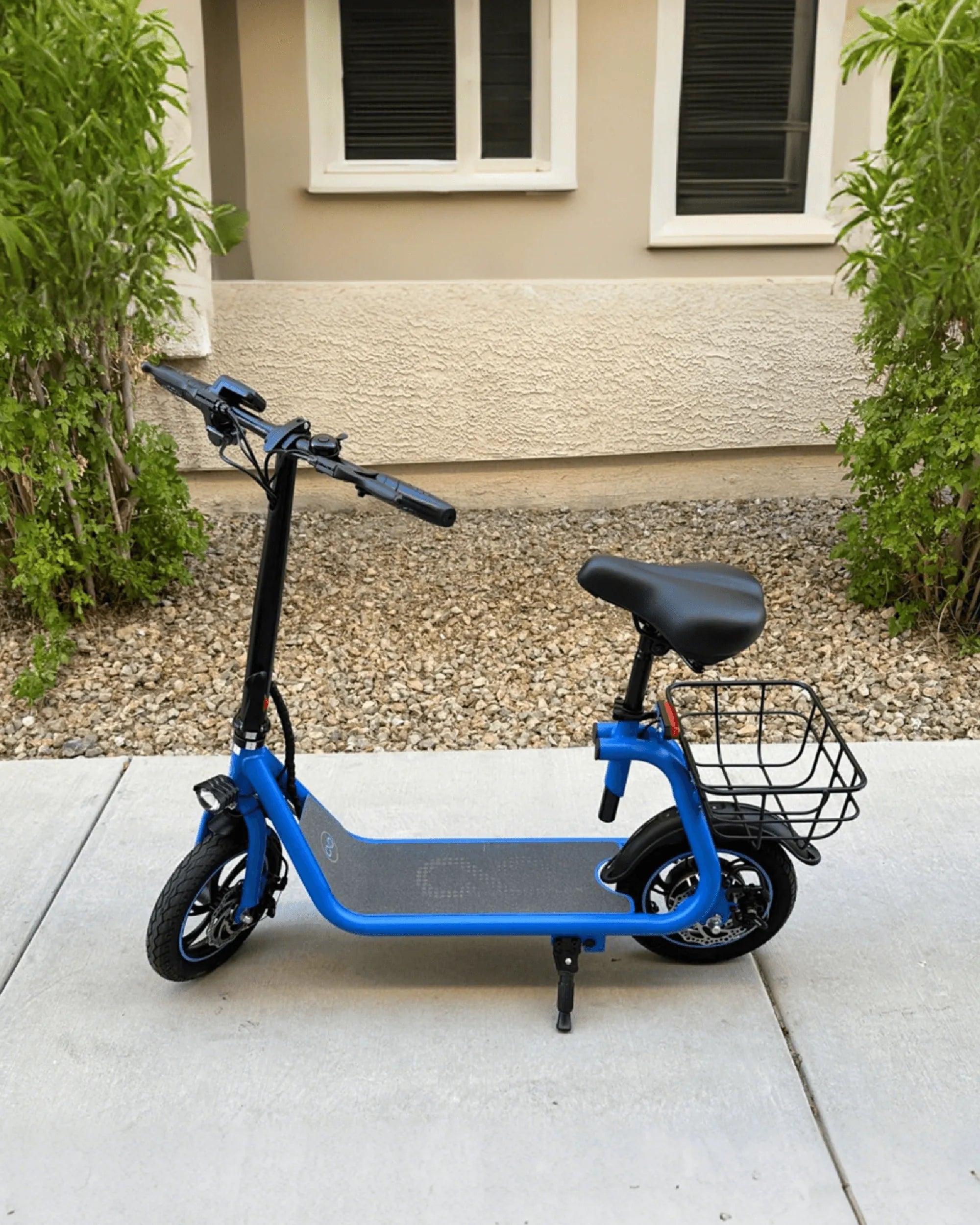
Introduction to Salem's Evolving Commute
Salem faces familiar urban challenges: congested downtown streets, scarce and expensive parking, and a public transit system that doesn't always align with individual schedules. For residents commuting from West Salem across the bridge, students navigating between Willamette University and downtown apartments, or professionals seeking a quick lunch break escape to Riverfront Park, the traditional car-centric model is increasingly inefficient. Electric scooters in Salem represent a practical, modern solution to these mobility pain points. They offer a nimble, cost-effective, and environmentally friendly alternative that fits the scale and pace of Oregon's capital city.
This shift isn't just about adopting a new gadget; it's about reimagining how we move through our urban environment. Electric scooters provide a first-and-last-mile connection that seamlessly integrates with existing infrastructure, from bike lanes to multi-use paths. For a city like Salem, which values sustainability and community livability, the rise of personal electric mobility is a logical progression. Leading brands, such as Gyroor—a trusted name with over 100,000 riders in North America and Europe—are aligning with this need by offering vehicles built for reliability, safety, and the specific demands of daily urban use.
Why Salem's Geography is Ideal for E-Scooter Adoption
Salem's urban layout and geographical features create a near-perfect environment for electric scooter integration. The city's core is relatively compact, with many common daily trips falling within the 3-to-6-mile range, which is the ideal sweet spot for most commuter-grade e-scooters. Unlike larger metropolises with sprawling distances, Salem's key hubs—the Capitol Mall, Willamette University, Salem Hospital, and the commercial districts—are interconnected by a network of streets and paths suitable for micro-mobility.
Furthermore, Salem's commitment to alternative transportation is evident in its infrastructure. The city maintains and continues to expand its network of bike lanes and shared-use paths, such as the Willamette Valley Scenic Bikeway and the in-town Riverfront Park trails. This existing framework provides a safer, more structured environment for e-scooter riders compared to cities lacking such amenities. The cultural mindset in Salem, which embraces outdoor activity and environmental stewardship, also fosters a welcoming atmosphere for this new mode of clean transportation.
Navigating Salem's Terrain: Hills, Parks, and Pavement
A common concern for prospective riders is terrain. While Salem is largely flat in its downtown and central areas, neighborhoods like South Salem and portions of West Salem feature noticeable inclines. This makes motor power a critical specification. A scooter with a continuous motor rating of at least 350W is recommended for tackling Salem's hills with ease, ensuring you maintain speed and battery efficiency on an incline.
For recreational riding through parks like Minto-Brown Island or along the Willamette River, suspension becomes a key comfort factor. Pneumatic (air-filled) tires and a robust suspension system absorb vibrations from brick pathways, cobblestone sections, and minor pavement cracks, providing a smooth and controlled ride. A scooter without suspension may suffice for perfect asphalt, but for full Salem accessibility, a model with front or dual suspension significantly enhances the experience and safety on variable surfaces.
Key Commute Corridors Where E-Scooters Excel
Specific routes in Salem demonstrate the time-saving advantage of electric scooters. Consider the commute from the Edgewater neighborhood to a downtown office. During peak hours, this short drive can take 15-20 minutes due to bridge traffic and parking search time. On an e-scooter using bike lanes, the trip is a consistent 10-12 minutes, door-to-desk, with no parking hassle.
Another prime example is the connection between the Salem Amtrak station and the central business district. An e-scooter serves as the perfect last-mile vehicle, covering the 1.5-mile distance in under 8 minutes, far faster than waiting for a local bus. For students, the ability to zip from an off-campus residence to a lecture hall at Willamette University or Chemeketa Community College in minutes, avoiding crowded parking lots, is a transformative convenience.
Choosing the Right Electric Scooter for Salem's Lifestyle
Selecting an e-scooter isn't a one-size-fits-all decision. Your choice should be dictated by your primary use case: daily commuting, recreational exploration, or multi-modal travel. A commuter needs reliability and range; a recreational rider prioritizes comfort and stability; a multi-modal user values ultra-portability for carrying onto buses or into offices.
Investing in a scooter from a reputable brand with a clear warranty and proven safety standards is crucial. This is where specifications and build quality matter immensely. Brands like Gyroor design their scooters with real-world use in mind, incorporating features like UL-certified battery packs for safety and IPX5 water resistance to handle Oregon's drizzle, making them a dependable choice for Salem's conditions.
Key Specifications for Salem Riders: Range, Power & Portability
Three core specs define an e-scooter's suitability for Salem: range, motor power, and portability. Range is the maximum distance a scooter can travel on a single charge. Manufacturers often list a "maximum" range under ideal conditions. For practical Salem commuting, identify the "real-world" range, which accounts for hills, rider weight, and stop-and-go traffic. A scooter with a 15-20 mile real-world range comfortably covers most daily routines with a safety buffer.
Motor power, measured in watts (W), determines acceleration and hill-climbing ability. For Salem's moderate hills, a 350W motor is a good baseline, with 500W or dual-motor options providing more confident performance. Portability, defined by weight and folding mechanism, is essential if you plan to carry your scooter into a building. Models around 30-40 pounds with a secure, one-step folding system offer the best balance of stability and convenience.
Safety and Durability: Non-Negotiable Features
Safety is paramount. Your scooter must have a reliable braking system. Disc brakes, either mechanical or hydraulic, offer strong, consistent stopping power in all weather conditions, superior to basic electric or foot brakes. Integrated lighting is also critical—a bright front headlight, rear brake light, and side reflectors are mandatory for visibility during Salem's overcast days and early winter evenings.
Durability directly impacts long-term safety and cost-of-ownership. Look for a frame constructed from aerospace-grade aluminum. Water resistance, indicated by an IP rating, is vital. An IPX5 rating means the scooter can withstand water jets from any direction, making it resistant to rain and puddles. This, combined with a UL-certified battery (a standard met by Gyroor's lineup) that undergoes rigorous testing for thermal stability and longevity, ensures your investment is protected against the elements and built to last.
Salem's Rules of the Road: Laws, Safety, and Etiquette
Responsible ridership ensures the long-term viability of e-scooters in Salem. Understanding and adhering to local regulations is the first step. In Oregon, electric scooters are legally classified as "electric scooters" with specific rules distinct from bicycles or motor vehicles. Knowing where you can and cannot ride prevents fines and promotes harmony with other road and path users.
Beyond the law, practicing conscientious etiquette is key. Salem's shared-use paths are popular with pedestrians, cyclists, and joggers. Riding at a safe speed, announcing your presence politely when passing (using a bell or your voice), and yielding right-of-way fosters a positive environment for everyone. Remember, you are an ambassador for this new mode of transport; your behavior shapes public perception.
Understanding Local E-Scooter Regulations
Under Oregon state law (ORS 814.512-514), electric scooters are permitted on highways (streets), bicycle lanes, and bicycle paths. They are generally prohibited on sidewalks within business districts, unless specifically allowed by local ordinance. Salem aligns with this state framework. The maximum speed for an e-scooter on a bike lane or path is 15 mph. On a roadway, it must travel in the bike lane if one is present; if not, it should ride as far right as practicable.
Helmet use is required by Oregon law for all riders under 16 years of age. For riders 16 and over, helmets are strongly recommended and are a fundamental best practice for safety. Parking rules require that scooters not block sidewalks, ADA ramps, building entrances, or access points. Using a bike rack when available is the most courteous option.
Gear and Best Practices for All-Weather Readiness
Proper gear transforms a fair-weather ride into a reliable, year-round commuting solution. A certified bicycle helmet is the absolute minimum. For Salem's climate, consider additional visibility gear like a reflective vest or ankle bands, especially during the rainy season from October to April. Riding gloves improve grip on handlebars in wet conditions and offer protection in case of a fall.
For the scooter itself, regular maintenance is your best defense against the weather. Wipe down your scooter after riding in the rain to prevent corrosion on mechanical parts. Regularly check tire pressure (for pneumatic tires) and brake pad wear. Storing your scooter in a dry place and avoiding complete battery discharge will maximize the lifespan of its most critical and expensive component—the battery pack.
Cost Analysis: E-Scooter vs. Traditional Commuting in Salem
The financial argument for e-scooter ownership is compelling when compared to the ongoing costs of car ownership or even public transit. While the initial purchase price of a quality scooter is an investment, the operating costs are remarkably low, leading to significant savings over time.
Let's break down a typical scenario for a Salem resident commuting 5 miles roundtrip to work, 20 days a month.
| Expense Category | Personal Car (Avg. Sedan) | Cherriots Monthly Pass | Quality E-Scooter (e.g., Gyroor Commuter Model) |
|---|---|---|---|
| Upfront Cost | $25,000+ (vehicle) | $0 (pass purchase) | $600 - $900 |
| Monthly Fuel/Energy | $80 - $120 (gas) | $40 (adult pass) | $2 - $3 (electricity) |
| Monthly Parking | $40 - $100 (downtown) | $0 | $0 |
| Annual Maintenance | $600+ (oil, tires, etc.) | $0 | $50 (tire, brake pads) |
| Annual Cost (Year 1) | $3,000 - $5,000+ | $480 | ~$750 (incl. purchase) |
| Annual Cost (Year 2+) | $2,000 - $3,000+ | $480 | <$100 |
As the table illustrates, an e-scooter pays for itself within the first year for many commuters when replacing car trips. Even compared to a bus pass, the scooter offers unparalleled schedule flexibility and door-to-door convenience for a comparable long-term cost after the initial year.
Beyond Savings: Environmental and Community Impact
The benefits extend far beyond personal finances. Each e-scooter trip that replaces a car trip reduces carbon emissions, local air pollutants, and traffic congestion. In a city like Salem, where air quality can be affected by valley conditions, reducing vehicle emissions has a direct positive impact on public health.
Furthermore, e-scooters promote a more vibrant, human-scale street life. They reduce the demand for parking spaces, freeing up valuable urban land for parks, wider sidewalks, or outdoor dining. They also increase accessibility to local businesses, as riders are more likely to make spontaneous stops than drivers circling for parking. This shift supports Salem's local economy and enhances the community's overall livability.
Frequently Asked Questions (FAQ) for Salem Riders
Q: Do I need a driver's license or insurance to ride an e-scooter in Salem?
A: Oregon law does not require a driver's license to operate an electric scooter. Vehicle insurance is also not required for e-scooters, though it's wise to check if your homeowner's or renter's insurance policy covers personal electric vehicles.
Q: Can I ride my e-scooter on the sidewalk in downtown Salem?
A: Generally, no. State law prohibits e-scooter operation on sidewalks within business districts. In Salem, this applies to the downtown core. You should use the street (in the bike lane or as far right as possible) or designated bike paths.
Q: What should I do if it starts raining while I'm riding?
A> First, slow down and increase following distance, as braking distances are longer on wet pavement. Avoid painted road markings and metal surfaces like manhole covers. If your scooter has a water-resistance rating (IPX4 or higher, like Gyroor's IPX5 models), it can handle light to moderate rain. After your ride, dry the scooter off to prevent water ingress and corrosion.
Q: How do I secure my e-scooter when parked in public?
A> Always use a high-quality U-lock or heavy-duty chain lock, threading it through the frame (not just the stem). If possible, lock it to a fixed, official bike rack. For added security, models with electronic alarms or GPS tracking offer peace of mind. Never leave your scooter unattended for extended periods in a public area.
Q: Are there any age restrictions for riding an e-scooter?
A> Oregon law does not set a minimum age for e-scooter operation. However, it requires all riders under 16 to wear a helmet. Given the skill and judgment required, e-scooters are generally recommended for responsible teenagers and adults. Parental supervision is advised for younger riders.
Conclusion: Embracing a Smarter, Greener Way to Move
Electric scooters in Salem are more than a trend; they are a logical and efficient evolution of urban mobility tailored to the city's scale, values, and infrastructure. They solve tangible problems—traffic congestion, parking scarcity, and transportation costs—while contributing to a cleaner environment and a more connected community. The future of getting around Salem is not about sitting in traffic, but about gliding smoothly along its bike paths, exploring its parks with ease, and reclaiming time and freedom in your daily routine.
Choosing the right tool for this future is essential. Prioritizing safety certifications like UL for batteries, durability features like IPX5 water resistance, and performance specs matched to Salem's hills will ensure your investment delivers reliable service for years. As a leader in personal electric mobility, Gyroor embodies these principles, engineering scooters and e-bikes that riders trust for their daily commutes and adventures. Discover how the right e-scooter can redefine your experience of Salem. Browse the full Gyroor collection at gyroorboard.com to find the model that powers your urban journey.
Electric Scooters for 16 Year Olds in India: A Complete Guide
Electric Scooters Adelaide: The Ultimate Guide to Eco-Friendly Commuting