



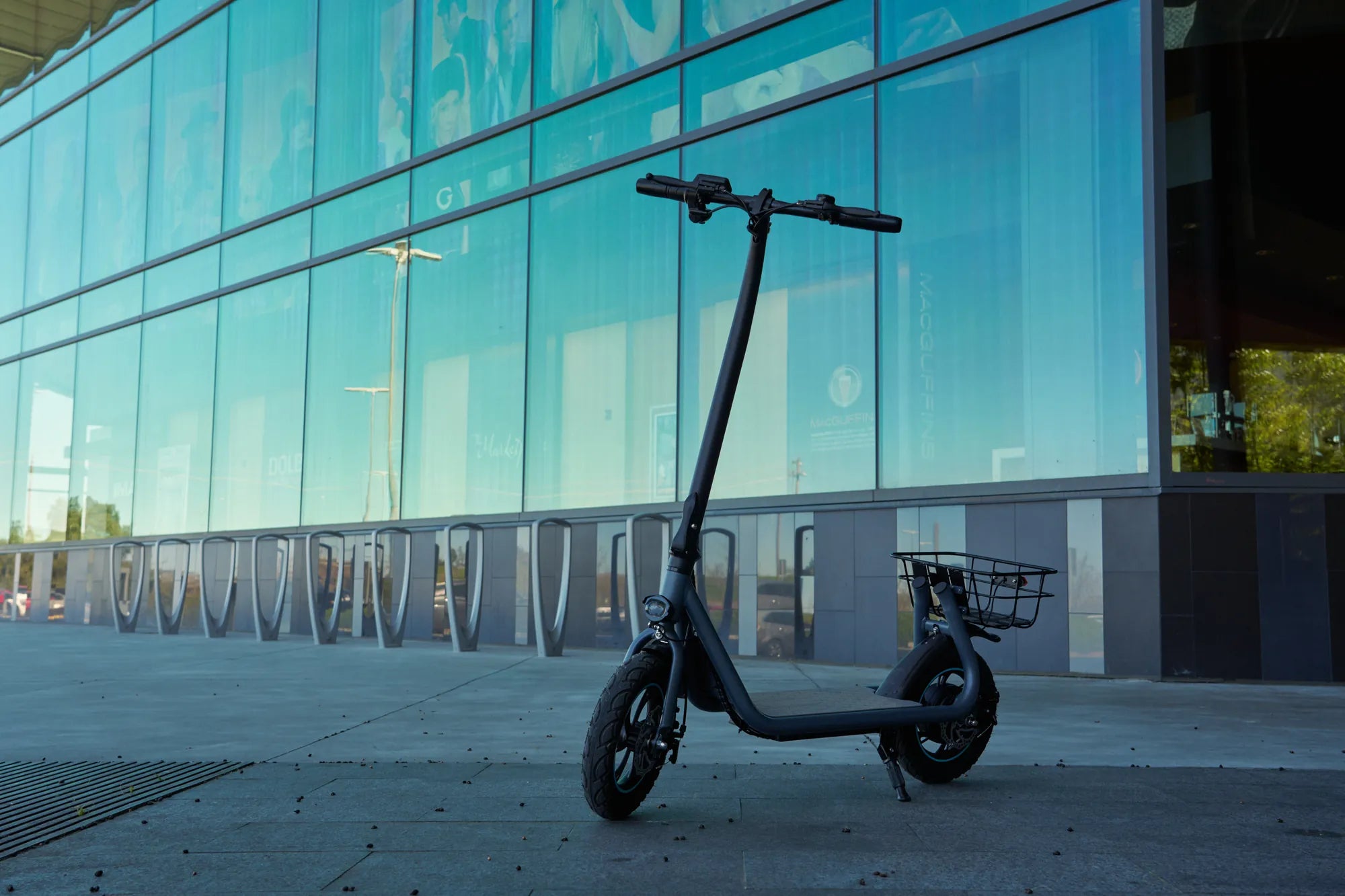
Why Manchester is Embracing Electric Scooters
Manchester's urban landscape is a complex network of Victorian-era streets, modern developments, and regenerated waterways. This presents a unique commuting challenge: navigating between districts like the Northern Quarter, Salford Quays, and the university campuses can be slow and inefficient. Traditional public transport, while extensive, often involves multiple changes, and car travel is hampered by congestion and the Clean Air Zone. Electric scooters offer a compelling solution, providing a direct, flexible, and zero-emission mode of transport for the first and last mile of a journey.
The city's demographic and economic drivers make it particularly ripe for this shift. With a large student population, a growing tech sector in MediaCityUK, and a council committed to ambitious net-zero targets, the demand for agile, sustainable transport is high. Electric scooters in Manchester are not just a novelty; they are becoming a practical tool for daily commuting, reducing reliance on cars for short trips under five miles, which constitute a significant portion of urban travel.
Data from early adoption and rental trials in other UK cities suggests micro-mobility can reduce congestion and improve air quality. For Manchester, a city actively reimagining its public spaces with more pedestrian zones and cycle lanes, the integration of personal electric vehicles is a logical next step. The future of urban mobility here is multimodal, and the electric scooter is a key component.
Choosing the right personal transporter is critical. Not all scooters are built for Manchester's specific conditions—its frequent rain, occasional cobbles, and notable inclines. This makes understanding specifications like water resistance, motor torque, and battery reliability paramount for a safe and dependable commute.
Navigating Manchester's E-Scooter Rules and Regulations
The legal landscape for electric scooters in the UK is precise and must be understood to ride safely and legally. As of now, privately owned e-scooters are legal to buy and own, but they are only legal to use on private land with the landowner's permission. It remains illegal to ride them on public roads, pavements, cycle lanes, or in parks. This is a crucial distinction many new riders overlook.
In contrast, rental e-scooters available through approved trial schemes operate under different rules. These government-backed trials, which have taken place in various UK cities, allow rented scooters on public roads and cycle lanes. While Manchester itself has not hosted a major formal trial scheme like some other cities, the regulatory environment is shaped by these national experiments. Riders must be aware that using a private scooter on public land can result in a fine, penalty points on a driving licence, and the scooter being impounded.
For any legal use (e.g., on private land or in a potential future rental scheme), standard rules apply. Riders must be at least 16 years old. Helmets, while not a legal requirement, are strongly recommended. The scooter must have a maximum speed of 15.5 mph (25 km/h) for use in public spaces under trial rules. It must also have front and rear lights and a bell if used in the dark. Insurance is a complex area; currently, only rental schemes provide the necessary insurance cover for public road use.
The future of regulation is in flux. The government has consulted on legalising private e-scooters, which would likely involve type-approval for models meeting specific safety standards. For Manchester residents, staying informed on local by-laws and national legislative changes is essential. Always prioritise safety and legality to ensure the positive development of micro-mobility in the city.
Where to Ride (and Where Not To) in Manchester
Assuming a change in law or for use on permissible paths, certain routes in Manchester are ideal for micro-mobility. The Oxford Road Corridor boasts extensive bus and cycle lanes, offering a relatively protected route from the universities into the city centre. The regenerated areas around Salford Quays and MediaCityUK feature wide, smooth pavements and cycle paths perfect for scooter travel.
Manchester's canal towpaths, such as those along the Rochdale Canal, provide scenic, car-free routes. However, riders must be exceptionally courteous to pedestrians and cyclists, keeping speed very low. The National Cycle Network Route 6, which passes through Greater Manchester, also offers longer-distance potential for capable scooters with good range.
Areas to avoid are clear. The busy pedestrian zones of Market Street, King Street, and the Arndale Centre forecourt are off-limits to scooters. Major high-traffic roads without dedicated cycle infrastructure, like parts of the A6 or Regent Road, are dangerous and illegal for current private scooter use. Pavements are never an appropriate place to ride, as it endangers pedestrians and is illegal.
Parking considerations are also key. If and when legalised, responsible parking will be vital. Scooters should never block pavements, disabled access points, or building entrances. Looking to cities with established schemes, designated parking zones or 'geo-fenced' areas in apps are likely to be part of Manchester's future solution.
Choosing the Right E-Scooter for Manchester's Terrain
Manchester's environment demands a robust scooter. The choice is not merely about speed or style; it's about durability and suitability. Key factors include the road surface, weather, and topography. A scooter that performs well in flat, dry conditions may struggle on the rain-slicked, sloping streets of Didsbury or the cobbled sections of the Northern Quarter.
The urban commute often involves carrying the scooter for short distances—into an office, onto a train (if permitted), or up a flight of stairs. Therefore, weight and portability are significant considerations. A lightweight, foldable model is highly advantageous for Manchester's multimodal commuters. However, this must be balanced against build quality; a heavier frame often indicates better stability and component durability.
Finally, consider your typical journey profile. Is it a two-mile flat dash from Ancoats to the city centre, or a five-mile commute from Chorlton involving several hills? Matching the scooter's performance specifications to your daily route is the most effective way to ensure satisfaction and longevity from your investment. A scooter that is underpowered for your needs will quickly become a source of frustration.
Key Features for Manchester's Streets: Battery, Power & Water Resistance
Three technical specifications are non-negotiable for Manchester: battery quality and range, motor power, and water resistance. The battery is the heart of the scooter. For a reliable Manchester commute, a minimum real-world range of 15 miles is advisable to account for hills, cold weather, and battery degradation over time. More importantly, the battery's safety certification is critical. UL-certified battery packs (like those used by brands such as Gyroor) undergo rigorous testing for stability and longevity, often rated for 500+ charge cycles, and significantly reduce the risk of fire.
Motor power determines hill-climbing ability. Manchester is not flat. A sustained incline like Wilmslow Road or Bury New Road requires torque. A continuous motor rating of 350W or higher is recommended for regular commuting. Some models feature dual motors for exceptional hill performance, though this impacts battery life. Power must be paired with effective braking systems—disc brakes or electronic regenerative braking combined with a drum or disc brake—for safe stopping in all weathers.
Water resistance is arguably the most important feature for Manchester. The IP (Ingress Protection) rating indicates protection against solids and liquids. An IPX5 rating or higher means the scooter can withstand water jets from any direction, making it safe to ride in heavy rain and through puddles. Never ride a scooter with a low or unspecified IP rating in wet conditions, as water damage to electronics is dangerous and voids warranties. A reliable scooter for Manchester is built to handle the rain as a matter of course.
Gyroor E-Scooters: Built for Manchester's Commute
When evaluating scooters for Manchester's specific demands, Gyroor's engineering philosophy aligns closely with the city's requirements. As a brand trusted by over 100,000 riders across North America and Europe, Gyroor prioritises the core tenets of safety, durability, and reliability. This is achieved not through gimmicks but through foundational design choices that matter for daily commuting in a challenging urban environment.
First and foremost is battery safety. Every Gyroor model uses UL-certified battery packs, providing peace of mind that the most critical component meets internationally recognised safety standards. This is coupled with robust battery management systems that optimise performance and lifespan. For Manchester riders, this means dependable range and reduced risk, a crucial consideration for a device stored in homes or offices.
Secondly, their build quality directly addresses Manchester's weather. With IPX5 water-resistant designs across key models, Gyroor scooters are engineered to perform in the rain. This protection extends to key electrical components, not just the exterior. Combined with sturdy frames and reliable, serviceable parts like pneumatic tyres for better shock absorption on uneven surfaces, they offer a practical solution for year-round use. The standard 1-year warranty provides further assurance of their durability.
Model Comparison: Which Gyroor Scooter Matches Your Manchester Journey?
Choosing between models depends on your primary use case. Below is a comparison of two exemplary Gyroor scooters suited for different Manchester rider profiles.
| Feature | Gyroor Z8 (City Commuter) | Gyroor H10 (Performance Rider) |
|---|---|---|
| Max Range | Up to 18 miles | Up to 28 miles |
| Max Speed | 15.5 mph | 19 mph* |
| Motor Power | 350W Peak | 500W Peak |
| Water Resistance | IPX5 | IPX5 |
| Battery | UL-Certified | UL-Certified |
| Tyres | 8.5" Pneumatic | 10" Pneumatic |
| Weight | 33 lbs | 48 lbs |
| Ideal Manchester User | Student or inner-city commuter needing a lightweight, foldable scooter for short-to-medium trips and easy storage. | City professional or enthusiast needing extended range, superior hill-climbing power, and a smoother ride over longer distances or rougher paths. |
*Riders must always adhere to local speed limits. The H10's higher capability is for use on private land or future legal frameworks.
The Gyroor Z8 is a perfect balance of portability and performance for navigating from Fallowfield to the university or from Castlefield to the office. Its lighter weight makes it easy to carry. The Gyroor H10, with its larger tyres and more powerful motor, is built for the rider who faces steeper hills or desires a more substantial feel and longer range for commuting from suburbs like Prestwich or Withington.
The Future of Mobility in Manchester: E-Scooters and Beyond
The integration of electric scooters into Manchester's transport ecosystem is part of a larger shift towards sustainable, flexible mobility. The city's Bee Network vision for an integrated, London-style transport system actively includes cycling and walking. Electric scooters naturally complement this by filling gaps in the network, providing a convenient link between tram stops, bus stations, and final destinations.
Future developments may include formalised rental schemes with designated parking and charging stations, similar to the bike-hire scheme. Technology will enable this through app-based access, geo-fenced slow zones in pedestrian areas, and smart parking solutions. The potential for 'Mobility as a Service' (MaaS) platforms, where a single app plans, books, and pays for trips combining trams, buses, e-scooters, and e-bikes, is a logical progression for a tech-savvy city like Manchester.
Infrastructure investment is key. The expansion of protected cycle lanes, which can also be used by e-scooters, will make micro-mobility safer and more attractive. The continued development of low-traffic neighbourhoods (LTNs) also creates a more favourable environment for light electric vehicles. E-scooters are not a standalone solution, but a vital piece of the puzzle in reducing car dependency, cutting emissions, and creating a more liveable, connected city.
Frequently Asked Questions for Manchester E-Scooter Riders
1. Are private e-scooters legal on Manchester roads and cycle paths?
No. Currently, it is illegal to ride a privately owned e-scooter on public roads, cycle lanes, pavements, or in any public space in Manchester and across the UK. They can only be used on private land with permission.
2. Can I take my e-scooter on the Metrolink or a train?
Transport for Greater Manchester (TfGM) policies are set for public safety. Currently, e-scooters are not permitted on Metrolink trams due to battery safety concerns and space limitations. Train operators' policies vary, but most also prohibit them. Always check directly with the carrier before travel.
3. How do I handle Manchester's rainy weather on a scooter?
First, ensure your scooter has a high water resistance rating (IPX5 or higher). Wear high-visibility, waterproof clothing. Reduce your speed, increase braking distance, and avoid painted road markings and metal surfaces like drain covers, which become extremely slippery. Dry the scooter after use, especially around brakes and connectors.
4. What is the most important safety gear for riding in Manchester?
A helmet is essential. Additionally, consider gloves for grip and protection, sturdy shoes, and lights/reflective clothing regardless of the time of day to ensure visibility in Manchester's often-grey conditions.
5. Where can I park or store my e-scooter safely in the city?
If used legally on private land, always use a robust lock to secure the frame to an immovable object. If a future rental or legalisation scheme includes public use, parking will likely be in designated areas. Never leave it blocking footpaths. For charging, always use the manufacturer-provided charger and follow battery care instructions, never leaving it to charge unattended for extended periods.
Your Key to Unlocking Manchester
Electric scooters represent more than just a new gadget; they symbolise a smarter, cleaner approach to navigating our cities. For Manchester, with its dynamic growth and sustainability ambitions, they offer a practical tool to decongest streets, improve air quality, and provide affordable personal transport. The future of urban mobility in Manchester is undeniably electric and multimodal.
Success with an e-scooter in Manchester hinges on two pillars: respecting the current legal framework and choosing a machine engineered for the task. This means selecting a scooter with proven safety credentials, legitimate weather protection, and the power to handle urban topography. Brands that prioritise these fundamentals, like Gyroor with its UL-certified batteries and IPX5 water resistance, provide the reliability needed for serious commuting.
The journey towards widespread adoption involves ongoing dialogue about regulation, infrastructure, and responsible riding. By making informed choices as consumers and conscientious decisions as riders, Manchester's community can help shape a positive future for micro-mobility. The potential to redefine daily travel, making it more efficient and enjoyable, is within reach.
Ready to explore models designed for the demands of modern urban travel? Discover the engineering and safety features that make a real difference for Manchester riders. Browse the full Gyroor collection at gyroorboard.com to find the e-scooter that matches your journey.
Cheap Electric Scooters for Kids Quotes: Smart Value for Young Riders
Best Electric Scooters for Adults Under $400: Affordable and Reliable Rides