



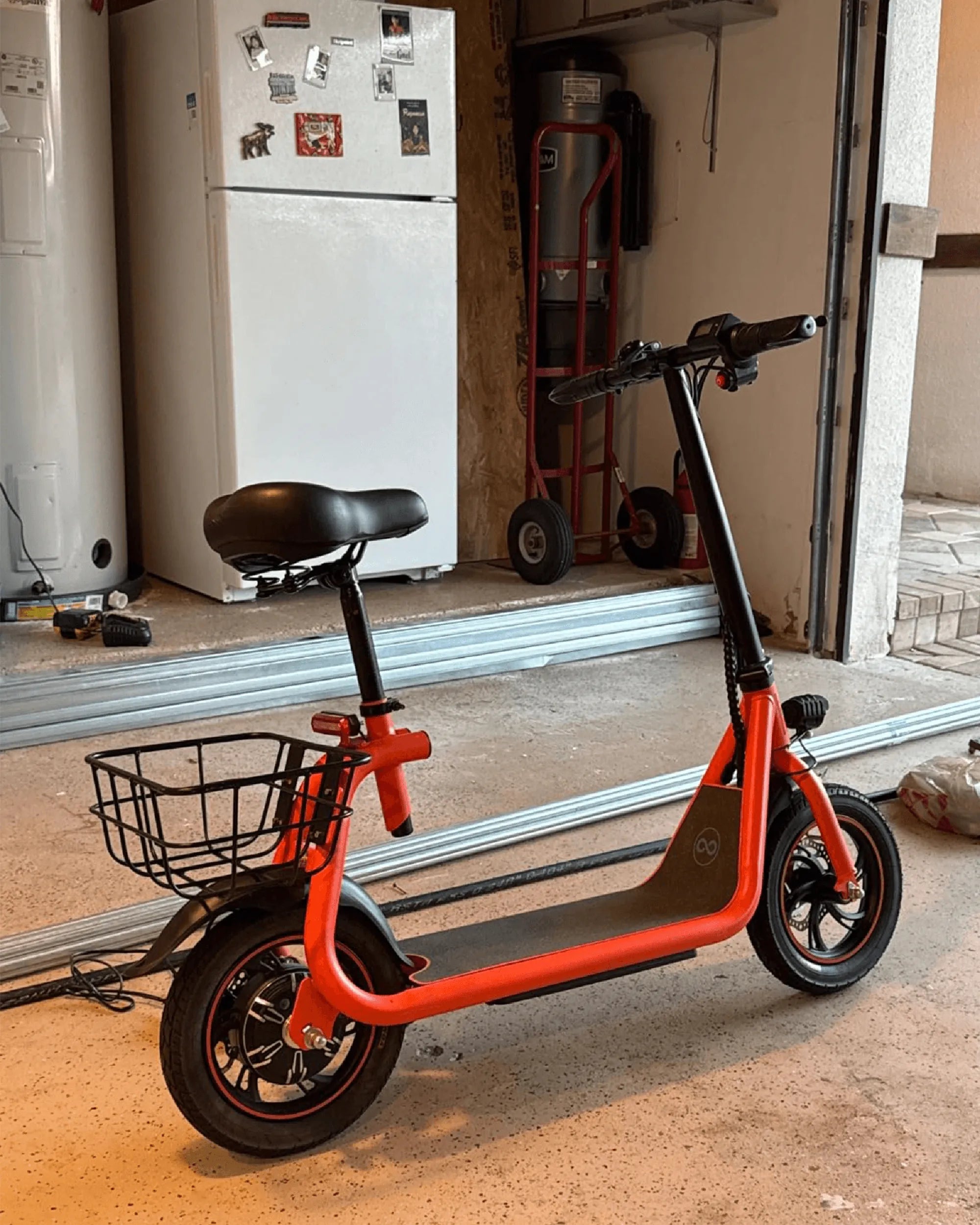
You see the price tag on a quality electric scooter and hesitate. It's a significant chunk of change upfront. Electric scooters more expense than a bus pass, a bicycle, or even a few ride-share trips—that's the immediate perception. But is that the full story? This analysis moves beyond the sticker shock to dissect the true value proposition. We'll examine the hard numbers of long-term savings, assign value to time and convenience, and underscore why critical safety features justify the investment. For the urban commuter, the question isn't just about cost, but about a strategic investment in daily efficiency and lifestyle.
The Real Cost of Ownership: Breaking Down the Investment
Viewing an e-scooter as merely a product purchase is a financial misstep. The correct lens is the total cost of ownership (TCO). This includes the upfront price plus all associated costs over its usable life, compared against the expenses it replaces. When you buy a scooter, you're not just buying a vehicle; you're buying an alternative to other, often more expensive, forms of transit.
Consider the recurring costs of car ownership: fuel, insurance, parking fees, maintenance, and depreciation. A monthly public transit pass represents a constant outflow with zero asset retention. An e-scooter's economics are different. After the initial outlay, operating costs are remarkably low—primarily just electricity for charging, which amounts to pennies per day.
A practical way to visualize this is through a cost-per-mile analysis. While a car might cost 50-60 cents per mile when all factors are considered, and a transit pass might equate to $0.30 per ride, a reliable e-scooter's cost-per-mile plummets after the break-even point, often within the first year of regular use.
The key variable in this equation is durability. A cheap, uncertified scooter with a poor battery might fail in a year, destroying its TCO advantage. This is where investing in a brand like Gyroor, with its focus on UL-certified components and a robust 1-year warranty, fundamentally changes the math by ensuring the scooter remains a viable asset for years.
Upfront Cost vs. Long-Term Savings: A Data-Driven Comparison
Let's translate theory into numbers. For a typical urban commuter traveling 5 miles each way, 5 days a week, the annual commute is roughly 2,600 miles. We can compare the annual costs of different transport modes against the amortized cost of a quality e-scooter.
| Transport Mode | Estimated Annual Cost* | Key Cost Drivers |
|---|---|---|
| Car (Commute Only) | $3,000 - $5,000+ | Fuel, insurance, parking, maintenance, depreciation |
| Public Transit Pass | $1,000 - $1,800 | Monthly subscription fees |
| Ride-Share (Twice Daily) | $4,000 - $7,000+ | Per-ride fares, surge pricing |
| Quality E-Scooter (Gyroor Example) | ~$400 (Year 1) ~$100 (Subsequent Years) |
Upfront cost amortized over 3-5 years, plus minimal electricity |
*Costs are illustrative estimates and vary by city and usage. E-scooter cost assumes a $800-$1000 model with a 3-year lifespan.
The table reveals the dramatic crossover. The higher initial electric scooters more expense is recouped, often within 6-12 months, by the elimination of these recurring fees. In the second and third years, the scooter rider is saving thousands while the car owner or transit user continues their monthly payments.
This calculation becomes even more compelling when you factor in multi-modal commutes. Many people drive to a train station and pay for parking, or take a bus to a subway. An e-scooter can eliminate one or both of those ancillary costs, accelerating the return on investment.
The Hidden Value of Reliability and Warranty
The long-term savings narrative collapses if the scooter itself is not reliable. This is the critical pitfall of opting for a low-cost, unbranded model. The true cost of a cheap scooter isn't its price tag; it's the premature battery failure, the motor burnout, or the controller malfunction that renders it a paperweight after a few months.
Investing in a brand with a strong warranty and proven components is essentially purchasing risk mitigation. Gyroor's comprehensive 1-year warranty on the scooter and its UL-certified battery pack is not just a marketing promise—it's a financial safety net. It means that if a component fails under normal use within that period, your investment is protected, and the TCO model remains intact.
Reliability also translates to predictability. Knowing your scooter will start every morning and complete your commute reduces stress and eliminates the hidden cost of emergency ride-shares or being late for work. This operational certainty, backed by a warranty, is a significant part of the value proposition for a premium scooter.
Beyond Dollars: Quantifying the Intangible Benefits
While the financial argument is strong, the full value of an e-scooter extends into areas that profoundly impact quality of life. These benefits are harder to quantify on a spreadsheet but are often the primary reasons riders swear by their investment.
Time is Money: The Commute Efficiency Factor
In congested urban corridors, e-scooters are often the fastest point-to-point transport. They bypass traffic jams, use bike lanes, and can be parked instantly. Saving 15-20 minutes each way on a commute adds up to over 130 hours saved annually—time that can be reinvested in work, family, or leisure.
This time savings also reduces the cognitive load and stress associated with stop-and-go traffic or crowded transit. The door-to-door convenience eliminates the "last-mile" problem entirely, providing a seamless journey that neither cars nor public transport can reliably match in dense city centers.
Health, Convenience, and Environmental Impact
While not a vigorous workout, riding an e-scooter requires balance, core engagement, and offers fresh air—a tangible health benefit compared to sedentary car commuting. The convenience factor is immense: no parking hassles, no waiting at stations, and ultimate flexibility to change routes on the fly.
Environmentally, the impact is direct. Replacing car trips with electric scooter travel eliminates tailpipe emissions. Even compared to an electric bus or train, the personal energy consumption is minuscule. For the eco-conscious commuter, this represents a meaningful way to reduce one's carbon footprint immediately.
The Safety & Durability Premium: Why Specifications Matter
The adage "you get what you pay for" is critically true for e-scooters. Core specifications related to safety and durability are the primary differentiators between a disposable gadget and a dependable commuter tool. These specs justify the electric scooters more expense of reputable brands.
The Critical Importance of a UL-Certified Battery
The battery is the heart, most expensive component, and biggest potential risk factor of an e-scooter. Non-certified lithium-ion batteries can be prone to thermal runaway—leading to fires—and often suffer from rapid capacity degradation. A UL 2272 certification, as used by Gyroor, means the battery pack has undergone rigorous testing for electrical, mechanical, and environmental safety.
This certification is a non-negotiable safety feature. It ensures not just safety from hazards but also performance consistency and longevity. A UL-certified battery will maintain its capacity over hundreds of charge cycles, ensuring your scooter's range doesn't halve after a few months, which directly protects your financial investment and personal well-being.
IPX5 Water Resistance: Ensuring All-Weather Readiness
A scooter that can't handle a damp road or a surprise drizzle has limited utility. An IPX5 water resistance rating means the scooter can withstand water jets from any direction, making it resistant to rain and road spray. This feature, standard on Gyroor models, dramatically increases the number of days per year you can reliably use your scooter.
Without this protection, water ingress can damage the battery, controller, and motor, leading to costly repairs or total failure. Paying a premium for water resistance is a direct investment in the scooter's durability and year-round usability, ensuring your investment isn't sidelined by the weather.
Making the Smart Choice: How to Evaluate Your ROI
Determining if an e-scooter is worth it for you requires a personal audit. A thoughtful evaluation will ensure your investment aligns with your needs and maximizes return.
Assessing Your Commute Profile and Usage Patterns
Ask these key questions: What is your one-way commute distance? (Ideal e-scooter range is 10-15 miles). What is the terrain like? (Hills require more motor power). How often will you use it? (Daily use justifies a higher budget). Where will you store and charge it securely? What is your local climate? Your answers will define the necessary specifications and help validate the investment case.
Prioritizing Features for Your Budget: A Buyer's Guide
When allocating your budget, follow this hierarchy: 1) Safety & Certification (UL battery, reliable brakes): Never compromise. 2) Range & Motor: Choose a scooter with a range 30-50% longer than your daily need to account for battery aging and wind. 3) Durability (Build quality, IP rating, warranty): This protects the investment. 4) Performance & Portability (Speed, weight, folding mechanism). Brands like Gyroor design their models to balance these priorities, offering robust safety features, adequate range, and durable builds that serve as a benchmark for value in their price segment.
Frequently Asked Questions (FAQ)
Q1: How long does a good electric scooter typically last?
A: With proper care, a quality scooter from a reputable brand can last 3-5 years or more. The primary consumable is the battery, which on a UL-certified pack like Gyroor's, can retain significant capacity for 500+ charge cycles. Build quality and component protection (like IPX5 rating) are key to longevity.
Q2: Aren't electric scooters more expense in terms of maintenance?
A: Compared to a car or even a bicycle, maintenance is minimal and low-cost. Regular upkeep involves checking tire pressure, ensuring bolts are tight, and keeping the scooter clean. The most significant potential cost is battery replacement after several years, which is factored into the long-term ownership model.
Q3: Is the savings still significant if I only use it a few times a week?
A: The ROI timeline extends with less frequent use. If you're a casual rider, the financial argument may be less about direct savings and more about the value of convenience, fun, and replacing occasional ride-shares or transit trips. The break-even point will take longer, but the intangible benefits remain.
Q4: What's the single biggest financial risk when buying an e-scooter?
A: Purchasing a model with a non-certified, low-quality battery. It poses a safety risk and will degrade quickly, forcing an early, expensive replacement and potentially voiding any savings. Always prioritize UL (or equivalent) certification.
Q5: Can an e-scooter truly handle a daily commute?
A> Absolutely, provided you select a commuter-grade model. Key features for daily use include sufficient range (15+ miles real-world), a powerful enough motor for hills (350W+), durable tires (pneumatic or airless), water resistance (IPX5), and a reliable folding mechanism. Brands like Gyroor engineer specific models for this demanding use case.
The Verdict on Value and Investment
The evidence points to a clear conclusion. While the initial electric scooters more expense is real, it is fundamentally a misconception to view it as a mere cost. For the urban commuter, it is a strategic investment with a demonstrable financial return, paid in both recouped cash and reclaimed time. The higher upfront cost of a quality, safety-focused scooter from a brand like Gyroor is the premium that ensures durability, protects your safety, and guarantees the long-term savings actually materialize. When you factor in the liberation from traffic, the elimination of transit fees, and the sheer daily convenience, the investment transforms from a question of expense into one of empowered mobility.
Ready to calculate your own savings? Explore a range built for reliability and daily commuting. Browse the full Gyroor collection at gyroorboard.com and find the model that turns your commute from a cost center into a smart investment.
Are Kids Allowed Electric Scooters? A Parent's Guide to Safety and Regulations
Best Electric Scooters Australia: Top Picks for 2024