



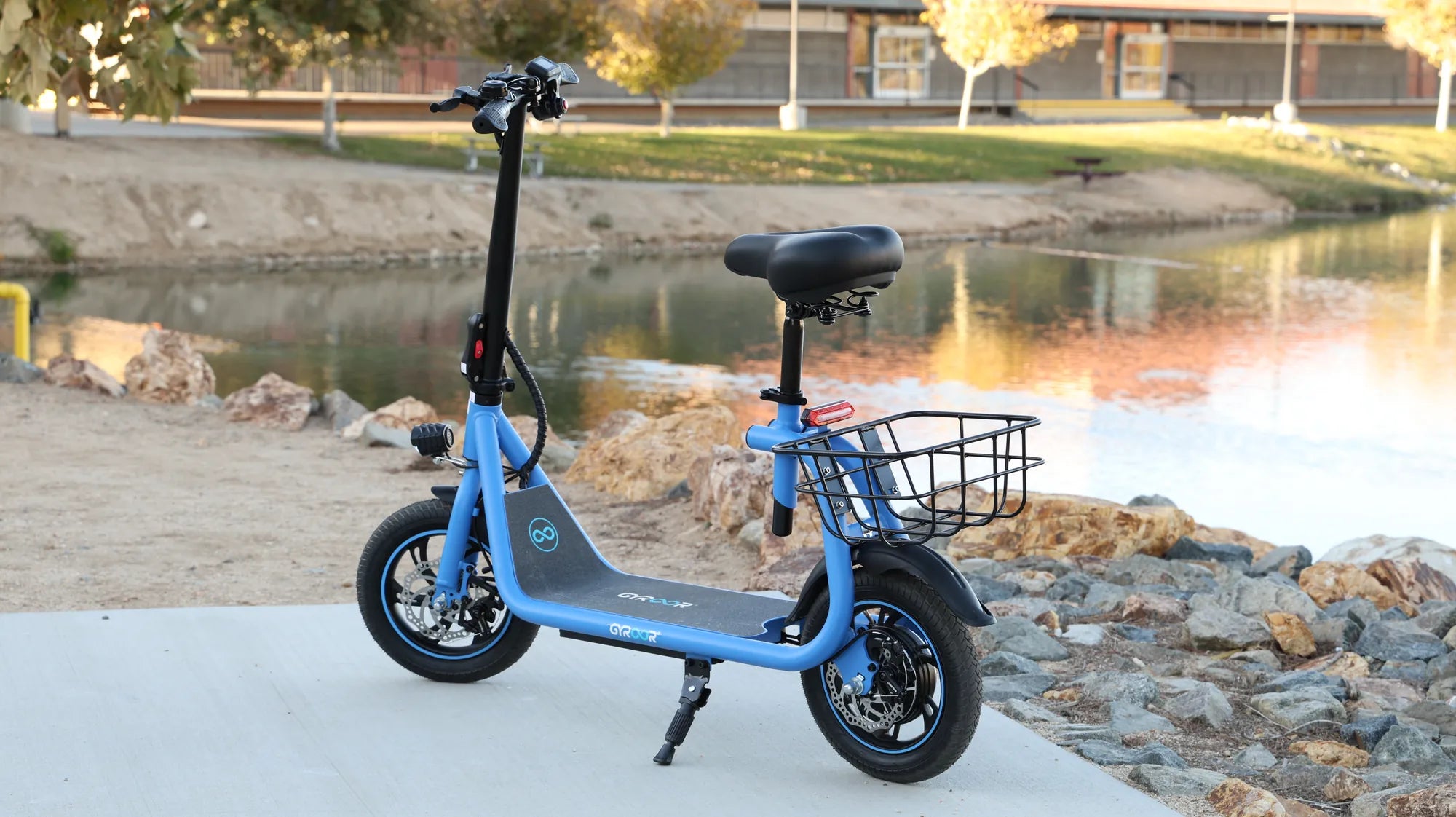
Navigating the Big Apple on Two Wheels
New York City's streets demand a smart mobility solution. Electric scooters have rapidly evolved from a novelty into a legitimate, efficient tool for conquering urban challenges. They directly address chronic traffic congestion, soaring transit costs, and frustrating last-mile gaps between subway stations and final destinations.
For New Yorkers, the right e-scooter isn't a toy—it's a serious commute upgrade. It must be built to withstand potholes, variable weather, and the rigors of daily use. This guide positions the electric scooter as an essential investment for NYC living, focusing on the specifications, laws, and practices that matter most.
We'll highlight why brands like Gyroor, trusted by over 100,000 riders, are engineered for this environment. With UL-certified batteries, IPX5 water-resistant designs, and robust one-year warranties, they meet the non-negotiable demands of safety and durability in the city that never sleeps.
Why an Electric Scooter is Your Best NYC Commute Investment
The financial argument for an electric scooter in New York is compelling. The average monthly unlimited MetroCard costs approximately $132. A reliable e-scooter, used for a primary commute, can pay for itself within 4-6 months by eliminating this recurring expense. This calculation ignores additional savings from avoiding ride-share surges and parking fees.
Time is a more valuable currency. According to INRIX traffic data, NYC drivers lost an average of 109 hours to congestion in 2023. Electric scooters, permitted in bike lanes and on streets with speed limits up to 30 mph, bypass this gridlock entirely. A 3-mile trip that takes 30+ minutes in a car can be completed in under 15 minutes on a scooter.
The convenience factor is transformative. An e-scooter solves the "last-mile" problem seamlessly. It bridges the gap from your apartment to the subway, from the PATH station to your office, or from the ferry to your final meeting. This door-to-door capability eliminates waiting times and crowded platforms.
Beyond personal benefit, the choice has a community impact. E-scooters are zero-emission at the point of use, reducing local air pollution and noise. They take up minimal space, easing parking pressures and traffic density. For the individual New Yorker, the investment yields daily dividends in savings, time, and personal agency.
Key Features to Look for in a NYC-Worthy Electric Scooter
Not all electric scooters are created equal, especially for New York City. The environment here is a rigorous test of durability, power, and practicality. Selecting a scooter without these key features will lead to frustration and potential safety issues.
The baseline must include a robust motor, a reliable battery with safety certifications, a suspension system, effective brakes, and water resistance. These features collectively determine whether a scooter is a viable long-term transport solution or a short-lived gadget.
Power & Range: Conquering Bridges and Boroughs
Motor power is critical for NYC's inclines and stop-and-go traffic. A minimum of a 350W motor is recommended; this provides enough torque to accelerate safely from intersections and handle gentle slopes like bridge approaches. For riders in hillier areas like parts of Brooklyn or Upper Manhattan, 500W or dual-motor systems offer necessary confidence.
Range anxiety is real. Advertised ranges are often based on ideal conditions: lightweight riders on flat, smooth paths at low speeds. In NYC, you must factor in frequent stops, curb hops, and wind. Look for a scooter with a manufacturer-stated range of at least 20 miles to ensure a real-world commute range of 12-15 miles. Gyroor models, for instance, use high-capacity, UL-certified battery packs tested for 500+ charge cycles, ensuring consistent performance and safety over time.
Durability & Safety: Built for NYC Streets
Durability starts with the frame. Aircraft-grade aluminum alloys offer the best strength-to-weight ratio. The suspension is non-negotiable for Manhattan's infamous potholes and uneven pavement. A combination of front and rear spring or hydraulic suspension absorbs impacts, protecting both the rider and the scooter's internal components.
Tire choice matters. Pneumatic (air-filled) tires provide superior shock absorption and traction compared to solid tires, making for a smoother, safer ride over rough surfaces. The braking system must be redundant and responsive. A dual-brake system—typically a disc brake combined with an electronic regenerative brake—ensures reliable stopping power in all weather conditions.
Finally, safety certifications are paramount. Water resistance rated at IPX5 or higher protects the scooter from rain and street spray. UL certification for the battery and electrical system, a standard Gyroor meets, is the benchmark for fire safety, a critical concern for apartment dwellers.
Portability & Practicality: From Subway Stairs to Studio Apartments
Portability defines an e-scooter's usability in a vertical city. Weight is the primary factor; a scooter between 30-40 lbs offers a reasonable balance between sturdiness and the ability to carry it up a flight of subway stairs or into an office. A one-click folding mechanism is essential for quick transitions between riding and carrying.
When folded, the scooter's footprint should be compact enough to tuck under a desk or in a small apartment closet. Integrated features enhance practicality: bright front and rear LED lights (with a brake light) are vital for visibility in NYC's chaotic traffic. An intuitive digital display shows speed, battery level, and mode. App connectivity for locking, diagnostics, and ride tracking adds a layer of security and functionality.
Navigating NYC Laws & Safety: A Rider's Responsibility
Operating an electric scooter in New York City comes with a clear set of legal responsibilities. Understanding and adhering to these rules is essential for your safety and the legitimacy of micro-mobility in the city. The regulations are designed to integrate scooters safely into the existing transportation ecosystem.
New York State law legalized electric scooters in 2020, with cities given the authority to set local rules. In NYC, the Department of Transportation (DOT) permits e-scooters on streets with speed limits of 30 mph or less, in bike lanes, and in bike paths. They are expressly prohibited on sidewalks. Riding in city parks is generally not allowed unless on a designated path or road open to vehicles.
The maximum legal speed for an e-scooter is 15 mph. Many scooters can go faster, but it is both illegal and unsafe to exceed this limit on city streets. Riders must be at least 16 years old. While helmets are not legally required for riders 16 and over, they are strongly, unequivocally recommended. A DOT-approved bicycle helmet is the minimum standard for protecting against head injury.
Safety extends beyond the law to defensive riding practices. Always assume drivers do not see you. Use hand signals for turns. Be hyper-aware of parked cars and the risk of "dooring." Ride predictably and avoid weaving between traffic. At night, wear reflective clothing and ensure your scooter's lights are fully functional. Your vigilance is your primary safety system.
Top Gyroor Models for New York City Riders
With over 20 models in its lineup, Gyroor offers options tailored to different urban needs. The following models exemplify the features necessary for NYC, balancing performance, portability, and durability. This comparison highlights their suitability for specific rider profiles in the city.
| Model | Best For | Motor / Max Speed | Max Range | Key NYC Features | Weight |
|---|---|---|---|---|---|
| Gyroor S1 | The Urban Commuter | 350W / 18 mph | 22 miles | UL-certified battery, IPX5 water resistance, one-click folding | 36 lbs |
| Gyroor F1 Pro | Power & Performance | 500W / 22 mph | 28 miles | Front & rear suspension, dual braking system, brighter LED lights | 41 lbs |
| Gyroor X1 | Long-Range Exploration | 600W / 25 mph | 35 miles | Extended battery, wider pneumatic tires, enhanced display with app sync | 48 lbs |
For the Urban Commuter: Gyroor S1
The Gyroor S1 is engineered for the daily grind. Its 350W motor delivers ample power for NYC's flat terrain and bridge approaches, while the 22-mile range comfortably covers most round-trip commutes with a safety buffer. The one-click folding mechanism and 36-lb weight make it manageable for carrying onto a train or into a coffee shop.
Key features address urban pain points directly. The IPX5 rating means a sudden rain shower won't end your ride. The UL-certified battery ensures safe charging in an apartment or office. The combination of a front shock absorber and 10-inch pneumatic tires provides a stable, comfortable ride over uneven streets, reducing fatigue on longer commutes.
For Power & Performance: Gyroor F1 Pro
The Gyroor F1 Pro is for the rider who covers more ground or faces tougher routes. Its 500W motor offers confident acceleration and better hill-climbing capability. The enhanced front and rear suspension system transforms rough pavement and cobblestone streets from obstacles into minor nuisances, providing a plush, controlled ride.
Safety and visibility are upgraded. The dual braking system—a disc brake and electronic brake—ensures shorter, more reliable stopping distances. The brighter LED headlight illuminates dark streets more effectively. While slightly heavier at 41 lbs, its performance-oriented build justifies the extra pounds for riders prioritizing ride quality and capability.
Your NYC E-Scooter Routine: Maintenance & Security Tips
Owning an electric scooter in New York requires a simple but consistent maintenance routine. This proactive care prevents minor issues from becoming major repairs and extends the lifespan of your investment. Start with weekly visual and functional checks before you ride.
Check tire pressure regularly; under-inflated pneumatic tires increase rolling resistance (reducing range) and are more prone to pinch flats from potholes. Inspect brakes for wear and ensure they engage smoothly and evenly. Tighten any visible bolts, especially on the folding mechanism and handlebars, as vibrations from city streets can loosen them over time.
Safe charging is non-negotiable. Always use the manufacturer-provided charger and never leave the scooter charging unattended for extended periods or overnight. Charge in a well-ventilated area, away from flammable materials. The UL-certification on Gyroor batteries provides a critical layer of safety, but proper practices are still essential.
Security is a major concern in NYC. A high-quality, hardened steel U-lock is the minimum standard. Always lock the scooter's frame to a fixed, immovable object—never just the wheel. If possible, bring the scooter indoors to your office or apartment. For added protection, use the scooter's electronic lock feature if it has one, and consider removing the battery (if easily removable) when leaving it in a public place for long.
Frequently Asked Questions (FAQs) for NYC E-Scooter Riders
Q: Can I ride my electric scooter on NYC sidewalks or in parks?
A: No. New York City law prohibits riding e-scooters on sidewalks. Riding in parks is also generally prohibited, except on roadways open to vehicular traffic. Always use bike lanes or streets with speed limits of 30 mph or less.
Q: Do I need a driver's license, registration, or insurance for my e-scooter?
A> No. New York State does not require a driver's license, vehicle registration, or insurance to operate an electric scooter that meets the state's definition (max speed 15 mph on public roads).
Q: How do I handle my e-scooter on public transportation?
A> MTA rules allow folded bicycles and scooters on subways and buses at all times, provided they do not block aisles or doorways. Be courteous: fold your scooter completely before entering and position it where it inconveniences others the least.
Q: What should I do if my Gyroor scooter needs repair in NYC?
A> Gyroor offers a comprehensive 1-year warranty on the scooter frame, motor, and battery. Contact their U.S.-based customer support for troubleshooting. They provide clear instructions for minor fixes and can facilitate repairs or part replacements through their service network.
Q: Are electric scooters safe in the rain?
A> Scooters with an IPX5 water-resistance rating, like Gyroor models, are designed to withstand rain and road spray. However, exercise extreme caution: reduce speed, avoid large puddles (which can hide deep potholes), and allow for much longer braking distances. Avoid riding in heavy downpours or flooding.
Conclusion: Embrace Efficient, Eco-Friendly Urban Freedom
An electric scooter is more than a vehicle; it's a key to reclaiming time, money, and enjoyment in New York City. The data is clear: the combination of financial savings, time efficiency, and convenience makes a compelling case for this mode of transport. By choosing a scooter built for the city's demands, you invest in reliable daily freedom.
The journey requires informed choices. Prioritize safety certifications like UL for batteries, durability features like suspension and pneumatic tires, and a design that fits your commute and living situation. Understand and respect local laws to ensure your riding experience is positive and sustainable. A consistent maintenance routine will protect your investment for years.
Gyroor's commitment to these principles—with UL-certified batteries, IPX5 water-resistant designs, and robust warranties—provides a foundation of trust for over 100,000 riders. It empowers you to navigate the urban landscape with confidence and control. Ready to transform your New York City commute? Browse the full Gyroor collection at gyroorboard.com and find the model engineered for your urban life.
Mopeds & Scooters: The Ultimate Guide to Electric Scooters for Adults
Does Vegas Have Electric Scooters? The Complete Guide to Riding in Sin City