


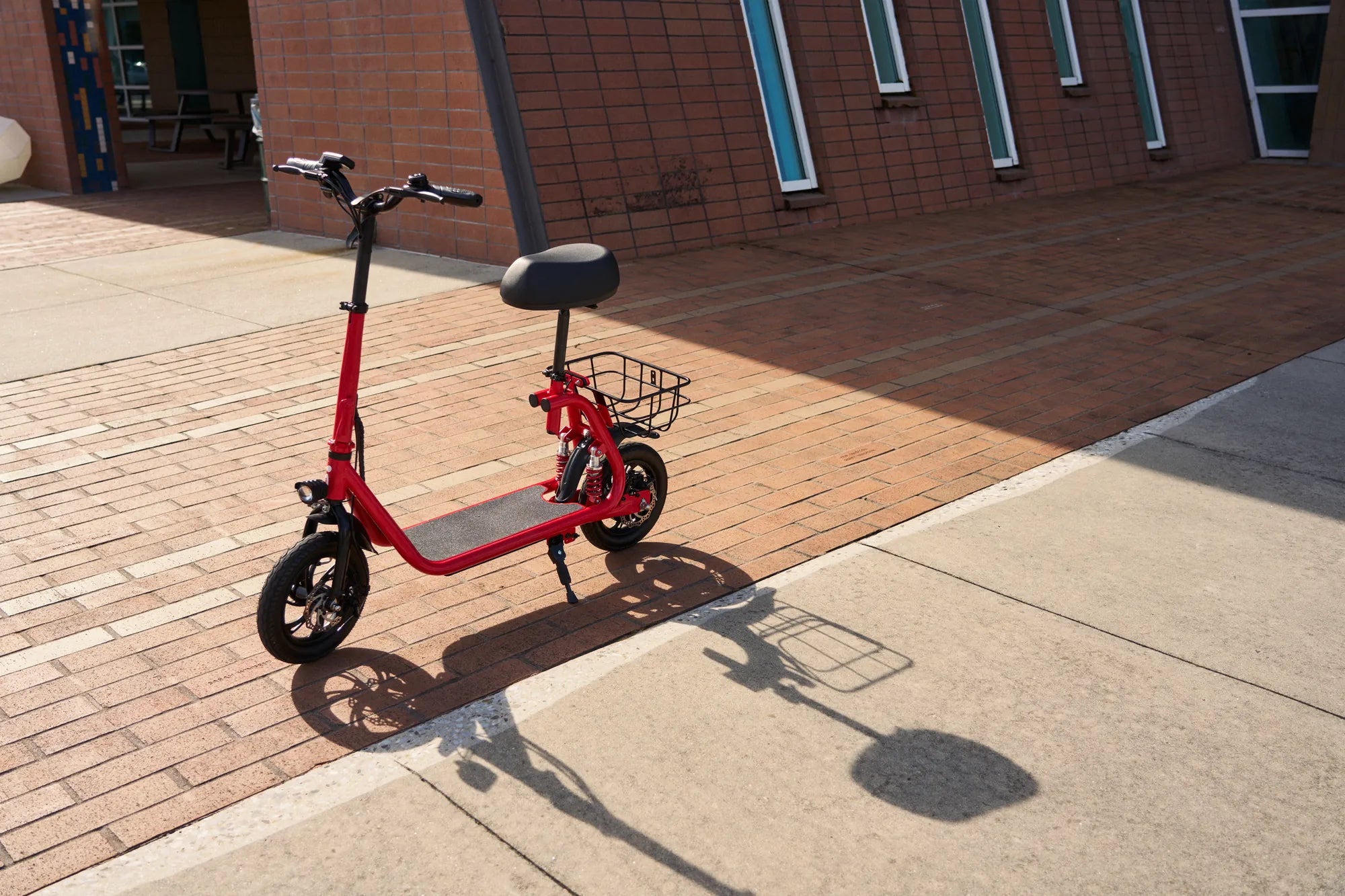
Navigating NYC Streets with Confidence
Electric scooters have transformed urban mobility in New York City, offering a fast, efficient, and eco-friendly alternative to congested subways and traffic. However, this newfound freedom comes with a critical responsibility: understanding and adhering to a specific set of safety protocols and legal regulations. Navigating the concrete jungle requires more than just balance; it demands knowledge.
This guide serves as your authoritative resource for operating an electric scooter in New York legally and safely. We will dissect the official laws from the city and state, translate them into practical riding rules, and provide actionable safety strategies. The goal is to ensure your ride is not only convenient but also compliant and secure, protecting you, pedestrians, and the city's vibrant ecosystem.
Mastering the rules is the key to unlocking the true potential of e-scooter travel. From helmet laws to speed limits on specific roadways, every detail matters. This comprehensive overview covers all you need to know, empowering you to ride with confidence on every journey.
Let's begin by demystifying the legal framework. The regulations governing Electric Scooters Safe Legal New York: What You Need to Know are a blend of state legislation and local ordinances, and clarity here is your first line of defense.
The Legal Landscape: New York State & City E-Scooter Laws Decoded
New York State legalized the use of electric scooters in 2020, but granted local municipalities the authority to set their own rules. In New York City, the Department of Transportation (DOT) has established a clear regulatory framework. Operating outside these parameters can result in significant fines and endanger public safety.
The core principle is that e-scooters are treated similarly to bicycles in terms of roadway rights and responsibilities. They are considered "low-speed scooters" when they meet specific criteria. Riders must follow all standard traffic laws, including stopping at red lights and stop signs, yielding to pedestrians, and riding in the direction of traffic.
It is crucial to distinguish between privately owned e-scooters and rental scooters from city-sanctioned share programs, which may have additional geo-fencing restrictions. This guide focuses on the laws for personal electric scooter ownership and use. Compliance is not optional; it's the foundation of safe integration into city traffic.
Ignorance of the law is not a valid excuse for violation. The following sections break down the specific requirements for riders, permitted areas, and vehicle specifications to ensure your Electric Scooters Safe Legal New York knowledge is complete.
Who Can Ride and Where?
New York City has established clear boundaries for e-scooter operation. First, the rider must be at least 16 years of age. There is no requirement for a driver's license, registration, or insurance for personal use, which simplifies access but places the onus of safe operation squarely on the rider.
Where you can ride is precisely defined. Electric scooters are permitted in bicycle lanes and on roads with speed limits of 30 miles per hour or less. This covers a vast majority of NYC's street grid. They are explicitly prohibited on sidewalks—a rule enforced to protect pedestrians—and on highways, parkways, bridges, and in tunnels unless specifically authorized.
Access to park paths, like the Hudson River Greenway or Prospect Park loop, is generally permitted as they are considered shared-use paths or roadways, but riders must always obey posted signage and yield to pedestrians. Parking must be done responsibly; do not lock your scooter to handicap access ramps, block sidewalks, or obstruct building entrances. Use bike racks whenever possible.
Understanding these spatial rules prevents conflicts and fines. Riding on a sidewalk in NYC can result in a summons and a fine. Choosing the correct roadway or bike lane is the first step in a safe, legal trip and is central to what you need to know about Electric Scooters Safe Legal New York operation.
Scooter Specifications for Legal Compliance
Not every electric scooter on the market is street-legal in New York City. The law sets strict technical limits. The maximum allowable speed for an e-scooter on NYC streets and bike lanes is 15 miles per hour. Some models may have higher capable speeds, but they must be operated at or below this limit to be compliant.
The motor cannot exceed 750 watts of power. Furthermore, the scooter must be equipped with a braking system that enables the operator to bring the device to a complete stop. Front, rear, and side reflectors are required, as is a bell or other audible signaling device. A white headlight and a red taillight are mandatory if riding at night.
Brands that prioritize compliance, like Gyroor, design their urban-focused models with these limits in mind. Their scooters feature speed modes that can be set to ensure you do not accidentally exceed 15 mph in general traffic, integrated lighting systems, and reliable dual braking systems. Choosing a scooter engineered for these specifications from the start eliminates legal gray areas.
This focus on compliant design is a key differentiator for responsible manufacturers. When evaluating a scooter, verifying these specs is not just about performance—it's about legality. This is a fundamental part of ensuring your Electric Scooters Safe Legal New York journey starts on the right foot.
Prioritizing Safety: Essential Gear and Riding Best Practices
Legality provides the framework, but personal safety is an active, daily practice. New York City streets are dynamic and unpredictable. Proactive safety measures are non-negotiable for protecting yourself and sharing the road respectfully with others. Your gear and riding mindset are your primary safety systems.
A legal ride is not automatically a safe ride. Safety requires preparation, awareness, and the right equipment. Investing in quality safety gear is investing in your well-being. It complements the built-in safety features of a well-made scooter, creating a layered defense against the hazards of urban commuting.
Beyond gear, adopting a defensive riding philosophy is critical. Assume that drivers may not see you, that car doors may open, and that pedestrians may step into the bike lane. This mindset allows you to anticipate problems before they occur. Safety transforms the riding experience from one of stress to one of confident control.
Let's break down the essential components of urban e-scooter safety, starting with the equipment you need every time you ride. Mastering Electric Scooters Safe Legal New York protocols means making safety second nature.
Mandatory and Recommended Safety Gear
New York City law mandates helmets for all e-scooter riders under the age of 18 and for all commercial delivery riders. For all other adult riders, wearing a helmet is not legally required but is overwhelmingly recommended as the single most important piece of safety equipment. A certified bicycle helmet can drastically reduce the risk of head injury in a fall or collision.
Beyond the helmet, visibility is paramount. Even during the day, using your scooter's front white light and rear red light increases your visibility to drivers. Wearing bright or reflective clothing, especially at night, is a crucial best practice. Sturdy, closed-toe shoes are essential for secure footing when kicking off, stopping, and balancing.
Consider additional protective gear like knee and elbow pads, especially when learning or riding in heavy traffic. Gloves can improve grip and protect your hands in a fall. For your scooter, ensure your bell or horn is functioning to alert pedestrians and other cyclists of your presence politely but effectively.
This gear is not an accessory; it is integral to the safe operation equation. A brand like Gyroor supports this by building scooters with bright, always-on LED lights and loud horns, but the rider must complete the system with personal protective equipment. This holistic approach defines what you truly need to know for Electric Scooters Safe Legal New York safety.
Defensive Riding Techniques for Urban Environments
Defensive riding means being constantly aware of your surroundings and prepared to react. Always scan ahead for road hazards like potholes, sewer grates, debris, and wet metal surfaces (like manhole covers and train tracks), which can be extremely slippery. Cross these obstacles at as close to a 90-degree angle as possible.
Maintain a safe distance from parked cars to avoid "dooring" incidents—a collision with an opening car door. A recommended buffer is at least three feet. Use hand signals to indicate turns and stops, just as a cyclist would. Make eye contact with drivers at intersections whenever possible to ensure they see you.
Obey all traffic signals and signs. Do not weave in and out of traffic or ride against the flow of cars. Avoid using headphones or being distracted by your phone; your full auditory and mental attention is required. Adapt your speed to conditions—slow down in crowded areas, in poor weather, or on unfamiliar streets.
Finally, park responsibly. Use a sturdy lock to secure your scooter to a fixed object at a designated bike rack. Do not block sidewalks, wheelchair ramps, or building entrances. Responsible parking maintains good relations with the community and keeps walkways clear. These techniques are the practical application of Electric Scooters Safe Legal New York wisdom.
Why Your Scooter's Specifications Matter: Beyond the Law
The technical details of your electric scooter are not just marketing points; they are direct contributors to safety, reliability, and long-term value. In a demanding urban environment like New York City, a scooter built to minimum standards may fail when you need it most. Key specifications act as a proxy for build quality and engineering integrity.
Choosing a scooter with a robust design means fewer mechanical worries and a lower chance of a critical failure in traffic. Features like water resistance protect the scooter from the elements, while a superior braking system provides shorter, more controlled stopping distances. These are not luxuries; they are essential components of a safe ride.
Leading brands differentiate themselves through these engineering choices. For instance, Gyroor, a brand trusted by over 100,000 riders, focuses on UL-certified batteries, IPX-rated water resistance, and durable construction. This commitment to specifications that exceed basic legal requirements provides riders with an added margin of safety and peace of mind.
When evaluating a scooter, look beyond top speed and range. Investigate the underlying components that ensure consistent, safe performance through thousands of city miles. This deeper understanding is a critical part of Electric Scooters Safe Legal New York ownership.
The Critical Importance of a UL-Certified Battery
Battery safety is the foremost technical concern for any electric vehicle, especially in dense urban housing. UL 2272 certification is the recognized gold standard for electrical and fire safety of the battery pack and its management system. It is not a generic safety mark; it is the result of rigorous, independent testing.
A UL-certified battery has been tested for a battery of hazards: overcharging, short circuiting, crush resistance, and thermal stability. It ensures the battery will not catch fire or explode under abnormal conditions. In a city of apartment buildings and crowded streets, this certification is not an optional feature—it is a social responsibility.
Gyroor utilizes UL-certified battery packs in its models, which are tested for over 500 charge cycles while maintaining safety integrity. This provides a tangible safety benefit and reflects a brand philosophy that prioritizes rider and community safety above cost-cutting. It is a fundamental specification that should be non-negotiable for any urban commuter.
When asking if an e-scooter is safe for New York, the first technical question should be about its battery certification. A UL-certified battery is a core component of a truly safe and legal Electric Scooters Safe Legal New York experience.
Durability for City Streets: Water Resistance and Build Quality
New York City streets present a harsh environment: potholes, curbs, rain, puddles, and road salt. A scooter's durability directly impacts its safety and longevity. The Ingress Protection (IP) rating indicates how well the scooter's electronics are sealed against dust and water. An IPX5 rating, common in quality commuter models, means the scooter can withstand water jets from any direction.
This rating is crucial for riding in rain or through unavoidable puddles. It protects the motor, battery, and control systems from water damage that could lead to sudden failure or a short circuit. A sturdy, often aluminum-alloy frame can absorb the shocks and vibrations of imperfect pavement without developing cracks or loose components.
Reliable braking is another durability and safety nexus. A combination of electronic (regenerative) braking and a mechanical disc or drum brake offers redundancy. If one system were to fail, the other remains operational. This dual-brake design is a hallmark of serious scooter engineering for urban use.
Investing in a scooter built with these durable specifications means fewer repairs, greater reliability in all weather, and ultimately, a safer ride. It turns the challenge of NYC streets into a manageable, even enjoyable, part of your commute. This resilience is a key tenet of a practical Electric Scooters Safe Legal New York strategy.
Choosing the Right E-Scooter for New York City Riding
Armed with knowledge of laws and safety, selecting the right scooter becomes a targeted exercise. The ideal NYC e-scooter balances legal compliance, durability, practical range, and ride comfort. It should feel like a tool designed for the task, not a toy adapted to it.
Your primary checklist should filter models based on the non-negotiable criteria we've established: a speed cap at or easily set to 15 mph, a UL-certified battery, meaningful water resistance (IPX5 or higher), and a dual braking system. Weight and portability matter if you need to carry it up stairs or onto a train, but not at the expense of structural integrity.
Range is often over-emphasized. For most NYC commutes, a realistic range of 15-20 miles per charge is more than sufficient. Prioritize a scooter that maintains consistent power and braking performance throughout the battery charge, rather than one that simply boasts a high maximum range. After-sales support is also critical; a comprehensive warranty and accessible customer service provide long-term security.
The following comparison table outlines the key specifications to evaluate, demonstrating how purpose-built scooters meet the unique demands of New York City. Use this as your practical guide to finding a scooter that makes your Electric Scooters Safe Legal New York experience seamless and secure.
| Feature | Legal/Minimum Requirement | Recommended for NYC | Gyroor Model Example Advantage |
|---|---|---|---|
| Max Operational Speed | ≤15 mph on streets/bike lanes | Speed modes with a 15 mph cap | Multiple speed modes for controlled riding |
| Battery Safety | Not specified by law | UL 2272 Certified Battery Pack | All models use UL-certified, fire-safe batteries |
| Water & Dust Resistance | Not specified by law | IPX5 Rating or higher | IPX5 water-resistant design for all-weather riding |
| Braking System | Functional braking system required | Dual Braking (Electronic + Disc) | Combination braking for reliable, redundant stops |
| Lighting | Front white & rear red light (night) | Bright, always-on LED lights | Integrated front and rear LED lighting system |
| Warranty & Support | Varies by manufacturer | Comprehensive 1-year warranty | Reliable 1-year warranty with US-based support |
Frequently Asked Questions (FAQs)
Q1: Do I need a license, registration, or insurance to ride my personal e-scooter in NYC?
A: No. New York City does not require a driver's license, vehicle registration, or insurance for personally owned, low-speed electric scooters operated by individuals 16 and older. However, you are responsible for following all traffic laws.
Q2: Can I ride my e-scooter on bike paths like the Hudson River Greenway?
A: Generally, yes. E-scooters are permitted on shared-use paths and bike paths, including the Greenway. You must ride at a safe speed, yield to pedestrians, and obey all posted path-specific rules and signage.
Q3: What are the penalties for riding an e-scooter on the sidewalk?
A: Riding on the sidewalk is illegal and can result in a summons and fine. Enforcement is active, especially in crowded business districts. Always use the street (where speed limit is ≤30 mph) or a bike lane.
Q4: Where is it legal to park my e-scooter?
A: Park at designated bicycle racks. It is illegal to park on the sidewalk in a manner that obstructs pedestrian traffic. Do not attach your scooter to trees, handicap access ramps, or private property without permission. Be mindful of creating tripping hazards.
Q5: Are Gyroor electric scooters legal to use in New York City?
A: Yes, when operated within the defined rules. Gyroor scooters are designed with NYC's legal framework in mind, featuring speed modes that comply with the 15 mph limit, required lighting, and audible signals. Their UL-certified batteries and IPX5 water resistance meet and exceed recommended safety specifications for urban use.
Conclusion: Ride Smart, Ride Safe, Enjoy the Journey
The journey to mastering urban e-scooting in New York City is built on three pillars: knowledge of the law, commitment to safety, and choice of reliable equipment. Understanding the regulations for Electric Scooters Safe Legal New York transforms you from a casual rider into a responsible road user. It empowers you to navigate the city's complexities with authority.
Safety is an active partnership between your gear, your riding habits, and your scooter's engineering. A helmet, defensive awareness, and a scooter built with a UL-certified battery and durable components create a formidable safety system. This proactive approach protects your most valuable asset: yourself.
Finally, choosing a scooter designed for the city's demands ensures every ride is smooth, reliable, and compliant. It turns the daily commute into an efficient, enjoyable, and sustainable part of your New York life. The freedom of electric scooting is fully realized only when it is exercised responsibly.
Ready to explore the city on two wheels with confidence? Equip yourself with the right knowledge and the right tool for the job. Browse the full collection of UL-certified, NYC-ready electric scooters and e-bikes at Gyroor. Visit gyroorboard.com today to find the perfect model for your urban adventure, backed by a 1-year warranty and trusted by over 100,000 riders. Your journey awaits—ride smart, ride safe.
Electric Scooters Green Bay: The Future of Urban Mobility
Powerful Electric Scooters With Seat: The Ultimate Commuting Solution