




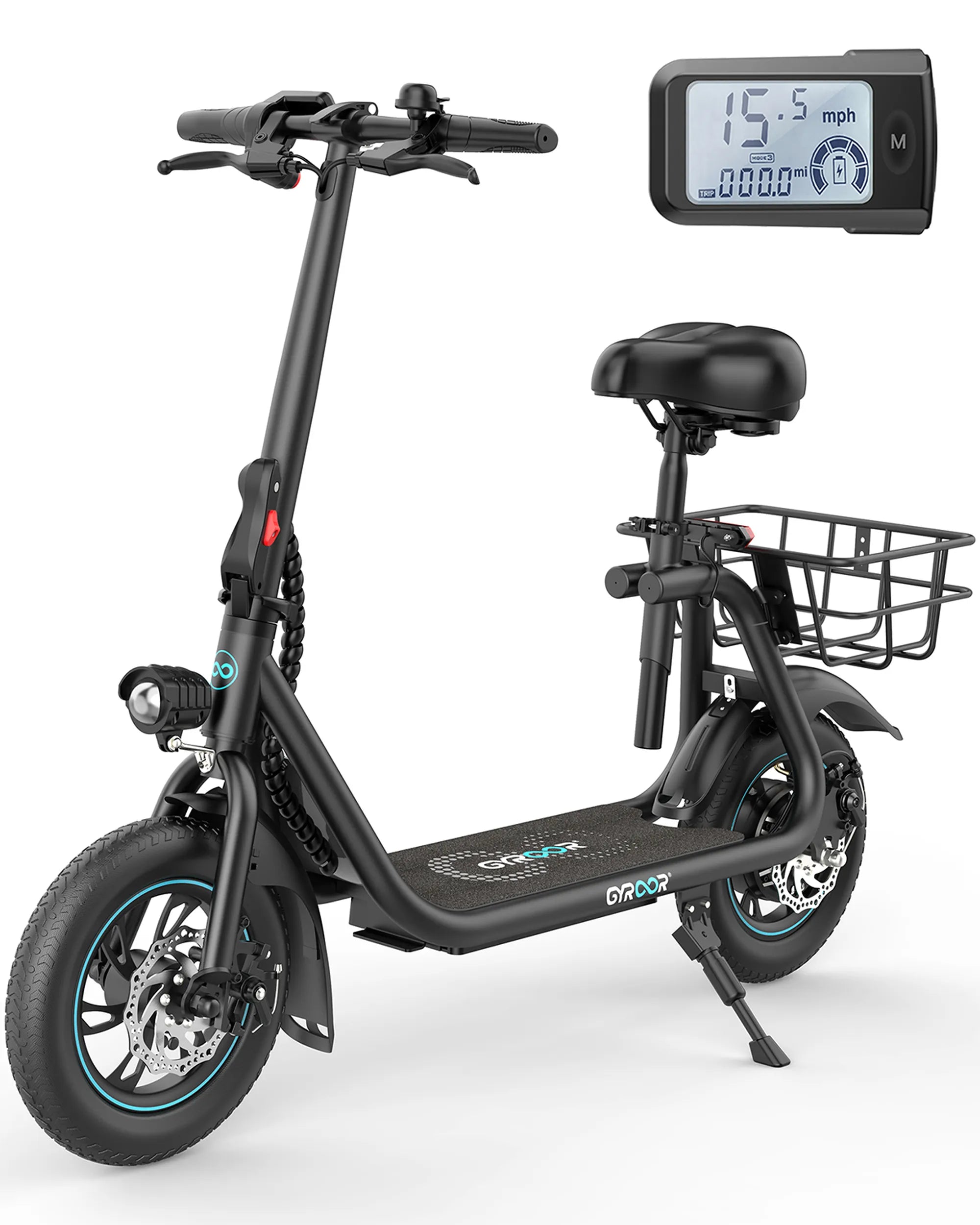
Introduction: South Africa's Urban Mobility Revolution
Traffic gridlock in Johannesburg, rising fuel prices nationwide, and a pressing need for sustainable alternatives are driving a rapid transport shift. Electric scooters have emerged as a powerful, practical solution, offering South Africans a new way to navigate congested cities. This article delves deep into why Electric Scooters South Africa represents more than a trend—it's a fundamental change in how we move.
From students in Cape Town to professionals in Sandton, riders are discovering the freedom and efficiency of e-scooters. We will explore the specific local challenges they solve, the critical features needed for South African roads, and how leading brands are engineering for this unique market. The future of urban mobility is here, and it's electric, agile, and smart.
Why South African Cities Are Embracing E-Scooters
The adoption of electric scooters across South Africa's major metros is a direct response to systemic urban challenges. Cities like Johannesburg, Cape Town, Durban, and Pretoria face severe traffic congestion that costs the economy billions annually in lost productivity and wasted fuel. Public transport systems, while improving, often lack first-and-last-mile connectivity, leaving commuters stranded.
Simultaneously, the consistent rise in petrol and diesel prices has made private car ownership increasingly burdensome. For many, an electric scooter presents a compelling alternative for short to medium-distance trips, effectively decoupling daily mobility from volatile fuel costs. The initial investment is quickly offset by minimal running expenses.
Beyond economics, there's a growing environmental consciousness. South Africa's energy grid is heavily reliant on coal, making the carbon footprint of electric vehicles a consideration. However, the exceptional energy efficiency of e-scooters—traveling up to 30km on the energy equivalent of a fraction of a liter of petrol—means they still represent a net positive for urban air quality and noise pollution reduction.
This convergence of traffic pain, economic pressure, and environmental awareness creates the perfect environment for micro-mobility to thrive. Electric scooters are not merely gadgets; they are legitimate tools for urban navigation, offering a sense of autonomy and efficiency that traditional transport modes often lack in the South African context.
Beating Traffic and Saving Money
Let's quantify the benefits with a practical Cape Town or Johannesburg scenario. A 5km commute from a suburb like Rosebank to Sandton, or Observatory to the Cape Town CBD, can take 25-45 minutes by car during peak hours, depending on traffic snarls. The same journey on an electric scooter often takes 15-20 minutes, using dedicated bike lanes or filtering through stationary traffic where safe and legal.
The cost difference is stark. A car consuming 8L/100km at R25 per liter costs R10 for that 5km trip, excluding parking, tolls, insurance, and depreciation. An e-scooter consuming 1.5 kWh per 100km at a household electricity rate costs under 50 cents for the same distance. Annually, commuting 10km daily could save a rider over R8,000 in fuel alone.
Parking further amplifies savings. Secure parking in major business districts can exceed R50 per day. An e-scooter can be folded and taken inside, eliminating this recurring cost entirely. This combination of time efficiency and direct cost reduction makes a compelling case for integrating an e-scooter into one's daily routine.
A Greener Commute for a Sustainable Future
While South Africa's electricity generation is carbon-intensive, the micro-mobility equation still favors e-scooters. A typical 500W e-scooter emits indirectly around 22g of CO2 per kilometer (based on SA's grid emissions factor). A modern petrol car emits roughly 120g per km per passenger. Even with our current grid, e-scooters can reduce transport emissions by over 80% for the same journey.
Their environmental impact extends beyond emissions. E-scooters produce negligible noise pollution, contributing to quieter, more pleasant urban environments. They also require far fewer raw materials to manufacture than a car and take up minimal public space, both when moving and parked. This efficient use of resources is key to building more sustainable, livable cities.
As South Africa continues to add renewable energy to its grid, the carbon footprint of electric scooters will only improve. Choosing an e-scooter is an investment in a cleaner future, aligning with global sustainability goals and local initiatives to improve urban air quality, which directly impacts public health.
Navigating the South African E-Scooter Landscape: What to Look For
Not all electric scooters are created equal, especially for the demanding South African environment. Choosing the right model requires careful evaluation of specifications that translate to real-world performance, safety, and durability. This buyer's guide focuses on the non-negotiable features for local conditions.
The market is flooded with options, but key differentiators lie in battery certification, build quality, and after-sales support. A low upfront cost can lead to high long-term expenses if the scooter fails on our roads or lacks reliable service. Informed buyers prioritize proven engineering and safety standards over attractive price tags alone.
Performance metrics like motor power, range, and top speed must be assessed in context. A manufacturer's "max range" is often achieved under ideal laboratory conditions. Real-world range is affected by rider weight, hills, wind, and road surface. Understanding these factors prevents disappointment and ensures your scooter meets your actual daily needs.
The following table compares critical specifications for different rider profiles in South Africa:
| Rider Profile & Use Case | Recommended Motor | Real-World Range Needed | Key Feature Priority | Terrain Consideration |
|---|---|---|---|---|
| Student / Campus Commuter (Short, flat trips) | 250W - 350W | 15-20 km | Portability, Foldability, Budget | Paved paths, mild slopes |
| Urban Professional (Daily work commute, 5-10km) | 350W - 500W | 25-35 km | Reliability, Water Resistance, Comfort | City streets, potholes, curbs |
| Adventure & Hilly City Rider (Cape Town, Durban hills) | 500W - 800W Dual Motor | 30-40 km | Hill Climb Power, Dual Suspension, Braking | Steep inclines, varied surfaces |
| Last-Mile Delivery Partner (Frequent, all-day use) | 500W+ | 40+ km | Battery Longevity, Extreme Durability, Warranty | Constant stop-start, all weather |
Safety First: The Non-Negotiable of Battery Certification
The battery is the heart of an electric scooter and its greatest potential risk if poorly made. UL2271 certification is an international safety standard for the battery pack itself, involving rigorous testing for electrical, mechanical, and environmental hazards like overcharge, short circuit, and crush tests. In a market with variable power supply, this certification is crucial.
Uncertified, cheap lithium-ion batteries pose a significant fire risk. They can overheat, catch fire, or even explode during charging or use. Brands like Gyroor commit to using only UL-certified battery packs, which undergo over 500 charge cycle tests to ensure longevity and safety. This certification should be a deal-breaker for any responsible buyer.
Beyond certification, battery management systems (BMS) are vital. A quality BMS protects the battery from over-current, over-voltage, and extreme temperatures. Given South Africa's summer heat, a BMS with thermal protection helps preserve battery health and safety over the scooter's lifetime, protecting your investment.
Built for Local Conditions: Durability is Key
South African urban terrain is diverse and often unforgiving. From the potholed streets of Johannesburg after summer rains to the steep, cobbled hills of Cape Town, an e-scooter must be robust. Key durability features start with the IP rating. An IPX5 rating means the scooter can withstand water jets from any direction, making it safe to ride in sudden rain showers—a common occurrence.
Suspension is not a luxury; it's a necessity for comfort and control. A combination of front and rear spring or hydraulic suspension absorbs shocks from uneven surfaces, reducing fatigue and improving tire and frame longevity. It also maintains better wheel contact with the road for safer braking.
Tire choice matters. Pneumatic (air-filled) tires offer the best shock absorption and grip but risk punctures. Solid honeycomb tires are puncture-proof but provide a harsher ride. For most South African riders, pneumatic tires paired with good suspension offer the ideal balance of comfort and practicality. The frame material, typically aerospace-grade aluminum, must be rigid yet lightweight to withstand daily use.
Understanding Range, Speed, and Local Regulations
Range anxiety is common among new buyers. To estimate real-world range, take the manufacturer's stated range (often tested at 75kg on a flat track) and apply a 20-30% reduction for hills, stop-start riding, and rider weight. For a reliable daily commute, choose a scooter with a stated range at least 50% longer than your round-trip distance.
Speed must be balanced with safety and legality. While many performance scooters can exceed 45 km/h, South African regulations for this new vehicle class are still evolving. Currently, it is widely advised to limit speeds to 25 km/h on shared paths and to always yield to pedestrians. Responsible riding is paramount for the positive integration of e-scooters into our transport ecosystem.
As of now, e-scooters occupy a grey area in the National Road Traffic Act. They are not explicitly legal on public roads, but enforcement is often focused on behavior rather than the vehicle itself. The safest practice is to use them on bicycle lanes, quieter suburban roads, and private property, always wearing a helmet and using lights. Advocacy is ongoing for formal, sensible regulation that recognizes their benefits while ensuring safety for all road users.
Gyroor in South Africa: Engineered for Confidence
Entering the South African market requires more than just shipping products; it requires an understanding of local needs. Gyroor, a global brand trusted by over 100,000 riders, brings a focus on certified safety and durable engineering that directly addresses the challenges outlined above. Their approach is built on providing reliable performance rather than chasing headline top speeds.
The brand's foundation is its commitment to UL-certified batteries and IPX5 water-resistant designs. These are not premium features but standard specifications, ensuring every rider gets core safety and weather resilience. In a climate with both intense sun and heavy rain, this built-in protection is essential for year-round usability and long-term reliability.
With a product range of over 20 models, from compact commuters to powerful off-road capable scooters, Gyroor offers solutions for different South African rider profiles. This variety, backed by consistent engineering standards, allows riders to choose a model that fits their specific commute, terrain, and budget without compromising on fundamental safety or quality.
Peace of Mind with Every Ride: The Gyroor Warranty Promise
After-sales support is a critical, often overlooked aspect of purchasing an electric scooter. A comprehensive warranty signals a manufacturer's confidence in its product. Gyroor backs its scooters with a reliable 1-year warranty covering the battery, motor, and controller—the core electrical components most vulnerable to stress.
This warranty is a significant advantage in the South African context. It provides a clear recourse should any manufacturing defect arise, protecting the consumer's investment. Coupled with accessible customer service, it transforms an e-scooter from a disposable gadget into a dependable transport tool, aligning with the needs of daily commuters who rely on their vehicle.
The value of a warranty extends beyond repairs. It reflects a brand's long-term commitment to its customers and its product's lifecycle. For a technology that is still novel to many South Africans, this peace of mind is invaluable, encouraging adoption by reducing the perceived risk of investment in a new mode of transport.
Model Spotlight: Choosing Your Gyroor for South African Streets
While Gyroor offers a wide range, let's hypothesize how different models align with local needs. A model like the Gyroor C1 (hypothetical compact model), with a 350W motor, 25km range, and IPX5 rating, is ideal for students or urban professionals in flatter areas like Pretoria or parts of Durban. Its foldability makes it perfect for combining with a train or bus ride.
For tackling the iconic hills of Cape Town or the rougher suburban roads of Johannesburg, a model like the Gyroor X5 (hypothetical performance model) would be more suitable. Featuring a 500W or dual 500W motor, enhanced dual suspension, and larger pneumatic tires, it provides the torque for steep inclines and the stability for uneven surfaces, without sacrificing the essential IPX5 weatherproofing.
This tailored approach ensures that whether your priority is portability, hill-climbing power, or maximum range for delivery work, there is an engineered solution that prioritizes the safety certifications and durable construction required for South African conditions. The choice becomes about matching capability to your lifestyle, not compromising on core safety features.
The Road Ahead: Integration and Infrastructure
The long-term success of electric scooters in South Africa hinges on their integration into the broader transport network and the parallel development of supportive infrastructure. The true potential is unlocked when e-scooters seamlessly connect with Gautrain stations, MyCiti bus stops, or metro systems, solving the critical first-and-last-mile problem that plagues public transport.
Infrastructure development is the next frontier. Cities like Cape Town and Johannesburg have begun expanding their bicycle lane networks. Advocating for these to be designed as shared micro-mobility lanes, wide enough for both cyclists and e-scooter riders, is essential. Secure parking and charging hubs at key transport interchanges would further encourage adoption.
The role of riders is pivotal in this evolution. Responsible riding behavior—obeying speed limits on shared paths, wearing helmets, using lights at night, and parking considerately—builds public and regulatory trust. Positive community experiences will do more to shape supportive legislation than any marketing campaign.
Looking forward, we may see innovations like swappable battery stations, reducing downtime for delivery riders, or smart scooters with integrated connectivity for fleet management. The foundation for these advances is being laid now by the choices of early adopters and the quality of the vehicles they bring onto our streets.
Cost-Benefit Analysis: E-Scooter vs. Traditional Transport
To fully appreciate the value proposition, a detailed, long-term financial analysis is necessary. The upfront cost of a quality e-scooter (R8,000 - R20,000) is often compared to a cheap used car, but the operating cost narrative is completely different. Over a three-year period, the total cost of ownership reveals a staggering disparity.
For a car, even a modest one, costs include finance/ depreciation, insurance (R1,500+ monthly), fuel (R1,500+ monthly), servicing, tires, and parking. Over three years, this can easily exceed R150,000. An e-scooter's costs are primarily the purchase price, with minor additions for electricity (under R100 monthly), occasional tire replacement, and brake pad changes. Total three-year cost rarely exceeds the scooter's initial price by more than 20%.
The time value benefit is harder to quantify but equally real. Saving 30 minutes per day on a commute translates to over 120 hours saved annually—time that can be invested in work, family, or leisure. The reduction in commute-related stress, by avoiding gridlocked traffic, also has significant benefits for mental well-being and productivity.
For businesses, especially in the logistics and delivery sector, e-scooters offer a revolutionary cost model. They enable faster, cheaper last-mile delivery in dense urban areas, reducing reliance on motorcycles and vans. This efficiency gain can be passed on to customers or reinvested, making e-scooters a strategic business tool, not just a personal transport choice.
Maintenance and Care for the South African Rider
Proper maintenance ensures safety, maximizes lifespan, and protects your investment. A simple weekly check can prevent most issues. Key tasks include inspecting tire pressure (for pneumatic tires), testing brake function (both electronic and disc/ drum), ensuring all bolts are tight (vibration can loosen them), and cleaning the deck and wheels of debris.
Battery care is paramount. Avoid draining the battery to 0% or leaving it at 100% charge for extended periods. The ideal storage charge is between 30-60%. In hot climates, avoid leaving the scooter or its battery in direct, scorching sunlight for prolonged periods, as extreme heat degrades battery cells. Store and charge in a cool, dry place.
After riding in wet conditions, even with an IPX5 rating, wipe down the scooter to prevent water ingress into mechanical parts and corrosion. Pay special attention to the folding mechanism and brake calipers. Regular lubrication of moving parts, as per the manufacturer's guide, will keep the ride smooth and quiet.
Understanding basic troubleshooting—like resetting the scooter, checking fuse connections, or diagnosing error codes—can save a trip to a service center. However, for any electrical issues beyond a simple connection, always consult the warranty and professional service to avoid voiding coverage or creating a safety hazard.
Frequently Asked Questions (FAQs) for South African Riders
Q: Are electric scooters legal on South African roads?
A: The legal framework is developing. They are not currently classified as motor vehicles under the National Road Traffic Act (NRTA). The safest approach is to ride on bicycle lanes, in parks where permitted, and on quieter suburban roads while always yielding to pedestrians. Avoid highways and high-speed traffic areas. Always wear a helmet, as local authorities may penalize riders for unsafe behavior even if the vehicle itself isn't explicitly regulated.
Q: How do I maintain my e-scooter battery in our climate?
A: Heat is the biggest enemy. Store and charge your scooter indoors, away from direct sunlight. Try not to charge immediately after a long, hot ride; let the battery cool first. During rainy seasons, ensure the charging port cover is securely closed. For brands like Gyroor with UL-certified packs and robust battery management systems, these practices will help achieve the full 500+ charge cycle lifespan, even in variable conditions.
Q: Can an e-scooter handle our hills and road conditions?
A: Yes, but you must choose the right scooter. For moderate hills, a continuous 350W motor is a minimum. For steep hills like in Cape Town, look for a 500W motor or dual-motor setup, which provides the necessary torque. Combined with pneumatic tires and suspension, a properly specced e-scooter can handle typical urban road imperfections and inclines effectively. Test the scooter's hill-climb grade specification (e.g., 15-20 degrees) before purchasing.
Q: Where can I ride safely in Johannesburg/Cape Town/Durban?
A: Johannesburg: The expanding Rea Vaya bus lane network (when not in use by buses), parks like Delta Park, and quieter suburban streets in areas like Sandton or Rosebank. Cape Town: The extensive Seapoint and City Bowl promenades, dedicated bicycle lanes on Klootfontein Rd, and the Green Point Urban Park. Durban: The beachfront promenade is ideal. Always check local bylaws for parks and use dedicated cycling infrastructure where it exists.
Q: What is the most important safety gear?
A: A certified bicycle or skate helmet is non-negotiable. Beyond that, consider gloves to protect your hands in a fall, knee and elbow pads for higher-speed riding, and always use bright clothing or reflective gear. Front and rear lights are essential, not just for night riding but also for visibility in overcast conditions or heavy traffic. Safety is about being seen and being protected.
Conclusion: Your Journey Starts Here
Electric scooters are poised to redefine urban mobility in South Africa. They offer a tangible, immediate solution to the intertwined challenges of congestion, cost, and sustainability. The journey towards smarter cities is paved with individual choices that collectively shape our transport ecosystem.
Choosing an e-scooter is a choice for efficiency, economy, and environmental stewardship. However, the quality of that choice matters immensely. Opting for a scooter with certified safety, durable construction, and reliable support ensures that your investment delivers on its promise for years to come, safely navigating the unique character of South African streets.
The future is not just electric; it is adaptable, personal, and connected. By embracing micro-mobility today, you become part of building that future. Explore the range of engineered solutions designed for confidence and discover the model that will power your next commute, errand, or adventure.
Ready to transform your urban commute? Browse the full Gyroor collection, featuring UL-certified batteries, IPX5 water-resistant designs, and a reliable 1-year warranty, at gyroorboard.com.
Pure Electric Pure Advance Flex Scooters: The Future of Urban Mobility
Different Electric Scooters: A Comprehensive Guide to Choosing the Right One