



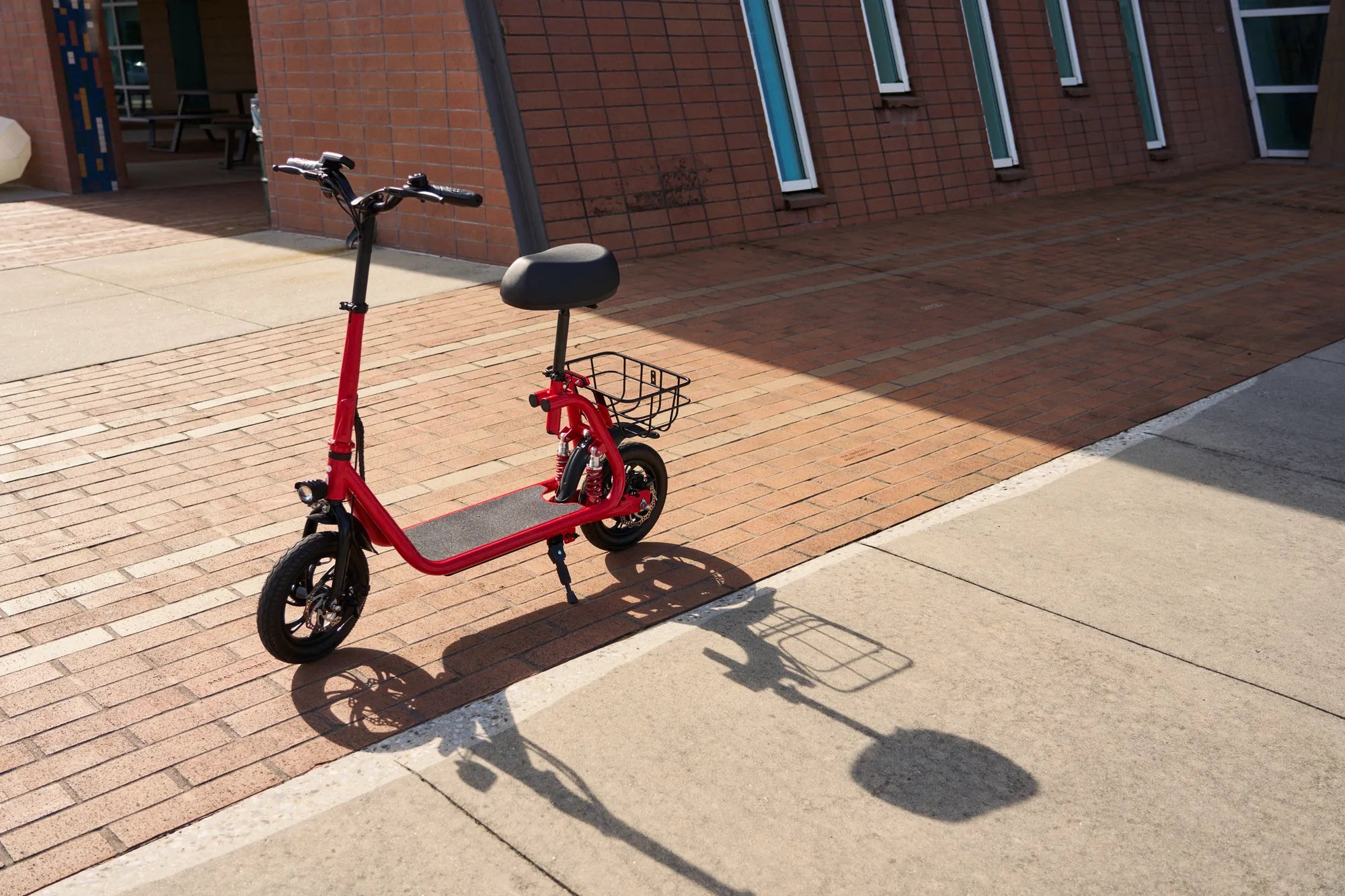
Electric scooters that go 40 MPH represent a paradigm shift in personal electric mobility, moving far beyond the realm of last-mile commuters. These high-performance machines unlock new possibilities for longer commutes, exhilarating rides, and a genuine sense of freedom on the road. However, with great speed comes significant responsibility. This guide delves into the engineering, legality, safety protocols, and ownership realities of these powerful vehicles. You'll learn not just about the thrill of the ride, but about the critical knowledge and gear required to navigate it safely and legally, and why choosing a brand built on certified safety, like Gyroor—a leading electric scooter and e-bike brand trusted by over 100,000 riders across North America and Europe—is a fundamental part of the equation.
The Allure and Evolution of 40 MPH Electric Scooters
The market for personal electric vehicles has matured dramatically. Early adopters sought basic convenience, but today's riders demand performance, range, and capability. Electric scooters that go 40 MPH cater to this evolved demand, serving commuters who need to cover 15-20 miles quickly, enthusiasts seeking adrenaline, and users in areas with higher speed limits on roadways. The appeal is clear: reduced commute times, the ability to keep pace with urban traffic, and the pure excitement of acceleration.
This performance leap is not merely about a more powerful motor. It represents a holistic engineering challenge encompassing battery management, structural integrity, braking power, and suspension design. These scooters are no longer toys; they are sophisticated electric vehicles. Their emergence signals a shift where riders view e-scooters as primary or serious secondary transportation, necessitating a corresponding shift in how we approach their use, regulation, and safety.
For a brand like Gyroor, known for UL-certified batteries, IPX5 water-resistant designs, and a reliable 1-year warranty, entering the high-performance segment means applying rigorous safety standards to powerful components. It's about building speed on a foundation of reliability, ensuring that the exhilaration of 40 MPH is matched by confidence in the machine beneath you.
Navigating the Complex Legal and Regulatory Landscape
Before considering a purchase, understanding the law is your most critical step. Regulations for electric scooters that go 40 MPH vary wildly and are often ambiguous. In most U.S. states and European countries, e-scooters capped at 15-20 MPH are classified as "personal mobility devices" allowed in bike lanes. However, once a scooter can exceed 25-28 MPH, it often crosses a legal threshold.
At 40 MPH, your electric scooter will likely be classified as a motor vehicle or a type of moped/motorized scooter in many jurisdictions. This classification carries major implications. You may be required to have a valid driver's license, register the vehicle with the DMV or equivalent agency, obtain license plates, and carry insurance. Riding on sidewalks, bike paths, or multi-use trails is almost always prohibited for vehicles in this class.
Local municipal ordinances add another layer of complexity. A city may ban all e-scooters over a certain wattage or speed entirely. It is the rider's unequivocal responsibility to research state, county, and city laws. Assuming the rules for a 20 MPH rental scooter apply to a 40 MPH performance model is a dangerous and potentially costly mistake that could result in fines, impoundment, or legal liability in an accident.
Safety Gear is Non-Negotiable at 40 MPH
At 40 MPH, the stakes of a fall or collision are equivalent to coming off a motorcycle. Standard bicycle helmets are utterly insufficient for this level of impact protection. Your gear must be upgraded to match the vehicle's performance.
A full-face motorcycle helmet certified by DOT (USA) or ECE (Europe) is the absolute minimum for head protection. It safeguards your skull, jaw, and face. Motorcycle-grade armored gloves, a padded or armored jacket, and knee/shin guards are essential to protect against abrasions and impacts. Durable, closed-toe shoes and high-visibility clothing or reflective elements are also critical, especially for riding in low-light conditions.
This investment in protective equipment is as important as the investment in the scooter itself. It is the primary system that protects you when physics takes over. High-speed riding without this gear is an unacceptable risk.
Deconstructing the Technology: What Makes 40 MPH Possible?
Reaching and sustaining 40 MPH requires a harmonious integration of several high-end components. It's not just one powerful part; it's a system engineered for performance.
First, dual motors are almost standard. Two motors (often 1000W each or more) provide the combined torque and power needed for rapid acceleration and maintaining high speeds, especially on inclines. Second, a high-capacity battery pack (typically 52V or 60V with 20Ah+) is required to deliver the sustained high current (discharge rate) these dual motors demand. This is where battery quality is paramount, as poor cells can overheat, sag in voltage, or fail dangerously under such loads.
The chassis and suspension must manage the increased forces. A rigid, often aluminum alloy frame provides stability. Advanced suspension systems—dual spring or hydraulic shocks at both wheels—are necessary to absorb bumps at speed, maintaining tire contact and rider control. Finally, braking must be exceptional. Hydraulic disc brakes on both wheels are the gold standard, offering progressive, powerful, and fade-resistant stopping power essential for controlling a 70+ pound vehicle at highway speeds.
The Gyroor Difference: Engineering for High-Speed Confidence
Gyroor's approach to high-speed scooters is defined by building confidence through certified safety and robust design. Their use of UL-certified battery packs is a critical differentiator. These batteries undergo rigorous testing for over 500 charge cycles, ensuring stability and thermal management even under the high discharge rates of 40 MPH riding. This directly addresses the primary safety concern with powerful electric vehicles.
Furthermore, an IPX5 water-resistance rating means the scooter's core electronics are protected against water jets from any direction. This allows for riding in light rain or on wet roads without immediate fear of short-circuiting, a feature not found on many performance scooters. Combined with a reliable 1-year warranty and responsive customer support, Gyroor positions its high-speed models not as disposable thrill machines, but as durable, responsibly engineered vehicles designed for long-term ownership and rider peace of mind.
Performance Realities: Range, Ride Quality, and Practicality
Understanding the real-world performance of electric scooters that go 40 MPH is key to setting proper expectations. Manufacturer range figures are usually given under ideal conditions at moderate speeds. The most significant factor affecting range is speed.
Riding consistently at 40 MPH can reduce the advertised range by 40-50% or more due to exponential increases in aerodynamic drag. A scooter rated for 40 miles at 20 MPH may only achieve 18-22 miles at full throttle. Acceleration, rider weight, hill climbs, and temperature also have substantial impacts. Therefore, planning your routes with charging infrastructure in mind is crucial for longer high-speed commutes.
Ride quality at speed is dictated by the suspension, tire size, and deck size. Larger, air-filled tires (10+ inches) and quality suspension smooth out road imperfections, increasing comfort and control. A wide, long deck provides a stable platform for your feet, reducing fatigue. These features transform the ride from a tense, jarring experience to one of composed confidence.
| Feature / Metric | Typical 40 MPH Scooter Expectation | Gyroor High-Performance Model Benchmark |
|---|---|---|
| Top Speed | 40-45 MPH | 40+ MPH |
| Real Range @ Top Speed | 18-25 miles | 20-28 miles (varies by model) |
| Motor Configuration | Dual Motor (1000W+ each) | Dual High-Torque Motors |
| Battery & Certification | 52V/60V 20Ah+ | High-Capacity, UL-Certified Pack |
| Braking System | Hydraulic or Dual Disc | Dual Hydraulic Disc Brakes |
| Suspension | Dual Spring/Hydraulic | Advanced Dual Suspension System |
| Water Resistance | Often IPX4 or unspecified | IPX5 Rated |
| Weight | 65-85 lbs | 70-80 lbs (robust frame) |
Responsible Ownership: Maintenance for Safety and Longevity
Owning a high-performance scooter is akin to owning a performance car; it requires diligent maintenance to stay safe and perform optimally. A pre-ride checklist should become ritual: check tire pressure (crucial for handling and range), inspect brake pads for wear and test brake function, ensure all lights are working, and confirm no loose bolts or parts.
Battery care is paramount. Follow the manufacturer's charging instructions precisely. Avoid leaving the battery at 0% or 100% charge for extended periods. Store in a cool, dry place. Regular firmware updates, if offered by the manufacturer, can improve performance, safety features, and battery management. Annually, or after every 500-1000 miles, consider a professional inspection of the braking system, suspension components, and electrical connections.
This proactive maintenance directly preserves your safety, protects your investment, and ensures the scooter delivers its promised performance for years. Neglect can lead to catastrophic failures, especially in critical systems like brakes at high speed.
Frequently Asked Questions (FAQ)
Do I need a license, registration, and insurance for a 40 MPH scooter?
In most regions where it is legally allowed on public roads, yes. At this speed, it is typically classified as a motor vehicle. You will likely need a valid driver's license, must register the scooter with your local transportation authority, and should obtain liability insurance. Always check your specific local and state laws.
How far can I actually travel on a single charge at 40 MPH?
Expect 40-60% less than the manufacturer's maximum range estimate. If a scooter is rated for 45 miles under ideal conditions, a realistic range at a consistent 40 MPH is between 18 and 27 miles. Factors like rider weight, hills, wind, and temperature will affect this.
Are these scooters safe to ride in the rain?
Safety is greatly diminished in wet conditions due to reduced tire traction and longer braking distances. However, scooters with a high IP water-resistance rating (like IPX5) are built to withstand water exposure without electrical failure. You must ride with extreme caution, reduce speed significantly, and avoid puddles, manhole covers, and road markings.
What is the true total cost of ownership?
Beyond the initial purchase price ($1,500-$3,000+), budget for high-quality safety gear ($300-$800), potential registration/insurance fees, replacement tires and brake pads, and occasional professional servicing. A quality scooter from a reputable brand with a good warranty, like Gyroor, can minimize unexpected repair costs.
Can I legally use bike lanes or paths?
Almost certainly not. Vehicles capable of 40 MPH are almost universally prohibited from bicycle infrastructure for the safety of cyclists. They are intended for use on public roads where local laws permit, and you must obey all traffic laws applicable to motor vehicles.
Conclusion: Embracing Speed with Wisdom and Responsibility
Electric scooters that go 40 MPH offer an unparalleled blend of efficiency, excitement, and freedom, effectively expanding the radius of practical personal electric transportation. They are powerful machines that command respect. The journey to responsible high-speed riding is paved with three pillars: a thorough understanding of your local legal landscape, an unwavering commitment to wearing comprehensive protective gear, and the deliberate choice of a scooter engineered with certified safety components and robust support. By prioritizing these principles, you transform a potentially risky novelty into a reliable, exhilarating, and legitimate mode of transport. Experience the fusion of performance and certified safety engineered for the discerning rider.
Browse the full Gyroor collection at gyroorboard.com
Are Electric Scooters Dangerous? A Data-Driven Look at Risks & Safety
Are Electric Scooters Dangerous? A Data-Driven Look at Risks & Safety