



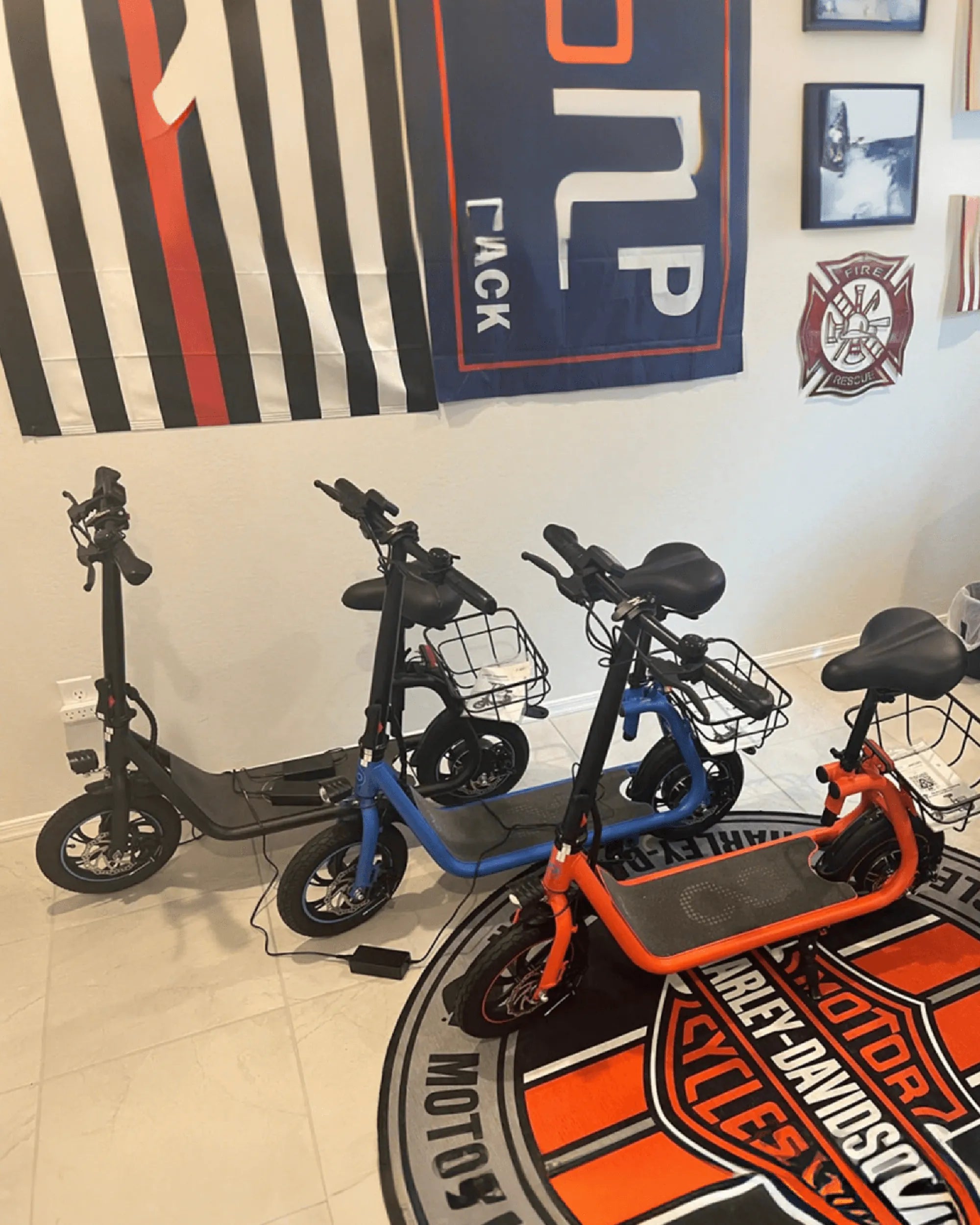
The 45 MPH Threshold and the Evolution of Urban Commuting
The quest for faster, more efficient urban travel has pushed electric scooter technology beyond the 20 MPH 'last-mile' solution. Electric scooters that go 45 MPH are emerging as legitimate car alternatives for medium-distance commutes, capable of matching city traffic flow. This article delves deep into the engineering that enables this speed, the crucial safety and legal frameworks riders must navigate, and the practical reality of using a high-speed scooter daily. We will explore whether the promise of a 45 MPH electric scooter aligns with the needs of the modern urban commuter.
What Makes a Scooter Capable of 45 MPH? The Engineering Breakdown
Achieving and sustaining a true 45 MPH requires a significant leap in component specification compared to standard commuter scooters. It's a holistic engineering challenge where power, energy, and control systems must work in concert. The core components are high-wattage motors, high-voltage battery packs, robust controllers, and serious braking systems.
At the heart are dual motors, often each rated at 1000W or more, working in tandem to produce the necessary torque and top speed. The battery must support this immense power draw; this means moving from common 36V or 48V systems to 52V or even 60V architectures with capacities of 20Ah or higher. This high-voltage foundation is critical for maintaining performance, especially on inclines.
The electronic speed controller (ESC) is the brain, managing the immense current flow from the battery to the motors. A high-quality controller ensures smooth acceleration, protects components from thermal overload, and enables features like regenerative braking. Finally, stopping power is non-negotiable: hydraulic or dual hydraulic disc brakes are the standard for safely managing kinetic energy at these speeds.
Power vs. Range: Understanding the Trade-Off
The most significant compromise for speed is range. Aerodynamic drag increases exponentially with speed, meaning battery consumption soars. A scooter with a manufacturer-stated range of 40 miles at 15 MPH may only achieve 15-18 miles when ridden consistently at 45 MPH.
This trade-off dictates trip planning. A high-speed scooter is ideal for a 7-10 mile commute where charging is available at both ends, not for all-day, long-distance exploration. Riders must understand that the advertised maximum range is almost always based on ideal conditions and lower average speeds.
Safety First: Navigating the Legal and Practical Landscape
Operating a vehicle at 45 MPH introduces risks comparable to a small motorcycle, demanding a complete shift in safety mindset. The legal landscape is equally critical, as these scooters often operate in a regulatory gray area, far exceeding standard micromobility speed limits.
The physical forces involved in a crash at 45 MPH are severe. Standard bicycle helmets offer insufficient protection. Rider skill must evolve beyond casual cruising to include advanced braking techniques, high-speed balance, and hyper-awareness of road surfaces and traffic dynamics.
Where Are 45 MPH Electric Scooters Legal?
In most jurisdictions across North America and Europe, electric scooters that go 45 MPH are not legal for use on public roads, bike lanes, or multi-use paths. Local regulations typically cap e-scooter speeds between 15 MPH and 28 MPH for lawful road use.
Their primary legal use is on private property with the owner's permission. Some regions may allow them with registration, insurance, and a driver's license, effectively classifying them as mopeds or limited-speed motorcycles, which comes with a separate set of requirements (license plates, turn signals, etc.). Riders must research their local and state/provincial laws exhaustively before purchase.
Essential Rider Gear and Skills for High-Speed Riding
Appropriate gear is not optional. A full-face motorcycle helmet (DOT or ECE certified) is essential to protect the head, face, and jaw. Motorcycle-grade armored gloves, a padded jacket (with shoulder, elbow, and back protectors), and sturdy over-ankle boots are the baseline.
Skills must be practiced in a safe, controlled environment. This includes progressive, two-brake emergency stopping, leaning correctly into turns, and managing weight distribution during acceleration and deceleration. Defensive riding—anticipating car doors opening, potholes, and erratic drivers—becomes a survival skill.
The Commuter's Reality: Is 45 MPH Practical for Daily Use?
The practicality of a 45 MPH scooter for a daily commute is a nuanced equation. For the right user with the right route, it can be transformative. For others, the limitations may outweigh the benefits.
The primary advantage is time. Converting a 30-minute, 10-mile commute via surface streets into a 15-minute journey is a powerful proposition. The ability to keep pace with urban traffic (typically 35-45 MPH) can increase safety by reducing speed differentials and make the rider more predictable to drivers.
The downsides are substantial. Legal risk is paramount. Range anxiety is real if the commute stretches the battery's high-speed limit. Secure parking is a major concern, as a high-value scooter is a theft target. Furthermore, comfort over longer distances at high speed, dealing with wind blast and road vibration, requires consideration.
Gyroor's Approach: Balancing Performance with Reliability
As a brand trusted by over 100,000 riders, Gyroor's engineering philosophy for performance models emphasizes a foundation of safety and durability. High-speed capability is built upon their core USPs: UL-certified battery packs, which are critical for managing the high discharge rates and thermal loads of 45 MPH performance safely.
This is coupled with IPX5 water-resistant designs for all-weather reliability and a comprehensive 1-year warranty backed by U.S. support. This approach ensures that the performance is not just a peak spec but a dependable feature integrated into a robust scooter platform designed for real-world use and rider trust.
Comparing the High-Speed Segment: Key Models and Specs
When evaluating electric scooters that go 45 MPH, key specifications differentiate models. The table below compares critical performance and safety metrics for a generalized high-performance scooter against a more common commuter model. Note: Specific Gyroor models evolve; check gyroorboard.com for latest specifications.
| Feature | High-Performance Scooter (45 MPH Capable) | Standard Commuter Scooter (20 MPH Capable) |
|---|---|---|
| Motor Power | Dual 1000W+ (Total 2000W+) | Single 350W - 500W |
| Battery Voltage/Capacity | 52V - 60V / 20Ah+ | 36V - 48V / 10Ah - 15Ah |
| Max Speed | 40 - 45+ MPH | 18 - 24 MPH |
| Real-World Range (at top speed) | 15 - 25 miles | 15 - 25 miles (at lower speed) |
| Braking System | Hydraulic or Dual Hydraulic Disc | Mechanical Disc or Drum |
| Suspension | Dual, adjustable front & rear | Basic front or spring-based |
| Weight | 65 - 85 lbs | 30 - 45 lbs |
| Primary Use Case | Performance commuting, private roads | Last-mile, public bike lanes/paths |
Beyond the Speedometer: The Future of High-Speed Personal Mobility
The development of electric scooters that go 45 MPH is a precursor to a broader evolution in personal electric vehicles (PEVs). Technology and infrastructure will need to adapt to integrate these faster machines safely into the urban fabric.
Battery technology is key. The adoption of solid-state or silicon-anode batteries could dramatically increase energy density, easing the range trade-off at high speeds. Smart safety systems like anti-lock braking systems (ABS), traction control, and electronic stability control will trickle down from motorcycles and electric cars to become standard on high-performance PEVs.
The regulatory future may see new vehicle classifications emerge for 'speed pedelecs' or micro-EVs, with dedicated lane infrastructure. This could legitimize the use of 45 MPH scooters on certain arterial roads, but it will require a parallel commitment to rider licensing, vehicle insurance, and safety standards.
Maintenance and Ownership: Keeping Your High-Speed Scooter Reliable
Owning a high-performance scooter demands a proactive maintenance regimen. The stresses on tires, brakes, and suspension are significantly greater than on a slower model.
Regular checks are mandatory. Inspect tire pressure before every ride; under-inflation at high speed is dangerous. Brake pads should be checked weekly for wear, and hydraulic brake fluid may need periodic changes. All bolts, especially those on the stem, handlebars, and folding mechanisms, must be regularly torqued to manufacturer specifications to prevent catastrophic failure.
Battery care remains paramount. Even with UL-certified packs, avoid draining the battery completely and store it in a cool, dry place. Following the manufacturer's charging guidelines ensures the 500+ charge cycle lifespan is achieved. The investment in a high-speed scooter is protected by diligent, simple maintenance.
FAQ: Your Top Questions on High-Speed Electric Scooters, Answered
Q: Can I legally ride a 45 MPH scooter to work on public roads?
A: In the vast majority of areas, no. Most local laws limit e-scooters to 15-28 MPH on public roads and bike lanes. Riding a 45 MPH model legally would typically require treating it as a moped (with registration, insurance, license) or limiting its use to private property.
Q: How much does a reliable 45 MPH scooter cost?
A> Expect to invest between $1,500 and $3,000+ for a well-built model from a reputable brand with the necessary safety features (hydraulic brakes, quality suspension, UL-certified battery). This reflects the higher-grade components required for performance and durability.
Q: Are Gyroor's high-speed models water-resistant?
A> Yes, Gyroor designs its performance scooters with IPX5 water resistance, meaning they can withstand water jets from any direction. This provides significant protection against rain and wet roads, a crucial feature for a practical commuter vehicle. Always check the specific IP rating for the model you choose.
Q: What's the most important safety tip for high-speed riding?
A> Beyond wearing a full-face helmet, the most critical skill is mastering progressive braking. Never grab the brakes abruptly at high speed. Instead, apply firm, increasing pressure to slow down smoothly and maintain control, using both brakes in coordination.
Q: How does the weight of a 45 MPH scooter impact portability?
A> Significantly. These scooters often weigh 65-85 lbs, making them difficult to carry up stairs or load into a car. They are designed for riding, not frequent carrying. The folding mechanism is for compact storage, not necessarily for last-mile multi-modal transit like a lighter scooter.
Speed as a Tool, Not Just a Thrill
Electric scooters that go 45 MPH represent a powerful tool for reimagining urban and suburban travel, offering a compelling blend of agility and speed. However, they are not casual toys. Their value is unlocked only when matched with a serious commitment to safety gear, advanced riding skills, and a thorough understanding of local laws. The engineering, exemplified by brands like Gyroor that prioritize UL-certified safety and robust construction, provides the capable platform. The rider provides the responsible mindset. As technology advances, the future of urban commuting may indeed be faster, but its success hinges on a foundation of smart, safe, and legal integration into our transportation ecosystem. Explore how high-performance design meets trusted reliability in the full Gyroor collection at gyroorboard.com.
Where Are Electric Scooters Banned? A Global Guide to Restrictions & Laws
How Fast Do Electric Scooters Go? A Complete Guide to Speed and Performance