


Introduction: Redefining the Urban Commute with Self-Balancing Technology
The electric self-balancing scooter for adults has evolved from a novelty gadget into a legitimate and transformative solution for urban mobility. It represents a fundamental shift in how we conceptualize short-distance travel, offering a unique blend of portability, efficiency, and technology-driven convenience. This device is no longer just for enthusiasts; it's a practical tool for the modern adult commuter navigating congested cityscapes.
This article will provide a comprehensive analysis of the electric self balancing scooter for adults as the future of urban mobility. You will learn about the sophisticated gyroscopic technology that makes these vehicles possible, the tangible economic and environmental benefits they offer, and the critical features that separate a reliable commuting partner from a mere toy. We will also examine real-world applications, safety protocols, and how leading brands like Gyroor engineer their products for daily adult use.
The core appeal lies in solving the persistent "first-and-last-mile" problem that plagues public transit systems. By filling the gap between home, transit hubs, and final destinations, these scooters create a seamless, multi-modal transportation chain. Their compact form factor and intuitive operation make them an accessible option for a wide demographic, directly addressing urban challenges like traffic congestion, parking scarcity, and carbon emissions.
The Core Technology: How Self-Balancing Scooters Work
At its heart, an electric self-balancing scooter is a marvel of modern sensor and control system engineering. The fundamental principle is dynamic stabilization, achieved through a combination of gyroscopic sensors, accelerometers, and a high-speed microprocessor. These components constantly monitor the scooter's pitch (forward/backward tilt) dozens of times per second, making instantaneous adjustments to the wheel motors to maintain balance.
The control mechanism is brilliantly intuitive: lean forward to accelerate, lean backward to decelerate or reverse, and apply subtle pressure with one foot to turn. This lean-to-steer interface creates a natural and responsive riding experience, often mastered within an hour of practice. The electric motors embedded in each wheel provide independent torque, allowing for smooth turns and stable handling even at low speeds.
Power is supplied by a rechargeable lithium-ion battery pack, typically mounted in the central chassis. The battery's capacity, measured in watt-hours (Wh), directly determines the scooter's range. The entire system is designed for minimal mechanical complexity, which contributes to the device's overall reliability and low maintenance needs when built with quality components.
Gyroor's Engineering Edge: Safety and Stability First
Gyroor implements this core technology with a specific focus on safety and stability for the adult rider. Their engineering philosophy prioritizes robust algorithms that process sensor data with high precision, ensuring a predictable and stable ride. This is crucial when navigating urban obstacles like cracks, inclines, and uneven pavement.
Unlike basic models, Gyroor scooters often incorporate dual balancing systems and redundant sensor checks to prevent single points of failure. The motor control is tuned for smooth acceleration and braking curves, eliminating the jerky movements that can unseat inexperienced riders. This attention to the software and control dynamics is what transforms the technological concept into a trustworthy vehicle for daily commuting.
Why Adults are Choosing Self-Balancing Scooters for Urban Mobility
The adoption of electric self-balancing scooters by adults is driven by a compelling matrix of practical benefits. Data from urban mobility studies and user reports highlight significant advantages in time savings, cost reduction, and personal convenience. For the environmentally conscious commuter, the zero direct emissions and ultra-low energy footprint present a clear alternative to fossil fuel-dependent transport.
Beyond the environmental appeal, the psychological benefit of an enjoyable, wind-in-your-face commute should not be underestimated. It transforms a mundane chore into a minor daily adventure, contributing to overall well-being. The flexibility they offer is unparalleled, allowing riders to adapt their route on the fly, avoid traffic snarls, and access areas impractical for cars or bicycles.
The Ultimate First-and-Last-Mile Solution
This is the most potent application for the urban adult. The average distance from a home to a transit stop, or from a transit stop to an office, often falls between 1 to 3 miles—a distance too long to walk comfortably but inefficient for a car. An electric self balancing scooter for adults covers this distance in 5-15 minutes, effectively extending the practical radius of any transit hub.
It eliminates the "wait and walk" penalty associated with buses and trains, making public transit a more attractive overall option. Riders can effortlessly carry the scooter onto a train or bus, completing a seamless multi-modal journey. This efficiency directly translates to reclaimed personal time and reduced daily stress.
Cost-Efficiency and Environmental Impact
The economic argument is powerful. Comparing costs per mile reveals stark differences. The average cost to operate a private car in the US, including fuel, maintenance, insurance, and depreciation, can exceed $0.60 per mile. Ride-sharing services like Uber or Lyft often cost $2-$3 per mile in urban centers. Even public transit typically ranges from $0.20-$0.50 per trip.
An electric scooter, by contrast, costs pennies per mile. A single charge, consuming roughly 0.5 kWh of electricity (costing about $0.07), can provide 15-20 miles of range. This results in an operational cost of less than $0.01 per mile. Over a year, replacing even two short car trips per day can save hundreds of dollars. Environmentally, this shift represents a direct reduction in CO2 emissions and urban noise pollution.
Convenience and Portability
The compact and lightweight design is a primary selling point. Most adult models weigh between 25-35 lbs, making them manageable to carry up a flight of stairs or onto public transport. Their slender profile allows for easy storage under a desk, in a closet, or in the trunk of a car, solving the parking and storage dilemmas inherent to cars and even bicycles.
This portability enables spontaneous use. A quick trip to a local cafe, a dash to a nearby meeting, or a weekend errand run becomes trivial. The ability to transition instantly from rider to pedestrian, by simply picking up the scooter, grants a level of urban agility that no other vehicle can match.
Key Features to Look for in an Adult Self-Balancing Scooter
Selecting a scooter for serious commuting requires moving beyond basic specs. Adults need a device engineered for durability, safety, and consistent performance. The following features are non-negotiable for a reliable daily transport tool, distinguishing professional-grade models from recreational toys.
A robust frame construction, typically from aerospace-grade aluminum alloys, is essential to withstand daily stress. The weight capacity must clearly exceed the rider's weight, with a healthy margin for safety; look for capacities of 260 lbs or higher. Tire choice is critical: air-filled (pneumatic) tires offer superior shock absorption and traction on varied surfaces, while solid tires eliminate the risk of flats but provide a harsher ride.
Power, Range, and Speed: Matching Your Commute
These three specs are interconnected and must align with your real-world needs. Motor power, measured in watts per motor (e.g., 2x 400W), determines hill-climbing ability and acceleration. For typical urban inclines, a combined power of 800W or more is recommended.
Manufacturer range claims are often based on ideal laboratory conditions. A practical rule is to derate the claimed range by 30-40% to account for rider weight, hills, stop-and-go traffic, and temperature. If your total daily commute is 10 miles, seek a model with a claimed range of at least 15-18 miles. Top speed for most quality adult models is capped between 10-15 mph, a safe and legal limit for shared pathways.
Build Quality and Durability for Daily Use
Daily commuting demands a rugged build. Examine the quality of the footpad deck coating for grip, the resilience of the shell to scratches and impacts, and the waterproofing of all electronic compartments. The hinge mechanism for the carrying handle (if present) should feel solid. High-quality bearings in the wheels ensure smooth, quiet operation over time.
Component quality directly correlates with longevity. Brands that disclose the use of name-brand battery cells (like LG, Samsung, or Panasonic) and precision gyroscope sensors are generally more trustworthy. These components are the heart of the scooter and where cost-cutting is most detrimental.
Safety and Warranty: Non-Negotiable Peace of Mind
Safety features are paramount. Bright LED headlights and taillights are essential for visibility in low-light conditions. Side reflectors or ambient lighting further enhance safety. An audible warning system (beep) for excessive speed or low battery is a useful alert. The most critical safety component is the battery. It must be UL-certified, indicating it has passed rigorous independent testing for fire and electrical safety.
A comprehensive warranty is not just a marketing promise; it's a reflection of the manufacturer's confidence in their product. For an adult using the scooter as serious transport, a minimum 1-year warranty on the entire vehicle, with at least 6 months on the battery, is essential. It protects your investment against manufacturing defects.
Gyroor Self-Balancing Scooters: Engineered for the Adult Commuter
Gyroor positions its product line specifically to meet the demands outlined above. As a brand trusted by over 100,000 riders across North America and Europe, their focus is on delivering reliable, safe, and high-performance micro-mobility solutions. Their design philosophy applies the key features for adult commuters directly into their engineering and quality control processes.
Every model in their lineup is built around a core commitment to rider safety and product durability. This is evident in their specification choices, from motor power to frame design, which are tailored for the realities of daily urban travel rather than just maximizing headline speed or range figures.
UL-Certified Battery Safety: Commute with Confidence
Gyroor's commitment to safety is most clearly demonstrated by its use of UL-certified lithium-ion battery packs across all models. This certification means the battery cells, battery management system (BMS), and overall pack design have been tested by Underwriters Laboratories for electrical, mechanical, and fire hazards. For an adult who charges their scooter daily, possibly in a home or office, this provides critical peace of mind.
The batteries are also rated for 500+ charge cycles while maintaining significant capacity, ensuring the scooter retains its useful range for years of daily use. This focus on long-term battery health and safety is a key differentiator for commuters who view their scooter as a long-term investment.
IPX5 Water Resistance: Ready for All Urban Conditions
Urban commuting doesn't stop for a light rain. Gyroor equips its scooters with an IPX5 water-resistant rating. This means the electrical components are protected against water jets from any direction, making the scooter capable of handling wet roads, puddles, and unexpected showers. This dramatically increases the scooter's utility, transforming it from a fair-weather option into a truly all-weather transport solution for most urban conditions.
This durability ensures that internal components like gyroscopes, control boards, and motor connections are shielded from moisture and dust, which are primary causes of failure in lesser-protected devices. It expands the usable days per year, enhancing the scooter's value proposition.
Supported by a Robust Warranty and Service Network
Understanding that adults depend on their scooters, Gyroor backs its products with a robust 1-year comprehensive warranty. This coverage includes the frame, motors, electronic systems, and the UL-certified battery. This warranty acts as a guarantee of quality and provides a clear recourse in the rare event of a manufacturing issue.
Supported by a responsive, US-based customer service team, riders have access to technical support and warranty service. This network is crucial for minimizing downtime, ensuring that a commuter's primary mode of transport can be repaired or serviced efficiently, a level of support rarely found with generic brands.
Comparison: Self-Balancing Scooter vs. Other Micro-Mobility Options
Choosing the right personal electric vehicle depends on individual needs, commute profile, and storage options. The following table compares the electric self balancing scooter for adults against other popular micro-mobility choices.
| Feature | Self-Balancing Scooter | Electric Kick Scooter | Electric Bike (E-Bike) | Traditional Bicycle |
|---|---|---|---|---|
| Learning Curve | Moderate (1-2 hours) | Very Low (Instant) | Very Low (Instant) | Low (Requires skill) |
| Portability & Weight | Excellent (25-35 lbs) | Good (30-45 lbs) | Poor (50-70 lbs) | Fair (20-30 lbs) |
| Storage Footprint | Minimal (Can stand vertically) | Small (Folding mechanism) | Large (Requires bike rack/space) | Large (Requires bike rack/space) |
| Speed & Range | 10-15 mph, 10-20 mi | 15-20 mph, 15-30 mi | 20-28 mph, 20-60 mi | Human-powered |
| Terrain Handling | Good on pavement, sensitive to rough terrain | Good with air tires, better suspension | Excellent, handles most urban terrain | Good, depends on bike type |
| Primary Use Case | Ultimate last-mile, ultra-portable commute | Medium-distance dedicated commute | Longer commutes, cargo, hills | Exercise, short recreational trips |
| Relative Cost | $$ | $$-$$$ | $$$-$$$$ | $ |
The electric self balancing scooter for adults excels in scenarios where extreme portability and seamless integration with public transit are the top priorities. It is the most "pedestrian-friendly" electric vehicle, easily carried and stored. E-scooters (kick-style) offer higher speeds and often greater range but are bulkier when folded. E-bikes are superior for longer distances and cargo but lack portability. The choice hinges on the specific gaps in your personal mobility chain.
Navigating Regulations and Riding Safely in the City
Responsible ownership is key to the long-term acceptance of personal electric vehicles in cities. Regulations are evolving rapidly and vary significantly by municipality, state, and country. Proactive knowledge and courteous riding are the responsibilities of every adult rider.
Always assume that pedestrians have the right of way. Riding on crowded sidewalks at high speed is dangerous and fosters negative public perception. The ideal riding locations are bicycle lanes, shared-use paths, and low-traffic residential streets where local laws permit. Your behavior as a rider directly impacts the regulatory environment for all micro-mobility users.
Understanding Local Laws and Where to Ride
Before riding, conduct thorough research. Check your city's transportation or police department website for specific ordinances governing "electric personal assistive mobility devices" (EPAMDs) or "motorized scooters." Key legal variables include maximum allowed speed, minimum rider age, helmet requirements, and whether riding on sidewalks is prohibited.
Many cities explicitly ban certain devices from sidewalks but allow them in bike lanes. Some require registration or have specific equipment mandates like lights or bells. Ignorance of the law is not a defense, and fines can be substantial. Adhering to the rules ensures your own safety and legal protection.
Essential Safety Gear and Riding Etiquette
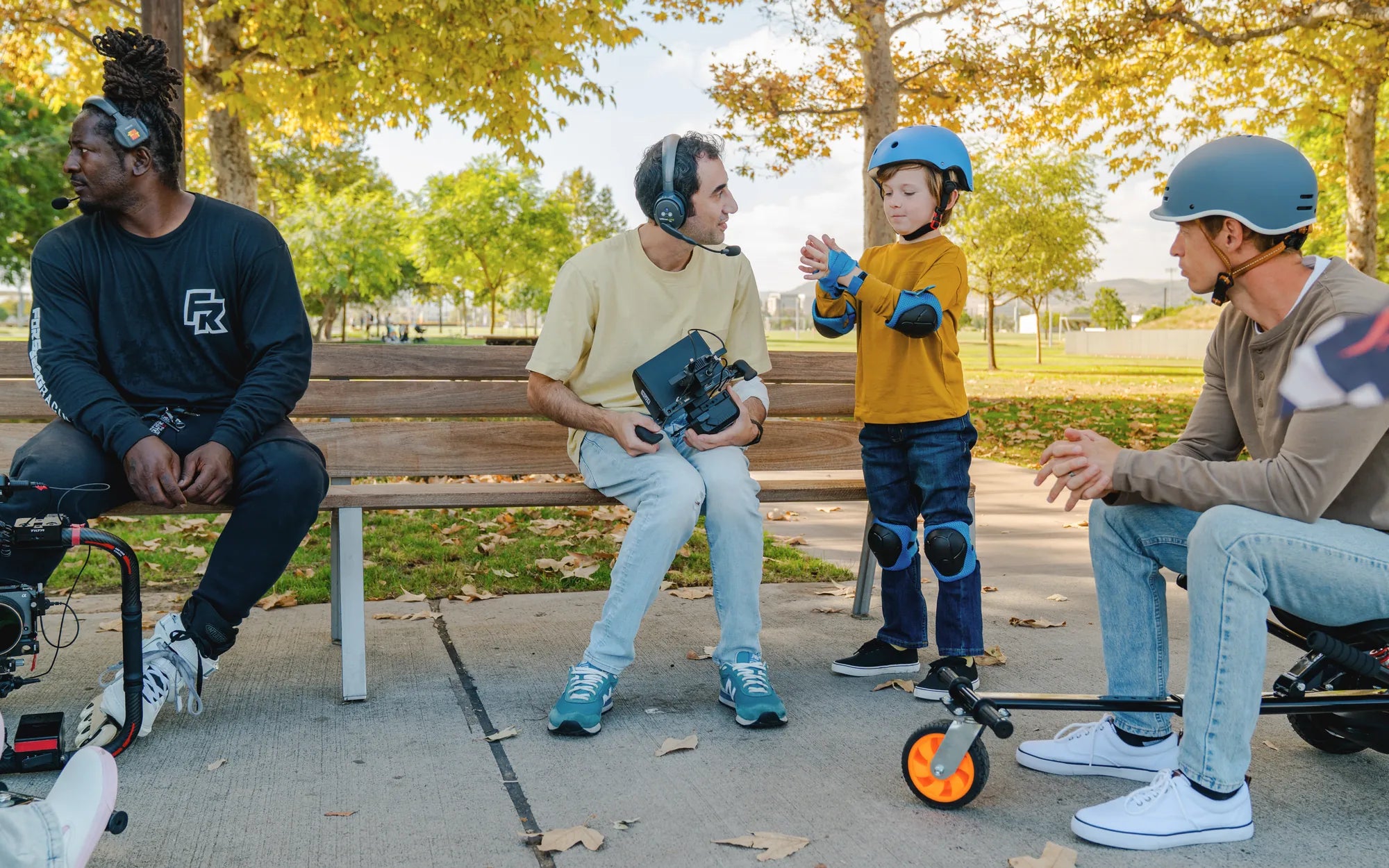
At a minimum, a properly fitted bicycle or multi-impact helmet is non-negotiable. Wrist guards are highly recommended, as falls often involve instinctive hand placement. For night riding, reflective clothing or vests are crucial. Elbow and knee pads add further protection, especially during the learning phase.
Riding etiquette is equally important. Use hand signals to indicate turns. Announce your presence politely with a bell or a verbal "passing on your left" when overtaking pedestrians or cyclists. Maintain a safe speed, especially in shared spaces. Never ride under the influence of alcohol or drugs. Regularly inspect your scooter for tire pressure, loose parts, and light functionality.
Frequently Asked Questions (FAQ)
Q1: How long does it take to learn to ride a self-balancing scooter?
Most adults can achieve basic competency within 30-60 minutes of practice in a safe, open area like an empty parking lot. Mastery of tight turns, obstacle avoidance, and mounting/dismounting fluidly may take a few days of regular use. The learning process is significantly faster than learning to ride a bicycle for the first time.
Q2: Can I ride a self-balancing scooter in the rain?
This depends entirely on the scooter's IP (Ingress Protection) rating. Models with a rating of IPX4 or higher (like Gyroor's IPX5) are designed to withstand rain and wet conditions. However, you should avoid deep puddles, standing water, and torrential downpours. Never submerge any part of the scooter. Always dry it off after riding in the rain.
Q3: What is the realistic range I can expect on a single charge?
Real-world range is affected by rider weight, terrain (hills), temperature (cold reduces battery efficiency), riding speed, and stop-start frequency. A practical estimate is 60-70% of the manufacturer's advertised range. For example, a scooter with a 20-mile claimed range will typically achieve 12-15 miles for an average adult rider in mixed urban conditions.
Q4: Are these scooters suitable for riders over a certain weight?
Yes, but you must check the manufacturer's specified maximum weight capacity. Quality adult models from brands like Gyroor often support riders up to 260-280 lbs. Exceeding this limit can strain the motors, reduce battery life, compromise stability, and void the warranty. Always choose a model with a weight capacity well above your own weight.
Q5: How do I maintain my self-balancing scooter for longevity?
Regular maintenance is simple but vital. Keep the tire pressure correct if using pneumatic tires. Wipe down the scooter to remove dirt and debris. Check and tighten screws periodically. Avoid extreme temperatures during storage or charging. Store with a 50-80% charge if not using for extended periods. Follow the manufacturer's specific charging instructions—avoid overcharging. Have the unit serviced by a professional if you notice unusual noises, vibrations, or performance drops.
Conclusion: Embracing a Smarter, More Agile Urban Future
The electric self balancing scooter for adults has firmly established itself as a legitimate and powerful tool in the urban mobility toolkit. It addresses specific modern challenges—congestion, cost, emissions, and the last-mile gap—with an elegant, technology-driven solution. Its value proposition is rooted in tangible data: dramatic cost savings per mile, time efficiency gains, and a meaningful reduction in personal carbon footprint.
The future of urban mobility is undeniably multi-modal, and devices like these are critical connectors in that network. As cities continue to densify and prioritize people over cars, the demand for compact, efficient, and personal transport will only grow. The evolution from novelty to necessity is complete, marking a significant shift in how we navigate our built environment.
For adults considering this shift, the imperative is to invest in a device engineered for the responsibility of daily transport. Prioritizing certified safety features, robust construction, and reliable manufacturer support, as found in brands like Gyroor, ensures your scooter is a dependable partner, not a liability. The right electric self balancing scooter for adults doesn't just change your commute; it redefines your relationship with the city itself, offering a newfound sense of freedom and agility.
Ready to experience the future of urban mobility? Explore Gyroor's full range of UL-certified, IPX5 water-resistant electric self-balancing scooters and e-bikes, engineered for the adult commuter and backed by a comprehensive 1-year warranty. Browse the full Gyroor collection at gyroorboard.com and find the perfect model to transform your daily journey.
What Is the Most Expensive Hoverboard and Why Does It Cost So Much?
What Is the Most Expensive Hoverboard and Why Does It Cost So Much?