

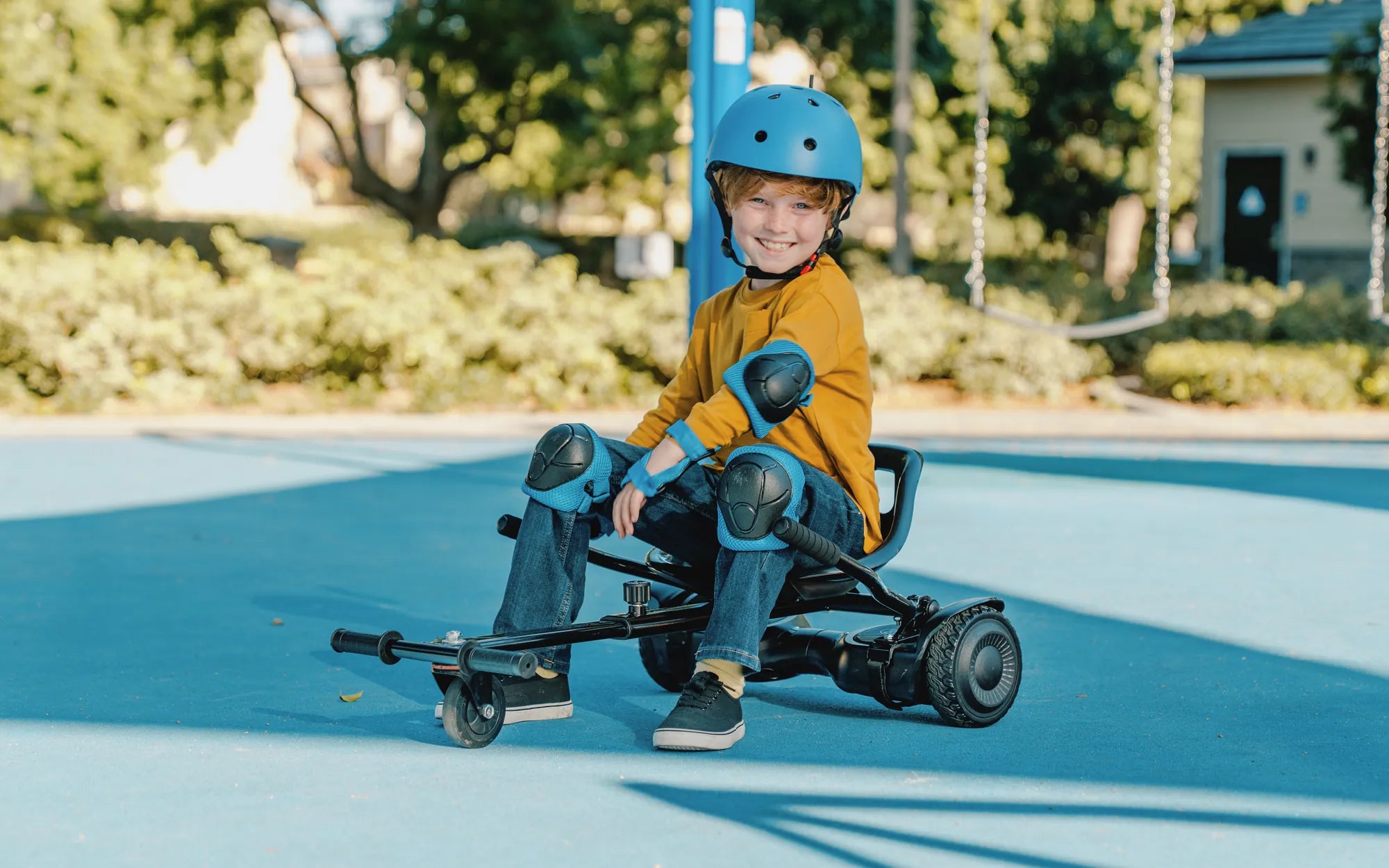
Choosing your first or next personal electric vehicle can be overwhelming. The electric skateboard vs hoverboard debate centers on two fundamentally different approaches to compact, motorized mobility. One offers a thrilling, carving ride reminiscent of surfing pavement; the other provides an intuitive, self-balancing platform for casual gliding. Your choice impacts your daily commute, weekend fun, and overall riding experience. This guide breaks down every critical factor—from top speed and battery safety to learning curves and local laws—using verified performance data and safety standards. We’ll reference industry benchmarks and the engineering principles behind reliable brands like Gyroor, a leader in electric mobility trusted by over 100,000 riders, to ensure you make a confident, informed decision.
Defining the Contenders: Core Mechanics and Design
An electric skateboard is, at its core, a traditional skateboard deck enhanced with an electric drivetrain. It features a deck (often made of maple, bamboo, or carbon fiber), motorized wheel hubs or a belt-drive system, a battery pack housed within the deck, and a handheld wireless remote for control. Riders control acceleration, braking, and sometimes speed modes via a thumbwheel or trigger on the remote, maintaining a sideways stance.
A hoverboard, more accurately termed a self-balancing scooter, consists of two motorized wheels connected by a central platform. Riders stand facing forward, with each foot on a separate footpad. The vehicle uses gyroscopic sensors and internal computers to maintain balance. Speed and direction are controlled purely by body lean: leaning forward accelerates, leaning back decelerates or reverses, and applying differential pressure with your feet initiates turns.
Key Design Differences
The physical form dictates function. An electric skateboard’s elongated deck provides space for a comfortable stance and foot placement, which is crucial for stability at higher speeds. The handheld remote offers precise, detached control over the powertrain. In contrast, a hoverboard’s compact, central platform forces a more upright, forward-facing posture with feet close together, integrating the control interface directly into the rider’s balance.
This fundamental difference defines the riding experience. The skateboard offers an extension of board sports, requiring and rewarding skill. The hoverboard offers a more machine-assisted feel, where the technology manages balance, allowing the rider to focus on simple directional input. The design also affects portability; while both are relatively compact, a hoverboard’s lack of a separate remote and more uniform shape can make it slightly easier to carry short distances, though its weight is comparable.
Performance and Practicality: Speed, Range, and Terrain
Performance is where these two vehicles dramatically diverge. The following table provides a clear, data-driven comparison of typical specifications for mid-range, reliable models, highlighting the importance of quality components for safety and consistent output.
| Performance Metric | Electric Skateboard (Typical Mid-Range) | Hoverboard (Typical Mid-Range) | Key Takeaway |
|---|---|---|---|
| Top Speed | 18 - 25 mph (29 - 40 km/h) | 6 - 10 mph (10 - 16 km/h) | Skateboards are built for speed; hoverboards for controlled cruising. |
| Range per Charge | 10 - 20 miles (16 - 32 km) | 8 - 15 miles (13 - 24 km) | Similar range, but real-world results depend heavily on terrain, weight, and battery quality. |
| Acceleration Control | Handheld remote (thumbwheel/trigger) | Body lean (pressure sensors) | Remote offers precision; lean control is intuitive but less granular. |
| Max Incline | 15% - 30% grade | 10% - 15% grade | Skateboard motors and gearing provide superior hill-climbing torque. |
| Weight | 14 - 20 lbs (6.5 - 9 kg) | 22 - 30 lbs (10 - 14 kg) | Hoverboards are often heavier due to dual motor and frame design. |
| Primary Terrain | Paved roads, bike paths, smooth asphalt. | Very smooth surfaces: indoor floors, sidewalks, pavements. | Skateboard versatility is higher; hoverboards demand smoothness. |
Speed and Acceleration
Electric skateboards are designed for velocity. With powerful hub or belt-drive motors, they deliver brisk acceleration and higher top speeds suitable for keeping pace with urban bicycle traffic. The handheld remote provides immediate and proportional response, allowing expert riders to carve and maneuver dynamically at speed. This makes them viable for longer commutes where reducing travel time is a factor.
Hoverboards prioritize stability and safety over speed. Their dual, independently controlled motors are tuned for smooth acceleration and deceleration within a lower speed envelope. The acceleration, controlled by leaning, feels natural but lacks the instant, punchy response of a remote. This makes them ideal for crowded, low-speed environments like campuses, malls, or indoor spaces where sudden speed changes are hazardous.
Range and Battery Life
Advertised range is a best-case scenario. Real-world range for both vehicles is affected by rider weight, terrain, temperature, and riding style (frequent acceleration drains batteries faster). While the table shows overlap, an electric skateboard covering 15 miles is often doing so at higher average speeds. Battery quality is the non-negotiable factor for safety and longevity. Reputable brands use certified battery packs. For instance, Gyroor utilizes UL-certified battery cells tested for over 500 charge cycles, ensuring stable voltage output and reducing risks of overheating, which is critical for both performance and rider safety.
Terrain Handling and Commute Suitability
Terrain capability is a major differentiator. Electric skateboards typically feature larger, softer urethane wheels (90-110mm) that absorb vibrations from cracks and rough pavement. Some models incorporate flexible decks or even pneumatic tires for all-terrain use. This allows them to handle a variety of paved surfaces comfortably, making them true last-mile commute solutions.
Hoverboards almost universally have smaller, solid rubber or airless tires (6.5-8.5 inches). They lack any meaningful suspension. This design makes them highly sensitive to surface imperfections. Gravel, cracks, and uneven pavement are not just uncomfortable but can be dangerous, potentially causing a loss of balance. They excel on pristine concrete, tile, or perfectly smooth asphalt. For commutes, this limits their utility to very well-maintained pathways or indoor transitions.
Safety, Learning Curve, and Legal Considerations
Safety is a function of vehicle design, built-in features, and rider behavior. A objective analysis reveals different risk profiles for each device, underscoring why build quality from reputable manufacturers is paramount.
Mastering the Ride: Learning Curve Comparison
For a complete beginner, a hoverboard is generally easier to learn. The self-balancing technology provides a stable platform; most people can achieve basic forward, backward, and turning movement within 30-60 minutes of practice. The challenge is overcoming the initial fear of trusting the gyros and learning subtle lean control.
An electric skateboard has a steeper learning curve. It requires the rider to already possess, or quickly develop, the balance and stance skills of traditional skateboarding. On top of that, the rider must master the coordination of using a handheld remote while balancing. Learning to brake smoothly with the remote is a critical safety skill. For those without board sport experience, dedicating several hours over multiple days in a safe, open area is essential before tackling public paths.
Built-in Safety Features and Gear
Modern electric skateboards from quality brands incorporate multiple safety features. These include regenerative braking, which saves energy and provides controlled stopping power, and multiple speed modes to limit top speed for beginners. Water resistance is crucial; an IPX5 rating, like on many Gyroor models, means the unit can withstand low-pressure water jets from any direction, protecting electronics from puddles and light rain.
Hoverboards have evolved significantly from early models with safety issues. Key features now include non-slip foot pads, LED lights for visibility, and alarm systems for low battery or excessive tilt. Their lower top speed is itself a safety design. However, their small wheels make them more prone to catching on obstacles, leading to ejection. For both devices, a certified helmet (CPSC, CE) is mandatory. Wrist guards, knee pads, and elbow pads are highly recommended, especially during the learning phase.
Where Can You Ride? Regulations and Etiquette
The legal landscape for personal electric vehicles is fragmented and evolving. Generally, neither electric skateboards nor hoverboards are classified as motor vehicles. Most jurisdictions prohibit them on public roads and often on sidewalks. Their typical legal domain is bicycle lanes, multi-use paths, and private property.
It is the rider’s responsibility to check local city ordinances and state laws. Some areas have specific speed or power limits, require lights for night riding, or mandate a minimum rider age. Regardless of the law, good etiquette is universal: yield to pedestrians, announce your presence politely when passing, avoid crowded walkways, and never ride under the influence. Your behavior shapes public perception and future regulations for all micro-mobility users.
Lifestyle and Use Case Match-Up: Which Fits You?
Your daily routine, personality, and environment should drive your choice. This section translates technical specifications into real-world rider profiles.
Choose an Electric Skateboard If...
You are an adrenaline seeker or a commuter who values efficiency. Your ideal ride involves carving down a bike path, feeling the wind, and covering distances quickly. You have some experience with skateboarding, snowboarding, or surfing, or you’re deeply motivated to learn. Your commute involves 2-5 miles of decent pavement, and you’re comfortable carrying a 15-pound board into your office or classroom. You view the ride as a sport and an activity, not just transportation. You appreciate the granular control of a remote and want a vehicle capable of handling mild hills and varied urban terrain.
Choose a Hoverboard If...
You prioritize fun, intuitive transportation over thrills. Your primary use is short trips on impeccably smooth surfaces—think navigating a large university campus, a corporate warehouse, or a neighborhood with perfect sidewalks. You want to be able to hop on and go with minimal learning drama. Portability in terms of a uniform shape (no remote to drop) is a plus for carrying it into a store or onto a bus. You are less concerned with high speed and more with stable, casual cruising. It’s an excellent choice for younger riders (where local laws permit) or for anyone wanting a novel way to run errands within a controlled, smooth environment.
Investment and Value: Cost, Maintenance, and Warranty
The initial purchase price is just one part of the total cost of ownership. Investing in a reliable product from a company with strong support saves money and frustration in the long run.
Entry-level prices for both categories can be similar, but quality diverges quickly. Reliable electric skateboards from established brands typically start in the $400-$600 range, with high-performance models reaching $1,500+. Reputable hoverboards generally fall in the $300-$500 range. Prices significantly below these brackets often indicate compromises on critical safety components, especially the battery and BMS (Battery Management System).
Maintenance differs. Electric skateboards require attention to wheel bearings, belt tension and replacement (for belt-drive models), and tire wear. Hoverboards require almost no maintenance beyond keeping tires inflated (if pneumatic) and cleaning the foot pads and sensors. However, their solid tires can wear down and may eventually need replacement. For both, the battery is the key consumable. A quality UL-certified pack, like those used by Gyroor, will maintain capacity over hundreds of charges, whereas uncertified batteries degrade quickly and pose safety risks.
This is where warranty and customer support become critical. A comprehensive 1-year warranty that covers the battery, motors, and electronics is a sign of manufacturer confidence. It provides peace of mind and protects your investment. Brands with a direct customer service channel and available replacement parts ensure your vehicle remains operational for years, maximizing its value.
Frequently Asked Questions (FAQ)
Which is safer for a complete beginner?
For absolute beginners with no board sport experience, a hoverboard is generally considered safer to learn initially due to its self-balancing technology and lower top speed. However, “safer” is relative; full protective gear and practice in a safe, open area are mandatory for both.
Can electric skateboards and hoverboards get wet?
It depends on the IP rating. Many quality models, such as those from Gyroor with an IPX5 rating, are designed to withstand water splashes and puddles. However, neither is a submarine. Avoid heavy rain, deep puddles, and submerging any part of the vehicle. Always check your specific model’s water resistance rating before riding on wet surfaces.
How long do the batteries last before needing replacement?
Battery lifespan is measured in charge cycles. A quality, certified lithium-ion battery (e.g., UL-certified) typically retains 70-80% of its original capacity after 500 full charge cycles. With average use (2-3 charges per week), this translates to 3-5 years of useful life. Cheaper, uncertified batteries degrade much faster and are a safety hazard.
Are they legal to ride on the road or sidewalk?
Laws vary widely by city, county, and state. Most commonly, they are not legal on public roads (with traffic) or sidewalks. They are most frequently permitted in bicycle lanes and on multi-use paths. You must research the specific regulations in your local area before riding in public.
What is the most important feature to look for when buying?
Beyond your personal use case, the single most important feature is battery certification and safety. Look for explicit mention of UL (Underwriters Laboratories) or CE certification for the battery pack. This is the best proxy for overall build quality, safety engineering, and long-term reliability. A strong warranty is the second most important feature.
Conclusion: Making Your Informed Choice
The electric skateboard vs hoverboard decision hinges on your specific needs. If your priority is speed, range, handling varied terrain, and an engaged riding experience, the electric skateboard is your vehicle. If you value a quick learning curve, ultra-portability for smooth, short trips, and intuitive control, the hoverboard is the ideal choice. Beyond this core comparison, your most critical task is selecting a reputable brand. Prioritize companies that invest in independent safety certifications (UL for batteries, IP ratings for water resistance), offer transparent performance data, and back their products with robust warranties and accessible customer support. This ensures your investment delivers safe, reliable fun for years to come. Assess your primary commute route, practice environment, and personal comfort with balance and technology against the facts outlined here. Ready to explore reliable, well-engineered options? Browse the full Gyroor collection at gyroorboard.com to see models built with the safety and performance standards discussed in this guide.
Cheapest Way to Buy a Hoverboard: Smart Shopping Tips for Budget Buyers
Self Balancing Scooter Cheap $100: The Ultimate Guide to Affordable Personal Transportation