



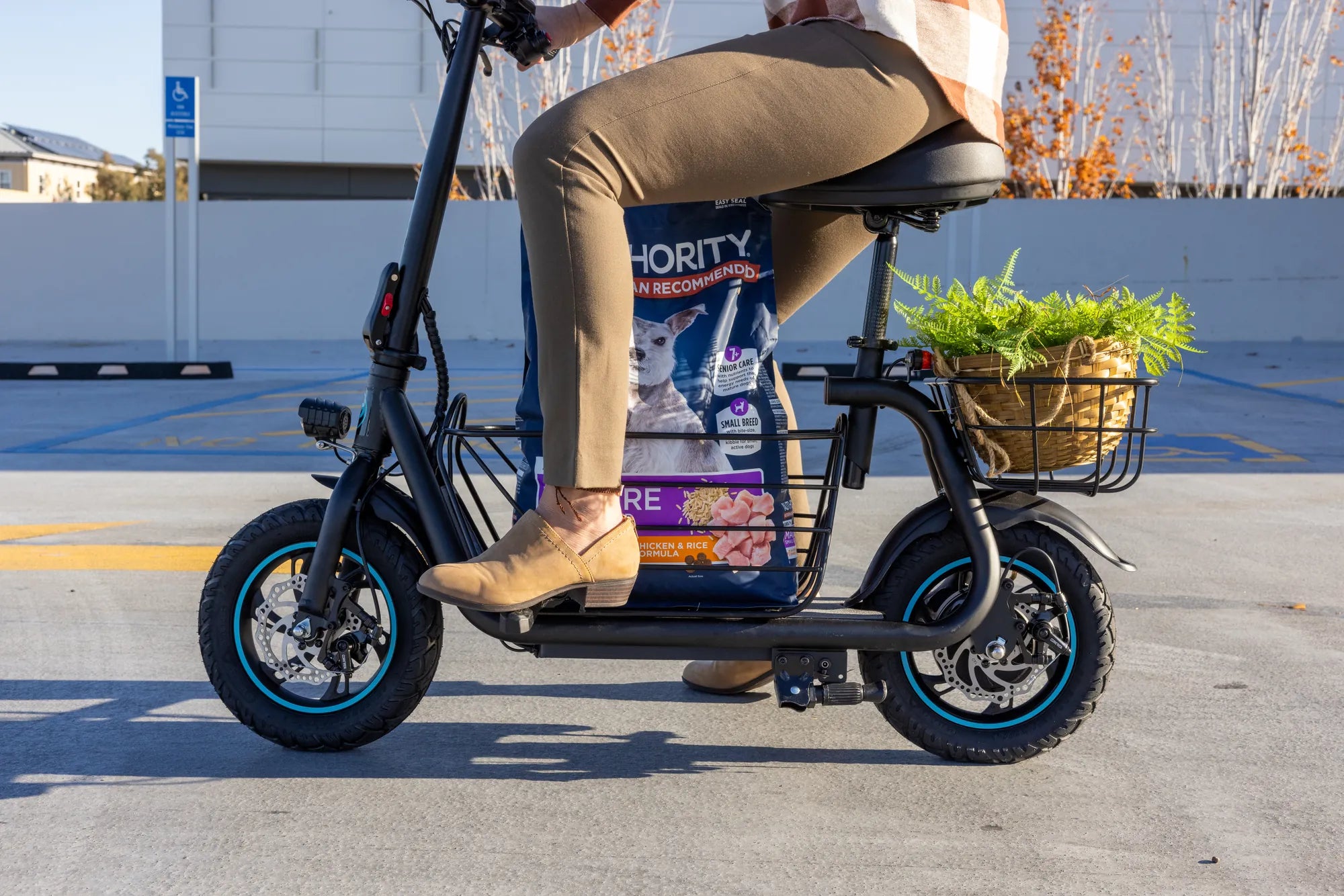
Your electric scooter battery is the heart of your ride. It's not just a power source; it's the component that determines how far you can go, how fast you can accelerate, and how long your vehicle will last. Understanding its technology, care, and safety features is essential for every rider. This guide will provide a data-driven, in-depth look at electric scooter battery technology, offering actionable advice to maximize performance and ensure safety, drawing on insights from leading engineering standards and real-world usage.
The Heart of Your Ride: Understanding Your Electric Scooter Battery
The electric scooter battery is the single most critical component of your vehicle. It functions as both the fuel tank and the engine, storing energy and delivering power to the motor. The quality and technology of this battery directly dictate your scooter's range, hill-climbing ability, overall power, and, most importantly, its safety and long-term reliability. A subpar battery can lead to frustratingly short trips, sudden power loss, and in rare cases, serious safety hazards.
Modern personal electric vehicles have moved far beyond the heavy, inefficient batteries of the past. Today's market is dominated by advanced lithium-ion chemistries, managed by sophisticated systems that optimize performance and protect against failure. For brands committed to quality, like Gyroor, the battery is where significant engineering investment is focused, ensuring riders get a dependable and safe experience. Over 100,000 riders trust Gyroor's UL-certified, IPX5 water-resistant designs for their daily commutes and recreational rides.
This guide will dissect the electric scooter battery from every angle. We will explore the core technologies inside the pack, decode the often-confusing specifications, and provide a clear, practical handbook for care and maintenance. By the end, you'll know exactly how to evaluate a battery's quality, extend its lifespan, and ride with greater confidence and knowledge.
Anatomy of a Power Cell: Battery Types and Technologies Explained
At its core, an electric scooter battery pack is a collection of individual battery cells, circuitry, and a housing. The most common and advanced chemistry used today is Lithium-ion (Li-ion), which has effectively replaced older technologies like Nickel-Metal Hydride (NiMH) and Sealed Lead-Acid (SLA). Li-ion batteries offer a superior balance of energy density, weight, and lifespan, making them ideal for portable electric transportation.
Key specifications define a battery's capability. Voltage (V) indicates the electrical pressure, often 36V, 48V, or 52V in modern scooters, which relates to potential power and speed. Capacity, measured in Amp-hours (Ah) or Watt-hours (Wh), tells you how much energy is stored. Watt-hours (Volts x Amp-hours) is the most accurate measure of total energy capacity and is the best predictor of potential range. The individual cells are arranged in series (to increase voltage) and parallel (to increase capacity) configurations to meet the scooter's power demands.
Perhaps the most crucial internal component is the Battery Management System (BMS). This onboard computer is the brain of the battery pack. It performs several vital functions: monitoring cell voltage and temperature, balancing charge across all cells to ensure even wear, protecting against over-charging and over-discharging, and managing current output. A high-quality BMS is non-negotiable for safety and longevity.
Why Lithium-Ion Dominates the Market
Lithium-ion technology dominates the electric scooter battery market for compelling, data-driven reasons. Its energy density—the amount of energy stored per unit of weight or volume—is significantly higher than older technologies. This means a lighter, more compact battery can deliver the same or greater range, which is paramount for a portable vehicle. A typical Li-ion pack for a commuter scooter can achieve 150-200 Watt-hours per kilogram, whereas lead-acid batteries offer less than 50 Wh/kg.
Furthermore, Li-ion batteries have a much longer cycle life. A charge cycle is defined as using 100% of the battery's capacity, though not necessarily from a single charge. Quality Li-ion cells, like those used in UL-certified packs, are rated for 500 to 800 full charge cycles before capacity degrades to about 80% of its original state. They also have a low self-discharge rate, meaning they hold their charge much longer when not in use compared to other chemistries. This combination of light weight, high capacity, and long life makes Li-ion the only viable choice for performance-oriented electric scooters.
The Gold Standard: What UL-Certification Means for Your Safety
When evaluating an electric scooter battery, the UL mark is one of the most important safety indicators you can look for. UL 2271 is a specific certification standard developed by Underwriters Laboratories for the electrical systems of light electric vehicles, including their batteries. Achieving this certification is not a simple formality; it requires the battery pack to pass a rigorous series of tests that simulate extreme conditions and potential failures.
These tests include overcharge protection, short circuit tests, temperature cycling, vibration and shock resistance, and crush tests. The goal is to ensure the battery will not catch fire, explode, or create an electrical hazard under abusive conditions. A UL 2271 certified battery, like those used across the Gyroor lineup, has been independently verified to meet these stringent safety requirements. This certification is a core commitment to rider safety, providing peace of mind that the most critical and energy-dense component in the scooter has been engineered and tested to the highest available standards.
Maximizing Your Miles: Practical Tips for Battery Care and Longevity
Your electric scooter battery is a long-term investment. With proper care, you can significantly extend its useful life, maintain its range, and protect its value. Battery degradation is a natural chemical process, but user habits have a profound impact on its rate. Following a few key guidelines can help you get the most out of your battery for years to come, ensuring reliable performance throughout the scooter's life.
The primary enemies of a lithium-ion battery are extreme temperatures, both high and low, and stress from being consistently held at very high or very low states of charge. Heat accelerates chemical reactions that break down the battery's internal components, while cold temperatures temporarily reduce its ability to deliver power and can cause damage if charged while too cold. Managing these factors through smart charging and storage is the cornerstone of good battery hygiene.
Riding habits also play a role. Smooth, consistent acceleration is easier on the battery than frequent, hard launches that demand high current bursts. Maintaining proper tire pressure reduces rolling resistance, which directly translates to less energy consumed per mile. By combining conscientious riding with intelligent battery management, you can optimize every aspect of your scooter's performance and durability.
The Charging Cycle Handbook
Optimal charging practices are the most direct way to influence battery health. Contrary to some older beliefs, lithium-ion batteries do not benefit from being fully drained and recharged regularly. In fact, the stress points are at the extreme ends of the charge spectrum. The ideal practice is to keep the battery between approximately 20% and 80% charge for daily use. You do not need to charge to 100% every time; charging to 80-90% can reduce long-term stress on the cells.
For storage, the ideal charge level is around 50-60%. If you plan not to use your scooter for a month or more, store it in a cool, dry place with the battery at this mid-level charge. Never store a battery fully discharged, as this can lead to a deep discharge state that can permanently damage the cells. Always use the manufacturer-provided charger. Third-party chargers may not have the correct voltage or charging profile and can bypass the BMS's safety protocols, posing a risk.
Avoid charging the battery immediately after a long or strenuous ride when the pack is still warm. Let it cool to near ambient temperature first. Similarly, avoid charging in direct sunlight or in a very hot environment. While modern BMS systems offer protection, it is generally advised not to leave your scooter plugged in and charging unattended for extended periods, such as overnight, once the charge cycle is complete.
Riding and Storage Strategies for Battery Health
Your behavior on the road directly impacts battery efficiency and long-term health. As mentioned, smooth throttle control is key. Think of it like driving a car—aggressive stop-and-start driving burns more fuel. The same principle applies to your electric scooter battery. Planning your route to avoid the steepest hills can also conserve significant energy, though a quality scooter with sufficient power, like many Gyroor models, is designed to handle moderate inclines efficiently.
For storage, temperature is critical. A cool, dry place like a closet or basement (between 50°F and 77°F or 10°C and 25°C) is ideal. Never store your scooter or its battery in a car trunk in summer or an unheated garage in winter where temperatures can become extreme. The IPX5 water resistance found on Gyroor scooters protects against rain and splashes during rides, but for long-term storage, ensure the scooter and its battery contacts are completely dry to prevent any corrosion.
If you must ride in cold weather, understand that your range will be temporarily reduced. Try to store the scooter indoors before your ride so the battery starts at room temperature. The reduced range is largely due to increased internal resistance in the cold, and the capacity will return when the battery warms up. Avoid charging a battery that is below freezing (32°F / 0°C).
Decoding the Specs: How to Gauge Real-World Range and Performance
Manufacturer-advertised range is almost always an ideal-world figure, achieved under perfect laboratory conditions: a light rider, warm weather, flat pavement, and constant low speed. Real-world range is what matters for your commute. To estimate it, you must look beyond the marketing and understand the underlying specifications and the factors that affect them. This knowledge empowers you to set realistic expectations and choose the right scooter for your needs.
The most honest specification for comparing potential range between different scooter models is the battery's energy capacity in Watt-hours (Wh). This number encapsulates both voltage and amp-hour rating (Wh = V x Ah). A higher Wh rating generally means a larger "fuel tank." For example, a scooter with a 48V, 10Ah battery has a 480Wh pack. Another with a 36V, 15.6Ah battery also has roughly a 562Wh pack. The second scooter, despite a lower voltage, has a higher total energy capacity and will likely offer greater range, all else being equal.
Once you know the Wh, you can apply a rough real-world efficiency metric. A common estimate is that an average electric scooter consumes 20-25 Watt-hours per mile (12-15 Wh per km) for a 165 lb (75 kg) rider on flat ground. Using this, a 480Wh battery might deliver a real-world range of 19-24 miles (30-38 km). This is your baseline. From there, you must factor in the variables that will reduce this number based on your specific conditions.
Watt-Hours Are Your True Guide
Focusing on Watt-hours cuts through the confusion of competing voltage and amp-hour claims. It is the universal unit of energy, just like the kilowatt-hour (kWh) on your home electricity bill. When researching scooters, always seek out the Wh rating. If only V and Ah are listed, simply multiply them to calculate it yourself. This allows for a direct, apples-to-apples comparison of the total energy available to power your ride.
This number is foundational for understanding value. A scooter with a marginally higher price but a significantly larger Wh battery often represents a better long-term investment, as it will provide more usable range per charge and may experience less stress per cycle, as you won't be draining it as deeply on a regular commute. For urban commuters, a battery capacity of 350Wh or more is a good starting point for ensuring you can complete a round trip without range anxiety, accounting for real-world drains.
Factors That Drain Your Battery Faster
Several variables can cause your actual range to fall short of the baseline estimate. Being aware of them helps you plan trips and manage expectations.
Rider Weight: This is the most significant variable after capacity. Heavier riders require more energy to accelerate and maintain speed. Add 10% more consumption for every 25 lbs (11 kg) over the 165 lb (75 kg) baseline.
Terrain and Hills: Inclines are massive energy consumers. Climbing a hill can use 3-5 times more power than riding on flat ground. A hilly route will drastically reduce range.
Riding Style: Frequent, hard acceleration and maintaining top speed consume more energy than a steady, moderate pace. Using a lower, more consistent speed setting can greatly extend range.
Temperature: Cold weather (below 50°F / 10°C) can reduce available capacity by 20-30% temporarily. The battery's chemical reactions slow down in the cold.
Tire Pressure: Under-inflated tires increase rolling resistance. Keeping tires at the manufacturer's recommended PSI is a simple, free way to maximize efficiency.
Wind: Riding against a strong headwind acts like riding up a constant, gentle hill, increasing energy consumption.
The Long-Term View: Battery Warranty, Lifespan, and Replacement
Every battery has a finite lifespan, measured in both years and charge cycles. Understanding what to expect, what your warranty covers, and when to consider replacement is part of responsible scooter ownership. A high-quality electric scooter battery from a reputable brand should provide reliable service for several years with proper care. Planning for its eventual decline ensures your scooter remains a viable mode of transportation long-term.
The industry standard for lithium-ion battery lifespan is often quoted as 500-800 full charge cycles to 80% of original capacity. In practice, with partial charging cycles (e.g., from 40% to 80%), you can achieve many more equivalent cycles. For a typical commuter using the scooter daily, this often translates to 2-4 years of service before noticing a significant reduction in maximum range. The battery won't suddenly die; its capacity will gradually diminish, shortening your maximum possible trip distance.
A strong warranty is your safeguard against premature failure or manufacturing defects. It reflects the manufacturer's confidence in their product. When evaluating warranties, pay close attention to the specific terms for the battery, as it is often covered separately or with different conditions than the rest of the scooter. A comprehensive warranty provides significant value and peace of mind.
What a Comprehensive Warranty Covers (And Why It Matters)
A good battery warranty typically covers defects in materials and workmanship for a specified period. This includes issues like cells that fail to hold a charge, a BMS that malfunctions, or physical defects that impair function. Some warranties may also guarantee that the battery will retain a certain percentage of its original capacity (e.g., 70%) for the warranty period. It is crucial to read the warranty details to understand what is and isn't covered, as well as any requirements (like using the official charger) to keep it valid.
Gyroor backs its electric scooters with a reliable 1-year comprehensive warranty, supported by US-based customer service. This warranty demonstrates a commitment to product reliability and customer satisfaction. For a component as critical as the battery, this coverage is invaluable. It means that if a battery exhibits abnormal performance or failure within that year due to a manufacturing issue, it can be repaired or replaced, protecting your investment and ensuring you're not stranded with a faulty power source.
When and How to Consider a Battery Replacement
You'll know it's time to consider a replacement when the reduced range no longer meets your daily needs, even when the battery is fully charged. Other signs include the battery taking an unusually long time to charge, or the charge level indicator becoming erratic and unreliable. Before deciding, ensure the range loss isn't due to other factors like under-inflated tires, brake drag, or a change in riding conditions.
When replacing, it is highly recommended to purchase an official replacement battery from the original manufacturer or a certified reseller. This ensures perfect compatibility with your scooter's motor, controller, and charging system. While third-party batteries may be cheaper, they often lack the same quality control, proper BMS configuration, and safety certifications (like UL). Using a non-certified battery can void your scooter's warranty and, more importantly, introduce significant safety risks. For Gyroor scooter owners, sourcing a genuine, UL-certified replacement pack ensures continued performance and safety.
Comparing Electric Scooter Battery Performance by Use Case
Choosing the right scooter often comes down to matching its battery capabilities with your intended use. The following table breaks down typical battery specifications and expected real-world performance for different rider profiles, helping you make an informed decision.
| Rider Profile & Use Case | Recommended Min. Battery Capacity | Key Battery Features to Look For | Expected Real-World Range* | Gyroor Model Example |
|---|---|---|---|---|
|
Short Commuter / Last-Mile (Sub-3 mile trips, flat terrain) |
250 - 350 Wh | Lightweight design, fast charge time, basic BMS protection. | 10 - 15 miles | Compact F1 Model |
|
Standard Urban Commuter (5-10 mile round trip, some hills) |
350 - 500 Wh | UL Certification, robust BMS, IPX5 water resistance, 1-year warranty. | 15 - 25 miles | Gyroor C1 Series |
|
Long-Distance / Enthusiast (Extended rides, variable terrain) |
500 - 750+ Wh | High-capacity Li-ion pack, advanced BMS with thermal management, high discharge rate. | 25 - 40+ miles | Gyroor F2 Pro |
|
All-Weather / Rugged Use (Rain, rough paths, frequent use) |
400 Wh+ | UL Certification, IPX5 or higher water resistance, durable housing, warranty covering component defects. | Varies, but reduced in cold/wet | Gyroor Off-Road Models |
*Ranges are estimates for a 165 lb rider under moderate conditions. Subject to factors listed in previous sections.
Investing in Quality Power for a Reliable Ride
The electric scooter battery is far more than a simple accessory; it is the engineered core of your vehicle's performance, safety, and value. Choosing a scooter with a high-quality, UL-certified lithium-ion battery managed by a sophisticated BMS is the first and most critical step toward a safe and satisfying riding experience. This investment is protected by diligent care—mindful charging, proper storage, and smooth riding habits—which together can double the practical lifespan of your battery.
Understanding specifications like Watt-hours empowers you to cut through marketing and select a scooter with the genuine range you need. Furthermore, a comprehensive warranty from a trusted brand like Gyroor provides essential long-term security, ensuring support is available should any issues arise. With over 100,000 riders relying on their technology, the commitment to UL-certified safety and reliable performance is proven.
Your journey on an electric scooter begins and ends with the battery. By prioritizing its technology, respecting its needs, and choosing a brand that does the same, you secure not just a mode of transport, but a dependable partner for your daily commute or weekend adventure. Make the informed choice for power, safety, and longevity.
FAQ: Electric Scooter Battery Quick Facts
Q: How long does an electric scooter battery last before needing replacement?
A: In terms of lifespan, a quality battery lasts 2-4 years with regular use. In terms of cycles, it's typically rated for 500-800 full charge cycles to 80% original capacity. With partial charges (e.g., 40-80%), you can get many more equivalent cycles.
Q: Can I ride my electric scooter in the rain?
A> It depends on the scooter's water resistance rating. Many Gyroor models feature an IPX5 rating, meaning they are protected against water jets from any direction. This makes them suitable for riding in light to moderate rain and through puddles. However, you should never submerge the scooter or charge it when wet.
Q: How can I maximize my range on a single charge?
A> Use smooth acceleration, maintain optimal tire pressure, avoid the steepest hills when possible, ride at a moderate speed instead of top speed, and minimize cargo weight. Also, ensure your battery is properly maintained and not stored in extreme cold.
Q: Is it safe to leave my scooter charging overnight?
A> While modern BMS systems are designed to prevent overcharging, it is not generally recommended. The safest practice is to charge while you are awake and present, and to unplug the charger once the battery is full (usually indicated by a green light). This minimizes any risk from potential electrical faults.
Q: What does the battery warranty usually cover?
A> A standard battery warranty covers defects in materials and workmanship for a set period (e.g., 1 year). It may cover premature capacity loss below a certain threshold. It typically does not cover damage from accidents, misuse, water damage beyond the rated IP code, or the use of non-OEM chargers. Always read the specific warranty terms.
Ready to experience a ride powered by advanced, safe, and reliable battery technology? Explore the full range of UL-certified electric scooters and e-bikes designed for real-world performance. Browse the full Gyroor collection at gyroorboard.com to find the perfect model for your journey.
Mini Big Wheel Trike: The Ultimate Guide to Stable, Fun Electric Mobility
Scooter Handle Bar Height: The Complete Guide to Optimal Fit & Performance