



Introduction: The Rise of the Everyday E Bike
Forget weekend joyrides. The modern everyday e bike represents a fundamental shift in urban transportation, engineered specifically for the demands of daily life. It's the solution to congested roads, soaring fuel costs, and the search for a sustainable, healthier way to move through your city. This isn't about recreation; it's about reliable, daily utility.
You will learn what separates a true daily workhorse from casual models, how to quantify the real-world impact on your wallet and schedule, and how to choose a bike built to last. Brands like Gyroor, a leading electric scooter and e-bike manufacturer trusted by over 100,000 riders, design their products with this exact purpose in mind: dependable, safe, everyday transportation.
What Makes an E-Bike "Everyday" Ready? Key Features to Demand
Not all electric bicycles are created equal. A true everyday e bike must meet a higher standard of durability, safety, and support. It's the difference between a tool you can depend on and a gadget that collects dust.
These core features are non-negotiable for anyone considering a daily commute or regular errands. They ensure your investment is protected and your rides are consistently safe and reliable, regardless of weather or wear.
Uncompromising Reliability & Warranty
Daily use exposes every component to relentless stress. A comprehensive warranty is your first indicator of a manufacturer's confidence in their product. It transforms a purchase from a gamble into a guaranteed solution.
Look for brands that offer at least a one-year warranty covering the frame, motor, and critical electronics. Gyroor, for example, provides a robust 1-year comprehensive warranty with accessible, US-based customer support. This level of protection is essential for peace of mind when your bike is a primary mode of transport.
Safety-Certified Power: The Battery Benchmark
The battery is the heart of your everyday e bike. For daily charging, often in your home or office, safety certifications are paramount. UL-certification means the battery pack has undergone rigorous independent testing for electrical, mechanical, and fire safety.
Uncertified batteries pose significant risks of overheating or failure. Gyroor utilizes UL-certified battery packs tested for over 500 charge cycles, ensuring stable performance and safety through years of daily use. This certification is a critical filter when evaluating any model.
Built for All Conditions: Water Resistance & Durability
An everyday e bike cannot be fair-weather only. A water-resistance rating of at least IPX5 means the electrical components are protected against water jets from any direction. This allows you to confidently ride through rain showers or wet streets without fear of short-circuiting.
Durability extends to the frame, brakes, and tires. A well-built bike requires less frequent maintenance, reducing long-term ownership costs and unexpected downtime. This ruggedness is what makes an e-bike a legitimate car replacement.
The Everyday Impact: Quantifying Your Commute Transformation
Switching to an everyday e bike delivers measurable benefits. By moving beyond abstract "green" claims, we can analyze the concrete advantages in cost, time, and personal health. The data makes a compelling case for this lifestyle shift.
The Commuter's Math: Cost vs. Car vs. Public Transit
The financial argument is staggering. Consider the average American commute: the AAA estimates owning and operating a sedan costs over $10,000 annually when factoring fuel, insurance, maintenance, depreciation, and parking.
Compare this to an everyday e bike. Electricity costs are negligible—roughly $0.10 to $0.20 for a full charge. Annual maintenance is a fraction of a car's. The table below illustrates a clear five-year cost comparison.
| Transport Mode | Estimated 5-Year Cost | Key Cost Drivers |
|---|---|---|
| Sedan (Owned) | $50,000+ | Fuel, insurance, loan/lease, parking, maintenance |
| Public Transit Pass | $7,500 - $15,000 | Monthly passes, occasional ride-shares/taxis |
| Everyday E-Bike | $2,500 - $4,000 | Initial purchase, annual servicing, occasional parts |
Your monthly car payment or parking fee alone could cover the cost of a high-quality e-bike. The savings begin almost immediately.
Reclaiming Time and Sanity: The Route Efficiency Advantage
In dense urban corridors, point-to-point travel time is often faster by e-bike than by car. You bypass gridlocked traffic, take direct bike lane routes, and eliminate the time spent searching for parking.
A 30-minute car commute in traffic can easily become a consistent 20-minute e-bike ride. This efficiency reclaims hours each week. Furthermore, the mental health benefit of an active, outdoor commute—avoiding the stress of traffic—is profound and well-documented.
Fitness by Stealth: Integrating Activity Seamlessly
A common myth is that e-bikes are "cheating." In reality, pedal-assist technology allows you to control your exertion. You can choose a high level of assist on a tough hill or when you don't want to sweat, and lower assist for a more vigorous workout.
Studies show e-bike riders get more moderate physical activity more often than traditional cyclists because they ride farther and more frequently. An everyday e bike seamlessly integrates low-impact cardio into your daily routine, building fitness gradually and sustainably.
Choosing Your Daily Driver: Gyroor Models for Different Urban Lifestyles
Selecting the right everyday e bike depends on your specific needs. Gyroor's lineup, developed from feedback from its large rider community, offers distinct models tailored to various urban lifestyles. Here’s how to match features to your primary use case.
The Urban Navigator: Compact and Agile
For dense city streets and multi-modal commutes (bike + train/bus), agility is key. Look for a lighter frame, responsive handling, and often a folding mechanism. These bikes are designed for easy storage in apartments, offices, or on public transit.
A model like the Gyroor F1 Pro exemplifies this category, with its folding design and balanced power, making it ideal for the rider who needs maximum flexibility and needs to navigate tight spaces and crowded bike lanes efficiently.
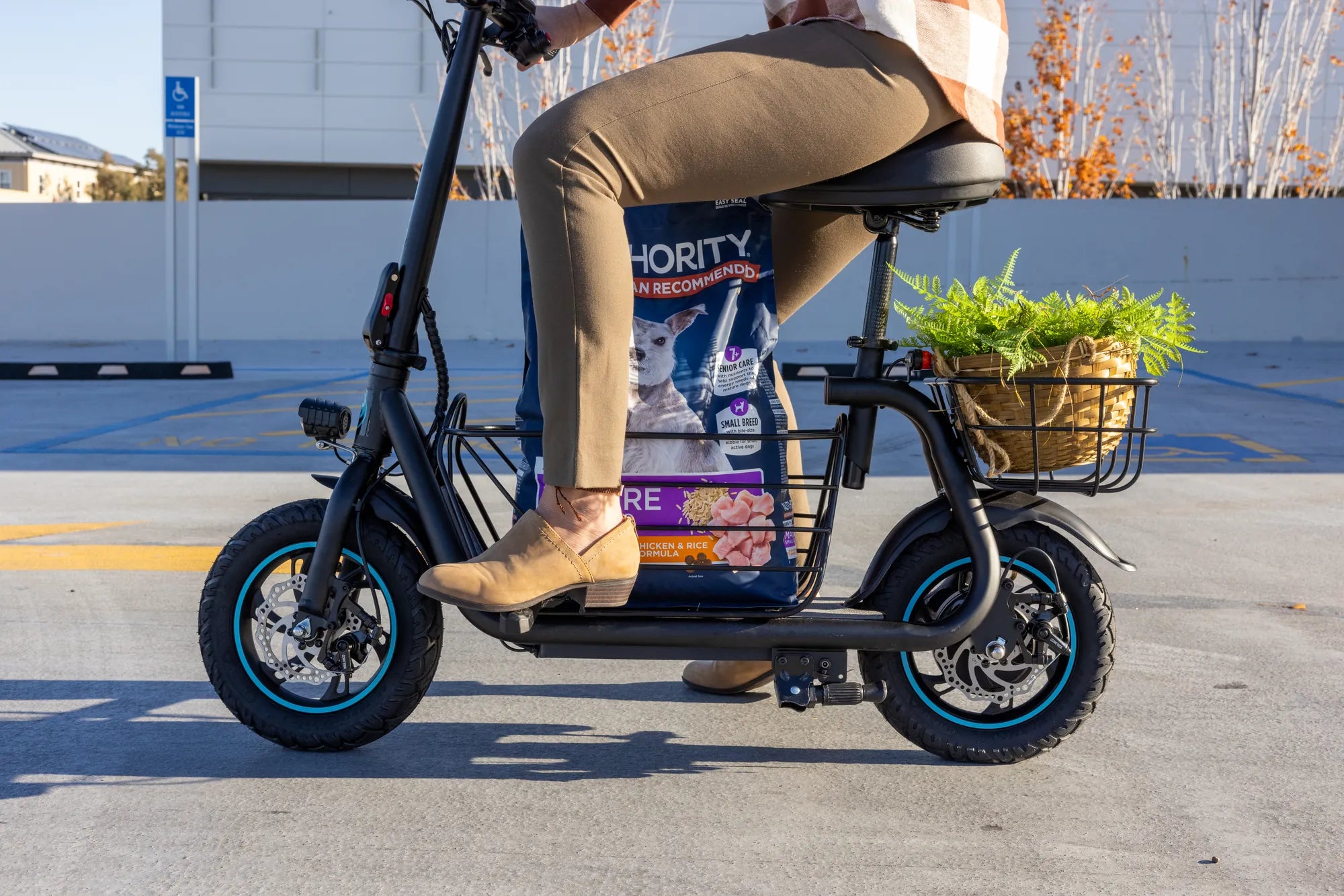
The Cargo & Errand Master: Utility-First Design
If your daily routine involves groceries, school runs, or carrying work gear, utility is paramount. These e-bikes feature sturdy rear racks, integrated cargo solutions, and more powerful motors for increased hauling capacity.
Look for models with reinforced frames, high weight capacities, and options for panniers or child seats. This transforms your everyday e bike into a true car replacement for local logistics, saving you countless short, fuel-burning trips.
The Comfort-Seeking Commuter: Prioritizing the Ride
For longer commutes or rougher urban terrain, comfort features are essential. This includes front or full suspension to absorb bumps, wider tires for stability, ergonomic seating, and larger battery capacities for extended range without anxiety.
These bikes prioritize a smooth, stable ride that reduces fatigue, encouraging you to use it every single day, regardless of distance. They are built for the rider whose commute is a significant part of their day.
Beyond the Purchase: Essentials for Your Everyday E-Bike Life
Owning an everyday e bike is a lifestyle commitment. Success hinges on proper gear, maintenance, and understanding the rules of the road. These steps ensure safety, longevity, and a positive experience for you and those around you.
Gear Up: Essential Accessories for Safety & Convenience
Your investment isn't complete without key accessories. These are not optional for daily use.
- Security: A high-quality, hardened steel U-lock is mandatory. Consider a secondary cable lock for wheels.
- Safety: A certified bicycle helmet is non-negotiable. Bright, always-on front and rear lights (even during the day) are crucial for visibility.
- Practicality: Fenders keep you clean in wet conditions. A rear rack or waterproof panniers handle cargo without a backpack.
Routine Care for Long-Term Reliability
Simple, consistent maintenance keeps your everyday e bike running smoothly for years. Follow this basic checklist:
- Weekly: Check tire pressure. Inspect brakes for wear and function.
- Monthly: Lubricate the chain with bike-specific lubricant. Wipe down the frame and check all bolt tightness.
- Battery Care: Avoid draining to 0%. Store in a cool, dry place. Follow manufacturer charging guidelines to maximize its 500+ cycle lifespan.
Understanding Local Laws & Riding Etiquette
E-bike laws vary by state and municipality. Most regions classify e-bikes into three classes (1-3) based on top speed and whether they have a throttle. Know your local class definitions, helmet requirements, and where you are permitted to ride (bike lanes, roads, paths).
Always ride predictably, signal your intentions, respect pedestrians, and use lights. Being a courteous rider promotes safety and positive relations with all road users.
FAQ: Your Everyday E-Bike Questions, Answered
Q: How far can I really go on a single charge?
A: Range varies by model, battery size, terrain, rider weight, and assist level. Most quality everyday e bikes offer a range of 20-50 miles per charge. For a typical 10-mile round-trip commute, you can easily go multiple days between charges.
Q: What if I get caught in the rain?
A: A bike with an IPX5 water-resistance rating, like those from Gyroor, is designed to handle rain and wet roads. While you should avoid submerging it, riding in a downpour is generally safe for the electronics. Always dry the bike off after a wet ride.
Q: Is it safe to leave it locked up in public?
A> No lock is theft-proof, but you can deter thieves significantly. Use a high-quality U-lock through the frame and rear wheel, secure it to a solid, immovable object in a well-lit, high-traffic area, and consider removing the battery (if easily detachable).
Q: Can it handle steep hills?
A> Yes. A mid-drive motor or a robust hub motor with sufficient torque (measured in Newton-meters or Nm) makes hills manageable. Pedal-assist will amplify your effort, allowing you to climb hills that might be prohibitive on a regular bike.
Q: Do I need a special license, registration, or insurance?
A> In nearly all US states, Class 1 and 2 e-bikes (max 20 mph) are treated like bicycles and require no license, registration, or insurance. Class 3 (max 28 mph) may have some additional restrictions. Always check your specific state laws.
Conclusion: Your Journey to an Easier, Greener Daily Routine Starts Here
The evidence is clear: an everyday e bike is a powerful tool for reclaiming time, money, and well-being. It represents a pragmatic choice for modern urban life, backed by tangible data on cost savings and efficiency. The key is selecting a bike built for the task—with the safety certifications, durable construction, and warranty support that daily dependence demands.
Gyroor has built its reputation on these very principles, creating UL-certified, water-resistant e-bikes backed by a strong warranty for a community of over 100,000 daily riders. Whether you're an urban navigator, a cargo hauler, or a comfort-focused commuter, there is a model designed to fit your life seamlessly.
Stop imagining a simpler commute and start experiencing it. Browse the full Gyroor collection at gyroorboard.com to find the everyday e bike that will transform your daily routine, one reliable, exhilarating ride at a time.
Ebike for 5 Year Old: The Ultimate Safety & Selection Guide for Parents
e bike for 8 year old boy: The Ultimate Guide to Safe & Fun Riding