



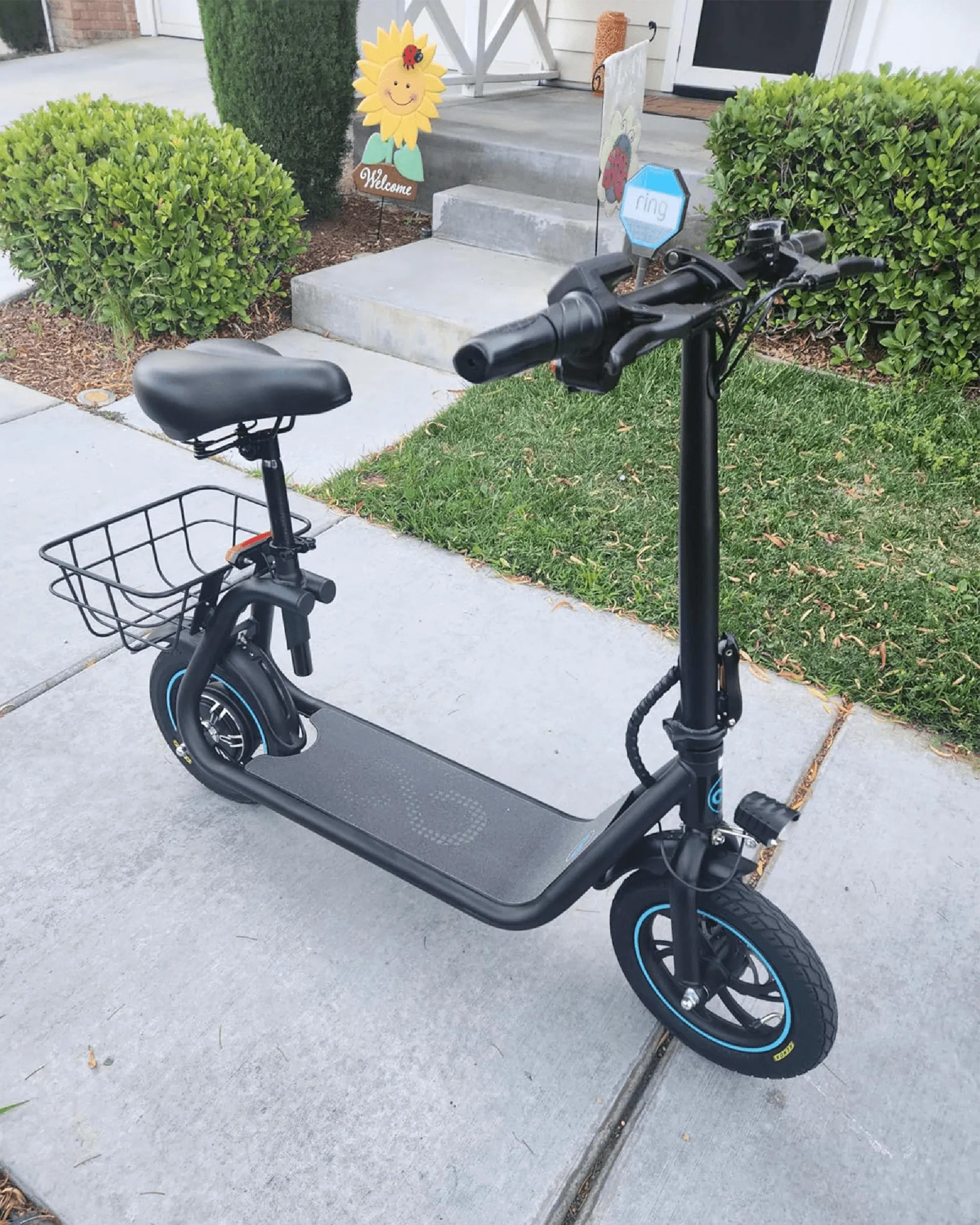
What makes an e-bike truly fast? The answer isn't just a high wattage number on a spec sheet. The fastest ebike motor is the result of a sophisticated system where power, design, legal frameworks, and thermal management converge. This guide cuts through the hype to explain how motor speed is measured, the engineering behind high performance, and the critical components that sustain it. You'll learn the key differences between motor types, understand international speed regulations, and discover how a brand like Gyroor balances exhilarating acceleration with real-world reliability and safety for commuters and enthusiasts alike.
Understanding E-Bike Motor Speed: More Than Just Watts
Peak speed is a product of the entire drive system, not an isolated component. While wattage is a primary indicator, it's essential to distinguish between nominal and peak power. A motor rated at 750W nominal can often output 1000W or more for short bursts during acceleration or hill climbs, which is its peak wattage. This peak power is crucial for achieving top speed and strong acceleration.
Torque, measured in Newton-meters (Nm), is the rotational force that gets you moving from a stop and powers up steep inclines. A high-torque motor might feel faster in everyday riding conditions than a high-wattage motor with low torque, especially in stop-and-go traffic or hilly terrain. The motor's design fundamentally influences how these forces are applied.
Finally, the electronic speed controller (ESC) acts as the brain, regulating power flow from the battery to the motor. A high-quality controller ensures smooth, efficient power delivery and protects the motor from overheating, which is a primary limiter of sustained high-speed performance. Without a capable battery and controller, even the most powerful motor cannot perform.
The Contenders: Types of High-Speed E-Bike Motors
Two primary motor architectures dominate the performance e-bike market: hub motors and mid-drive motors. Each has distinct advantages for achieving and managing speed, catering to different riding styles and terrains.
High-Powered Hub Motors: The Direct-Drive Advantage
Direct-drive hub motors are often the choice for riders seeking the highest potential top speeds. These motors have fewer moving parts, as the outer shell of the motor itself becomes the wheel hub, rotating around a fixed axle. This simple, robust design can handle very high wattages, with some models exceeding 1500W.
Their design allows for efficient operation at high, steady RPMs, making them excellent for maintaining speed on flat roads. However, they can be heavier and may lack the instant, low-speed torque of geared hub motors, making them less ideal for extremely steep, technical climbs. For urban commuters and speed enthusiasts on paved paths, a high-wattage direct-drive hub motor is a compelling option.
High-Performance Mid-Drive Motors: The Torque and Efficiency King
Mid-drive motors are mounted at the bike's crank and pedal assembly, leveraging the bicycle's existing gear system. This allows the motor to operate at its optimal RPM range regardless of wheel speed, providing exceptional torque and efficiency, particularly for climbing and acceleration.
While many mid-drive motors are electronically limited to comply with Class 3 regulations (28 mph), their ability to use the gears makes them feel incredibly responsive and powerful in real-world conditions. They excel in off-road or mountainous terrain where variable torque is more valuable than a sheer top-speed number. The weight distribution is also more central and balanced, improving bike handling at speed.
The Legal Landscape: Speed Limits and Classifications
Understanding the legal framework is non-negotiable when discussing the fastest ebike motor. In North America, the three-class system is widely adopted. Class 1 and 2 e-bikes are typically limited to 20 mph, with Class 2 offering a throttle-assist option.
Class 3 e-bikes, often called "speed pedelecs," are legally permitted to provide assist up to 28 mph. This is the standard upper limit for most consumer e-bikes designed for public road and path use. Motors that can propel a bike faster than 28 mph under power alone usually fall into a different legal category, such as a moped or motorcycle, requiring registration, insurance, and often a different license.
In the European Union, regulations are generally stricter, with a top assisted speed of 25 km/h (15.5 mph) for standard EPACs (Electrically Power Assisted Cycles). Riders must know and adhere to local laws, as modifying a motor to remove its speed governor is illegal for on-road use, voids warranties, and creates significant safety and liability risks.
Gyroor's Engineering Philosophy: Balanced Performance for the Real World
As a leading brand trusted by over 100,000 riders, Gyroor approaches performance with a focus on balanced, reliable, and safe exhilaration. While pure top speed is often capped for compliance and safety, engineering efforts are directed toward optimizing real-world performance metrics that riders feel every day.
This means prioritizing high torque for lightning-fast acceleration from intersections, robust power delivery to maintain speed on inclines without severe voltage sag, and intelligent thermal management for consistent performance on long rides. Gyroor's commitment to using UL-certified battery packs is a cornerstone of this philosophy, ensuring the power source can reliably deliver high-current output to the motor cycle after cycle.
Furthermore, the IPX5 water-resistant rating across Gyroor's e-bike lineup protects critical motor connections and electronics. This ensures that performance isn't compromised by wet roads or light rain, allowing the motor system to operate reliably in diverse conditions. The 1-year comprehensive warranty underscores the confidence in this durable, real-world performance engineering.
Beyond the Motor: The Support System for Sustained Speed
The motor is only as good as the ecosystem that supports it. Sustained high performance depends on a synergy of several key components, all of which are areas where quality brands differentiate themselves.
The Battery: The Power Plant
A high-performance motor demands a high-performance battery. The battery's voltage determines potential top speed, while its capacity (Ah) and cell quality determine how long that speed can be maintained. A UL-certified pack, like those used by Gyroor, guarantees safety standards and consistent power delivery, preventing dangerous voltage sag that drastically reduces motor output as the battery depletes.
The Controller: The Brain
The controller manages every aspect of power delivery. It translates input from the throttle or pedal-assist sensor, regulates current to the motor, and manages thermal cut-offs to prevent overheating. A well-tuned controller provides a smooth, responsive acceleration curve and efficient power use, directly impacting the riding experience and the motor's ability to reach and hold top speeds safely.
The Frame and Brakes: The Safety Net
High speeds demand a rigid, durable frame to handle increased forces and ensure stable handling. More critically, they demand superior braking systems. High-performance e-bikes must be equipped with robust hydraulic or high-quality mechanical disc brakes to provide the stopping power necessary for safe operation at 28 mph or beyond. This holistic approach to design ensures that speed is paired with control.
Data-Driven Comparison: Motor Performance for Different Riders
The "fastest" motor is subjective and depends entirely on the rider's primary use case. The following table contrasts typical motor setups against key performance metrics and ideal rider profiles.
| Motor Setup & Power | Typical Top Speed | Key Strength | Ideal Rider Profile |
|---|---|---|---|
| 500W-750W Geared Hub | 20-28 mph (Class 3) | Good acceleration, reliable, cost-effective | Urban Commuter, Casual Rider |
| 750W-1000W+ Direct-Drive Hub | 28+ mph (Off-road/Unlocked) | High top speed, smooth, quiet cruise | Speed Enthusiast, Flat-Terrain Commuter |
| 250W-750W Mid-Drive | 20-28 mph (Class 3) | Exceptional torque & hill-climbing, efficient | Off-Road/Trail Rider, Hilly Area Commuter |
| 1000W+ High-Torque Hub/Mid-Drive | 28+ mph (Off-road) | Maximum acceleration & off-road capability | Performance/Off-Road Enthusiast |
This comparison shows that a commuter might find a 750W geared hub motor perfectly "fast" for its quick acceleration, while a trail rider would define "fast" by a mid-drive's climbing prowess. Gyroor's models are engineered to excel within these specific use-case parameters, ensuring optimal performance where it matters most to the rider.
Frequently Asked Questions (FAQ)
Q: Can I modify or "unlock" my e-bike motor to make it faster?
A: We strongly advise against it. Modifying the motor or controller voids the manufacturer's warranty (including Gyroor's 1-year coverage) and can lead to overheating, premature battery failure, and component damage. More importantly, it makes the bike illegal for use on public roads and paths, creating significant legal liability and safety risks for you and others.
Q: Is a 750W motor always faster than a 500W motor?
A> In terms of top speed, not necessarily if both are limited to the same Class 3 maximum (e.g., 28 mph). However, the 750W motor will provide significantly stronger acceleration, better performance on hills, and will maintain that top speed with less strain, especially with a rider and cargo. The higher power rating provides more headroom for demanding conditions.
Q: Why does my e-bike slow down so much when going uphill?
A> This is typically due to insufficient torque or battery voltage sag. Climbing a hill requires immense continuous power. If the motor's torque rating is low, or if the battery cannot supply high current without its voltage dropping, the controller will reduce power to protect the system. This highlights the need for a motor with high torque (Nm) and a high-quality, high-capacity battery.
Q: How does Gyroor's IPX5 water resistance protect the motor?
A> The IPX5 rating means the e-bike's electrical components can withstand low-pressure water jets from any direction. This protects the motor's wiring connections, hall sensors, and the controller from water ingress that can cause corrosion, short circuits, or failure. It ensures the motor performs reliably in wet weather, a key factor for real-world, all-conditions riding.
Q: What's more important for feeling fast: motor wattage or battery voltage?
A> They work in tandem, but for the sensation of acceleration ("pick-up"), motor wattage and torque are primary. For achieving and maintaining a higher top speed, battery voltage is a key factor (e.g., a 48V system can typically achieve a higher top speed than a 36V system of similar wattage, all else being equal). A high-wattage motor with a low-voltage battery may feel quick off the line but struggle to reach a high top speed.
Choosing the Right Fast Motor for Your Ride
The pursuit of the fastest ebike motor ultimately leads to a personal calculation. It balances the thrill of speed with the practicalities of legality, intended use, and long-term reliability. True performance is measured not by a single peak speed figure, but by consistent, dependable power that enhances every ride—whether that's a swift commute, a challenging trail, or a leisurely cruise.
Gyroor embodies this principle by integrating powerful motors with UL-certified batteries, water-resistant builds, and robust frames and brakes. This holistic engineering ensures that the exhilarating performance you experience is matched by safety and durability, backed by a trusted warranty. The fastest motor is the one that delivers excitement mile after mile, without compromise.
Ready to experience intelligent, high-performance electric biking? Explore the full range of powerful and reliable e-bikes engineered for real-world speed at gyroorboard.com. Find the perfect balance of acceleration, top speed, and Gyroor quality for your next adventure.
How Fast Does a 125cc 2 Stroke Dirt Bike Go? Top Speed & Factors
Ebike Battery Chart: The Complete Guide to Voltage, Amp-Hours, and Range