


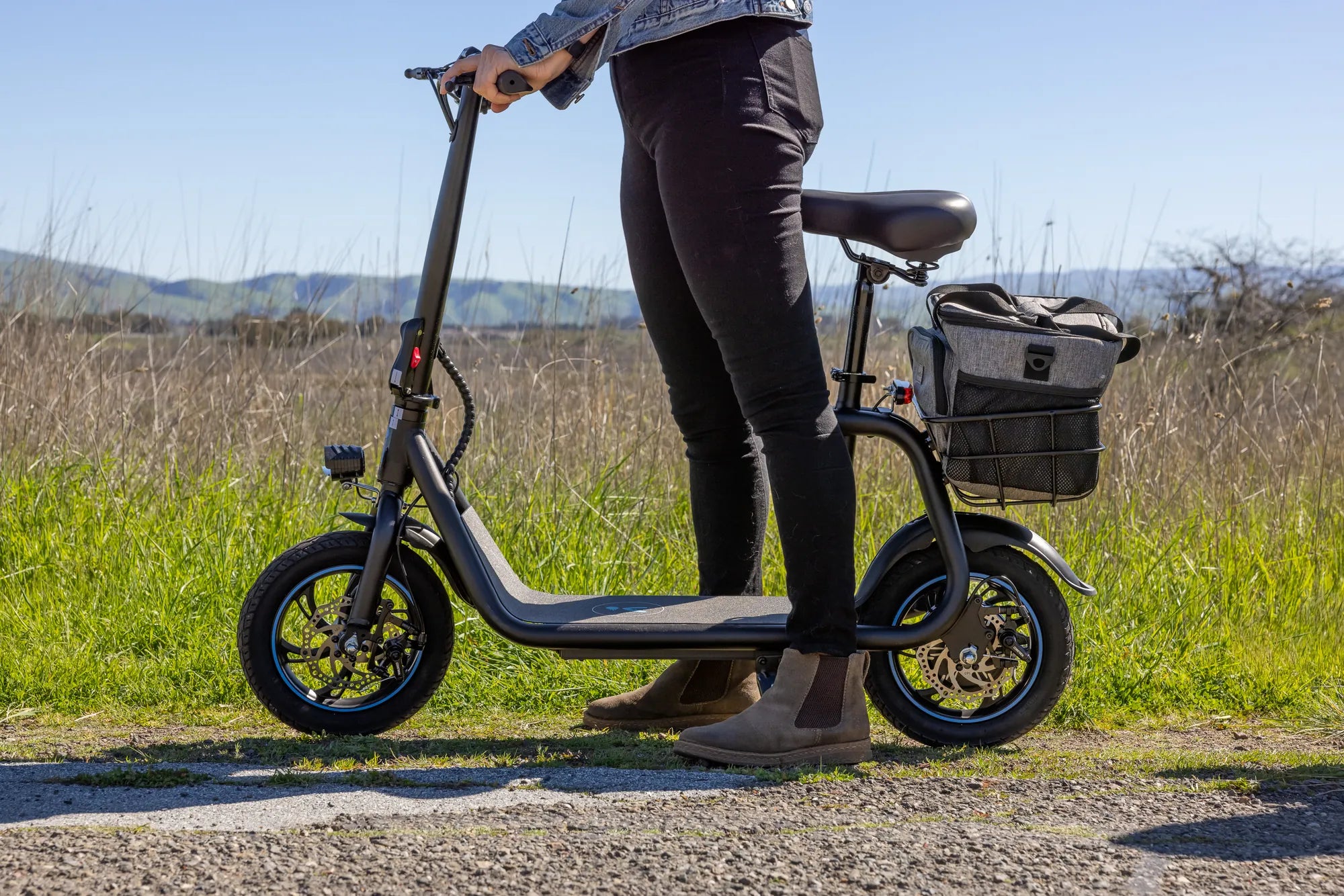
What does it take to build the fastest scooter ever? This pursuit pushes the boundaries of electric motor technology, battery science, and material engineering, resulting in machines that blur the line between personal transporter and lightweight electric vehicle. This article is a deep dive into the mechanics of extreme speed, the current contenders for the title, and the crucial realities of safety, legality, and practical performance that every prospective rider must understand. We'll move beyond the top-speed number to examine how leading brands like Gyroor engineer for a balanced, thrilling, and reliable ride.
Defining "Fastest": Top Speed vs. Real-World Performance
The term "fastest scooter ever" is often anchored to a manufacturer's claimed top speed, a figure typically achieved under ideal, controlled conditions. This theoretical maximum, however, tells only part of the story. Real-world performance is governed by a triad of factors: rider weight, terrain incline, and battery state of charge. A scooter claiming 50 mph may only sustain 40 mph for a rider over 180 lbs on a slight incline.
Sustained performance is the true test of engineering. Many high-output scooters experience significant voltage sag when the battery drops below 50%, drastically cutting power and speed. A well-engineered model maintains a higher percentage of its peak performance throughout the discharge cycle. This requires robust battery management systems and high-discharge cells.
Furthermore, acceleration is as critical as top speed for urban riding. A scooter that rockets from 0 to 20 mph in 2 seconds offers a more visceral and practical thrill in traffic than one that slowly builds to a higher top speed. Torque, delivered instantly by electric motors, defines this feel. Brands focused on balanced performance, like Gyroor, calibrate their motor controllers to provide strong, controllable acceleration that complements the top speed.
Ultimately, the "fastest" experience isn't just about a peak number on a display. It's about accessible power, consistent delivery, and the confidence that the scooter's systems—from the UL-certified battery to the braking hardware—are designed to handle the stresses of high-speed operation safely and reliably.
Engineering the Need for Speed: Core Components
Creating a high-speed electric scooter is an exercise in systems integration. No single component can deliver extreme performance alone; each part must be matched to handle the increased power, thermal load, and physical stresses.
Motor Power and Configuration: The Heart of Acceleration
The motor is the primary determinant of a scooter's potential. Wattage is a common benchmark, but voltage and motor type are equally important. High-performance scooters often utilize 60V or even 72V systems, which allow the motor to draw more power for higher top speeds and better hill-climbing ability. Dual-motor configurations (one in each wheel) provide unparalleled acceleration and torque, effectively doubling the power output and improving traction.
However, raw power must be managed. An electronic speed controller (ESC) acts as the brain, regulating power flow from the battery to the motor. A high-quality ESC ensures smooth acceleration, implements safety cut-offs, and can often be tuned for different riding modes (Eco, Sport, Turbo). The synergy between a powerful dual-motor setup and a sophisticated ESC is what transforms brute force into controllable speed.
Battery Technology and Power Delivery: The Power Reservoir
A powerful motor is useless without a battery that can feed it. Capacity, measured in watt-hours (Wh), dictates range, but the discharge rate (C-rate) is critical for speed. High-performance scooters require battery packs with cells capable of very high continuous discharge to supply the motor's peak demand without overheating or causing dangerous voltage sag.
This is where battery safety becomes non-negotiable. Pushing cells to their limits increases risk. Using UL-certified battery packs, like those in Gyroor scooters, ensures the cells, wiring, and battery management system (BMS) have passed rigorous safety tests for overcharge, short-circuit, and thermal stability. For the fastest scooter ever, the battery isn't just a component; it's a high-stakes pressure vessel that must be engineered flawlessly.
Frame, Suspension, and Braking: The Safety Triad
Speed magnifies every instability. A frame designed for 15 mph will be dangerously flexy at 40 mph. The fastest scooters use reinforced, aerospace-grade aluminum or carbon fiber monocoque designs for torsional stiffness. The deck must be wide and long enough for a stable, confident stance at high velocity.
Suspension is no longer a comfort luxury; it's a critical control system. Dual or even triple spring hydraulic suspension systems are necessary to keep wheels in contact with the road over imperfections, ensuring traction for acceleration and braking. Finally, braking must be paramount. Cable disc brakes are insufficient for sustained high-speed use. High-performance models employ full hydraulic disc brakes or advanced electronic regenerative braking systems that can dissipate massive amounts of kinetic energy reliably and without fade.
The Hyper-Scooter Pantheon: Record-Holders and Speed Demons
A niche category of "hyper-scooters" exists, pushing the boundaries of what's considered a portable device. These are often built in limited runs or as passion projects, featuring motorcycle-grade components.
| Model Type / Example | Claimed Top Speed | Key Enabling Features | Practical Realities |
|---|---|---|---|
| Ultimate Record-Holders (e.g., Rion, Weped) | 70 - 100+ mph | Dual 3000W+ motors, 72V-100V+ systems, custom controllers, racing tires, motorcycle frames. | Extremely heavy (100+ lbs), very short range at top speed, not street-legal anywhere, require full protective gear and a closed course. |
| Production Hyper-Scooters | 50 - 65 mph | Dual 1000-2000W motors, 60V-72V systems, hydraulic brakes, advanced suspension. | Heavy (70-100 lbs), limited legality, high price point, significant maintenance demands. Built for enthusiasts, not commuters. |
| High-Performance Street Models (e.g., Gyroor Z8 Pro) | 25 - 40 mph | Single or dual 500-1000W motors, 48V-52V systems, UL-certified batteries, IPX5 water resistance, integrated lighting. | Designed for real-world use. Balance speed with range (25-40 miles), portability (50-70 lbs), and durability. Often compliant with modified local speed limits. |
This comparison highlights a critical divide. The absolute fastest scooter ever is a specialized, dangerous machine with limited practical application. For most riders seeking a thrilling yet usable experience, the high-performance street model category offers the ideal synthesis of speed, safety, and daily functionality.
The Rider's Reality: Safety, Legality, and Control at High Speeds
Operating at the extremes of scooter performance transforms the riding experience from casual to athletic, demanding respect, preparation, and a thorough understanding of the risks and rules.
Essential Safety Gear: Non-Negotiable Equipment
At speeds over 25 mph, a bicycle helmet is grossly inadequate. The minimum requirement for high-speed riding is a full-face motorcycle helmet (DOT or ECE certified). This protects the skull and the jaw. Beyond that, an armored motorcycle jacket or separate elbow and shoulder pads, motorcycle gloves with palm sliders, and knee/shin guards are essential. Protective gear is not an accessory; it is part of the vehicle's safety system.
Understanding Local Laws and Regulations
Legality is a major constraint. Most municipalities and countries have strict regulations for electric scooters on public roads, bike lanes, and paths. Common limits are 15, 20, or 25 mph. A scooter capable of 50 mph almost certainly falls outside these legal definitions and may be classified as an unregistered motor vehicle, making its operation on public roads illegal and voiding any insurance.
These ultra-fast scooters are intended for private property or sanctioned racing events. Riders must research their local laws extensively. Brands that sell high-speed models often include disclaimers about checking local regulations, as compliance is the rider's responsibility.
The Critical Role of Warranty and Support
Operating any vehicle at its performance limits accelerates wear and tear on components like brakes, tires, and suspension. A comprehensive warranty and accessible customer support are invaluable. A 1-year warranty covering the motor, battery, and frame, like that offered by Gyroor, provides peace of mind that the manufacturer stands behind their product's durability under stress. For hyper-scooters, support may come from niche communities rather than large companies, adding complexity to repairs.
Beyond the Speedometer: The Performance Trilemma
The pursuit of speed forces trade-offs with two other critical metrics: range and portability. This is the performance trilemma.
Speed vs. Range: Aerodynamic drag increases with the square of speed. Going twice as fast requires roughly four times the power, decimating range. A scooter that gets 40 miles at 15 mph may only achieve 15 miles at 30 mph. High-speed riding is inherently energy-intensive.
Speed vs. Portability: Components that enable speed are heavy. Large batteries, powerful dual motors, and reinforced frames add mass. A 65 mph scooter can weigh over 90 lbs, making it impractical to carry up stairs or onto public transit. The concept of "portability" vanishes.
The Sweet Spot: For urban and suburban riders, the sweet spot lies in scooters that offer a thrilling 25-35 mph top speed, a real-world range of 20-35 miles, and a weight under 65 lbs. This balance, combined with features like IPX5 water resistance for all-weather reliability, defines a truly high-performance commuter or enthusiast vehicle, such as those engineered by Gyroor.
Advanced Dynamics: Stability, Tires, and Aerodynamics
Once the core powertrain is established, finer details dictate high-speed stability and control.
Tire choice is paramount. Small, solid tires (common on entry-level scooters) offer poor shock absorption and traction at speed. High-performance models use large (9-11 inch), pneumatic (air-filled) tires, often with a wider profile. Some even adopt tubeless designs with sealant to prevent flats. The compound and tread pattern are tuned for a balance of rolling resistance and grip.
Aerodynamics, often overlooked, plays a role. While a rider's body is the largest source of drag, scooter design can minimize turbulence. Integrated, streamlined stems and decks help. More importantly, the rider's stance becomes aerodynamic tucking at high speeds.
Finally, the steering geometry—the angle of the headset—affects high-speed stability. A steeper angle makes for quicker, more nimble handling at low speeds but can feel twitchy at high speeds. A slacker angle provides more stability for straight-line speed but reduces low-speed maneuverability. The fastest scooters are tuned for stability, often feeling less agile at walking speeds.
The Future of Speed: Emerging Technologies
The engineering race continues. Future iterations of the fastest scooter ever will likely leverage technologies currently in development.
Motor Advancements: Hub motor technology is evolving with better heat dissipation (e.g., liquid cooling) and more efficient magnetic materials. This could allow for sustained high-power output without thermal throttling. In-wheel motors with integrated gearboxes (planetary gears) could offer even higher torque densities.
Battery Breakthroughs: The shift from traditional 18650 cells to larger-format 21700 or even 4680 cells (as used in some EVs) allows for greater energy density and simpler, more robust pack architecture. Solid-state batteries, though years away from commercial scooter use, promise even greater safety and energy density.
Smart Systems Integration: Advanced traction control, anti-lock braking systems (ABS) adapted from motorcycles, and even stability control could become standard on top-tier performance scooters. Bluetooth connectivity for detailed performance telemetry and firmware updates will allow riders to fine-tune their scooters' behavior.
Conclusion: Speed as a Symphony of Engineering
The title of fastest scooter ever represents a fascinating pinnacle of micro-mobility engineering, showcasing what is possible when power, weight, and control are pushed to their limits. However, for the vast majority of riders, the raw number is less important than the holistic experience: the confidence of a rigid frame, the reassurance of UL-certified safety, the practicality of weather resistance, and the thrill of acceleration that is both potent and predictable. True performance is measured not just in miles per hour, but in the quality of every mile ridden. It is the symphony of a well-integrated machine, built by brands that understand the balance between extreme capability and everyday reliability.
Ready to experience a thrilling yet balanced high-performance ride? Explore the engineering and reliability built into Gyroor's performance-oriented electric scooters. Browse the full Gyroor collection, featuring models with powerful motors, UL-certified batteries, and IPX5 water-resistant designs, at gyroorboard.com.
Frequently Asked Questions (FAQ)
What is officially the fastest electric scooter in the world?
As of late 2023, the title is contested among boutique manufacturers like Rion and Weped. The Rion2 RE90 claims a tested top speed of over 80 mph, and the Weped FF is also in this extreme category. These are bespoke, incredibly powerful machines with price tags to match, and they are not street-legal consumer products.
Can I legally ride a 50+ mph scooter on public roads?
Almost certainly not. In nearly all jurisdictions in North America and Europe, electric scooters permitted on public roads, bike lanes, or paths are subject to speed limits, typically capped at 20-28 mph. A 50+ mph scooter exceeds these limits by a wide margin and would be classified as an unregistered motor vehicle, making its operation on public infrastructure illegal and potentially subject to fines or impoundment.
How does Gyroor ensure safety in its faster performance models?
Gyroor integrates safety at multiple levels. It starts with the foundational use of UL-certified battery packs to mitigate fire risk. Performance models then pair powerful motors with robust, responsive braking systems (often dual disc brakes) and stable, reinforced frame geometry. Features like bright headlights, brake lights, and IPX5 water resistance further contribute to safe operation in real-world conditions, ensuring the scooter remains reliable when performance is utilized.
Is a dual-motor scooter always faster than a single-motor one?
Not always in terms of pure top speed, but almost invariably in terms of acceleration, hill-climbing ability, and overall power delivery. A single, very powerful motor can achieve a high top speed. However, dual motors provide superior torque from a stop, better traction in wet conditions or on hills, and often a more balanced, controllable power feel. For the fastest acceleration and most robust performance, dual motors are the superior configuration.
What is the most important maintenance task for a high-speed scooter?
Beyond regular tire pressure checks, the most critical maintenance is on the braking system. High speeds generate immense kinetic energy. Regularly inspecting brake pad wear, ensuring brake rotors are clean and true, and checking that hydraulic lines (if equipped) are not leaking is essential. Worn brakes on a fast scooter are a critical failure point. Following the manufacturer's recommended service intervals for brake inspection is non-negotiable for safety.
Does a higher voltage system (e.g., 60V vs. 48V) always mean a faster scooter?
Generally, yes, as a higher voltage system allows the motor to draw more power (watts = volts x amps) for a given current, enabling higher top speeds and better efficiency at high power outputs. However, voltage must be matched with a motor and controller designed for it. A 60V system with a weak motor or poor controller will not outperform a well-tuned 48V system. It's the integration of high voltage with capable components that unlocks significant speed gains.
Dirt Bike Rear Tire Pressure: The Ultimate Guide to Traction and Control
350W vs 500W Scooter: The Ultimate Power & Performance Guide