


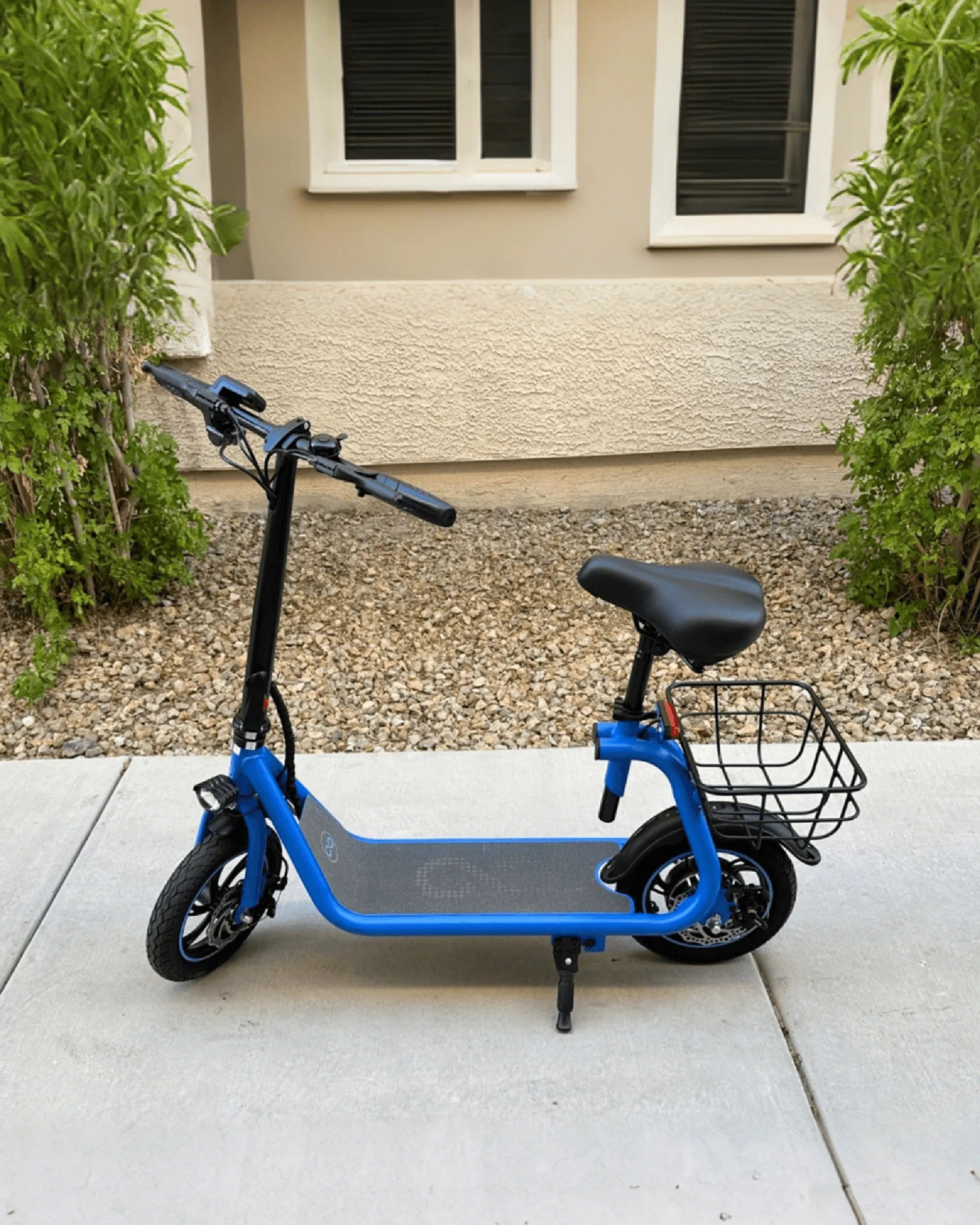
Looking for an electric vehicle that combines the stability of three wheels, the power for your commute, and a design that tucks neatly into a closet or car trunk? The Fastfold trike is engineered to meet that exact demand. This guide will dissect everything you need to know about this innovative category of personal electric transport. You'll learn how its unique design solves common urban mobility problems, what critical specifications to evaluate before buying, and how it stacks up against alternatives like e-scooters and e-bikes. We'll ground our analysis in data, safety standards, and practical use cases to help you make an informed decision.
Introduction to the Fastfold Trike Category
A Fastfold trike is a three-wheeled, electrically assisted vehicle designed with a primary focus on rapid folding and compact storage. Its core appeal lies in merging the inherent stability of a trike configuration with the convenience of a portable, space-saving design, all powered by an electric motor for effortless commuting. This isn't a bulky, traditional mobility scooter; it's a sleek, modern solution for navigating crowded city streets.
The target audience for a Fastfold trike is broad yet specific. Urban commuters seeking a reliable, car-alternative for the "last mile" from transit to office find its compact fold invaluable. Apartment and condo dwellers with strict storage limitations benefit immensely from its vertical or under-bed storage capability. Furthermore, riders who may lack confidence on two wheels—or those who simply prefer a more planted, comfortable ride—appreciate the trike's stable platform.
The engineering prioritizes a seamless user experience. The folding mechanism is typically a single-step, tool-free operation, allowing the vehicle to transform from ride mode to carry mode in seconds. This practicality, combined with electric power for hills and distance, positions the Fastfold trike as a versatile tool for modern urban life. It addresses the pain points of storage, stability, and sweat-free travel in one integrated package.
Key Features and Benefits of Fastfold Trikes
The defining characteristics of a quality Fastfold trike deliver tangible benefits that directly impact daily use. Understanding these features explains why this category is gaining significant traction among commuters and practical riders alike.
Stability and Safety for Diverse Riders
The three-wheeled design provides a natural, stable triangle stance that eliminates the need for balance at stops. This makes a Fastfold trike exceptionally accessible for new riders, those with balance concerns, or anyone carrying groceries or a backpack. The low center of gravity, often aided by a step-through frame, further enhances confidence.
Safety is integrated into this stability. Riders can focus on traffic and their path rather than wobbling. This design also allows for effective use of a front or rear storage basket without compromising handling. Braking systems on quality models often include disc brakes or regenerative braking, providing reliable stopping power that complements the stable chassis. The seated position itself is inherently safer than standing on a scooter, offering better control and visibility in traffic.
Portability and Space-Saving Design
Portability is the "Fastfold" promise. The best models feature an intuitive, robust latch mechanism that allows the trike to fold at the frame and/or stem in one or two motions. The goal is a process taking under 15 seconds without tools. The folded dimensions are crucial; a well-designed Fastfold trike should stand on its end in a corner or slide under a desk.
This transforms multi-modal travel. You can ride to the train station, fold the trike, carry it aboard, and unfold it for the final leg of your journey. Similarly, storing it in a car trunk for weekend trips or campground mobility is trivial. Weight is a factor, with most models ranging from 45 to 70 pounds, so features like built-in carry handles or rolling wheels on the folded frame are significant advantages for navigating stairs or platforms.
Electric Power and Riding Efficiency
The electric drive system turns the trike from a manual pedal-powered vehicle into a true commuting machine. A hub motor in the rear wheel provides quiet, instantaneous torque, assisting the rider up hills and maintaining a consistent speed without physical strain. Throttle control or pedal-assist systems make starting from a stop effortless.
This electric boost expands the practical range of trips from 1-2 miles to 10-20 miles or more on a single charge. It makes commuting in business attire feasible and turns longer errand runs into quick, enjoyable trips. The efficiency of an electric motor, paired with a stable trike platform, creates a uniquely practical vehicle for daily urban and suburban tasks.
What to Look for When Choosing a Fastfold Trike
Selecting the right model requires careful evaluation of specifications that directly correlate to performance, safety, and longevity. This buyer's guide focuses on data-driven decision points.
Motor Power, Speed, and Range
Motor power, measured in watts (W), dictates performance. A 350W motor is sufficient for flat terrain and lighter riders, reaching speeds of 15-18 mph. A 500W or 750W motor provides stronger acceleration and better hill-climbing ability, often enabling top speeds of 20-25 mph. Consider your local terrain and desired pace.
Range is determined by battery voltage (V) and capacity (Ah). A common system is a 48V 10Ah battery, offering roughly 480 Watt-hours of energy. Real-world range depends on rider weight, terrain, wind, and assist level. As a rule, expect 1-1.5 miles per Ah of battery capacity. Therefore, a 48V 10Ah battery typically offers 10-15 miles per charge. For a reliable commute, choose a battery that offers at least 30% more range than your daily distance.
Build Quality, Warranty, and Safety Certifications
The folding mechanism is the most critical mechanical component. Inspect its design: it should use solid latches or locking pins, not just friction fit. The frame should be made of reinforced aluminum or steel. Tire quality matters; pneumatic (air-filled) tires offer the best shock absorption, while solid tires eliminate flats but provide a harsher ride.
Safety certifications are non-negotiable. The battery pack must be UL 2271 or UL 2849 certified. This ensures the lithium-ion cells and battery management system have passed rigorous electrical, mechanical, and environmental stress tests to prevent fire hazards. A comprehensive warranty is your best indicator of a manufacturer's confidence. Look for at least a 1-year warranty on the frame, motor, and battery. Brands like Gyroor back their products with such warranties and US-based support, providing long-term peace of mind.
Gyroor's Engineering Philosophy for Fastfold Trikes
As a leading brand in personal electric mobility, Gyroor's approach to the Fastfold trike concept is rooted in safety, durability, and user-centric design. Their engineering priorities directly address the core concerns of riders who need a reliable, foldable electric vehicle.
UL-Certified Battery Safety in a Compact Package
For a device designed to be folded and stored indoors—in homes, offices, or apartments—battery safety is paramount. Gyroor integrates exclusively UL-certified battery packs into their designs. This certification isn't just a label; it represents hundreds of individual tests for overcharge, short circuit, crush, and immersion. In a Fastfold trike, where the battery pack may be jostled during the folding process and storage, this rigorous standard is essential for consumer safety and peace of mind.
Durability for Daily Use: IPX5 Water Resistance and Robust Warranty
A commuter vehicle must handle real-world conditions. Gyroor designs its electric components with at least an IPX5 water-resistance rating. This means the critical electrical parts can withstand water jets from any direction, protecting the system from rain, puddles, and roadside splashes. This durability is matched by a robust 1-year warranty that covers the entire vehicle. This warranty signals confidence in the longevity of the folding mechanism, motor, and electronics—critical for a product with moving parts that are used and folded daily.
Fastfold Trike vs. Other Personal E-Transport
To understand where a Fastfold trike fits, a clear comparison with popular alternatives is essential. The following table and analysis break down the key differences.
| Feature | Fastfold Trike | Standard Folding E-Scooter | Traditional E-Bike |
|---|---|---|---|
| Primary Stability | Excellent (3 wheels) | Good (2 wheels, requires balance) | Excellent (2 wheels, larger frame) |
| Folding Speed/Portability | Fast, compact vertical fold | Very Fast, most compact | Slow or Non-folding; bulky |
| Typical Riding Position | Seated | Standing | Seated (bicycle posture) |
| Cargo Capacity | High (often includes basket) | Low (reliant on backpack) | Moderate to High (racks possible) |
| Storage Footprint | Small when folded | Smallest | Largest |
| Ideal Use Case | Stable, seated commutes; errands; riders preferring stability | Ultra-portable, short-distance trips; mixed-modal travel | Long-distance rides; recreational trails; where storage isn't an issue |
Comparison with Standard Folding E-Scooters
The Fastfold trike trades some of the extreme portability of a lightweight e-scooter for vastly superior stability and comfort. An e-scooter is easier to carry up a long flight of stairs and fits in tighter spaces. However, the trike's seated position and three-wheel design make it more suitable for longer commutes, riders who don't want to stand, and those carrying items. The trike excels where the journey is more than just a quick dash and where confidence on uneven surfaces is valued.
Comparison with Traditional E-Bikes
Most e-bikes do not fold, or have complex, multi-step folding processes. A Fastfold trike’s core advantage is its rapid, tool-free transformation into a storable object. An e-bike typically offers greater range, higher speeds, and a more traditional cycling experience, but requires dedicated garage, shed, or balcony space. The trike wins in scenarios where indoor storage is mandatory, such as apartments, offices, or homes with limited space. It is the solution when "where to put it" is a primary question.
Frequently Asked Questions (FAQs) About Fastfold Trikes
Q: How fast do Fastfold trikes typically go?
A: Most consumer-focused models are governed for safety and regulatory compliance, with top speeds between 15-20 mph. Some higher-performance models with 750W motors can reach 25+ mph. It's crucial to check local regulations, as many areas have a 20 mph limit for electric bicycles and similar vehicles on bike paths.
Q: Do I need a license, registration, or insurance to ride one?
A: In the vast majority of U.S. states, electric trikes with a motor under 750W and a maximum speed of 20 mph are classified as "low-speed electric bicycles" and do not require a driver's license, vehicle registration, or insurance. However, laws vary by municipality, so always verify with your local Department of Motor Vehicles or transportation authority.
Q: How difficult is it to fold and carry?
A> Quality Fastfold trikes are designed for simplicity. The process should be tool-free and take less than 15 seconds—often involving releasing a latch and folding the handlebar stem down. Weight is the main factor for carrying; models between 45-55 lbs are manageable, while heavier ones benefit greatly from integrated rolling wheels or carry straps.
Q: What is the real-world range I can expect on a single charge?
A: Range is highly variable. Using the throttle extensively, riding on hilly terrain, or carrying heavy loads will reduce range. Under optimal conditions (moderate pedal assist, flat ground, average rider weight), you can expect the mileage equivalent to the battery's Amp-hour (Ah) rating. A 10Ah battery typically delivers 10-15 miles. For a reliable daily commute, choose a battery with a capacity that doubles your one-way distance.
Q: Can I ride a Fastfold trike in the rain?
A: This depends entirely on the model's ingress protection (IP) rating. A rating of IPX5 or higher, like those found on Gyroor models, means the electrical components are protected against water jets and light rain. However, no consumer electric vehicle is fully waterproof. Avoid deep puddles, heavy downpours, and submerging any part of the trike. Always dry it off after riding in wet conditions.
The Verdict: Who Should Buy a Fastfold Trike?
The Fastfold trike is not for everyone, but for its target user, it is a near-perfect solution. It is the ideal choice for the urban apartment dweller who lacks a garage or storage locker but needs a stable, electric vehicle for daily errands and commuting. It serves the rider who values the confidence of three wheels over the agility of two, whether for personal comfort or physical necessity.
It is a practical investment for the multi-modal commuter who needs to seamlessly transition from riding to carrying their vehicle onto public transit. Furthermore, it is a smart buy for the safety-conscious consumer who prioritizes certified components (like UL-certified batteries) and a strong manufacturer warranty that protects their investment. If your priorities are stability, compact storage, and electric assistance for daily tasks, a Fastfold trike aligns perfectly with your needs.
When evaluating models, let the core principles guide you: a robust folding mechanism, a UL-certified battery, a clear water-resistance rating, and a warranty backed by a reputable brand. These factors ensure your trike is a reliable partner for years of convenient, enjoyable rides. Explore how a thoughtfully engineered Fastfold trike can transform your daily mobility.
Ready to find a Fastfold trike that combines safety, durability, and smart design? Browse the full Gyroor collection at gyroorboard.com to see models built with UL-certified batteries, IPX5 water resistance, and backed by a reliable 1-year warranty, trusted by over 100,000 riders.
How to Make My E-Bike Faster: A Complete Guide to Safe Performance Upgrades
Class 3 Mobility Scooter Rules: Your Complete Guide to Road Legality & Safety