



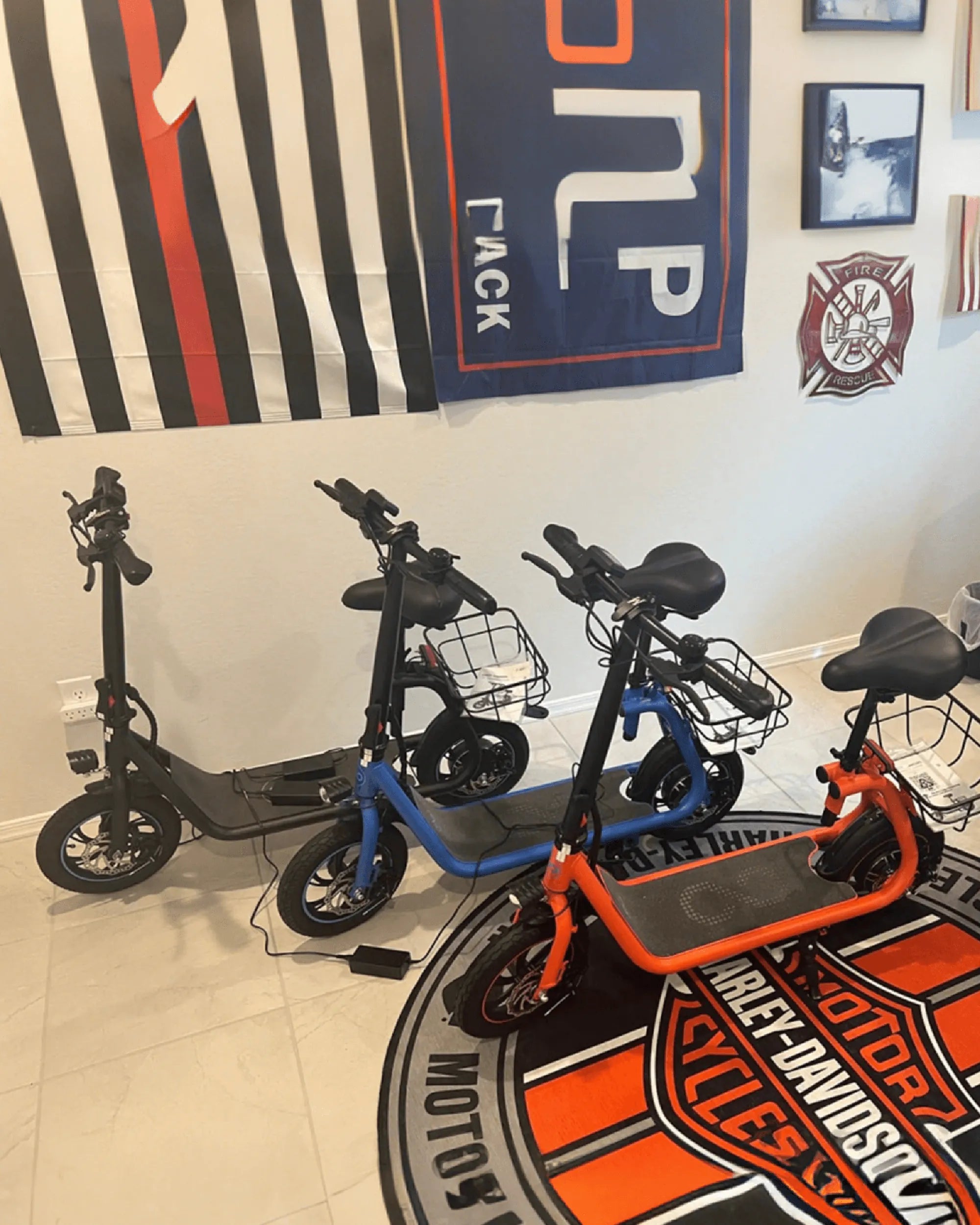
Introduction: The Heart of Your Fold & Go Scooter
Unlocking the true potential of a foldable electric scooter begins with understanding its core: the battery pack. This single component dictates your scooter's range, acceleration, hill-climbing ability, and overall lifespan. The promise of a "fold & go scooter" hinges on a battery that is not only powerful and long-lasting but also safe, reliable, and seamlessly integrated into a portable design. Choosing the right battery technology is the difference between a frustrating, range-anxious commute and a truly liberating urban mobility experience.
This guide will dissect every critical aspect of the fold & go scooter battery pack. We will move beyond marketing claims to examine the hard data, safety standards, and engineering principles that define a high-quality power source. You will learn how to interpret specifications, implement maintenance routines that double your pack's life, and identify the non-negotiable features that ensure safe operation for years to come.
By the end, you will possess the knowledge to make an informed decision, whether you are purchasing your first scooter or seeking to understand the technology powering your current ride. The goal is to empower you to select a scooter whose battery is built not just to last, but to perform reliably in the real world, from bustling city streets to unexpected weather.
Anatomy of a High-Performance Fold & Go Battery Pack
A fold & go scooter battery pack is far more than a simple black box. It is a sophisticated assembly of individual battery cells, a Battery Management System (BMS), protective casing, and electrical connectors. The most common and advanced cell chemistry used is lithium-ion, specifically variations like Lithium Nickel Manganese Cobalt Oxide (NMC) or Lithium Iron Phosphate (LiFePO4), prized for their high energy density and rechargeability.
Key specifications define a battery's capability. Voltage (V), typically 36V or 48V in modern scooters, determines the system's power and top speed. Amp-hours (Ah) measure the battery's capacity, or how much current it can deliver over time. The most telling metric is Watt-hours (Wh), calculated as Voltage (V) x Amp-hours (Ah). Watt-hours represent the total energy stored and are the most accurate predictor of potential range.
For example, a 36V 10Ah battery pack has 360Wh of energy. A 48V 7.5Ah pack also has 360Wh. While they store the same total energy, the 48V system may offer better performance on hills due to higher power output. Understanding these numbers allows you to compare scooters objectively, cutting through ambiguous "up to XX miles" range claims that depend heavily on ideal conditions.
The Battery Management System (BMS) is the unsung hero within the pack. This electronic brain performs critical functions: it monitors cell voltage and temperature to prevent overcharging or deep discharge, balances charge across all cells to maintain health, manages current output for safety, and communicates with the scooter's display. A robust BMS is essential for both safety and maximizing battery lifespan.
Why UL-Certification is Non-Negotiable for Safety
When it comes to lithium-ion batteries, safety certification is not a luxury—it is an imperative. UL (Underwriters Laboratories) certification, specifically standards like UL 2271 for light electric vehicle batteries, represents the gold standard. This rigorous testing protocol evaluates the battery pack for electrical, mechanical, and environmental hazards, including overcharging, short-circuiting, crush resistance, and thermal runaway.
A UL-certified fold & go scooter battery pack has undergone independent, third-party verification that its design and construction mitigate fire and explosion risks. This certification process tests the entire system: cells, BMS, wiring, and enclosure. For riders, this translates to profound peace of mind, especially when charging at home or in an office. It is the single most important indicator that a manufacturer prioritizes user safety over cutting corners.
Brands that invest in UL certification, like Gyroor, demonstrate a commitment to responsible engineering. All Gyroor electric scooter models utilize UL-certified battery packs that have been tested for over 500 charge cycles, ensuring not only initial safety but sustained reliability throughout the pack's life. This certification should be a primary filter in your purchasing decision, effectively separating reputable products from potentially dangerous ones.
The IPX5 Advantage: Weatherproofing for Real-World Use
The "go" in "fold & go scooter" implies versatility, including dealing with less-than-perfect conditions. An IP (Ingress Protection) rating defines a device's resistance to solids and liquids. For scooter batteries, the liquid rating is crucial. An IPX5 rating means the battery enclosure is protected against water jets from a nozzle (6.3mm) from any direction.
In practical terms, an IPX5-rated fold & go scooter battery pack can handle riding through urban puddles, enduring splashes from wet roads, and surviving a sudden rain shower. It is engineered to prevent moisture ingress that could cause short circuits, corrosion, or BMS failure. This level of protection is essential for a vehicle designed for daily commuting and errands, where weather can change rapidly.
Gyroor designs its scooters with IPX5 water-resistant battery compartments and electrical systems as a standard feature. This engineering choice acknowledges real-world use cases, ensuring that a bit of weather doesn't end your ride or compromise your investment. When comparing scooters, a verifiable IPX5 rating (or higher) on the battery system is a strong indicator of overall build quality and durability.
Maximizing Your Battery Pack's Lifespan & Range
Proper care can significantly extend the life and performance of your fold & go scooter battery pack. Lithium-ion batteries degrade over time, but user habits dramatically influence the rate. The first rule is to avoid consistently draining the battery to 0% or charging it to 100%. For long-term storage, the ideal charge level is between 40% and 60%.
Optimal charging practices involve using only the manufacturer-provided charger and unplugging the scooter once the battery is full. Avoid leaving it on the charger for days at a time. If you won't be riding for several weeks or months, store the scooter (and battery) in a cool, dry place at a partial charge, and top it up every few months. Extreme heat and cold are enemies of battery health.
Your riding style directly impacts range. Smooth acceleration and regenerative braking (if available) conserve power. Riding at top speed continuously, climbing steep hills, carrying heavy loads, and riding in cold temperatures will all reduce your per-charge range. Maintaining proper tire pressure reduces rolling resistance, another simple way to maximize efficiency.
Recognize the signs of a battery nearing the end of its useful life: a significant reduction in range (e.g., less than 70% of the original), slower charging, or the scooter struggling to maintain speed under load. A high-quality pack from a brand like Gyroor, backed by a clear warranty, is designed to deliver consistent performance for its entire rated cycle life, which is typically 500+ full charge cycles before reaching 80% of original capacity.
Gyroor's Engineering: Built for Reliability and Peace of Mind
Gyroor approaches battery pack design with a philosophy centered on safety, performance, and durability. This is reflected in a multi-layered engineering strategy. First, every fold & go scooter battery pack is built around UL-certified lithium-ion cells from reputable suppliers, ensuring the foundational power source meets the highest safety benchmarks.
Second, Gyroor integrates a sophisticated, multi-protection BMS into every pack. This system provides over-charge protection, over-discharge protection, short-circuit protection, over-current protection, and individual cell balancing. The BMS acts as a vigilant guardian, constantly optimizing performance and preventing conditions that lead to premature failure or safety incidents.
Third, mechanical design is crucial. The battery enclosure is not just a shell; it is a structural component designed for impact resistance and environmental sealing. The IPX5-rated construction ensures the sensitive electronics are shielded from daily hazards. This holistic approach—from cell selection to final assembly—results in a fold & go scooter battery pack that delivers reliable power mile after mile, a key reason over 100,000 riders trust Gyroor across North America and Europe.
The 1-Year Comprehensive Warranty: Your Long-Term Assurance
A warranty is a manufacturer's promise, and its terms reveal their confidence in the product. Gyroor backs its electric scooters, including the critical fold & go scooter battery pack, with a robust 1-year comprehensive warranty. This coverage protects against defects in materials and workmanship, providing a clear recourse if an issue arises.
For the battery specifically, this warranty underscores the brand's commitment to the longevity and safety of its power systems. It means that within the first year of ownership, you are covered for battery-related performance failures that are not caused by misuse or accidents. This protection is a cornerstone of the value proposition, transforming the battery from a consumable component into a guaranteed part of your mobility solution.
Gyroor supports this warranty with accessible, US-based customer service. This ensures that if you need assistance, you can get clear guidance and support without the delays and frustrations often associated with overseas support channels. The 1-year warranty, combined with the inherent safety of UL-certified, IPX5-protected batteries, creates a foundation for truly worry-free riding.
Comparison: What to Look for Beyond the Price Tag
Choosing a fold & go scooter requires looking beyond the sticker price and advertised range. A smart comparison focuses on the verifiable specifications and protections of the battery system. The following table provides a framework for evaluating key differentiators.
| Feature to Compare | Budget/Generic Option | Quality Brand (e.g., Gyroor) | Why It Matters |
|---|---|---|---|
| Battery Certification | Often uncertified or self-certified | UL 2271 Certified | Fundamental fire and electrical safety. Non-negotiable. |
| Energy Capacity | May list only voltage (V) or use inflated Ah | Clearly lists Watt-hours (Wh) (e.g., 360Wh) | Wh is the true measure of energy storage and potential range. |
| Water Resistance | May claim "water-resistant" without rating | IPX5 rating specified | Protects against real-world conditions like rain and puddles. |
| Battery Warranty | 30-90 days, often excluding battery | 1-year comprehensive warranty | Shows manufacturer confidence and protects your investment. |
| Cell Chemistry & BMS | Generic lithium-ion, basic or no BMS details | Brand-name cells (e.g., LG, Samsung), multi-protection BMS specified | Ensures performance consistency, longevity, and safety management. |
When analyzing options, prioritize scooters that provide transparent data on these points. A slightly higher upfront cost for a scooter with a certified, well-warranted battery pack like those from Gyroor translates to lower long-term cost of ownership, greater safety, and a vastly better user experience.
Frequently Asked Questions (FAQ)
How long does a fold & go scooter battery pack typically last?
Battery lifespan is measured in both charge cycles and calendar years. A high-quality pack is rated for 500+ full charge cycles (from 0% to 100%) before its capacity degrades to about 80% of new. In practical terms, with regular use, this equates to 2-4 years of service. With partial cycling and proper care, you can maximize this lifespan. Gyroor's UL-certified packs are tested to exceed 500 cycles.
Can I replace the battery pack myself?
It depends on the scooter's design. Many modern foldable scooters, including several Gyroor models, feature user-replaceable battery packs. These are designed to be easily unlocked and swapped by the user, a great feature for extending scooter life or carrying a spare. Always consult your user manual. For integrated batteries, replacement should be performed by a qualified technician to maintain water resistance and safety.
How should I transport my scooter battery safely?
For daily use, simply fold the scooter. For air travel, you must check airline regulations, as lithium-ion batteries above a certain Wh (often 160Wh) are prohibited in checked luggage and have strict rules for carry-on. For car transport, avoid leaving the scooter or battery in a hot car for extended periods. When shipping a battery separately, it must be declared and packaged according to hazardous materials regulations.
What's the real-world range I can expect?
Manufacturer range claims are based on ideal conditions: a lightweight rider on flat, smooth pavement at moderate speed in mild temperatures. Real-world range is typically 60-75% of the claimed maximum. Factors that reduce range include rider weight, hills, headwinds, frequent stops/starts, cold weather, and low tire pressure. A 360Wh battery might claim 20 miles but reliably deliver 13-16 miles for an average rider.
Is it bad to charge my battery after every ride, even if it's not empty?
No, for lithium-ion batteries, partial charges are actually better than full 0-100% cycles. It's perfectly fine to top up your battery after a short ride. The habit to avoid is consistently letting it drain completely before charging. The most stressful states for the battery are at very high (100%) and very low (0%) charge levels for prolonged periods.
Conclusion: Power Your Journey with Confidence
Your fold & go scooter is only as good as the battery pack that fuels it. This guide has equipped you with the knowledge to discern marketing hype from engineering substance. The path to reliable, safe, and enjoyable urban mobility is built on verified safety certifications like UL 2271, tangible weatherproofing like IPX5, transparent energy metrics like Watt-hours, and the security of a strong manufacturer warranty.
Investing in a scooter from a brand that prioritizes these elements, such as Gyroor, is an investment in peace of mind and long-term value. It ensures that the convenience of a foldable design is matched by the dependable performance of a professionally engineered power system. You deserve a scooter that starts every journey with a full charge of confidence and delivers on the promise of freedom, day after day, for years to come.
Ready to experience the difference a high-performance, safety-focused battery pack makes? Explore the full range of UL-certified, IPX5-rated electric scooters engineered for reliability. Browse the full Gyroor collection at gyroorboard.com and find the perfect ride to power your journey.
80cc Dirt Bike Speed: The Complete Guide to Performance, Tuning & Safety
Scooter Age 5: The Ultimate Guide to Choosing, Riding & Safety