


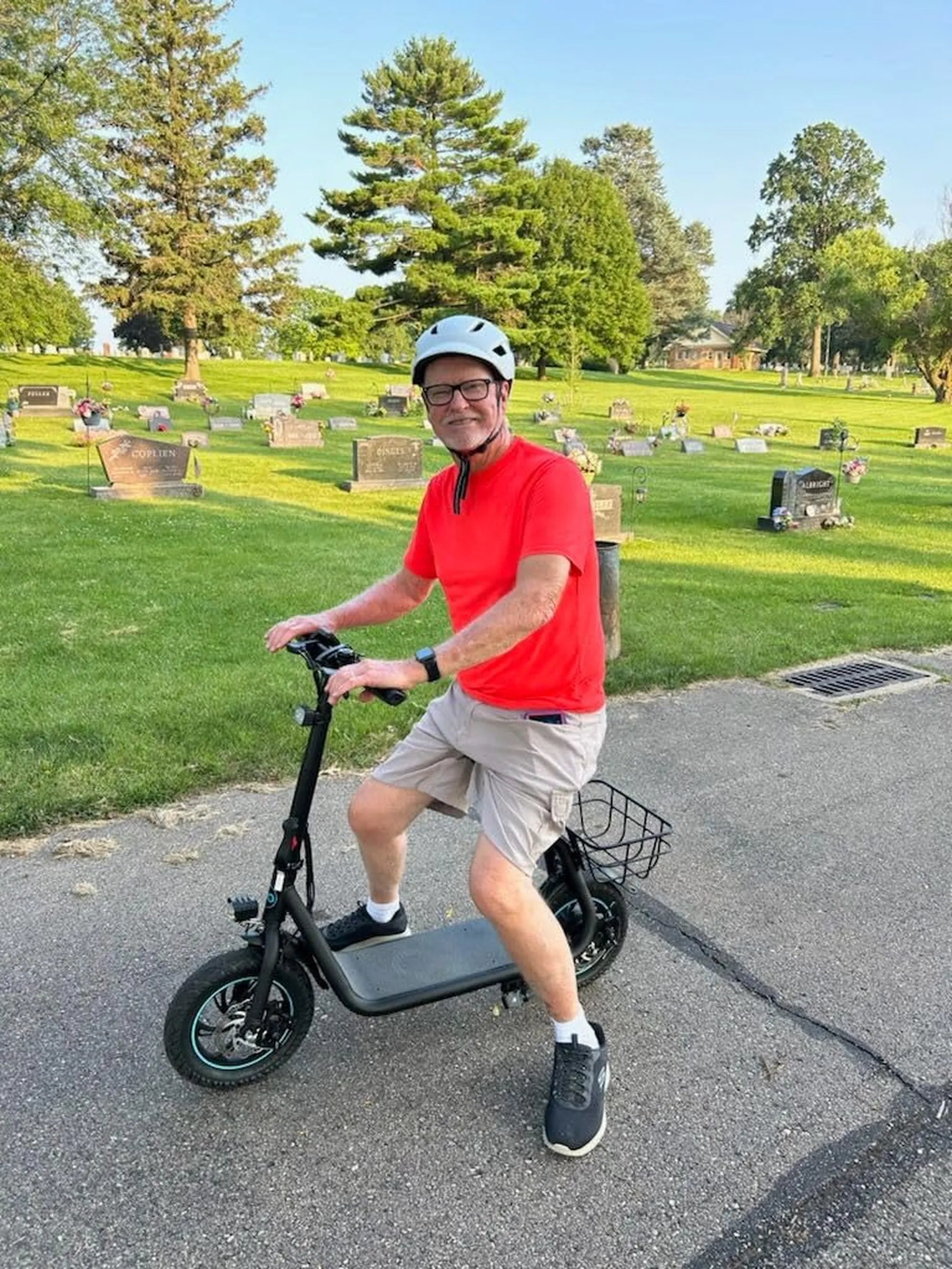
Introduction: Redefining the Urban Commute with Full-Suspension Comfort
Urban commuting presents a unique set of challenges: potholes, expansion joints, uneven pavement, and unexpected curbs. A standard electric bicycle can turn these daily obstacles into a jarring, fatiguing experience. The full suspension commuter ebike emerges as the definitive engineering response, evolving from basic transportation to a premium category focused on rider preservation and all-weather capability.
This machine is designed not just for movement, but for seamless, controlled traversal of the modern urban landscape. By isolating the rider and critical components from impacts, it redefines what a daily commute can feel like. For brands like Gyroor, a leader trusted by over 100,000 riders, integrating this advanced suspension technology with reliable, UL-certified electric systems is key to building e-bikes for real-world conditions.
The core promise is simple: arrive at your destination feeling energized, not exhausted, regardless of the road quality. This article will dissect the technology, quantify the benefits, and provide a data-driven framework for choosing the right full suspension commuter ebike for your journey.
What is a Full Suspension Commuter Ebike? Beyond the Basics
A full suspension commuter ebike is defined by its dual suspension system: a front suspension fork and a rear shock absorber. This system works in tandem to absorb kinetic energy from road impacts before it reaches the rider and the bike's frame. Unlike a hardtail e-bike (front suspension only) or a rigid model (no suspension), this design provides damping at both contact points.
The primary function is to maintain consistent wheel contact with the ground. When a wheel hits a bump, the suspension compresses, allowing the wheel to move upward independently. The energy is then dissipated through the shock's damping mechanism, preventing a reactive bounce. This results in a smoother, more stable, and predictable ride.
For commuters, this isn't about mountain bike-style aggression; it's about precision tuning for urban hazards. Travel distances (the amount the suspension can move) are typically moderate, ranging from 80mm to 100mm, optimized for comfort without sacrificing efficient pedaling geometry. The integration of this system with a mid-drive or hub motor and a high-capacity battery creates a uniquely capable urban vehicle.
Key Components of the Suspension System
The performance hinges on its components. The front fork is usually an air-spring or coil-spring model with hydraulic damping. Air springs are lighter and highly adjustable for rider weight via a pump, while coil springs offer linear performance and often require less maintenance.
The rear shock connects the main frame to the rear swingarm. Similar to the fork, it uses air or coil springs. A critical feature for commuters is a lockout or compression adjustment, allowing the rider to stiffen the suspension on smooth pavement to maximize pedal efficiency and battery range.
Adjustable preload lets riders tune the suspension's initial firmness. High-quality seals and materials, like those used in Gyroor's durable builds, are essential for withstanding daily exposure to dust, water, and road grime without frequent service intervals, ensuring long-term reliability for the daily rider.
The Unmatched Benefits: Why Your Commute Demands Full Suspension
The advantages of a full suspension commuter ebike translate directly into tangible improvements in the commuting experience. The benefits are cumulative, affecting everything from personal well-being to the longevity of the machine itself.
Enhanced Comfort & Reduced Fatigue: The most immediate benefit is the drastic reduction in transmitted vibration and shock. By absorbing impacts from cracks, potholes, and curbs, the system prevents energy from traveling up through the handlebars, saddle, and pedals to the rider. This significantly reduces strain on the wrists, back, neck, and joints. The result is a rider who arrives feeling fresh, even after a 45-minute commute over rough city streets, preserving energy for the day ahead.
Improved Safety & Control: Safety is paramount. Full suspension maintains tire contact with the road surface over bumps. This provides superior traction during acceleration, cornering, and—most critically—braking, especially on wet leaves, metal grates, or gravel-strewn paths. The bike remains composed and predictable, giving the rider greater confidence to handle emergency maneuvers or adverse conditions, a key consideration highlighted in Gyroor's design philosophy for all-weather, IPX5 water-resistant vehicles.
Greater Versatility & Route Freedom: This design liberates the commuter from being bound to perfectly paved roads. It confidently handles cobblestone streets, brick pathways, park cut-throughs, light gravel trails, and construction zones. This versatility can shorten commute times by enabling more direct routes and opens up recreational possibilities on weekends, effectively making one e-bike suitable for multiple roles.
Protection for Your Investment: The suspension system acts as a primary defense for the e-bike's most expensive and sensitive components. By isolating the frame, motor, battery mount, and display from constant impacts, it reduces stress and the potential for fatigue failures or electrical connection issues. This protective function can directly contribute to a longer operational lifespan for the entire vehicle, safeguarding an investment that often exceeds several thousand dollars.
Critical Considerations Before You Buy: A Data-Driven Guide
Selecting the right full suspension commuter ebike requires evaluating several interconnected factors. A suspension system adds complexity, weight, and cost, making informed choices crucial.
Motor & Battery Performance: Suspension components add 8-15 lbs (3.5-7 kg) compared to a rigid frame. This makes a capable motor essential. A sustained 500W or higher hub or mid-drive motor ensures ample power for hills and maintaining speed with the added mass. Similarly, a high-capacity battery (e.g., 48V 15Ah or larger) is needed to offset the energy used to move the extra weight and power the motor over varied terrain. Look for UL-certified battery packs, like those standard on Gyroor e-bikes, which undergo rigorous testing for 500+ charge cycles and safety.
Build Quality & Warranty Coverage: The frame must be engineered to handle the pivot points and stresses of a rear suspension linkage. Robust welding and quality aluminum alloys are non-negotiable. Given the added mechanical complexity, a comprehensive warranty is a strong indicator of manufacturer confidence. A reputable brand will offer at least a 1-year comprehensive warranty on the frame, motor, and battery, providing peace of mind for a daily-use product.
Practical Commuting Features: The bike must be equipped for real-world use. Integrated, bright LED headlights and taillights (often powered by the main battery) are vital for visibility. Full-length fenders are essential to keep water and road spray off the rider and the bike's components. A sturdy rear rack mount is crucial for carrying bags, panniers, or cargo. Finally, an IPX5 water-resistance rating or similar ensures the electrical systems can handle rain and wet roads, a standard feature in Gyroor's commuter-focused designs.
Full Suspension vs. Hardtail: Choosing the Right Tool for Your Route
The choice between a full-suspension and a hardtail (front suspension only) commuter e-bike is fundamentally about matching the tool to the task. The following table provides a clear, objective comparison.
| Feature | Full-Suspension Commuter E-Bike | Hardtail Commuter E-Bike |
|---|---|---|
| Ride Comfort | Excellent. Isolates rider from front and rear impacts. | Good for front impacts; rear transmits road vibration. |
| Control & Traction | Superior. Both wheels maintain better contact on rough/loose surfaces. | Good front traction; rear can skip or lose grip on bumps. |
| Terrain Versatility | High. Confidently handles poor pavement, gravel, cobbles. | Moderate. Best for smooth to moderately rough pavement. |
| Mechanical Complexity | Higher (pivot points, rear shock). Potentially higher long-term maintenance. | Lower. Simpler design, fewer moving parts. |
| Weight | Heavier (added rear linkage and shock). | Lighter. |
| Pedaling Efficiency | Good to Excellent (with lockout engaged). Some energy loss when active. | Excellent. Minimal energy loss to suspension bob. |
| Typical Cost | Higher, due to added components and frame engineering. | More affordable. |
The Verdict: A full suspension commuter ebike is the superior choice for commutes longer than 30 minutes, routes with consistently poor road surfaces, mixed-terrain pathways, or for riders with any back or joint sensitivity. The investment pays dividends in daily comfort and capability. A hardtail e-bike is a compelling choice for shorter commutes on predominantly smooth, well-maintained roads where budget and simplicity are the primary concerns, though it may compromise on comfort over longer distances.
Technical Deep Dive: Suspension Geometry and Tuning for Commuting
The geometry of a full-suspension system is carefully calibrated for its purpose. Commuter e-bikes use a "four-bar" linkage or similar design that prioritizes pedaling efficiency and bump absorption over large travel. The rear wheel's path is designed to minimize "chain growth" or "pedal kickback," which can make pedaling feel inefficient when the suspension is active.
The suspension's leverage ratio—how much force at the wheel translates to force at the shock—is tuned to be progressive. This means it becomes firmer as it compresses, preventing it from bottoming out harshly on large potholes while remaining supple for small bumps. This progression is key to a comfortable yet controlled feel.
For the commuter, tuning is about setting the sag. Sag is the amount the suspension compresses under the rider's static weight, typically set at 20-30% of total travel. This ensures the suspension is in its optimal operating range to react to bumps. Correct sag, set via air pressure or preload, is the single most important adjustment for optimizing comfort and performance on a full suspension commuter ebike.
Rebound damping control, which manages how quickly the suspension returns after compression, should be set fast enough to recover before the next bump but slow enough to prevent a pogo-stick effect. For urban riding with frequent sequential bumps, a medium-to-quick rebound setting is often ideal.
Integration with Electric Systems: A Synergistic Relationship
The electric assist system and the full suspension on a commuter e-bike have a synergistic relationship. The motor compensates for the system's added weight and any minor efficiency loss from the active suspension. Conversely, the suspension enables the rider to use the motor's power more effectively and safely at higher speeds over rough ground.
Battery and motor placement are critical. Mid-drive motors, which centralize weight low and between the wheels, pair exceptionally well with full suspension. The balanced weight distribution works harmoniously with the suspension's kinematics, improving handling. Hub motors can be used effectively, but frame designers must account for the unsprung weight (weight not supported by the suspension) at the rear wheel, which can affect small-bump sensitivity.
The battery, often the heaviest component, is typically mounted inside or on the downtube. This low center of gravity enhances stability, a benefit amplified by the suspension's ability to keep the frame level over undulations. Brands like Gyroor integrate these systems holistically, ensuring the battery pack is securely mounted within a robust frame to withstand the dynamics of suspended travel without compromising electrical connections.
Long-Term Ownership: Maintenance and Reliability
Owning a full suspension commuter ebike entails a slightly more involved maintenance routine than a rigid bike, but it is far from prohibitive. The key is preventative care. Regularly wiping down the suspension stanchions (the shiny tubes) and seals with a clean cloth removes abrasive grit that can damage seals and cause premature wear.
Basic maintenance includes checking air pressure in air shocks monthly, as they can slowly lose pressure. Coil shocks require less frequent attention but should be inspected for wear. The pivot points in the rear linkage require periodic checks for bearing play and should be re-greased according to the manufacturer's schedule, often once a year for a commuter.
Reliability is heavily dependent on component quality and design. Sealed cartridge bearings in the linkage last longer than bushings. Models designed with serviceability in mind, where pivot bolts are accessible, make upkeep easier. Choosing a brand with a strong support network, like Gyroor with its US-based service and clear warranty terms, mitigates potential long-term concerns and ensures access to genuine parts.
FAQ: Your Full-Suspension Commuter E-Bike Questions, Answered
Q: Are full-suspension commuter e-bikes much slower or less efficient?
A: The impact on efficiency is minimal with modern designs. When the suspension lockout is engaged on smooth roads, pedaling efficiency is nearly identical to a hardtail. On rough roads, any minor efficiency loss from suspension movement is overwhelmingly offset by the ability to maintain higher average speeds comfortably and with greater control. The motor easily compensates for the added weight.
Q: Is the maintenance complicated and expensive?
A: It is more involved than for a rigid bike but not complicated. Basic upkeep involves keeping seals clean and checking air pressure. Major service (seal replacements, damper rebuilds) may be needed every few years depending on use, similar to servicing a car's shocks. The cost is reasonable when weighed against the daily comfort benefits, and support from established brands ensures serviceability.
Q: Can I still add a rack and panniers to a full-suspension e-bike?
A> Absolutely. Many full suspension commuter ebike models, including several from Gyroor, are designed with commuter practicality in mind. They feature specific frame mounts or utilize seat-post-based racks that clear the rear shock. It is a critical feature to verify before purchase if you plan to carry cargo.
Q: How does it handle in wet or icy conditions compared to a regular e-bike?
A> It handles significantly better. The maintained tire contact patch provides superior traction during braking and cornering on wet pavement, metal surfaces, or light frost. Combined with puncture-resistant tires often fitted to these models, it creates a more secure all-weather platform. However, for black ice or deep snow, studded tires remain the essential upgrade, regardless of suspension.
Q: Is the extra cost of a full-suspension system justified for a city commute?
A> For most urban commuters facing typical city road conditions, the justification is strong. The cost is an investment in daily comfort, reduced physical fatigue, enhanced safety through improved control, and potential longevity of the e-bike itself. It transforms the commute from an endurance test into an enjoyable, sustainable part of the day, which for many riders is invaluable.
Conclusion: The Smart Investment for a Seamless City Journey
The full suspension commuter ebike represents the pinnacle of purpose-built urban electric mobility. It directly addresses the harsh realities of city infrastructure with elegant engineering, prioritizing the rider's well-being and the machine's durability. The data is clear: the benefits in comfort, safety, control, and versatility are substantial and measurable.
This is not a niche product for off-road enthusiasts but a logical evolution for anyone serious about replacing car trips with a reliable, all-conditions alternative. When evaluating options, prioritize brands that combine this advanced suspension technology with robust electric systems, certified safety standards, and comprehensive support—the hallmarks of a vehicle built for the long haul.
Ready to experience the difference that true all-terrain comfort can make on your daily route? Explore engineering-focused designs that merge full-suspension capability with reliable, UL-certified electric power. Browse the full Gyroor collection at gyroorboard.com to find the full suspension commuter ebike engineered for your city.
Best Dirt Bike for 12 Year Old Boy: The Ultimate 2024 Guide
ebike vs e motorcycle: The Ultimate Guide to Power, Law, and Your Perfect Ride