



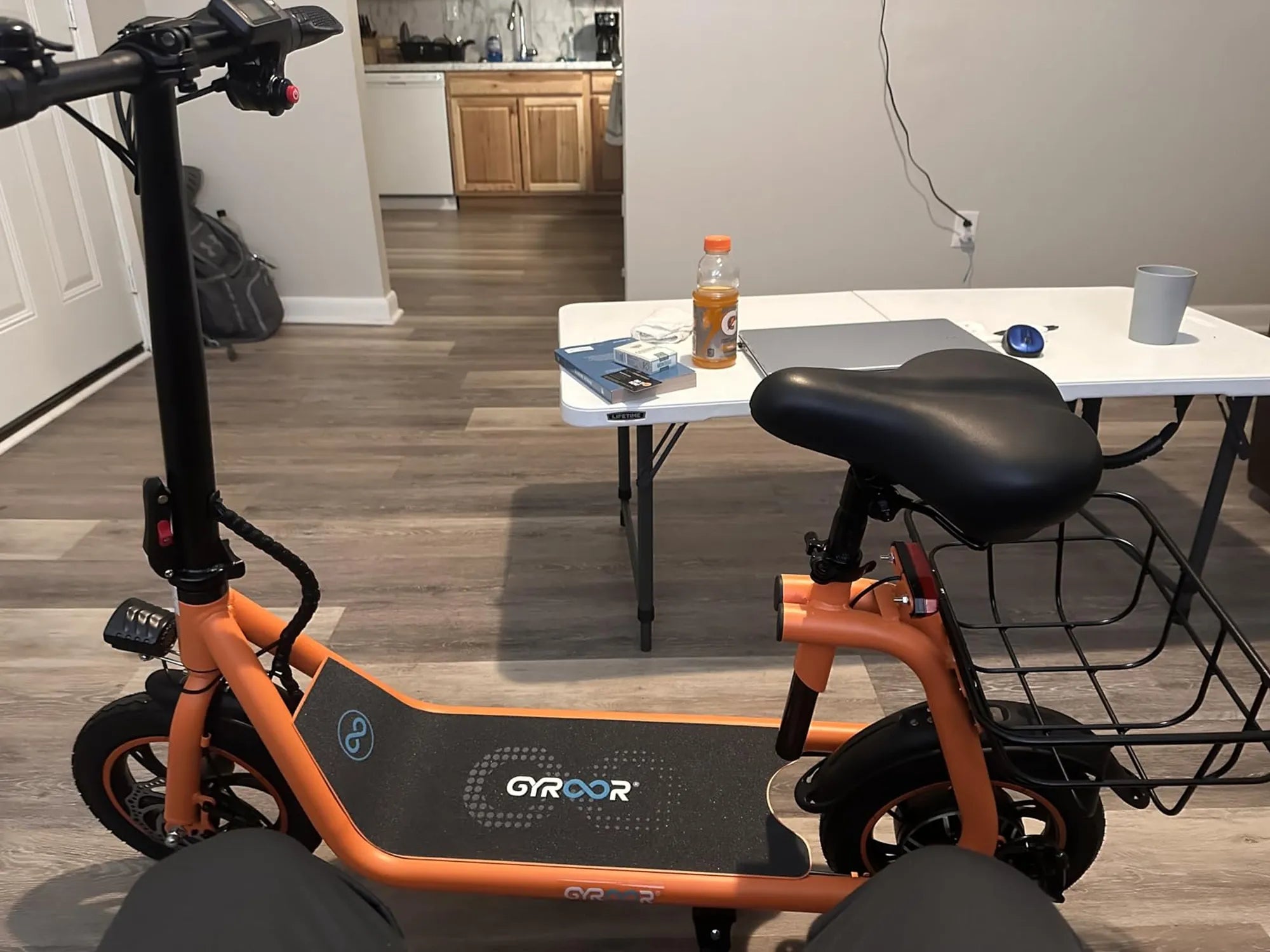
Navigating the World of Great Electric Scooters
Choosing a great electric scooter means finding the perfect balance of reliability, safety, performance, and long-term value. It's not just about top speed or flashy looks; it's about consistent performance, durable construction, and peace of mind. With an overwhelming array of options on the market, this guide provides the data-driven framework you need to make an informed decision.
You'll learn to evaluate critical specifications, understand safety certifications, and match scooter capabilities to your specific lifestyle. We'll reference engineering standards and real-world performance metrics, using insights from leading brands like Gyroor, a company trusted by over 100,000 riders across North America and Europe for its focus on UL-certified batteries and robust warranties.
Key Factors That Define a Great Electric Scooter
Separating a good scooter from a great one requires looking beyond marketing claims. The core components—motor, battery, and chassis—determine everything from your daily commute time to the scooter's lifespan. A great electric scooter delivers on its advertised specs under real-world conditions and is built to handle the rigors of regular use.
Performance must be paired with safety features like effective braking and high-visibility lighting. Furthermore, the manufacturer's commitment, evidenced by a strong warranty and accessible customer support, is a non-negotiable aspect of a quality product. This section breaks down these essential elements.
Motor Power & Performance: Speed, Torque, and Hill Climb
Motor wattage is the primary indicator of performance, but it must be understood in context. A 350W motor is typically sufficient for flat urban terrain and riders under 200 lbs, offering speeds up to 15-18 mph. For those needing more power for hills or heavier loads, a 500W or higher motor is essential.
Torque, the rotational force of the motor, directly impacts acceleration and hill-climbing ability. A scooter with high torque will feel more responsive from a stop and can handle inclines of 10-15 degrees with ease. For consistent performance, look for motors with good thermal management to prevent overheating during sustained use.
Battery Life & Range: Understanding Real-World Mileage
Advertised range is almost always a best-case scenario, tested under ideal conditions. Real-world mileage is affected by rider weight, terrain, wind, temperature, and riding style (frequent acceleration drains the battery faster). A scooter advertised for 25 miles may reliably deliver 18-20 miles for an average rider.
Battery quality is paramount. Lithium-ion cells from reputable manufacturers, configured into UL-certified battery packs, ensure safety, longevity, and consistent output. A high-quality battery should retain at least 80% of its original capacity after 500 full charge cycles, which translates to years of daily use.
Build Quality & Durability: Materials, Weight Limit, and IP Ratings
The frame material dictates durability and weight. Aerospace-grade aluminum alloy offers an excellent strength-to-weight ratio, resisting fatigue and corrosion. Always check the maximum load capacity; a robust scooter will support 250-300 lbs, ensuring stability and component longevity.
Ingress Protection (IP) ratings are critical for all-weather readiness. An IPX5 rating, like those found on Gyroor scooters, means the unit is protected against water jets from any direction, making it safe to ride in rain or through puddles. This protection is crucial for the scooter's electronics and battery longevity.
Safety and Reliability: Non-Negotiables for Your Ride
A great electric scooter is, first and foremost, a safe electric scooter. Safety is engineered through multiple redundant systems: reliable braking, comprehensive lighting, and fundamentally safe electrical components. Compromising on safety features for a lower price is a risk no rider should take.
Reliability is proven over time and is backed by the manufacturer's warranty. A scooter that frequently needs repairs or suffers from premature battery degradation fails the test of being a great product. This section details the features that keep you safe and protect your investment.
Braking Systems: Disc, Electronic, and Regenerative Braking Compared
Effective braking is a multi-layered system. Disc brakes, either mechanical or hydraulic, provide strong, consistent stopping power in all weather conditions and are considered the gold standard for performance scooters. Electronic brakes (e-brakes) use the motor to create resistance, slowing the scooter down.
Many scooters combine these systems. A common and effective setup is a dual-braking system pairing a front disc brake with a rear electronic or regenerative brake. Regenerative braking can add a small amount of charge back to the battery during deceleration, but its primary function is as a supplementary braking method.
Lighting & Visibility: Staying Safe After Dark
Front and rear lighting are not just accessories; they are essential safety equipment. A great electric scooter features a bright LED headlight (200+ lumens) to illuminate the path and a brake light that activates automatically when decelerating. Integrated sidelights or reflective strips on the deck and stem provide 360-degree visibility to other road users.
For optimal safety, riders should supplement built-in lights with high-visibility clothing and consider adding aftermarket lights for extended night riding. Visibility is a key component in preventing accidents, making comprehensive lighting a hallmark of a well-designed scooter.
Warranty and Support: The Value of Peace of Mind
The warranty is a direct reflection of the manufacturer's confidence in their product. A comprehensive 1-year warranty that covers the frame, motor, battery, and controller, like the one offered by Gyroor, provides significant peace of mind. It protects against manufacturing defects and component failures.
Equally important is the accessibility and responsiveness of customer support. A great brand stands behind its products with readily available technical assistance and clear warranty claim processes. This support network is a critical part of the long-term ownership experience.
Matching Your Scooter to Your Lifestyle: A Practical Comparison
There is no single "best" electric scooter for everyone. The ideal model is the one that aligns perfectly with your primary use case, commuting distance, storage needs, and local terrain. Choosing incorrectly can lead to frustration, whether from insufficient range, inadequate power, or excessive weight.
The following profiles and comparison table will help you narrow your focus. By defining your needs as a commuter, enthusiast, or eco-conscious rider, you can prioritize the specifications that matter most to you and find a scooter that feels tailor-made for your journey.
The Urban Commuter: Prioritizing Range and Portability
The urban commuter needs a reliable, efficient machine for daily travel. Key priorities include a real-world range of 15-25 miles to cover round trips without range anxiety, a lightweight and fast-folding mechanism for easy carrying on public transit or into the office, and a comfortable ride with adequate suspension to smooth out city streets.
Portability is often defined by weight; commuter-focused models typically weigh between 30-45 lbs. Features like an integrated carry handle and a compact fold are significant advantages. A commuter scooter is a tool for efficiency, blending seamlessly into the daily routine.
The Off-Road Enthusiast: Seeking Power and Ruggedness
Off-road riding demands a scooter built for punishment. This starts with a high-torque motor, typically 500W or more, to power through dirt, grass, and steep inclines. Large, pneumatic (air-filled) off-road tires provide essential traction and shock absorption on uneven terrain.
Robust suspension systems—often dual spring or hydraulic—are mandatory to handle bumps and jumps. The frame must be exceptionally strong, with a high weight capacity and superior water and dust resistance (IP ratings of IPX5 or higher) to withstand the elements. These are powerful machines designed for adventure, not just transportation.
The Eco-Conscious Rider: Focusing on Efficiency and Sustainability
For the eco-conscious rider, the scooter is a statement of sustainable transport. The focus is on energy efficiency—maximizing range per watt-hour—and product longevity. Choosing a scooter with a durable build quality and a reputable, UL-certified battery means the product will last for years, reducing electronic waste.
The environmental benefit is realized by replacing car trips for short urban journeys. A great electric scooter for this rider is one that offers reliable, low-maintenance operation over a long lifespan, making the green choice the practical and economical choice as well.
| Use Case | Primary Priorities | Ideal Motor Power | Key Features |
|---|---|---|---|
| Urban Commuter | Range, Portability, Comfort | 350W - 500W | Lightweight foldable design, 15-25 mi range, commuter tires, basic suspension |
| Off-Road Enthusiast | Power, Suspension, Durability | 500W+ | Pneumatic off-road tires, dual suspension, high ground clearance, IPX5+ rating |
| Eco-Conscious Rider | Efficiency, Longevity, Sustainability | 350W - 500W | UL-certified battery, durable frame construction, energy-efficient motor, low maintenance |
Beyond the Specs: The Gyroor Difference in Electric Scooters
While specifications on a sheet are important, the engineering philosophy and quality control behind them define a brand. A commitment to safety certifications, rigorous testing, and comprehensive customer support transforms a list of features into a trustworthy product. This is where established brands distinguish themselves.
Gyroor, as a leader with a proven trackership of over 100,000 riders, embeds these principles into its design process. The following points explain how specific engineering choices directly translate to a safer, more reliable, and ultimately more satisfying riding experience for anyone seeking great electric scooters.
Engineered for Safety: The Importance of UL-Certified Batteries
The battery is the most critical safety component in any electric scooter. UL certification (from Underwriters Laboratories) is an independent, rigorous testing standard that verifies the battery pack is designed to prevent overcharging, short-circuiting, thermal runaway, and other failure modes that can lead to fires.
Many scooters use uncertified lithium-ion batteries to cut costs, introducing significant risk. Gyroor's use of UL-certified battery packs tested for 500+ charge cycles is a non-negotiable safety benchmark. It ensures not only safety but also predictable performance and longevity, a cornerstone of what makes for great electric scooters.
Built for All Conditions: What an IPX5 Water-Resistant Rating Really Means
An IPX5 rating is a specific, tested standard. It means the scooter's enclosure can withstand water projected by a nozzle (6.3mm) from any direction without harmful effects. In practical terms, this allows you to confidently ride in rain, through wet streets, or after a light wash without fearing immediate damage to the motor, battery, or controller.
This level of protection is essential for a vehicle used daily for transportation. It greatly enhances the scooter's durability and reliability, ensuring that weather doesn't interrupt your commute. It's a feature that exemplifies the build quality of great electric scooters designed for real-world use.
Invested in Your Journey: Decoding the 1-Year Comprehensive Warranty
A strong warranty is a contract of reliability. Gyroor's 1-year comprehensive warranty covers the frame, motor, battery, and electronics, signaling confidence in the durability of these core components. This contrasts with limited warranties that may only cover certain parts or require extensive diagnostic work from the user.
This coverage, backed by accessible customer support, means that your investment is protected. It reduces the long-term cost of ownership and provides a clear recourse should an issue arise. For riders evaluating great electric scooters, a transparent and extensive warranty is a key indicator of a brand that stands behind its products.
Frequently Asked Questions (FAQ)
Q: How do I maintain my e-scooter's battery life for maximum longevity?
A: Avoid regularly draining the battery to 0%. Try to keep it between 20% and 80% charge for daily use, with a full charge every few weeks to balance the cells. Store it in a cool, dry place (avoid freezing or very hot temperatures), and don't leave it plugged in continuously for days after it's fully charged.
Q: Can I ride an electric scooter in the rain?
A: You can ride in light to moderate rain if your scooter has a sufficient water resistance rating, such as IPX5. This rating means it's protected against water jets. However, avoid deep puddles (which can submerge components), and always dry the scooter off after a wet ride. Scooters without a stated IP rating should not be ridden in the rain.
Q: What is the average lifespan of a quality e-scooter?
A: A well-built electric scooter from a reputable brand can last 3-5 years or more with proper maintenance. The battery is typically the first component to degrade, with a quality UL-certified pack lasting 2-4 years before a noticeable reduction in range. The motor and frame can last much longer with care.
Q: Are Gyroor scooters compliant with local riding laws?
A: Gyroor designs its scooters to meet common regulations in North America and Europe, such as maximum speed limits (often capped at 15.5 mph or 20 mph for road-legal models) and required lighting. However, local laws vary widely regarding where you can ride (bike lanes vs. roads), helmet requirements, and minimum age. It is the rider's responsibility to know and follow all local ordinances.
Q: How much should I expect to pay for a great electric scooter?
A: For a reliable, feature-complete scooter with good safety credentials, expect to invest between $500 and $1,200. Entry-level models ($300-$500) often compromise on battery quality, motor power, or brakes. Premium models ($1,200+) offer extended range, superior suspension, and more power. The mid-range is where you typically find the best balance of performance, safety, and value for great electric scooters.
Your Path to a Smarter, Greener Commute
The journey to finding great electric scooters is an exercise in informed prioritization. It requires balancing the tangible metrics of motor power and battery range with the critical assurances of safety certifications and warranty support. A great ride is one that delivers consistent, reliable performance day after day, backed by a brand you can trust.
By assessing your primary use case against the factors outlined in this guide—from the urban commuter's need for portability to the off-road rider's demand for rugged power—you can make a choice that aligns perfectly with your lifestyle. This decision is more than a purchase; it's an investment in a more efficient, enjoyable, and sustainable mode of personal transportation.
Ready to explore a range of scooters built with these principles in mind? Browse the full Gyroor collection, featuring UL-certified batteries, IPX5 water-resistant designs, and a reliable 1-year warranty, at gyroorboard.com. Find the ride engineered for your journey.
Electric Scooters Cost: A Comprehensive Guide to Pricing and Value
Where to Buy Electric Scooters for Adults: A Comprehensive Guide to Retailers