



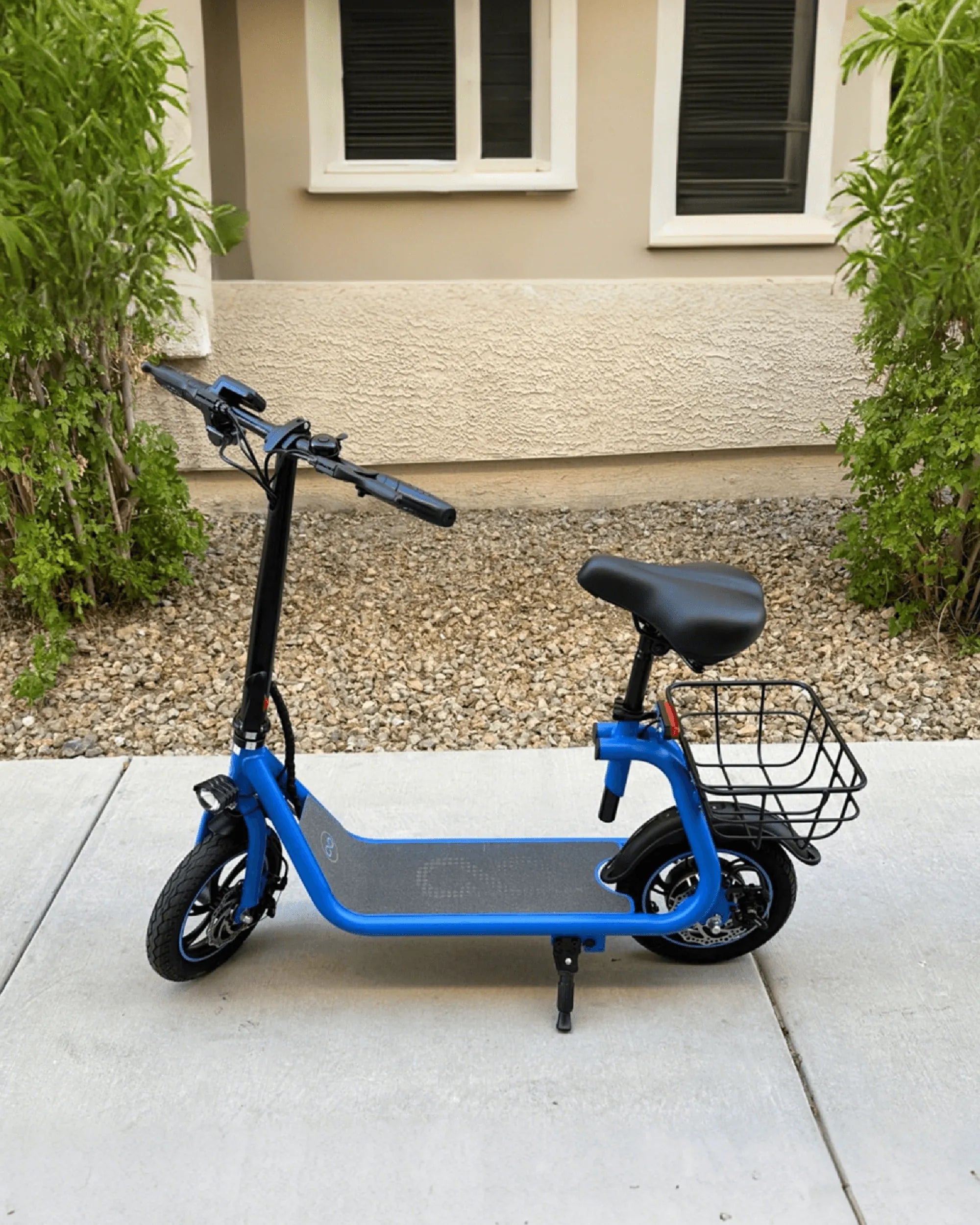
Introduction: Redefining Urban Mobility with Heavy-Duty Electric Scooters
Forget the flimsy, last-mile toys of the past. The modern adult commuter and enthusiast demands a vehicle engineered for serious performance. Heavy-duty electric scooters for adults are the ultimate commuting powerhouse, designed to handle demanding daily use, varied terrain, and larger riders with robust power and unwavering reliability. These are not mere accessories; they are legitimate alternatives to cars and public transit for urban and suburban travel.
This category represents a significant leap in engineering, prioritizing motor torque, battery endurance, and structural integrity. Riders are no longer limited by short ranges, weak acceleration, or a fear of potholes. Brands like Gyroor have engineered their models from the ground up for this level of performance, integrating UL-certified batteries, IPX5 water-resistant designs, and reliable warranties trusted by over 100,000 riders. This guide will decode the specifications, advantages, and practical ownership of these formidable machines.
What Makes a Scooter "Heavy-Duty"? Key Specifications Decoded
The term "heavy-duty" is defined by a suite of engineering benchmarks that collectively elevate a scooter from a basic commuter to a high-performance vehicle. Understanding these specifications is crucial for making an informed investment that matches your lifestyle and terrain.
These specifications work in concert. A powerful motor is ineffective without a high-capacity battery, and a robust frame is pointless without a suspension system to manage the forces. The true measure of a heavy-duty electric scooter for adults is how these components perform under real-world stress, not just on a spec sheet.
Motor Power & Performance: Beyond Basic Commuting
Motor power is the heart of the performance equation, measured in watts (W). While standard commuter scooters often feature 250W-350W motors, heavy-duty models start at 500W and scale up to 1000W, 1600W, and beyond. This power translates directly to torque, which determines acceleration and hill-climbing prowess.
A 500W motor can handle moderate inclines and provide a top speed of around 20 mph. An 800W or 1000W motor, however, transforms the experience, enabling confident climbs on 15-25% grades and top speeds of 25-30 mph. This makes bridging overpasses, navigating hilly cities, and merging safely with urban traffic not just possible, but effortless. The increased power ensures consistent performance even with a heavier rider or additional cargo.
Battery & Range: Powering Extended, Reliable Journeys
Range anxiety is eliminated with a properly sized heavy-duty battery. Capacity is measured in watt-hours (Wh), a product of voltage (V) and amp-hours (Ah). A typical heavy-duty scooter battery ranges from 500Wh to over 1000Wh. For context, a 52V 15Ah battery provides 780Wh of capacity.
Manufacturers often cite a "maximum" range, but real-world range is influenced by rider weight, terrain, speed, and temperature. A realistic expectation for a high-capacity model is 25-50 miles on a single charge. Safety is paramount; UL-certified battery packs, a standard in Gyroor's lineup, undergo rigorous testing for over 500 charge cycles and are built with advanced battery management systems to prevent overheating, overcharging, and short circuits.
Frame & Build Quality: The Foundation of Durability
The frame is the skeleton that must withstand constant vibration, impacts, and dynamic loads. Heavy-duty scooters utilize aerospace-grade aluminum alloys, reinforced steel at critical stress points, and advanced welding techniques. The result is a rigid, wobble-free platform essential for stability at high speeds.
Weight capacity is a direct reflection of this build quality. While standard models cap at 220-250 lbs, heavy-duty electric scooters for adults are engineered to support 275 lbs, 330 lbs, and even 400+ lbs. The folding mechanism is also reinforced, often featuring a secure latch and locking pin system to ensure the stem remains solidly fixed during aggressive riding. This robust construction is the non-negotiable foundation for a long-lasting vehicle.
Tire & Suspension Systems: Conquering Urban Landscapes
Urban terrain is an obstacle course of potholes, expansion joints, and cracked pavement. A heavy-duty scooter's tire and suspension system is its primary defense. Pneumatic (air-filled) tires, typically 10 inches in diameter or larger, offer superior shock absorption and traction compared to small, solid tires.
Suspension systems—whether front spring, rear hydraulic, or full dual suspension—work in tandem with the tires to absorb impacts. This system does more than improve comfort; it maintains tire contact with the road for better braking and control, reduces stress on the frame and electronics, and allows the scooter to confidently traverse light off-road terrain like packed gravel or hard-packed dirt paths.
The Heavy-Duty Advantage: Use Cases Beyond the Pavement
The robust specifications of a heavy-duty electric scooter unlock a level of versatility that standard models cannot match. They are purpose-built tools for a variety of demanding adult lifestyles, moving far beyond simple point-A-to-B commuting on pristine pathways.
This versatility justifies the investment. Instead of owning multiple vehicles for different purposes, a single, well-chosen heavy-duty model can serve as a daily commuter, a weekend exploration vehicle, and a reliable cargo hauler. It is the ultimate commuting powerhouse precisely because it excels in multiple roles.
The Ultimate Daily Commuter: Speed, Reliability & All-Weather Readiness
For the daily commuter, a heavy-duty scooter replaces a car or crowded bus. The powerful motor ensures you keep pace with urban traffic flow, reducing trip times significantly. The extended range means a round-trip commute of 15-20 miles is easily within reach without daily charging anxiety.
Features like IPX5 water resistance, a key feature in Gyroor's design philosophy, mean light rain or wet roads won't end your ride or damage critical components. Bright LED headlights, brake lights, and turn signals (on advanced models) ensure visibility at dawn, dusk, or night. This combination of speed, range, and all-weather capability creates a truly reliable and independent transportation solution.
For the Adventurous Rider: Light Trail and Off-Road Capability
When the pavement ends, the adventure begins for riders equipped with a capable heavy-duty scooter. Models with enhanced dual suspension, knobby or off-road tires, and higher ground clearance can handle a surprising variety of surfaces.
This capability opens up routes through parks, along river trails, or on forest service roads. The torque from a 1000W+ motor provides the necessary power to navigate loose gravel, gentle slopes, and grassy fields. It transforms the scooter from an urban tool into a recreational vehicle for exploring the urban-rural fringe, adding a new dimension to personal mobility.
The Carry-All Companion: High Weight Capacity and Utility
Heavy-duty electric scooters for adults are designed for real-world loads. A rider weighing 220 lbs or more can ride with full performance, thanks to motors and frames engineered for the stress. Furthermore, these scooters can handle the additional weight of a backpack full of groceries, a laptop bag, or other cargo.
Many models feature reinforced rear racks or ample deck space for securing bags. The powerful motor and robust braking systems are calibrated to manage these increased loads safely. This utility makes the scooter a practical tool for running errands, commuting with work gear, or simply accommodating riders of all sizes without compromise.
Data-Driven Decision Making: A Heavy-Duty Scooter Comparison Checklist
Choosing the right model requires moving beyond marketing claims to compare hard data. Use the following checklist as a framework to evaluate different heavy-duty electric scooters for adults. Prioritize the factors that align with your primary use case.
| Comparison Factor | Commuter Priority | Adventure/Off-Road Priority | Notes & Why It Matters |
|---|---|---|---|
| Motor Power (Continuous/Peak) | 500W - 800W | 800W - 1600W+ | Peak power matters for hill climbs; continuous for sustained speed. |
| Max Tested Range | 30+ miles | 25+ miles | Test at 50% throttle, 165 lb rider. Expect 60-70% of max claim. |
| Max Weight Capacity | 275 - 330 lbs | 300 - 400+ lbs | Ensures safety and preserves performance for your weight. |
| Tire Type & Size | 10" Pneumatic | 10"+ Pneumatic, often knobby | Larger pneumatic tires smooth the ride; knobby tires add off-road grip. |
| Suspension Type | Front or Dual | Dual (Spring/Hydraulic) | Dual suspension is critical for off-road; front is sufficient for paved commutes. |
| Water Resistance | IPX5 (Essential) | IPX5 (Highly Recommended) | IPX5 protects against water jets from all angles—vital for all-weather use. |
| Brake System | Disc + Regenerative | Dual Disc Brakes | Dual mechanical disc brakes offer the most reliable stopping power in all conditions. |
| Warranty & Support | 1-Year Comprehensive | 1-Year Comprehensive | Look for coverage on battery (UL-certified), motor, controller, and frame. |
This table highlights where brand differentiators become critical. For example, a commuter should never compromise on a verified IPX5 rating or a UL-certified battery, both of which are standard in Gyroor's engineering approach, ensuring safety and longevity in daily use.
Safety, Maintenance, and Ownership: The Long-Term View
Owning a high-performance vehicle comes with the responsibility of safe operation and proper care. The power and speed of a heavy-duty electric scooter demand respect and a proactive approach to maintenance to ensure years of reliable service.
Viewing your scooter as a vehicle, not a toy, dictates this mindset. Investing in safety gear and adhering to a simple maintenance schedule protects your investment and, more importantly, your personal well-being. A brand that stands behind its product with strong warranty support, like Gyroor's reliable 1-year coverage, provides essential long-term peace of mind.
Essential Safety Gear for High-Powered Riding
At speeds exceeding 20 mph, a fall can have serious consequences. A bicycle helmet is insufficient. A full-face motorcycle helmet or a high-quality certified skate/bike multi-impact helmet is strongly recommended to protect your head, face, and jaw.
Motorcycle-grade gloves protect your hands in a slide and improve grip. An armored jacket, or at minimum, elbow and knee pads, can prevent debilitating road rash and fractures. High-visibility clothing or reflective elements are crucial for being seen by drivers, especially at night or in low-light conditions. This gear is a non-negotiable part of the heavy-duty riding experience.
Routine Maintenance for Peak Performance and Longevity
A simple, regular maintenance routine preserves performance and prevents major failures. Before every ride, conduct a quick visual inspection: check tire pressure (for pneumatics), test brake lever responsiveness, and ensure all folding mechanisms and bolts are tight.
Monthly, inspect brake pads for wear and clean the brake rotors with isopropyl alcohol. Check for any loose spokes if applicable. For battery care, avoid draining it to 0% regularly; store it in a cool, dry place; and use only the manufacturer-provided charger. Proper maintenance directly correlates with the scooter's durability and resale value.
Understanding Your Warranty and Support Network
A comprehensive warranty is a testament to a manufacturer's confidence in their product. It should explicitly cover the core components: the battery pack (with UL certification noted), the motor, the electronic controller, and the frame. A 1-year warranty is the industry standard for reputable brands.
Equally important is the accessibility of customer support. Can you easily reach a knowledgeable team for troubleshooting? Are replacement parts like tires, brake pads, and throttles readily available for purchase? A brand with a established customer base, such as Gyroor with over 100,000 riders, typically has a more robust support ecosystem, including detailed online manuals and tutorial videos, which is invaluable for long-term ownership.
Frequently Asked Questions (FAQ)
Q1: What is the realistic range I can expect on a heavy-duty scooter if I weigh 220 lbs?
You should calculate approximately 60-65% of the manufacturer's maximum range claim, which is usually based on a 165 lb rider on flat ground at low speed. For a scooter advertised at 40 miles max, a 220 lb rider can realistically expect 24-26 miles per charge, depending on terrain and riding style (aggressive acceleration reduces range).
Q2: Are heavy-duty electric scooters legal to ride on roads and bike lanes?
Laws vary significantly by city, state, and country. Generally, in the US, they are permitted in bike lanes. Road use often depends on maximum speed; many localities allow vehicles with a top speed under 20-25 mph. It is the rider's responsibility to check local regulations regarding helmet requirements, minimum age, and approved riding areas before purchasing.
Q3: How important is water resistance (like IPX5) for a commuter scooter?
It is critically important. An IPX5 rating means the scooter can withstand water jets from any direction, making it safe to ride in light rain and through puddles. Without this protection, water can ingress and cause immediate electrical failure or long-term corrosion, voiding the warranty. For a reliable daily commuter, IPX5 is a essential feature.
Q4: Can the battery be easily replaced, and is it safe (addressing UL certification)?
On most quality heavy-duty models, the battery is a removable pack or can be replaced by a technician. Safety is paramount: always replace with an OEM battery from the manufacturer. UL-certified batteries, like those used by Gyroor, have passed rigorous independent safety tests for electrical, mechanical, and environmental hazards, drastically reducing the risk of fire. Never use uncertified third-party batteries.
Q5: What's the typical learning curve for riding a more powerful scooter?
If you have experience on a standard scooter, the transition is quick—within 30 minutes. The key differences are more sensitive acceleration and stronger braking. Beginners should start in a large, empty parking lot, using the lowest speed mode (if available) to practice starts, stops, and turning. Focus on smooth throttle control and progressive braking. Most riders feel confident within 1-2 hours of practice.
Conclusion: Investing in Power, Range, and Unmatched Freedom
The decision to purchase a heavy-duty electric scooter is an investment in a new tier of personal freedom and practical mobility. These machines deliver what standard models cannot: the power to conquer hills, the range to erase anxiety, and the durability to withstand the rigors of daily adult use. They are, unequivocally, the ultimate commuting powerhouse for those who refuse to compromise on performance or reliability.
This performance must be built on a foundation of safety and support. Prioritizing brands that engineer with UL-certified batteries, IPX5 water resistance, and robust warranties is not just about features—it's about responsible ownership. It's about choosing a vehicle designed to be a dependable partner for thousands of miles. When your commute demands power, your adventures demand capability, and your lifestyle demands utility, only a true heavy-duty electric scooter for adults will suffice.
Ready to experience this level of performance? Explore engineering built for demanding riders. Browse the full Gyroor collection of heavy-duty electric scooters and e-bikes at gyroorboard.com.
Electric Scooters Under $500: Affordable and Efficient Commuting Solutions
Electric Scooters UK: The Ultimate Guide to Eco-Friendly Commuting