

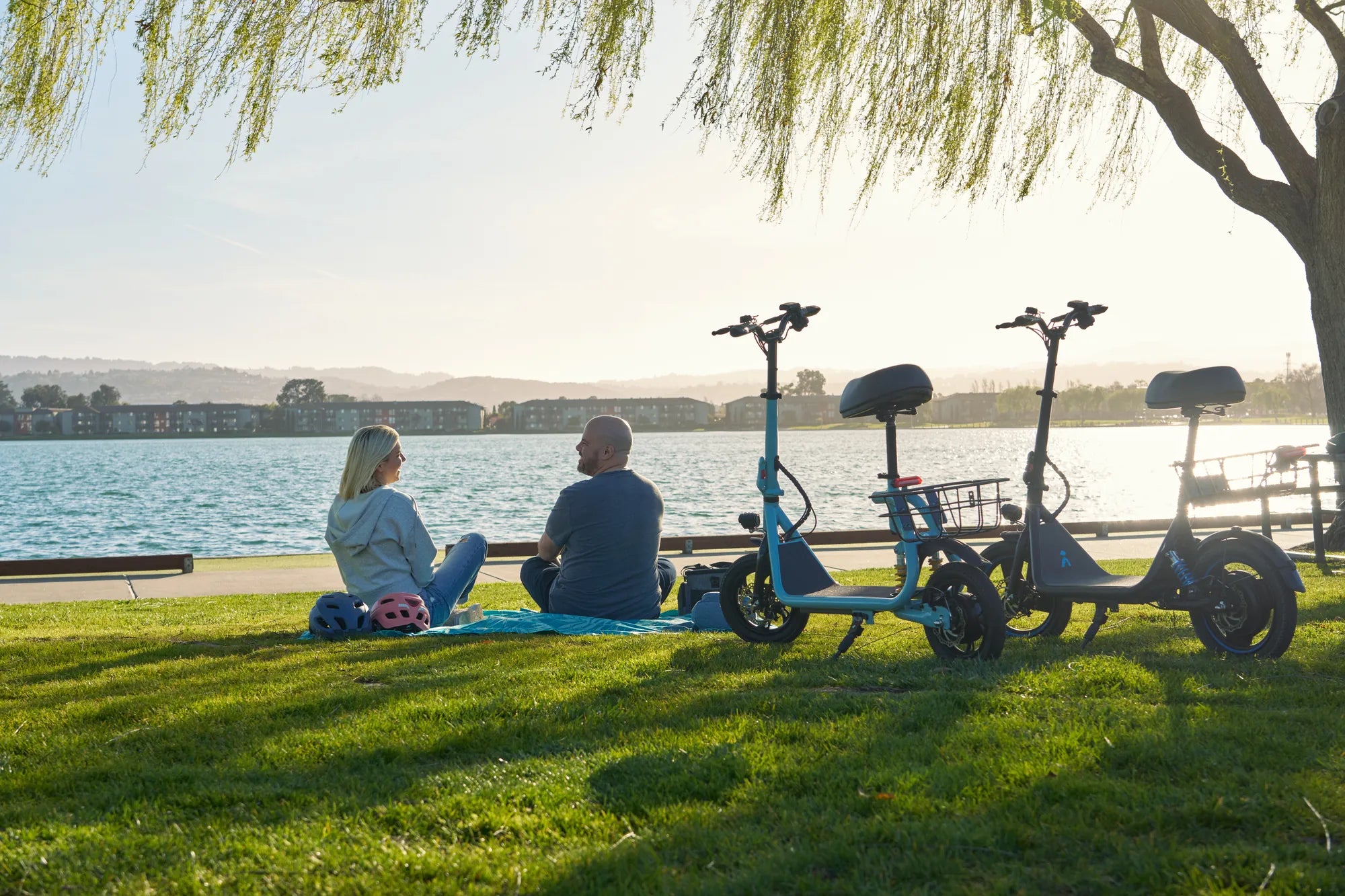
Defining the High-Performance E-Bike
A high-performance ebike represents a fundamental shift from basic electric-assisted transportation to a machine engineered for exhilaration, capability, and extended freedom. It's designed for the rider who views the journey as the destination, whether that's slicing through urban traffic, conquering mountain trails, or embarking on long-distance tours without range anxiety. These bikes merge advanced electrical engineering with refined cycling dynamics to deliver an experience where power, control, and endurance are paramount.
The appeal lies in the seamless amplification of human effort. Unlike standard commuter e-bikes, a high-performance model doesn't just assist; it transforms. It provides the torque to climb steep grades effortlessly, the sustained power to maintain higher speeds, and the robust construction to handle demanding conditions. This category is defined by superior components working in harmony to create a ride that is both thrilling and trustworthy.
For brands like Gyroor, building a high-performance ebike starts with a foundation of safety and reliability. Performance is meaningless if it comes at the cost of rider security or product longevity. Trusted by over 100,000 riders across North America and Europe, the approach integrates powerful hardware with UL-certified batteries, IPX5 water-resistant designs, and comprehensive warranties, ensuring the adrenaline rush is built on solid ground.
This guide will dissect what makes a true high-performance electric bicycle. We'll explore the core hardware that generates power, translate technical specifications into real-world riding experiences, and match different performance profiles to specific riding styles. Ultimately, we'll show that smart performance balances explosive capability with the essential features for safety and long-term durability.
The Core Components of a True High-Performance E-Bike
The distinction between a standard and a high-performance ebike is rooted in its hardware. Superior components not only deliver more power but also manage and control that power effectively, ensuring a ride that is both potent and polished. Understanding these elements is key to evaluating any performance-oriented model.
At its heart, a performance ebike is a system where the motor, battery, and frame must work in perfect synergy. A powerful motor is hampered by a small battery. A large battery adds weight that a weak frame cannot handle dynamically. True performance is achieved when each component is selected and engineered to complement the others, creating a balanced and capable machine.
Motor Power & Torque: The Heart of Performance
The motor is the primary determinant of an e-bike's character. Key specifications include nominal power (e.g., 750W) and peak power (often 1000W+), which indicate sustained output and maximum burst capability, respectively. For high-performance applications, a peak power of 1000W or more is common, enabling strong acceleration and hill-climbing prowess.
More critical than peak wattage alone is torque, measured in Newton-meters (Nm). Torque is the rotational force that propels you forward from a stop and up hills. A high-torque motor (e.g., 80-100+ Nm) provides instant, visceral acceleration, making it essential for off-road riding and responsive urban commuting. Motor placement also matters: hub drives offer simplicity and direct power, while mid-drive motors leverage the bike's gears for exceptional efficiency and climbing torque, making them a favorite for high-end mountain and touring models.
Battery Capacity & Management: Sustaining the Thrill
Performance is fleeting without ample energy storage. Battery capacity is defined by voltage (V) and amp-hours (Ah), with their product yielding watt-hours (Wh). A high-performance ebike typically features a 48V or 52V system with 15Ah or more, resulting in 720Wh+ of capacity. Higher voltage systems provide more power to the motor, improving acceleration and top-speed performance.
Beyond raw capacity, battery management and safety are non-negotiable. This is where brands like Gyroor prioritize rider security. Using UL-certified battery packs, tested for over 500 charge cycles, ensures safe, consistent high-output performance and long-term reliability. Advanced Battery Management Systems (BMS) protect against overcharging, overheating, and deep discharge, preserving both the battery's life and the rider's safety during demanding use.
Frame Design & Build Quality: Stability at Speed
A high-performance ebike's frame must be a rigid, lightweight platform that can handle increased stresses. Materials like hydroformed aluminum alloy provide an excellent strength-to-weight ratio, while carbon fiber is used in premium models for ultimate lightness and vibration damping. The geometry is also crucial; a more aggressive stance aids aerodynamics and handling at speed, while a relaxed geometry prioritizes comfort for long-distance touring.
Build quality encompasses welding integrity, component alignment, and overall finish. A poorly built frame will flex under high torque or chatter on rough terrain, undermining control and safety. The frame must also intelligently integrate the battery and motor, keeping the center of gravity low and centralized for predictable, stable handling, which is absolutely critical when riding at the limits of the bike's performance envelope.
Performance Metrics: What the Numbers Actually Mean for You
Manufacturer specifications provide a baseline, but real-world performance is dictated by a confluence of factors. Translating these numbers into tangible riding experiences allows you to set realistic expectations and choose a bike that aligns with your goals.
It's vital to understand that metrics like range and speed are interdependent and heavily influenced by rider weight, terrain, wind, and riding style. A performance ebike ridden in its highest assist mode will deliver thrilling speed but dramatically reduced range compared to eco-mode cruising. The following breakdown contextualizes these key metrics.
Top Speed & Acceleration: The Adrenaline Factor
Top speed for high-performance models often falls between 28 mph (45 km/h), which is a common Class 3 limit, and 35+ mph (56+ km/h) for off-road or unrestricted models. However, the sensation of speed is more closely tied to acceleration. A bike that can swiftly reach 28 mph feels more exhilarating than one that slowly tops out at 35 mph.
Acceleration is a function of motor torque and system voltage. A high-torque (90+ Nm), 52V system will launch you from an intersection with authority, a key advantage in urban environments. For trail riding, instant torque is necessary to navigate technical features and steep, loose climbs. This responsive power delivery is a hallmark of a well-tuned performance ebike.
Range Under Real Conditions: Beyond the Lab Test
Advertised range is typically calculated under ideal conditions: a light rider on flat ground in a low assist mode. Performance riding shatters this ideal. Frequent hard acceleration, high sustained speeds, and hill climbing can reduce real-world range by 40-50% or more. Therefore, battery capacity is paramount.
The table below provides a realistic comparison of estimated range for a high-performance ebike with a 720Wh (48V15Ah) battery under different use cases. Rider weight and terrain will cause variance.
| Riding Mode / Use Case | Average Speed | Estimated Range | Primary Factors |
|---|---|---|---|
| Eco / Touring (Minimal Assist) | 15-18 mph | 50-65 miles | Maximizes human pedaling, flat terrain. |
| Standard / Mixed Commuting | 20-24 mph | 35-45 miles | Moderate assist, some stops/starts. |
| Sport / Performance Urban | 26-28 mph | 25-35 miles | High assist, frequent acceleration. |
| Turbo / Off-Road Trail Riding | Variable (10-20 mph) | 20-28 miles | Max power, steep climbs, technical terrain. |
Climbing Ability: Conquering Inclines with Ease
Gradeability, often expressed as a percentage (e.g., 30% grade), is a critical metric for hill climbing. A high-performance ebike should handle 20%+ grades with relative ease. This capability is delivered by a combination of high motor torque, an efficient drivetrain, and proper gearing.
Mid-drive motors excel here as they multiply their torque through the bike's rear gears, allowing the rider to spin a low gear while the motor works efficiently. High-torque hub motors also perform well, providing direct wheel drive. The result is the ability to ascend steep, sustained hills without excessive strain on the motor or battery, opening up terrain that would be prohibitive on a standard bicycle or low-power e-bike.
Matching High Performance to Your Riding Style
Not all performance is created equal. The ideal high-performance ebike for a mountain biker differs vastly from that of a urban commuter or a long-distance tourer. Aligning the bike's strengths with your primary use case ensures you get the most value and enjoyment from your investment.
Choosing the wrong type of performance can lead to frustration—an overly heavy trail bike for city streets, or a fragile road-oriented bike for rugged paths. By focusing on the features that matter most for your environment, you can select a machine that feels purpose-built for your rides.
The Urban Speedster: Commuting & City Riding
For the urban rider, performance translates to agility, acceleration, and all-weather reliability. Key features include a powerful, responsive motor for quick starts from traffic lights, a rigid frame for precise handling through traffic, and integrated, bright lighting for visibility. Hydraulic disc brakes are essential for consistent stopping power in all conditions.
Durability against the elements is crucial. An IPX5 water-resistant rating, like those found on Gyroor models, protects the electrical components from rain and road spray. Puncture-resistant tires with a smooth or lightly treaded profile reduce flats and provide low rolling resistance for efficiency. Features like a rear rack or fender mounts add practicality without sacrificing the performance-oriented ethos.
The Off-Road Adventurer: Trail & Mountain E-Biking
Off-road performance demands durability, traction, and control above all. A full-suspension system with ample travel (120mm+) is standard to absorb impacts from roots and rocks. The frame must be exceptionally robust, with high ground clearance and aggressive geometry. Wide, knobby tires (2.6"+) provide the grip needed for loose and technical terrain.
Motor performance is centered on massive, controllable torque for climbing and technical maneuvers. Mid-drive motors are predominant here due to their optimal weight distribution, efficiency, and ability to work with the bike's wide-range gearing. The battery and all electronic components must be exceptionally well-sealed against mud, dust, and water immersion. This is where uncompromising build quality is most apparent.
The Long-Distance Tourer: Endurance & Comfort
For the tourer, performance is synonymous with range and comfort over many hours in the saddle. The highest priority is a large-capacity battery (often 1000Wh+) paired with an efficient mid-drive motor to maximize miles per charge. The frame geometry is more relaxed, promoting an upright riding position that reduces fatigue.
Comfort features include an ergonomic saddle, multiple hand positions (often with alt bars), and suspension seatposts or front forks to smooth out road vibrations. Practicality is key, with numerous mounting points for racks, panniers, and bottles. While top speed is less critical, the motor should provide smooth, reliable assist that feels like a constant tailwind, enabling the rider to cover impressive distances day after day.
Beyond Speed: Essential Features for Safe & Reliable Performance
Raw power is only one facet of performance. True capability is defined by the rider's ability to control that power and the bike's durability to deliver it consistently. Neglecting these supporting systems turns a high-performance machine into a dangerous or unreliable one.
Investing in a bike with advanced braking, quality suspension, and robust construction isn't just about luxury; it's a prerequisite for safely harnessing high speeds and torque. These features form the foundation that makes intense riding not just possible, but also repeatable and enjoyable over the long term.
Advanced Braking Systems: Controlling the Power
As speed and weight increase, braking demands escalate exponentially. Mechanical disc brakes can fade under repeated hard use. For any genuine high-performance ebike, hydraulic disc brakes are the minimum standard. They provide superior modulation (control over braking force), more powerful stopping, and consistent performance in wet or muddy conditions with minimal maintenance.
Larger rotor sizes (180mm or 203mm) offer greater heat dissipation and leverage, further reducing fade on long descents. For the heaviest e-MTBs or high-speed commuters, four-piston calipers provide even more clamping power. This braking confidence is what allows a rider to fully utilize the bike's acceleration and downhill capabilities without fear.
Suspension & Tires: Maintaining Contact and Comfort
Suspension does more than just smooth out bumps; it maintains tire contact with the ground, which is essential for traction, control, and safety at high speeds or on uneven surfaces. A quality front fork is vital for urban and touring bikes, while full suspension is mandatory for serious trail riding. Look for adjustable suspension that can be tuned for your weight and riding style.
Tires are the only point of contact with the ground. High-performance ebikes benefit from wider tires (2.2" to 2.8") that run at lower pressures, increasing grip, comfort, and stability. The compound and tread pattern should be matched to the terrain: slick for pavement, knobby for dirt. Quality tires with reinforced sidewalls also resist pinch flats, a common issue with the added weight and speed of an e-bike.
Durability & Warranty: The Foundation of Long-Term Performance
Performance that degrades quickly is poor performance. Durability is engineered through high-quality materials, precision assembly, and protective features. Water-resistant construction (IPX5 or higher) is critical to protect sensitive electronics from corrosion and failure, a standard that Gyroor incorporates across its performance line.
A strong warranty is the brand's commitment to this durability. A comprehensive 1-year warranty on the frame, motor, battery, and electronics, like the one offered by Gyroor, provides peace of mind. It signals that the manufacturer stands behind the product's ability to handle the demands of performance riding. This support is as much a part of the product's value as the components themselves.
Frequently Asked Questions About High-Performance E-Bikes
1. Are high-performance e-bikes street legal?
Legality varies by jurisdiction. In the USA, a three-class system is common. Class 1 & 2 e-bikes (20 mph max, with or without throttle) are widely treated as bicycles. Class 3 e-bikes (28 mph max pedal-assist) are also legal in most areas but may have age restrictions or be banned from certain paths. E-bikes exceeding 28 mph or 750W nominal power may be classified as mopeds or motorcycles, requiring registration, insurance, and helmet laws. Always check your local regulations.
2. How much maintenance do they require compared to regular e-bikes?
They require similar foundational maintenance (brake adjustments, drivetrain cleaning, tire pressure) but often at a higher frequency due to increased stress and usage. Hydraulic brakes may need periodic fluid bleeds. Suspension forks require regular service. The motor and battery systems themselves are largely maintenance-free but should be kept clean and dry. The key difference is that neglecting maintenance on a high-performance bike has more immediate and severe consequences for safety and component wear.
3. Is the higher cost of a performance model justified for a casual rider?
It depends on the rider's definition of "casual." If you only ride short, flat distances infrequently, a standard e-bike may suffice. However, if "casual" includes occasional hills, longer weekend rides, or simply wanting ample power in reserve, the performance model is justified. The enhanced components (brakes, suspension, battery) also improve safety, comfort, and longevity, offering better value over time. It's an investment in capability and enjoyment that a basic model cannot provide.
4. Can I upgrade a standard e-bike to high-performance specs?
Significant upgrades are often impractical or unsafe. Swapping a motor or significantly increasing battery voltage usually requires a compatible controller and display, and may exceed the frame's design limits. Upgrading brakes, tires, and suspension is more feasible and can improve performance. However, the integrated nature of most e-bike systems means true high-performance is best achieved by purchasing a bike designed as such from the ground up, ensuring all components are rated for the increased loads.
5. What is the typical lifespan of a high-performance e-bike battery, and what affects it?
A quality UL-certified battery, like those used by Gyroor, is rated for 500+ full charge cycles while retaining ~80% of its original capacity. This translates to several years of regular use. Lifespan is shortened by consistent full discharges, exposure to extreme temperatures (hot or cold), and using non-OEM chargers. Storing the battery at a 50-80% charge level when not in use for extended periods maximizes its longevity.
Investing in the Ride, Not Just the Bike
A high-performance ebike is more than a collection of impressive specifications; it's an investment in an elevated experience. It's the confidence to take a longer, hillier route home, the freedom to explore trails previously out of reach, and the pure joy of effortless acceleration. This capability transforms cycling from mere transportation or exercise into a source of daily adventure and excitement.
This investment, however, must be intelligent. True performance is a holistic package that balances explosive power with uncompromising control, achieved through hydraulic disc brakes, quality suspension, and durable construction. It pairs high-output batteries with rigorous safety certifications and backs the entire system with a warranty that guarantees long-term reliability. This is the philosophy behind brands that earn rider trust.
Gyroor embodies this balanced approach, engineering high-performance electric bikes and scooters with the foundational principles of safety, water resistance, and dependable support. With a community of over 100,000 riders and a commitment to UL-certified components and IPX5 ratings, the focus is on delivering thrilling performance you can count on, mile after mile.
Ready to experience the fusion of power, control, and freedom that defines the modern high-performance ebike? Explore engineering that prioritizes your safety and enjoyment as much as your speed. Browse the full Gyroor collection at gyroorboard.com to find the performance machine built for your next adventure.
How Fast Is a 300cc Dirt Bike: Top Speeds, Factors & Real-World Performance
Scooter Accessory Attachment: The Ultimate Guide to Personalizing Your Ride