



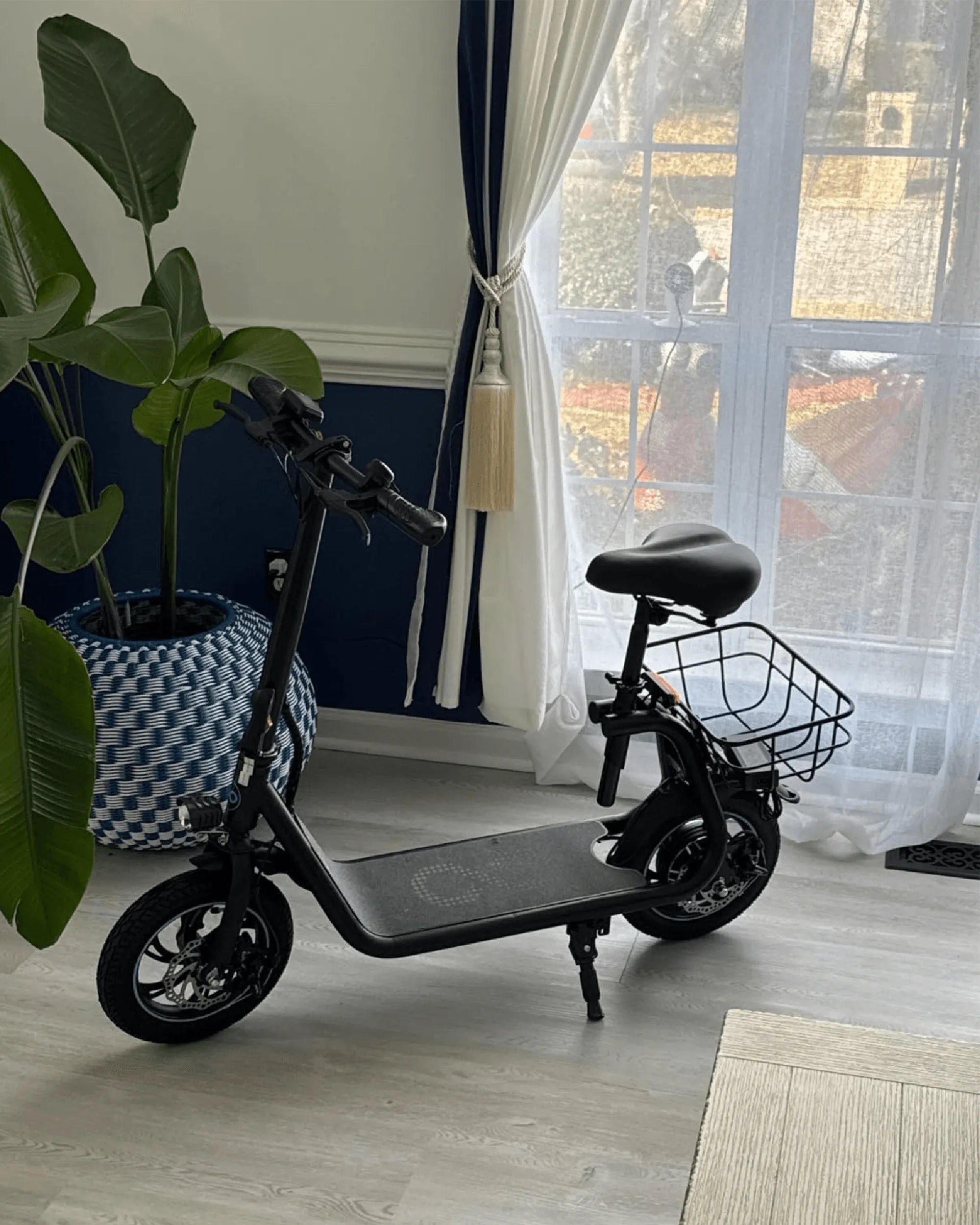
Range anxiety is the single greatest barrier to using an electric scooter as a legitimate car replacement. When you're planning a serious commute or an extended adventure, the question isn't just about top speed or flashy features—it's about whether you'll reach your destination with power to spare. This guide cuts through marketing claims to deliver the facts about highest range electric scooters and what makes them reliable for long-distance riding. You'll learn how range is actually measured, which factors drastically affect it, and how to select a scooter engineered for endurance from brands like Gyroor, trusted by over 100,000 riders for their UL-certified safety and durable builds.
Why Range is the King of Electric Scooter Specs
For casual riders, a 15-mile range might suffice. For commuters and explorers, it's a non-starter. The highest range electric scooters transform the device from a last-mile solution into a primary vehicle. They enable practical, emissions-free travel across cities and suburbs, effectively reducing reliance on cars for daily trips under 40 miles.
True long-range capability hinges on three pillars: battery capacity, motor efficiency, and overall build quality. A large battery is useless if the scooter's electronics are inefficient or if the frame can't withstand daily, lengthy rides. This is where engineering for reliability, not just peak numbers, becomes critical.
Riders seeking the highest range are often investing in a significant purchase. They need assurance that the scooter's components, especially the battery pack, are safe and built to last through hundreds of charge cycles. Brands that prioritize certified batteries and robust warranties directly address this core concern.
Ultimately, the king of specs unlocks true freedom. It allows for spontaneous detours, handles hilly terrain without panic, and ensures you won't be left pushing a heavy scooter home. The pursuit of maximum range is fundamentally the pursuit of a dependable, versatile transportation tool.
Understanding Electric Scooter Range: Manufacturer Claims vs. Real-World Miles
Manufacturer-stated range is almost always calculated under ideal laboratory conditions: a light rider (often 165 lbs), on a flat, smooth surface, at a steady low speed (around 10-12 mph), in mild temperatures. Your real-world experience will be different. The advertised number is a useful benchmark for comparison, but it is not a promise.
Actual mileage can be 30-50% lower than the claimed maximum. This variance is normal and depends on a confluence of real-world factors. Understanding these variables allows you to make an informed purchase and set realistic expectations for your daily commute or weekend ride.
The Critical Factors That Drain Your Battery
Rider Weight and Cargo: This is the most significant factor after the battery itself. More mass requires more energy to accelerate and maintain speed. A rider weighing 220 lbs will achieve notably fewer miles than one weighing 160 lbs on the same scooter.
Terrain and Inclines: Hills are a major range killer. Climbing even a moderate incline demands a huge surge of power from the motor(s). A route with frequent hills can halve your expected range compared to a perfectly flat path.
Riding Style and Speed: Aggressive acceleration and consistently riding at top speed consume battery power exponentially faster. Using the highest performance mode and frequent stop-and-go traffic are the least efficient ways to ride.
Temperature: Lithium-ion batteries operate most efficiently in temperatures between 50°F and 80°F (10°C - 27°C). Cold weather significantly reduces both performance and available capacity, while extreme heat can accelerate long-term battery degradation.
Tire Pressure and Terrain: Under-inflated tires create more rolling resistance. Similarly, riding on rough, grassy, or sandy surfaces requires more energy than smooth pavement.
The Role of Battery Technology: More Than Just Watt-Hours (Wh)
The battery is the fuel tank of your scooter. Its capacity is measured in Watt-hours (Wh), which is the product of Voltage (V) and Amp-hours (Ah). A higher Wh rating generally indicates a larger capacity and potential for longer range. For serious distance, look for batteries starting at 700Wh and extending beyond 1500Wh for extreme models.
Not all batteries are created equal. High-quality, name-brand lithium-ion cells (like those from LG, Samsung, or Panasonic) paired with a sophisticated Battery Management System (BMS) ensure stable power delivery, safety, and longevity. The BMS protects against overcharging, deep discharge, and short circuits.
Safety certification is non-negotiable. UL-certified battery packs, like those used in Gyroor scooters, have undergone rigorous independent testing for electrical, mechanical, and fire safety. This certification is a strong indicator of quality and reduces the risk of catastrophic failure, giving peace of mind on long, isolated rides.
Battery longevity is measured in charge cycles. A quality battery rated for 500+ full cycles (from 0% to 100%) will maintain a significant portion of its original capacity for years of regular use. Proper charging habits, like avoiding constant 100% charges for storage, can extend this lifespan further.
Top Contenders: Breaking Down High-Range Electric Scooter Categories
To find the right scooter, it's essential to segment the market by intended use and capability. The following table and categories help clarify which type of high-range scooter aligns with different rider profiles and budgets.
| Category | Typical Range (Real-World) | Key Features | Best For |
|---|---|---|---|
| Premium Commuter | 35 - 55 miles | Large battery (700-1000Wh), single or dual motor, good suspension, IPX5+ water resistance, commuter lights. | Daily urban/suburban commuting, running errands, replacing car trips. |
| Performance & Off-Road | 40 - 70+ miles | Very large battery (1000Wh+), powerful dual motors, off-road tires, advanced suspension, high top speed. | Adventure riding, rough terrain, riders prioritizing power and extreme distance. |
| Ultra-Portable Long-Range | 25 - 40 miles | Moderate battery (500-700Wh) in a lighter, compact folding frame. Balances range with portability. | Multi-modal commuters (bus/train), those with limited storage, who need good range but must carry the scooter. |
The Commuter Champions (40-60+ Mile Claimed Range)
This category is designed for the serious daily rider. These scooters prioritize a blend of sufficient range, reliability, and practical features for all-weather urban travel. The goal is consistent, dependable performance over years of use.
Key specifications include battery capacities from 700Wh to 1000Wh, often with a single efficient motor or a dual-motor setup for tackling bridges and hills. Suspension is crucial for comfort on longer rides, and hydraulic or disc brakes provide reliable stopping power.
Durability features are paramount. A high water resistance rating, such as IPX5 which protects against water jets from all angles, is essential for riding in rain or on wet roads. This feature, found on models like those from Gyroor, prevents water damage that could strand a rider and end a scooter's life prematurely.
Practical commuter additions include bright headlights and taillights, reflective elements, turn signals, and a clear display. Some models offer app connectivity for tracking ride data and adjusting settings. The focus is on creating a safe, predictable, and comfortable experience for the daily grind.
The Off-Road & Performance Machines (Extreme Range)
These are the electric scooters built for adventure and pushing limits. They boast the largest batteries on the market, often exceeding 1500Wh, paired with extremely powerful dual motors that can deliver thousands of watts of peak power.
Range in this category is highly variable. While they may claim 70+ miles, using the full power of the motors for off-road climbing or high-speed runs will deplete the battery much faster. The advertised range is often achievable only in eco-mode on smooth terrain.
They are characterized by rugged construction: reinforced decks, wide, knobby off-road tires, long-travel suspension (sometimes front and rear), and high ground clearance. The weight is substantial, often over 70 lbs, making them impractical for frequent carrying or public transport.
These scooters are less about daily practicality and more about capability and thrill. They are for riders who want to explore trails, conquer steep hills, and have the absolute maximum power and range available, accepting the trade-offs in weight, portability, and price.
Maximizing Your Scooter's Range: Pro Tips from Experienced Riders
Ownership of a high-range scooter doesn't end at purchase. How you ride and maintain it has a profound impact on the miles you actually get. Implementing these techniques can often add 10-20% more range to any trip.
Riding Techniques for Maximum Efficiency
Embrace Eco or Single-Motor Mode: For most of your cruising, use the most efficient power setting. This limits top speed and acceleration but greatly conserves battery. Switch to higher modes only when needed for hills or traffic.
Master the Art of Smooth Acceleration: The biggest drain happens during acceleration. Gently squeeze the throttle instead of punching it from a stop. Anticipate traffic lights and slow stops to use regenerative braking if available, which feeds some energy back into the battery.
Maintain a Steady, Moderate Pace: Aerodynamic drag increases exponentially with speed. Riding at 15 mph is vastly more efficient than riding at 25 mph. Find a comfortable, steady cruising speed that balances travel time with energy consumption.
Plan Your Route Strategically: Use apps or knowledge to choose flatter routes with fewer stops. Even a slight, consistent incline can have a major cumulative effect. Avoiding rough roads and soft surfaces also preserves energy.
Scooter Maintenance for Optimal Performance
Tire Pressure is Critical: Check pressure weekly. Under-inflated tires increase rolling resistance, forcing the motor to work harder. Inflate to the PSI rating on the tire sidewall for optimal efficiency and handling.
Ensure Brakes Are Not Dragging: Periodually lift the scooter and spin the wheels. If they don't spin freely, your brakes may be slightly engaged, creating constant resistance. Adjust disc brakes or loosen calipers as needed.
Keep it Clean and Lubricated: Dirt and grime on moving parts like the folding mechanism, stem, and bearings can create friction. Regular cleaning and applying appropriate lubricants ensures smooth operation.
Practice Smart Battery Care: Avoid storing the scooter in extreme cold or heat. For long-term storage, keep the battery charge between 40-60%. Use only the official charger provided. These habits preserve long-term battery health, which directly correlates to maintained range over the years.
The Gyroor Advantage: Engineered for Distance and Dependability
For riders who prioritize reliable, real-world range, engineering philosophy matters as much as specifications. Gyroor designs scooters with a focus on the foundational elements that guarantee consistent performance and safety over the long term, supporting a community of over 100,000 riders.
Built for the Long Haul: Battery and Durability Features
Every Gyroor scooter is powered by a UL-certified lithium-ion battery pack. This independent safety certification is a core differentiator, ensuring the battery's internal components and management system meet stringent standards for electrical and fire safety. This translates to stable power delivery and reduced risk of failure during your ride.
The IPX5 water-resistant rating is engineered into key components. This level of protection means the scooter can withstand water jets from any direction, making it confidently rideable in rain and on wet roads. For a commuter, this reliability is essential—your transportation shouldn't be fair-weather only.
Durability extends to the frame and components. High-tensile steel or aluminum alloy constructions are tested for rigidity and fatigue resistance. This robust build quality ensures the scooter can handle the vibrations and stresses of daily, lengthy commutes without developing worrisome creaks or play in the stem.
By focusing on these core aspects of safety (UL) and environmental protection (IPX5), Gyroor scooters are built to deliver their advertised performance consistently, ride after ride, in conditions that would cause less robust models to falter or become unsafe.
Peace of Mind for Your Journey: Warranty and Support
A high-range electric scooter is an investment. Protecting that investment requires comprehensive support. Gyroor backs its products with a 1-year warranty covering the frame, battery, motor, and electronic components, providing a significant safety net for defects in materials or workmanship.
The warranty underscores confidence in the product's longevity. For a battery rated for 500+ charge cycles, a one-year period allows the rider to fully test the scooter's endurance through all seasons, knowing they are covered.
Accessible customer support is crucial for troubleshooting and obtaining replacement parts. This support structure minimizes potential downtime, ensuring that a minor issue doesn't sideline your primary mode of transportation for weeks.
This combination of certified quality and strong post-purchase support allows riders to focus on the journey, not anxiety over potential breakdowns. It transforms the scooter from a gadget into a trustworthy vehicle.
Frequently Asked Questions (FAQ) About High-Range Scooters
Q: How long does it take to charge a high-range electric scooter?
A: Charge time is directly proportional to battery capacity. A large 1000Wh battery using a standard 2-3A charger typically takes 8-12 hours for a full charge from empty. Some performance models may include faster chargers that can reduce this to 4-6 hours. It's best practice to use the manufacturer's provided charger and avoid routinely draining the battery to 0% to preserve its health.
Q: Can I carry a spare battery to extend my range?
A> While technically possible for some models where the battery is easily removable, it's often impractical. Spare batteries are expensive (often $300-$600), heavy, and bulky. For most riders, it's more efficient to purchase a scooter with the largest battery that meets their needs and weight budget from the start, rather than managing multiple packs.
Q: Does a higher range always mean a heavier scooter?
A> Generally, yes. The battery is the single heaviest component. More capacity requires more battery cells, which adds weight. There is a direct trade-off between range and portability. An ultra-portable scooter claiming 40 miles will be pushing the limits of weight and size, while a 40-mile commuter scooter may be heavier but more stable and feature-rich.
Q: How does cold weather affect my scooter's range?
A> Cold weather (below 50°F/10°C) significantly reduces range, sometimes by 20-40%. Lithium-ion chemistry is less efficient in the cold, reducing both power output and total capacity. The battery gauge may also become inaccurate. Storing the scooter indoors before a ride and keeping the battery warm can help mitigate some of this loss.
Q: Are high-range scooters safe to use in the rain?
A> Safety depends entirely on the scooter's Ingress Protection (IP) rating. A rating of IPX5 or higher (like Gyroor models) indicates protection against water jets and is generally safe for riding in rain and on wet roads. Scooters with a lower rating (IPX4 or less) or no stated rating should be kept dry, as water ingress can cause electrical shorts, damage, and safety hazards.
Choosing Your Long-Distance Partner
Selecting from the array of highest range electric scooters requires looking beyond the peak mileage number on the spec sheet. It demands an evaluation of real-world factors: your weight, your terrain, your need for portability, and the quality of construction that will deliver those miles reliably for years. The ultimate guide to long-distance riding teaches us that true range is a product of both hardware and habit.
The most capable scooter is one that matches your specific use case—be it daily commuting, off-road adventure, or multi-modal travel—and is built with the safety certifications and durability features to handle that use case in all conditions. A UL-certified battery and a meaningful water resistance rating are not just features; they are the foundation of dependable, long-term ownership.
Your investment should be protected by a clear warranty and supported by accessible service. By prioritizing these elements alongside capacity and power, you choose a partner for the road, not just a device. You gain the confidence to expand your radius, replace car trips, and experience the genuine freedom that electric personal transportation promises.
Ready to explore models engineered for distance and daily reliability? Assess your commute, define your needs, and browse the full Gyroor collection at gyroorboard.com to find a scooter built to go the distance with you.
Are Pure Electric Scooters Any Good? A Comprehensive Review of Performance & Value
Do Electric Scooters Use a Lot of Electricity to Charge? The Truth Revealed