



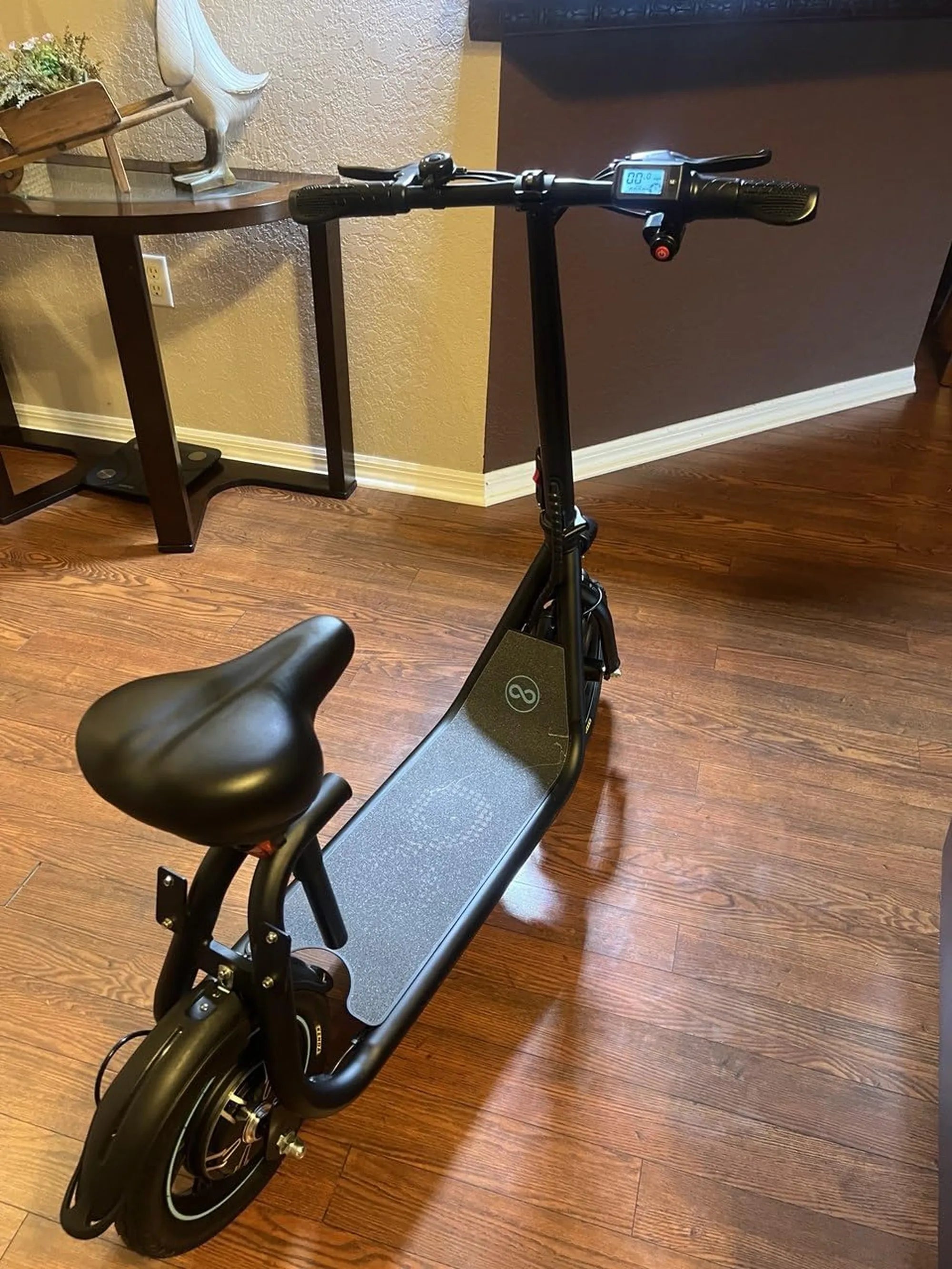
Introduction to Highway-Legal Scooters
A highway legal scooter is not your average electric kick scooter. It is a class of electric two-wheeler engineered and certified to operate safely on public roads with higher speed limits, including surface streets, arterials, and many state highways. The core definition hinges on a scooter's ability to meet or exceed minimum speed thresholds—typically 40 to 45 mph—and possess the full suite of safety equipment mandated for motor vehicles. This classification often places them in the moped or motorcycle category with state Departments of Motor Vehicles (DMV), requiring registration, insurance, and sometimes a specific driver's license. The growing demand stems from commuters seeking a genuinely car-alternative for distances of 10-30 miles, offering unparalleled efficiency, low operating costs, and a reduced carbon footprint without being confined to slower bike lanes or side streets.
The appeal of a true highway legal electric scooter is transformative. It effectively expands your viable commute radius, turning a 45-minute car drive into a swift, enjoyable ride that bypasses traffic. For suburban dwellers or those connecting between towns, it represents a practical step towards micro-mobility that can handle faster, multi-lane roads. However, the term 'highway legal' is often misused. This guide cuts through the marketing to focus on the factual engineering specs, federal regulations, and state-level legal frameworks that separate a capable commuter vehicle from a toy. Understanding these distinctions is the first and most critical step before investing in a high-speed electric scooter.
Performance is non-negotiable. A scooter must sustain a speed that allows it to merge safely and keep pace with the flow of traffic, which on many highways is 45-55 mph. This demands a powerful motor, a high-capacity battery, and a robust frame designed for stability at these velocities. Furthermore, legality is not just about speed. It encompasses lighting, signaling, braking, and identification systems that communicate your intentions to other drivers and authorities. Navigating this landscape requires a methodical approach, which we will detail in the following sections, providing you with the knowledge to make an informed and safe purchase.
Key Legal Requirements for Highway Riding
The legality of operating a scooter on highways is governed by a combination of federal motor vehicle safety standards (FMVSS) and, more critically, individual state vehicle codes. There is no single 'highway legal' certification; instead, a scooter must meet the specific definition of a motor-driven cycle, moped, or motorcycle as outlined by your state's DMV. Generally, if a vehicle is capable of exceeding 30 mph, it is almost always classified outside of the 'electric bicycle' category and subject to more stringent rules. For highway use, the capability to reach and sustain 40-45 mph is the typical baseline that triggers these requirements.
Common mandates across most states include a Vehicle Identification Number (VIN), which allows for registration and titling. The scooter must be registered with the DMV, and you will need to secure insurance coverage, similar to a motorcycle. Licensing varies: some states require a standard driver's license, while others mandate a motorcycle endorsement or a specific moped license. It is imperative to consult your local DMV's official website or office for the exact classification and requirements, as assuming legality can lead to fines, impoundment, or denial of insurance coverage in the event of an accident.
The equipment required is extensive and designed for mutual safety on high-speed roads. This is not an area for compromise or aftermarket additions that may not meet regulatory standards. The scooter must come from the manufacturer equipped with these features to be considered for registration. Key components include a headlight, taillight, brake light, turn signals (both front and rear), a horn or audible warning device, at least one rearview mirror (often two are required), and proper reflectors. The braking system must be robust, typically requiring a dual braking system (e.g., front and rear disc brakes) capable of bringing the scooter to a controlled stop from high speed.
Motor Power & Top Speed Specifications
The engine of a highway legal scooter is its most critical component. To safely accelerate to highway merging speeds and maintain pace with traffic, significant power is required. A motor with a continuous power output of at least 1000 watts is considered the entry point for highway-capable models. However, for confident performance, especially on inclines or with a rider near the weight limit, motors in the 1500W to 2000W range are far more common and recommended. Peak power ratings can be much higher, providing the necessary torque for acceleration.
Top speed is the defining metric. A scooter must have a verified, sustained top speed—not just a momentary peak—of at least 40-45 mph. Many true highway legal models offer top speeds of 50 mph, 55 mph, or even higher. This sustained speed capability is what allows you to travel in the right lane without becoming a traffic obstruction or hazard. It's important to distinguish between a scooter's 'theoretical' top speed under ideal conditions and its real-world speed with a rider of average weight, on a slight incline, and with a partially depleted battery. Reputable brands provide realistic performance data.
Voltage is a key supporting factor for this performance. While 48V systems are common on powerful commuter scooters, highway-legal models often utilize 52V or 60V battery systems. The higher voltage allows the motor to draw power more efficiently, sustaining high speeds for longer periods and reducing voltage sag, which is the drop in performance as the battery depletes. This engineering ensures consistent power delivery, which is a safety feature when you need predictable acceleration to navigate traffic.
Safety Features & Equipment Mandates
Safety equipment on a highway legal electric scooter is not optional; it is mandated by law for a reason. At 45 mph, the dynamics of riding change dramatically. Other drivers must be able to see you and anticipate your moves from a greater distance. A bright, focused headlight (often with a high-beam function) is essential for night riding. Amber front and red rear turn signals must be clearly visible and separate from the brake lights to avoid confusion. A loud, electric horn is necessary to alert distracted drivers.
The braking system is arguably the most important safety feature. Dual hydraulic or high-quality mechanical disc brakes are the standard. These provide the stopping power and modulation needed to handle emergency stops from high speed. Some advanced models incorporate electronic braking systems (EBS) or anti-lock braking (ABS) to prevent wheel lock-up and skidding, a significant safety upgrade. The tires must be durable, often air-filled (pneumatic) with good tread patterns, and should be rated for the speeds you intend to travel.
Additional critical features include a robust kickstand, functional speedometer and odometer, and often a license plate bracket. The frame itself must be constructed from high-grade aluminum or steel to handle the stresses of high-speed travel and potential road imperfections. Many states also have specific requirements for mirror placement and field of view. Purchasing a scooter that lacks any of these federally or state-required features means you are buying a vehicle that cannot be legally registered for highway use, regardless of its motor power.
Choosing the Right Highway-Legal Scooter: A Buyer’s Framework
Selecting a highway legal scooter requires balancing performance specs with real-world usability and durability. Beyond the basic legal checklist, you must consider how the scooter will function in your daily life. The primary decision factors fall into three categories: performance (range and hill climb), build quality, and practical features for commuting. A scooter that excels in a single metric but fails in others is a poor choice for a primary commuter vehicle. Your goal is to find a machine that is not only fast but also reliable, safe, and suited to your specific route and conditions.
Start by honestly assessing your commute. What is the total distance? Are there significant hills? Will you be riding in rain or on poorly maintained roads? The answers will directly inform the battery capacity you need, the motor torque required, and the importance of suspension and water resistance. A scooter with a 40-mile range at 20 mph might only deliver 15-20 miles at a constant 40 mph due to increased aerodynamic drag and power draw. Always derate the advertised range by 40-50% for highway-speed planning.
Build quality and brand reputation are paramount. A highway legal scooter is a significant investment and a piece of machinery that must perform reliably under stress. Look for brands that use name-brand components (e.g., LG or Samsung battery cells), provide clear warranty terms, and have a track record of customer support. The frame welding, finish, and overall fit-and-finish are good indicators of engineering rigor. Do not sacrifice proven durability for a slightly lower price or flashy, unproven features.
Performance Metrics: Range, Speed, and Hill Climb
Real-world range is the most misunderstood specification. Battery capacity, measured in Watt-hours (Wh), is the true indicator of energy storage. A larger Wh number means more potential range. For highway commuting, a minimum of 1000Wh is advisable, with 1500Wh+ being ideal for longer commutes or less frequent charging. Remember that riding at top speed consumes energy at nearly double the rate of cruising at 20 mph. Factor in a safety buffer of 20% battery charge to avoid being stranded.
Sustained speed and hill climb ability are linked to motor torque and system voltage. A high-torque motor, often found in dual-motor configurations, ensures the scooter can maintain 40+ mph on a gentle incline or into a headwind. A single motor might hit the top speed on flat ground but struggle to hold it on a hill, causing you to slow down and become a hazard. Dual-motor setups provide exceptional acceleration and hill-climbing power but will further reduce overall range per charge.
Performance consistency is key. A quality scooter will use a battery management system (BMS) and motor controller that deliver smooth, predictable power. There should be no sudden jerks or cut-outs. The acceleration should be linear and controllable. Test reviews and performance data from trusted sources are invaluable here, as they provide real-world measurements of acceleration times, hill climb grades, and range at different speeds.
Build Quality and Durability for Daily Commuting
The daily grind of a highway commute demands a scooter built to last. The frame should be constructed from aerospace-grade aluminum or reinforced steel, with clean, strong welds at all stress points. The folding mechanism, if present, must be absolutely secure with no play or wobble when locked in the riding position. Any flex in the frame at high speed is dangerous and leads to fatigue failures over time.
Suspension is critical for comfort and control. At highway speeds, hitting a pothole without proper suspension can lead to a loss of control. A combination of front and rear suspension—whether spring-based, hydraulic, or air—absorbs impacts and keeps the tires in contact with the road. Look for adjustable suspension that allows you to tune the ride for your weight and road conditions.
Water and dust resistance are practical necessities. An IP rating of IPX5 or higher indicates the scooter can withstand water jets from any direction, making it safe to ride in the rain or through puddles. This protects the electrical components, motor, and battery from short-circuiting. Combined with durable, sealed connectors, this rating provides peace of mind for all-weather commuting. Finally, consider practicalities like built-in locking points, a clear display visible in sunlight, and accessible charging ports.
Gyroor’s Approach to Reliable Highway-Capable Rides
As a leading electric mobility brand trusted by over 100,000 riders, Gyroor engineers its high-performance scooters with a core philosophy centered on verified safety, durable construction, and rider confidence. Understanding that a highway legal scooter is a primary vehicle for many, Gyroor's design process starts with the non-negotiable legal and safety requirements, then builds in the performance and reliability needed for demanding daily use. This results in vehicles that are not just powerful, but are systematically designed to be trustworthy at high speeds.
Every Gyroor scooter model is developed with a clear understanding of its intended use case. For highway-capable commuting, this means prioritizing a robust chassis geometry for stability, integrating premium braking components, and ensuring all lighting and signaling equipment exceeds basic regulatory standards for brightness and visibility. The brand’s commitment is reflected in its comprehensive 1-year warranty, offering peace of mind that the scooter is backed by the manufacturer for the long haul. This warranty support is a critical differentiator for a product category where reliability is paramount.
Gyroor’s lineup includes models that meet the rigorous demands of faster road commuting. By focusing on core engineering principles—such as using UL-certified battery packs, achieving high IPX water resistance ratings, and implementing rigorous quality control—Gyroor delivers scooters that riders can depend on. This approach ensures that the exhilaration of a high-speed electric commute is matched by a foundation of safety and durability, making the transition from car to scooter a confident and sustainable choice.
UL-Certified Batteries: Safety at High Speeds
The battery pack is the heart of any electric scooter, and its safety is exponentially more important in a high-power, highway legal model. Gyroor uses exclusively UL-certified battery packs in its scooters. This certification from Underwriters Laboratories means the battery cells, BMS, and overall pack design have undergone rigorous independent testing for electrical, mechanical, and fire safety. For a scooter discharging high currents continuously to maintain 40+ mph, this mitigates the risks of thermal runaway, overheating, or failure.
These UL-certified packs are rated for 500+ charge cycles while maintaining significant capacity, ensuring long-term value and reliability. The battery management system precisely monitors cell voltage, temperature, and current, providing protections against over-charge, over-discharge, and short circuits. This level of integrated safety is not a marketing add-on; it is a fundamental engineering requirement for a vehicle that will be used at the limits of its performance envelope, where component stress is highest.
Built for the Road: IPX5 Water Resistance and Warranty
Commuting is a daily activity, and weather is unpredictable. Gyroor designs its highway-capable scooters with an IPX5 water resistance rating. This engineering specification means the scooter's critical components are protected against low-pressure water jets from any direction. In practical terms, you can confidently ride in rain, through wet streets, or encounter roadside sprinklers without fear of immediate damage or electrical failure. This durability is essential for a vehicle that serves as legitimate car replacement.
This robust construction is backed by Gyroor’s reliable 1-year warranty, covering the frame, motor, battery, and electronic controller. For a commuter investing in a highway legal electric scooter, this warranty is a cornerstone of the purchase decision. It signifies the brand’s confidence in its product's longevity and provides a clear recourse should any manufacturing defect arise. Combined with a customer base of over 100,000 riders across North America and Europe and a 4.5/5 average rating, this warranty underscores a commitment to quality and customer satisfaction that is critical in the high-performance micro-mobility space.
Comparison of Highway-Legal Scooter Considerations
To simplify the decision-making process, the following table compares key considerations for different commuter profiles looking at highway legal scooters. This data-driven approach highlights how priorities shift based on use case.
| Commuter Profile | Primary Need | Key Specs to Prioritize | Recommended Minimums |
|---|---|---|---|
|
Urban/Suburban Connector (10-15 mile commute, mixed roads) |
Balanced performance & agility | Top Speed, Dual Brakes, Moderate Range | 40+ mph, 1000W motor, 15Ah battery, IPX5 |
|
Long-Distance Highway Commuter (20-30 mile commute, mostly highway) |
Sustained speed & maximum range | Battery Capacity (Wh), Motor Power, Comfort | 45+ mph, 1500W+ motor, 25Ah+ battery, full suspension |
|
Hilly Terrain Rider (Significant inclines on route) |
Torque & hill-climb power | Motor Torque (Nm), Dual Motors, Voltage | Dual motor setup, 52V/60V system, high torque rating |
|
All-Weather Commuter (Rides in rain or variable conditions) |
Durability & weatherproofing | Water Resistance Rating, Tire Type, Build Quality | IPX5 or higher, pneumatic tires, sealed electronics |
The Highway Commuter’s Checklist: Before You Buy
Use this actionable checklist to ensure you make a safe, legal, and satisfying purchase. Do not skip any step.
- Verify Local Laws: Contact your state DMV to confirm the classification (moped/motorcycle) for a scooter with your desired top speed. Understand the exact requirements for registration, insurance, and licensing.
- Confirm Manufacturer Specifications: Ensure the scooter comes from the factory with all legally required equipment: VIN, headlight, taillight, brake light, turn signals, horn, mirror(s), and a capable dual-braking system.
- Validate Real-World Performance: Seek out independent reviews that test the scooter’s sustained top speed with a rider and its real-world range at highway speeds (not maximum range).
- Inspect Safety Credentials: Prioritize brands using UL-certified battery packs and providing clear water resistance ratings (IPX5 or better) for all-weather capability.
- Assess Build Quality & Warranty: Examine frame construction, suspension, and component quality. A comprehensive warranty (1-year minimum) is essential for a primary commuter vehicle.
- Gear Up: Budget for and always use a full-face or modular motorcycle helmet (DOT/ECE certified), riding gloves, armored jacket, and other protective gear. High-speed falls are severe.
- Plan for Ownership: Factor in costs for insurance, registration, maintenance (tires, brakes), and secure storage or locking solutions at home and your destination.
FAQ: Highway Legal Scooters
Q: Do I need a motorcycle license for a highway-legal scooter?
A: It depends entirely on your state's vehicle code. Most states classify anything capable of over 30 mph as a moped or motorcycle, which typically requires a standard driver's license at minimum, and often a motorcycle endorsement (M endorsement) on your license. You must check with your local DMV for the precise law.
Q: How does highway speed affect the scooter's range?
A: Dramatically. Aerodynamic drag increases with the square of speed. Riding at 40 mph consumes battery power at nearly double the rate of riding at 25 mph. Always assume your real-world highway range will be 40-50% less than the manufacturer's maximum range estimate, which is usually calculated at a steady, lower speed.
Q: Can I use bike lanes on a highway-legal scooter?
A> Generally, no. Once a scooter is registered as a motor vehicle (moped/motorcycle), it is typically prohibited from using bicycle lanes, paths, or sidewalks. You are required to ride in the road, obeying all traffic laws applicable to motor vehicles.
Q: Are highway-legal scooters safe?
A> They can be as safe as the rider's preparation and the scooter's engineering allow. Safety requires: 1) A scooter with all mandated lighting, signals, and superior brakes. 2) Proper rider training and defensive driving techniques. 3) Full protective gear (helmet, gloves, armor). 4) Adherence to traffic laws. The vehicle's inherent stability at high speed is also a factor, which is why a well-built, rigid frame is critical.
Q: What is the most important feature to look for?
A> Beyond the legal equipment, the most critical feature is a combination of braking performance and battery safety certification. High-quality dual disc brakes (ideally hydraulic) are essential for stopping power. A UL-certified battery pack is non-negotiable for mitigating fire risk during the high-power demands of highway riding.
Embracing a Faster, Greener Commute
The highway legal scooter represents a significant leap in personal electric mobility, offering a genuine alternative to car commuting for millions. It unlocks the potential for faster, more efficient, and enjoyable travel over distances that were previously the exclusive domain of automobiles. By understanding and respecting the legal frameworks, prioritizing verified safety engineering, and choosing a scooter built for durability, you can confidently integrate this technology into your daily life.
This transition is about more than convenience; it's a step towards reducing traffic congestion, lowering emissions, and reclaiming time and money spent on fuel and maintenance. The key is informed decision-making. Focus on specifications that matter for safety and reliability—UL-certified batteries, IPX5+ water resistance, robust frames, and comprehensive warranties—rather than headline-grabbing top speeds alone. Your commute is a daily ritual; your vehicle should be a dependable partner engineered for that task.
Ready to explore models designed with these rigorous principles in mind? Discover a range of high-performance, reliably engineered electric scooters built for the demands of modern commuting. Browse the full Gyroor collection at gyroorboard.com to find a ride that matches your need for speed, safety, and sustainability.
Cheap Trike: The Ultimate Guide to Affordable, Stable Transport
Fastest Commuter E-Bike: Engineering Speed for the Urban Rush