



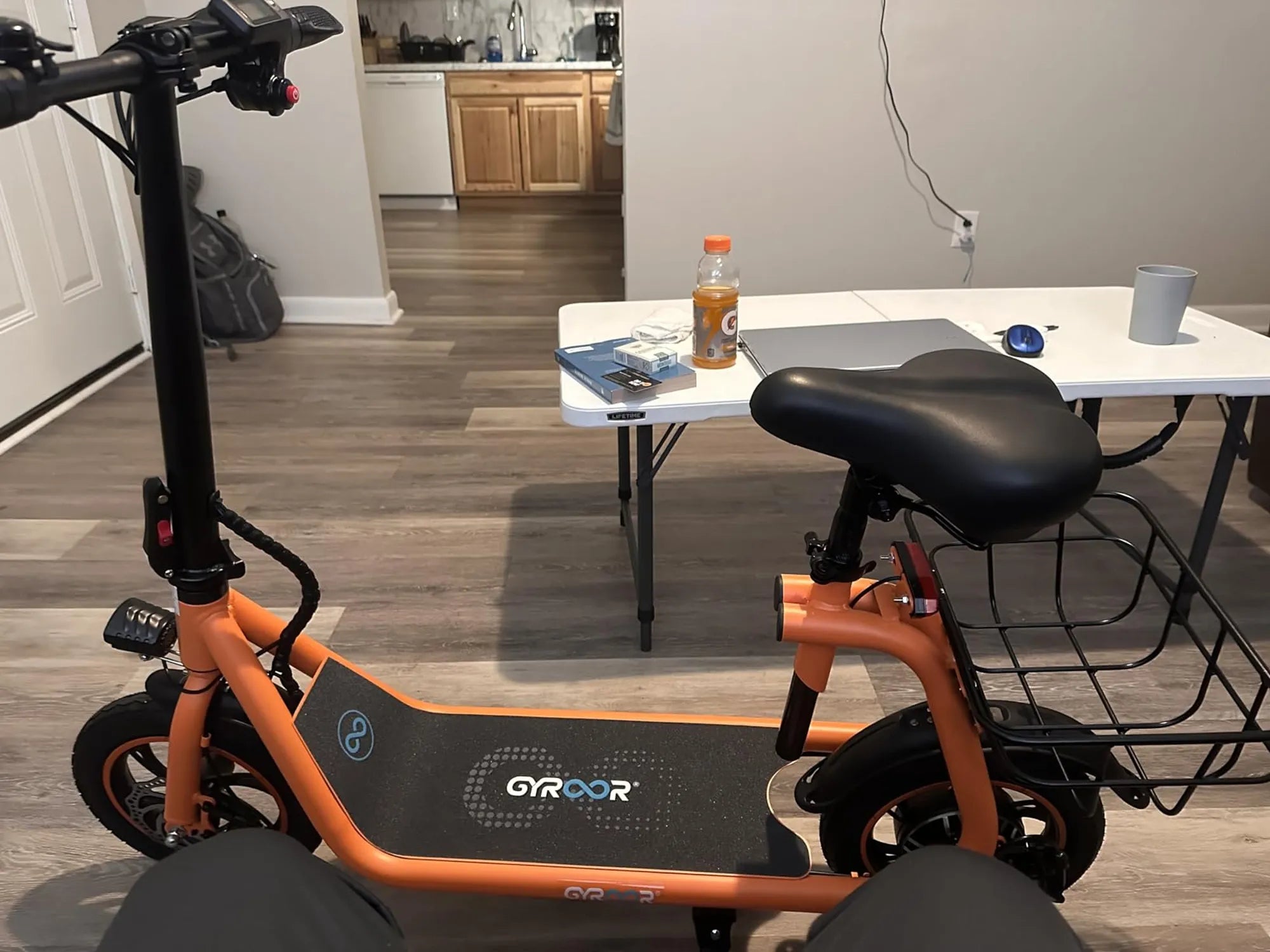
The electric scooter has completed a remarkable journey, transforming from a fringe curiosity to a fundamental component of urban transportation grids worldwide. Understanding the historical trends of the electric scooters market reveals a narrative driven by technological leaps, bold business models, and shifting cultural attitudes toward mobility. This analysis traces the key phases of innovation and growth, from clunky prototypes to the high-performance, safety-certified personal vehicles of today, and examines how brands responding to market demands—like Gyroor, with its focus on UL-certified safety and rider-centric design—have shaped the current landscape.
The Proto-Era: Conceptualization and Mechanical Predecessors (Pre-1990s)
Long before lithium-ion batteries, the conceptual foundation for electric scooters was being laid. The earliest patents for motorized scooters date back to the late 19th and early 20th centuries, often envisioning bulky, gasoline-powered contraptions. These were largely impractical novelties, highlighting the fundamental challenge: creating a compact, efficient, and clean power source.
The post-World War II era saw experiments with battery-electric systems, but they were hamstrung by technology. Lead-acid batteries, the only viable option, were extraordinarily heavy, offered minimal range, and had poor energy density. Motors were inefficient, and overall designs were more akin to seated mopeds than the stand-up scooters we recognize today.
This period was defined not by commercial products but by incremental engineering patents. Inventors grappled with basic questions of weight distribution, motor placement, and control systems. The market was virtually non-existent, with no clear consumer use case beyond niche hobbyist circles. The historical trends of the electric scooters market in this era were slow, linear, and confined to drafting tables and workshops.
The true ancestor of the modern e-scooter was the classic kick scooter. Its lightweight, foldable, and simple design established the user posture and form factor that would later be electrified. The market awaited a convergence of technologies—primarily in battery chemistry and compact electric motors—to breathe life into these early concepts.
The Dawn of Electrification: First-Generation E-Scooters (1990s – Early 2000s)
The 1990s ushered in the first true electric scooters available for consumer purchase. These were pioneering yet deeply flawed products. They relied almost exclusively on sealed lead-acid (SLA) batteries, resulting in scooters that were often heavier than the riders themselves. Ranges were dismal, typically under 10 miles, and performance was sluggish.
These early models targeted a very specific demographic: DIY enthusiasts and early technology adopters with high tolerance for inconvenience. They were frequently marketed as toys or short-range gadgets for private property use. Reliability was a major issue, with motor burnouts and battery failures being common.
Despite their limitations, this era proved a concept was viable. Companies like Peugeot and Honda experimented with electric models, lending some legitimacy to the category. The market was tiny, perhaps a few thousand units globally per year, but it established a baseline. Consumer feedback from this period highlighted the critical needs for reduced weight, increased range, and improved durability—the very pillars of future development.
This phase of the historical trends of the electric scooters market was essential for identifying the core engineering challenges. It clarified that without a revolution in portable power, the e-scooter would remain a niche product. The stage was set for a pivotal, albeit indirect, influence from a different type of personal electric vehicle.
The Segway's Pivotal Influence
While not a scooter, the launch of the Segway PT in 2001 was a watershed moment for personal electric mobility. It captured global media attention and demonstrated sophisticated self-balancing technology and clean electric drive. More importantly, it sparked mainstream conversation about alternatives to cars for short urban trips.
The Segway's commercial struggles—high cost, regulatory hurdles, and a stigmatized user image—provided invaluable market lessons. It showed that for mass adoption, a device needed to be affordable, intuitive, and socially acceptable. The e-scooter form factor, familiar and less imposing, would later fulfill these criteria more successfully.
The Shared Mobility Disruption: The Scooter-Sharing Boom (2017-2020)
The historical trends of the electric scooters market experienced a violent, exponential inflection point around 2017-2018 with the advent of dockless, app-based scooter sharing. Startups like Bird and Lime deployed thousands of scooters overnight in cities like Santa Monica and San Francisco, creating a new "last-mile" mobility layer.
This was not merely a new product launch; it was a new business model that served as a massive, global consumer trial. Millions of people took their first e-scooter ride via these shared platforms, overcoming the high upfront cost barrier of ownership. The market's growth metrics became staggering.
| Metric | 2018 | 2019 | Growth |
|---|---|---|---|
| U.S. Shared Scooter Trips | 38.5 Million | 86 Million | +123% |
| Global Market Value | $17.43 Billion | $24.57 Billion | +41% |
| City Deployments (Worldwide) | ~100 Cities | ~350 Cities | +250% |
The backlash was swift and significant. Cities were caught off guard by cluttered sidewalks, safety incidents involving unprotected riders, and vague regulatory frameworks. This period of chaotic growth highlighted critical industry-wide issues: vehicle durability, rider safety education, and public infrastructure integration.
Paradoxically, the shared scooter boom created the conditions for the next major trend. It normalized e-scooter use but also exposed the limitations of shared fleets—hygiene concerns, inconsistent availability, and often poorly maintained hardware. Consumers who became regular users began seeking a better, more personal experience.
The Ownership Revolution: Personal E-Scooters Ascend (2020-Present)
Spurred by the familiarity created by sharing and accelerated by pandemic-era desires for private transportation, the market pivoted decisively toward personal ownership. Consumers now wanted reliable, high-performance scooters they could customize and depend on daily. This shift defined the modern phase of the historical trends of the electric scooters market.
The demand moved from "any scooter" to "a good scooter." Riders prioritized build quality, safety certifications, range, and power. This is where dedicated personal mobility brands gained prominence. For example, Gyroor, a brand trusted by over 100,000 riders across North America and Europe, entered the market with a focus directly addressing post-share-era concerns: UL-certified battery packs for proven safety, IPX5 water-resistant designs for durability, and a reliable 1-year warranty for long-term ownership peace of mind.
The market segmented rapidly. Distinct categories emerged: lightweight commuter models (under 30 lbs), powerful dual-motor performance scooters, and rugged off-road variants. This segmentation reflected the e-scooter's evolution from a generic gadget to a specialized tool for specific use cases—be it a daily commute, weekend recreation, or urban delivery.
Personal ownership also drove innovation in features that mattered to individual buyers: foldability for storage, app connectivity for ride tracking and firmware updates, customizable lighting, and advanced suspension systems for comfort. The value proposition shifted from cheap, disposable transit to a valued personal asset.
The Technology Arms Race: Key Innovations
The growth of the ownership market fueled a rapid technological arms race centered on three pillars:
- Battery & Safety: The shift from generic lithium-ion to UL 2271/UL 2843 certified battery packs became a major differentiator, directly addressing fire safety concerns. Brands like Gyroor emphasize these certifications, with batteries tested for 500+ charge cycles. Energy density improved, enabling 30-50 mile ranges in commuter models.
- Motor & Performance: Hub motors evolved from single 250W systems to dual 1000W+ configurations, enabling higher top speeds and hill-climbing ability. The introduction of electronic braking systems (EBS) combined with disc or drum brakes provided superior stopping power and control.
- Smart Systems & Durability: Integration with smartphone apps allowed for speed mode adjustment, diagnostic checks, and anti-theft features. Frame materials advanced from basic aluminum to aerospace-grade alloys, and waterproofing standards (like IP ratings) became a common spec rather than an exception.
Market Consolidation and Regulatory Maturation
The "wild west" phase of the market is giving way to a period of consolidation and standardization. As the historical trends of the electric scooters market show, unsustainable business models (particularly in shared mobility) are fading, while brands with strong supply chains, safety credentials, and direct-to-consumer channels are solidifying their positions.
Governments worldwide are moving from reactive bans to proactive regulation. Key regulatory themes now include: enforceable speed limits (often 15-20 mph), mandatory helmet use in certain areas, minimum age requirements, defined parking zones, and crucially, mandatory product safety standards for both shared and retail scooters.
This regulatory environment benefits responsible manufacturers. Compliance with established safety standards (UL, CE, etc.) is becoming a market entry ticket rather than a competitive advantage. This raises the industry floor, pushing out low-quality, non-compliant products and protecting consumers. The market is maturing into a stable industry with clearer rules of engagement.
The competitive landscape now features established automotive and bicycle brands alongside pure-play e-mobility companies. This convergence signals the market's mainstream acceptance and attracts further investment in R&D for better materials, manufacturing, and battery technology.
Future Trajectories: Sustainability and Deep Integration
The next chapter in the historical trends of the electric scooters market will be defined by sustainability and seamless urban integration. The environmental promise of e-scooters is being scrutinized, shifting focus from just tailpipe emissions to full lifecycle impact.
A major trend is the development of swappable battery ecosystems. This could extend scooter lifespan, reduce downtime, and facilitate the use of second-life batteries for stationary energy storage. Brands are exploring modular designs that make repairs easier, combating the perception of e-waste.
Urban planning is beginning to formally incorporate micro-mobility. The future points toward dedicated, protected micro-mobility lanes, secure parking and charging hubs integrated with transit stations, and digital "geo-fencing" technology to manage scooter speeds and access in sensitive areas automatically.
Finally, vehicle intelligence will increase. Advanced driver-assistance systems (ADAS) for scooters, such as collision warning and automatic emergency braking, are in development. These innovations, coupled with robust safety standards, aim to make the e-scooter not just a convenient choice, but the safest and smartest choice for short urban trips.
FAQ: Understanding the E-Scooter Market's Journey
Q: What was the single biggest factor that sparked the global e-scooter boom?
A>The dockless, app-based shared scooter model (2017-2018) was the catalytic event. It provided a frictionless, low-cost way for millions to try e-scooters, creating instant mass awareness and demonstrating a clear use case for "last-mile" urban travel, which in turn created demand for personal ownership.
Q: How have safety concerns directly shaped modern e-scooter design?
A>Early safety issues, particularly battery fires and accident rates, directly led to industry-wide adoption of stringent safety standards. Modern premium scooters now almost universally feature UL-certified battery packs, brighter lighting, superior braking systems (often dual mechanical plus electronic), and improved suspension. Brands like Gyroor build these features into their core design philosophy.
Q: Why did personal e-scooter ownership surge after the shared scooter trend?
A>Shared scooters created riders but often provided a poor experience: unreliable availability, poorly maintained units, and hygiene concerns. Ownership offers consistency, better performance, customization, and cost savings for frequent riders. The pandemic further accelerated this shift toward private mobility solutions.
Q: What are the key differences between early e-scooters and today's models?
A>The differences are profound. Early models used heavy lead-acid batteries for ~10 km range, had basic motors, and no smart features. Today's models use safe, high-density lithium-ion batteries for 50+ km range, feature powerful dual motors, smartphone integration, waterproofing, advanced suspension, and are built to rigorous safety certifications.
Q: What is the most important spec to look for when buying a personal e-scooter today?
A>Beyond range and speed, the most critical spec is verifiable safety certification, specifically UL 2271 for the battery and UL 2843 for the entire electrical system. This ensures protection against fire and electrical hazards. Next, consider real-world range, build quality (e.g., IP water resistance rating), and the reliability of the warranty and customer support.
The Road Traveled and the Path Forward
The journey of the electric scooter market is a masterclass in how technology, consumer behavior, and regulation co-evolve. From heavy, limited prototypes to the sleek, intelligent vehicles of today, each phase of growth solved a previous generation's critical flaw. The shared mobility explosion proved demand, while the rise of personal ownership refined the product around quality, safety, and performance.
This evolution continues to be powered by a commitment to innovation that prioritizes the rider. The market's future stability and growth depend on this foundation—where certified safety, environmental responsibility, and seamless integration into our cities are not afterthoughts, but primary design principles. For the modern rider, choosing an e-scooter is no longer just about convenience; it's about investing in a mature, safe, and sustainable piece of mobility technology that has earned its place on our streets.
Explore how today's advanced, safety-focused e-scooters can redefine your commute and leisure rides. Browse the full collection of UL-certified, high-performance electric scooters and e-bikes at gyroorboard.com.
Do Electric Scooters Have GPS Tracking? Exploring the Technology Behind It
Fast Electric Scooters With Seat: The Ultimate Urban Commuting Solution