



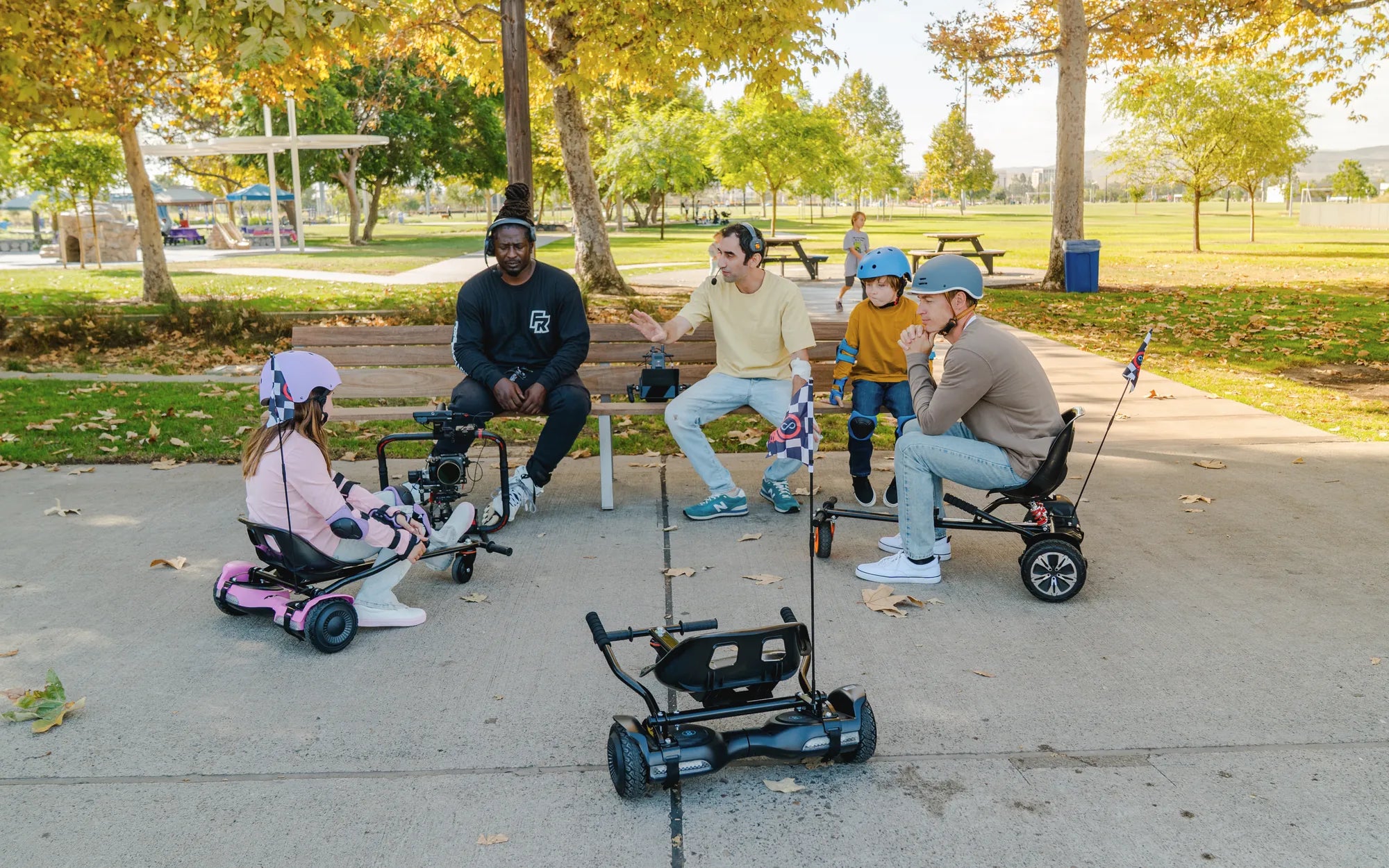
Introduction: Unlocking New Utility with a Hoverboard Cart Attachment
A hoverboard cart attachment is a transformative accessory that redefines the purpose of your personal transporter. It shifts the paradigm from pure recreation to practical utility, enabling you to haul groceries, transport gear, and complete light chores with effortless electric mobility. This guide provides the definitive resource for understanding, selecting, and safely using a cart to enhance your hoverboard experience.
You will learn how a simple attachment can reduce car dependency for short trips, assist with tasks around the home or garden, and even provide stability for new riders. We will cover critical buying factors, operational safety, and innovative use cases. Leading brands like Gyroor, trusted by over 100,000 riders for their UL-certified batteries and robust designs, exemplify the quality needed for reliable accessory integration.
What is a Hoverboard Cart Attachment? Design and Functionality Explained
A hoverboard cart attachment is a towable trailer that connects securely to the rear of a self-balancing scooter. It typically consists of a metal frame, a hitch mechanism, a handle for control, and a cargo platform or basket. The design allows the hoverboard to pull the load behind it, fundamentally changing its function from a personal rider to a light-duty utility vehicle.
The connection is paramount. Most attachments use a universal clamp or bracket that fastens around the hoverboard's main chassis, specifically on the non-articulating section between the two footpads. This ensures the steering and balancing mechanics of the hoverboard remain unaffected. The hitch must be robust to handle torsional forces during turns and sudden stops.
Physically, the system operates on basic towing principles. The hoverboard's motors must provide enough torque to overcome the cart's rolling resistance and the weight of its load. This requires a hoverboard with sufficient power, typically a 350W or higher dual-motor system found in adult-rated models. The rider's weight, combined with the cart's load, must never exceed the hoverboard's maximum weight capacity.
Key Benefits: Why Every Hoverboard Owner Should Consider One
The primary benefit is utility transformation. A hoverboard cart attachment converts your device into a legitimate tool for running errands. Imagine transporting a full grocery load, a case of water, or a delivery package without needing a car or carrying heavy bags. This makes short urban trips remarkably efficient and eco-friendly.
It promotes sustainable micro-mobility. By replacing car trips for small errands within a 2-3 mile radius, you reduce carbon emissions and traffic congestion. This aligns perfectly with the electric, zero-direct-emission nature of the hoverboard itself, amplifying its environmental benefit beyond just personal transport.
For practical tasks, it becomes an invaluable aid. Gardening supplies, bags of soil, tools, or even small furniture items can be moved with ease. It also serves as a training aid; the fixed handle provides a stable grip for beginners learning to balance, offering more control than a loose leash.
Finally, it extends the hoverboard's value proposition. Instead of a seasonal toy, it becomes a year-round practical asset. This enhances the return on investment and justifies owning a higher-quality, durable model from a brand like Gyroor, known for IPX5 water resistance and reliable performance in various conditions.
Critical Buying Guide: How to Choose the Right Cart for Your Hoverboard
Selecting the correct cart attachment is crucial for safety, compatibility, and satisfaction. This decision should be based on a careful evaluation of your hoverboard's specifications, your intended use, and the build quality of the accessory itself. Rushing this choice can lead to poor performance or even damage.
Consider your primary use case first. Is it for grocery shopping, light hauling, or recreational gear? Your answer will determine the ideal cart design—be it a basket, platform, or hybrid. Then, match that to a product with the appropriate weight capacity and construction.
Compatibility and Connection Type
Compatibility is the first and most critical filter. "Universal" does not always mean a perfect fit for every model. You must verify the clamp mechanism's size and adjustability range against your hoverboard's specific frame dimensions.
Measure the clearance between the rear wheel and the main body of your hoverboard, as this is where most clamps attach. The attachment should secure firmly without pressing against wires, buttons, or the wheel itself. A model-specific attachment, if available for your hoverboard brand, often provides the most secure and seamless integration.
Build Quality and Weight Capacity
Build quality directly correlates with safety and longevity. Look for frames constructed from powder-coated steel or reinforced aluminum. Inspect product images for clean, solid welds at joints. Flimsy, thin-gauge metal will bend or fail under load.
The stated weight capacity is a non-negotiable specification. Most quality carts support between 60 and 100 pounds. However, this is the cart's limit. You must also ensure that the combined weight of the rider, the cart, and its load does not exceed the hoverboard's maximum payload, which for adult models typically ranges from 220 to 265 pounds.
Cart Design: Baskets, Platforms, and Folding Features
Cart design dictates functionality. Enclosed wire baskets are ideal for groceries and small items, preventing them from falling out. Open platforms, on the other hand, are perfect for bulky, irregularly shaped objects like storage bins, small furniture, or gardening pots.
For urban dwellers or those with limited storage space, a foldable design is a significant advantage. These carts can collapse down to a slim profile for easy storage in a closet or car trunk. Some advanced models feature convertible designs, switching between basket and platform modes.
Safety Features to Look For
Never compromise on safety features. A secure, locking hitch mechanism is essential to prevent accidental detachment. The cart should have a wide wheelbase (the distance between its wheels) to enhance stability and prevent tipping during turns.
Additional safety elements include reflective strips or a safety flag for visibility in low-light conditions, and a low center of gravity design. Some carts feature a hand-operated brake on the handle, providing an extra layer of control when descending gentle slopes. These features complement the inherent safety of using a hoverboard from a reputable brand with UL-certified battery packs.
Performance and Safety: Operating Your Hoverboard with a Cart
Operating a hoverboard with an attached cart requires adapted techniques. The added length and weight change the dynamics of acceleration, braking, and turning. Always perform a maiden voyage in a safe, open, and flat area like an empty parking lot.
Starting and stopping should be more gradual. Apply pressure to accelerate smoothly to avoid jerking the cart, which can cause instability. When stopping, anticipate a longer stopping distance and begin decelerating earlier. Avoid sudden backward movements, as this can cause the cart to jackknife.
Navigating turns is the most significant adjustment. You must initiate turns earlier and wider. Sharp, sudden turns can cause the cart to tip or put excessive strain on the hitch. Practice making large, sweeping arcs. Be hyper-aware of your extended "vehicle length" when navigating sidewalks, doorways, or crowded areas.
Load management is critical. Always distribute weight evenly across the cart platform or basket, and place heavier items at the bottom and centered. Use bungee cords or nets to secure loose items. Avoid overloading, as it strains the hoverboard's motors, reduces battery life, and compromises braking efficiency. Never exceed the recommended speed limit for cart operation, which is typically 5-7 mph, even if your hoverboard can go faster.
Top Use Cases and Creative Applications
Beyond groceries, the applications are vast. For beachgoers, it's a perfect gear hauler for coolers, chairs, and umbrellas across the sand (ensure your hoverboard is rated for such terrain). For sports enthusiasts, it can transport equipment like golf clubs, fishing gear, or camping supplies to a nearby site.
In residential settings, it excels at yard work. Haul bags of mulch, gardening tools, or harvested vegetables. It can serve as a mobile concession stand for kids' lemonade stands or at community events. Photographers and videographers can use a stabilized platform attachment to create smooth, moving shots.
For the practical commuter, it's a last-mile logistics solution, capable of carrying a laptop bag, lunch, and a change of clothes with ease. In rural or farm settings, it can assist with light chores like carrying feed for animals or tools across a property. The key is matching the task to the cart's capacity and the hoverboard's capability.
Hoverboard Cart vs. Alternative Micro-Mobility Hauling Solutions
How does a hoverboard cart compare to other small-scale hauling methods? The table below provides a data-driven comparison based on key utility factors.
| Feature / Solution | Hoverboard + Cart | Electric Scooter with Basket | Personal Pull Cart | Electric Cargo Bike |
|---|---|---|---|---|
| Max Cargo Capacity | 60-100 lbs | 20-30 lbs (in basket) | 100+ lbs | 200+ lbs |
| Portability & Storage | High (both fold/separate) | High (folds) | Medium (collapsible) | Very Low |
| Cost (Accessory only) | $80 - $200 | $30 - $80 (basket) | $50 - $150 | $2,000+ (vehicle) |
| Multi-Purpose Use | High (ride with/without cart) | Medium (basket always on) | Low (hauling only) | Low (cargo focused) |
| Ease of Use with Load | Moderate (requires skill) | Easy (scooter stable) | Manual effort required | Easy (power assisted) |
| Best For | Existing hoverboard owners, light versatile hauling | Commuters with light daily loads | One-off heavy hauling without power | Serified, high-volume cargo needs |
As shown, the hoverboard cart attachment offers a unique balance of portability, multi-purpose use, and capable hauling for its cost, especially for those who already own a capable hoverboard.
Frequently Asked Questions (FAQ)
Q1: Is a cart attachment safe for all hoverboards?
A1: No. Cart attachments are only safe for robust, adult-rated hoverboards with sufficient motor torque (typically 350W dual motors or more) and a sturdy frame. They are not recommended for smaller, toy-grade boards with plastic bodies or low power, such as those designed for young children. A brand like Gyroor, which builds to higher durability standards, is a suitable candidate.
Q2: How much weight can a typical hoverboard cart hold?
A2: A well-built cart attachment typically has a maximum load capacity between 60 and 80 pounds. Always check the manufacturer's specification. Crucially, this weight is in addition to the rider's weight. The sum of both must be under your hoverboard's maximum user weight limit, which is often 220-265 lbs.
Q3: Does attaching a cart void my hoverboard's warranty?
A3: Using a properly fitted, compatible cart from a reputable source should not automatically void the warranty. Gyroor's 1-year comprehensive warranty, for instance, covers defects in materials and workmanship. However, if damage is directly and demonstrably caused by the misuse of an incompatible or overloaded cart, that specific damage may not be covered. Always use accessories as intended.
Q4: Can I still maneuver and turn easily with a cart attached?
A4: You can maneuver, but not as easily as without a cart. Turns require a wider arc and more gradual initiation. Sharp, quick turns are unsafe and can tip the cart. It requires practice and spatial awareness. The handling is comparable to driving a vehicle with a small trailer.
Q5: What maintenance does the cart attachment itself require?
A5: Regular maintenance ensures longevity. Periodically check and tighten all bolts and fasteners, especially on the hitch. Lubricate any moving parts in the wheel axles if they are not sealed bearings. Inspect the frame for cracks or rust, and clean the cart with a damp cloth. For the wheels, ensure they are clean and rotate freely.
Conclusion: Elevate Your Ride from Fun to Functional
A hoverboard cart attachment is more than an accessory; it's a capability multiplier. It unlocks a new dimension of utility from your existing device, promoting a more sustainable and efficient lifestyle for short-range tasks. The investment in a quality cart pays dividends in convenience and reduced reliance on larger vehicles.
Success hinges on choosing a cart that is compatible, well-built, and used within its safety parameters. By integrating a robust cart with a reliable hoverboard from a trusted brand like Gyroor—known for safety certifications and durable design—you create a versatile personal transport system. Transform your next ride from a simple glide into a purposeful journey.
Ready to enhance your hoverboard's potential? Browse the full Gyroor collection of electric scooters, e-bikes, and compatible accessories designed for performance and safety at gyroorboard.com.
Hoverboard Blinking Red Light and Beeping: The Complete Safety Guide
Balancing Foot Scooter: The Ultimate Guide to Fun and Fitness