

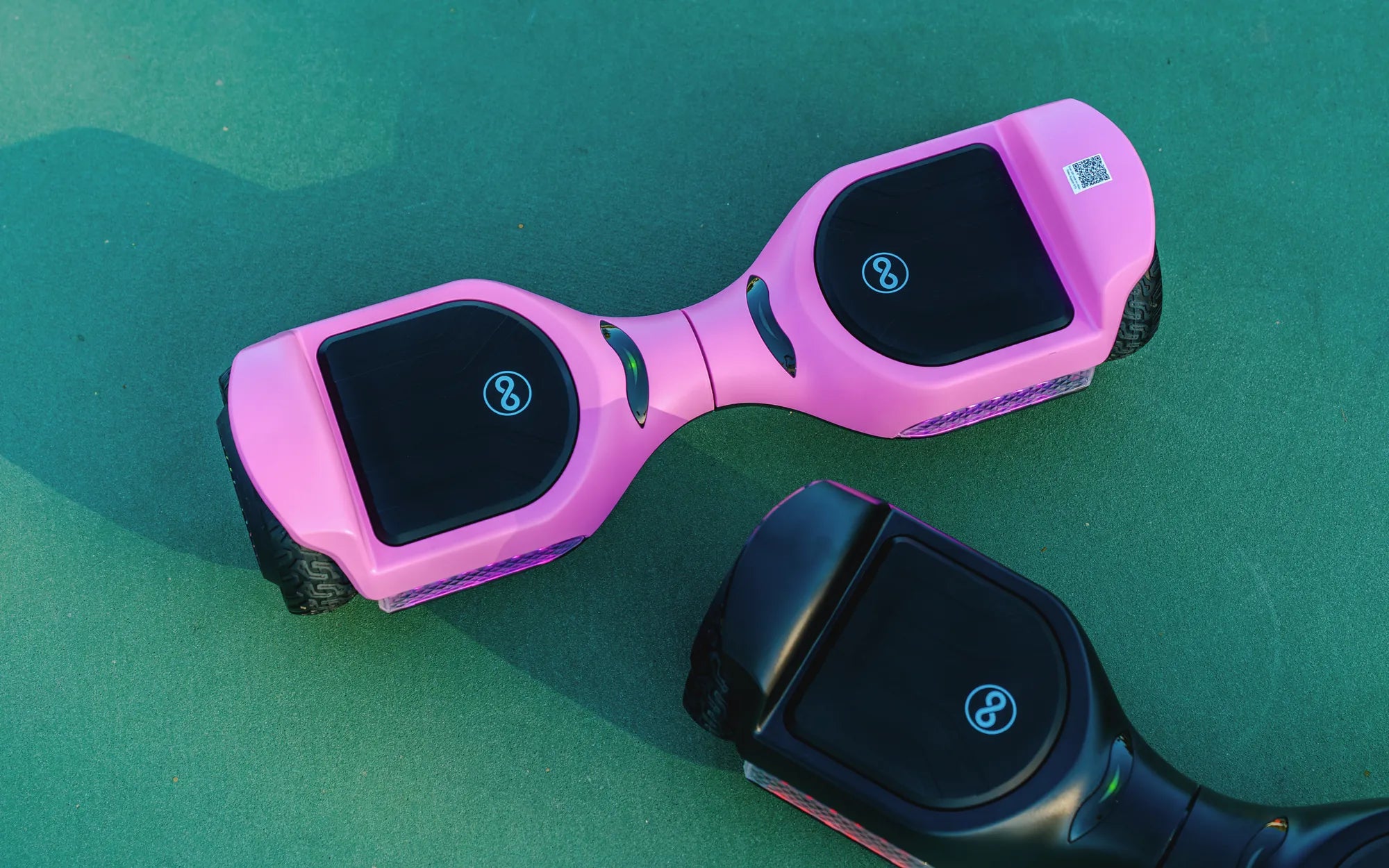
Forget the gimmicks. Hoverboard exercise is a legitimate, low-impact fitness modality that engages your core, improves balance, and burns calories—all while being genuinely enjoyable. This guide will dissect the biomechanics, quantify the benefits, and provide you with actionable workout plans to transform your hoverboard from a novelty into a powerful fitness tool trusted by over 100,000 riders for its unique blend of fun and function.
Introduction to Hoverboard Fitness
The self-balancing scooter, commonly called a hoverboard, has evolved from a futuristic toy into a sophisticated piece of personal mobility and fitness equipment. Its fundamental requirement—maintaining dynamic equilibrium—turns every ride into an active engagement session for your body's stabilizing muscles. Unlike repetitive gym routines, hoverboard exercise demands constant mental and physical attention, making workouts feel less like a chore and more like play. This intrinsic fun factor is key to adherence, a critical component often missing in traditional fitness regimens. For those seeking a sustainable, joint-friendly way to stay active, the hoverboard presents a compelling solution that merges utility with undeniable enjoyment.
The misconception that hoverboards are solely for kids or short-distance travel is fading. Fitness enthusiasts and physiotherapists alike are recognizing their value for proprioceptive training and low-impact conditioning. The act of riding requires continuous micro-adjustments, engaging muscle groups that are frequently neglected during linear exercises like running or cycling. This makes hoverboard exercise an excellent cross-training tool, enhancing overall athletic performance and reducing injury risk by building a more resilient musculoskeletal system. It’s a full-body workout disguised as a ride around the park.
Adopting hoverboard exercise is not about replacing your entire fitness routine; it's about enriching it. It adds an element of skill-based training that improves coordination and reaction time. Whether you're navigating a gentle slalom course in your driveway or practicing controlled turns on a bike path, you're actively working your body. The key to unlocking these benefits lies in consistent practice and, fundamentally, in using a reliable, well-constructed hoverboard designed for active use, not just casual gliding.
The Science of Balance: Core Muscle Engagement
At its heart, hoverboard exercise is a masterclass in isometric and dynamic stabilization. The primary challenge is maintaining balance on a platform that pivots on a central axis. To stay upright, your body must make countless subconscious corrections every second. This process heavily recruits your core musculature—the body's natural weight belt. The transverse abdominis, obliques, and lower back muscles fire continuously to keep your torso stable over the moving base. This isn't a crunch; it's a sustained, functional engagement that mimics the core stability required for sports or even daily activities like carrying groceries.
Your legs are far from passive. The quadriceps and hamstrings work in tandem to control forward and backward motion, while the calves and muscles surrounding the ankles (the peroneals and tibialis anterior) are constantly active to make fine lateral adjustments and absorb minor bumps in the terrain. This comprehensive lower-body engagement strengthens the often-ignored stabilizer muscles that support the major joints, promoting better knee and ankle health. The result is not just stronger legs, but more resilient ones.
How Micro-Adjustments Build Strength
The magic of hoverboard fitness lies in these micro-adjustments. Each tiny shift in your weight—a subtle lean forward to accelerate, a slight pressure on your right heel to turn left—requires a coordinated muscular response. This is isometric training in motion: muscles contract to hold a position or make a correction without necessarily changing length dramatically. Over a 30-minute session, these constant, low-intensity contractions lead to significant muscular endurance gains, particularly in the deep core and hip stabilizers.
Furthermore, this activity dramatically enhances proprioception—your body's awareness of its position in space. Improved proprioception is linked to better balance, reduced fall risk in older adults, and enhanced athletic performance. By challenging your balance in a controlled yet dynamic environment, hoverboard exercise effectively rewires neural pathways, improving the communication between your brain and muscles. This makes it an exceptional tool for active aging and injury rehabilitation, as well as for athletes looking to gain a competitive edge through superior body control.
Calorie Burn and Cardiovascular Benefits
While it may look effortless, a focused hoverboard workout can be a legitimate calorie-burning activity. The exact expenditure depends on intensity, rider weight, and terrain, but estimates suggest an average rider can burn between 150 to 300 calories per hour. This places it in a similar range to brisk walking or light cycling. However, the engagement factor often leads to longer, more consistent sessions compared to more monotonous cardio options. You're likely to ride for fun for an hour, whereas forcing yourself to walk on a treadmill for the same duration can feel like a slog.
The cardiovascular benefits are unlocked when you introduce intervals and skill drills. Simply cruising in a straight line has a modest cardio effect. But incorporating figure-eights, uphill climbs, controlled acceleration/deceleration cycles, and slalom courses elevates the heart rate into a true cardio zone. This interval training—alternating between higher and lower intensity—is one of the most efficient ways to improve cardiovascular health and boost metabolism. Turning your hoverboard session into a structured workout transforms it from a balance exercise into a comprehensive cardio and strength circuit.
Hoverboard Exercise vs. Traditional Cardio: A Comparison
The following table compares hoverboard exercise to other common moderate-intensity activities, highlighting its unique position as a low-impact, high-engagement option.
| Activity | Est. Calorie Burn (30 mins)* | Joint Impact | Primary Engagement | Fun/Adherence Factor |
|---|---|---|---|---|
| Hoverboard Exercise (Drills) | 120-200 | Very Low | Core, Legs, Balance | High |
| Brisk Walking (4 mph) | 120-180 | Low | Legs, Cardio | Medium |
| Jogging (5 mph) | 240-300 | High | Legs, Cardio | Medium-Low |
| Stationary Cycling (Moderate) | 210-260 | Very Low | Legs, Cardio | Low-Medium |
| Leisure Cycling | 150-220 | Very Low | Legs, Cardio | High |
*Estimates for a 155-lb (70 kg) individual. Hoverboard calories based on active maneuvering.
As shown, hoverboard exercise offers a compelling balance of calorie expenditure and joint safety, while its unique demand for skill and balance significantly boosts the enjoyment factor, which is critical for long-term consistency in any fitness plan.
Designing Your Hoverboard Workout Routine
A structured approach maximizes the fitness benefits of your hoverboard. Start every session with a 5-minute dynamic warm-up off the board: leg swings, torso twists, and ankle circles prepare your joints for the stabilization demands. Begin on the hoverboard with 5 minutes of simple forward/backward gliding and gentle turns to find your balance. A proper cool-down is equally important; spend 5 minutes post-ride stretching your calves, quadriceps, hamstrings, and core.
Beginner Routine (20-25 mins): Focus on mastery. Practice mounting and dismounting smoothly. Spend 10 minutes riding in large circles and wide figure-eights. Perform 5 sets of controlled stops and starts. Finish with 5 minutes of steady cruising, concentrating on maintaining perfect posture—shoulders back, core tight, gaze forward.
Intermediate Routine (30-35 mins): Introduce intervals. After a warm-up, alternate 2 minutes of brisk, controlled riding with 1 minute of slow, precise maneuvering (tight turns) for 15 minutes. Then, practice 5 minutes of backward riding (if your model supports it) or very slow-speed balance holds. Conclude with a 10-minute freestyle session incorporating all your skills.
Advanced Routine (40+ mins): Create a circuit. Find a safe, open area with slight inclines if possible. Design a course that includes: acceleration sprints (20 sec), hill climbs (30 sec), slalom between cones (60 sec), and 360-degree spin drills (where safe). Perform each element for the suggested time, with 45 seconds of easy gliding between. Repeat the circuit 3-4 times.
Safety First: Gear and Best Practices
Safety is the non-negotiable foundation of effective hoverboard exercise. Essential protective gear includes a certified bicycle or multi-sport helmet, wrist guards (the most common injury in falls is to the wrists), and knee and elbow pads. This gear is crucial, especially during the learning phase and when attempting new drills.
Always choose your practice area carefully. Start on a smooth, flat, and traffic-free surface like an empty parking lot, tennis court, or smooth pathway. Ensure your hoverboard is fully charged and the tires are properly inflated for optimal stability and response. Learn the proper mounting technique: place one foot firmly on the board, step up quickly but smoothly, then bring the other foot up. Avoid looking down at your feet; keep your eyes on the horizon to maintain balance. Finally, respect the limits of your skill and your equipment's specifications, especially regarding maximum weight and terrain suitability.
Why Choose a Gyroor Hoverboard for Fitness?
Not all hoverboards are created equal, especially when used as fitness equipment. The demands of regular, active riding require durability, consistent performance, and paramount safety. Gyroor hoverboards are engineered with these principles in mind, making them the ideal partner for your fitness journey. As a leading brand trusted by over 100,000 riders, Gyroor prioritizes the features that matter most for a serious workout: reliable power, environmental resilience, and long-term support. Choosing a hoverboard built with fitness in mind ensures your sessions are effective, safe, and uninterrupted by technical failures.
When your workout depends on the responsiveness of your equipment, you cannot afford power lag or sudden cut-offs. Gyroor's commitment to safety and performance is embedded in its core components, directly translating to a more confident and productive exercise experience. The brand's focus on UL-certification, robust construction, and water resistance means your hoverboard adapts to your routine, not the other way around.
UL-Certified Battery for Uninterrupted Sessions
The heart of any electric vehicle is its battery, and for fitness, reliability is key. Gyroor uses exclusively UL 2272-certified lithium-ion battery packs. This certification, achieved through rigorous testing for electrical, mechanical, and environmental safety, is your guarantee against overheating, short-circuiting, or thermal runaway. For your workout, this means consistent power delivery from the first minute to the last. You won't experience the sudden performance drops or anxiety that can come with uncertified batteries, allowing you to focus entirely on your form and routine. These high-quality cells are rated for 500+ charge cycles, ensuring your investment supports your fitness goals for years.
IPX5 Water Resistance for Versatile Terrain
Fitness shouldn't be fair-weather only. Gyroor's IPX5 water-resistant rating allows you to take your hoverboard exercise onto slightly damp pavement, morning dew-covered paths, or handle accidental splashes without worry. This durability expands your workout terrain and consistency. Whether transitioning from an indoor garage to an outdoor path or riding on a day with patchy drizzle, the sealed electronics and construction protect the core systems. This resilience means your hoverboard is a truly versatile fitness tool, capable of supporting your routine in more real-world conditions, encouraging more frequent use.
Built to Last: The 1-Year Warranty and Support
A fitness tool is an investment in your health. Gyroor backs that investment with a comprehensive 1-year warranty and accessible customer support. This warranty covers manufacturing defects in the motor, battery, frame, and electronics, providing peace of mind that your equipment is built to withstand the rigors of regular exercise. Should any issue arise, their support team is available to help. This commitment to longevity ensures your hoverboard remains a dependable part of your fitness regimen, avoiding the frustration and waste of a product that fails prematurely. It’s a testament to the brand's confidence in its 20+ models of personal electric vehicles.
Frequently Asked Questions (FAQ)
Q: Is hoverboard exercise suitable for all ages and fitness levels?
A: Generally, yes, for anyone with decent baseline balance and mobility. It is excellent low-impact exercise. However, beginners of any age should start slowly, use all safety gear, and those with severe balance disorders or specific medical conditions should consult a physician first. It's adaptable, allowing you to increase intensity as your skill improves.
Q: How long should a typical hoverboard workout be?
A: For general fitness, aim for 20-45 minute sessions, 3-4 times per week. This includes warm-up and cool-down. Beginners might start with 15-20 minute sessions focused on skill acquisition. Listen to your body—muscle fatigue from balancing is a real sign to stop, much like strength training.
Q: Can hoverboarding actually help improve my posture?
A>Absolutely. Maintaining an upright posture is critical for balance on a hoverboard. The constant engagement of the core and back muscles to keep your torso stable directly strengthens the muscles responsible for good posture. Over time, this can correct a tendency to slouch, as the strengthened muscles make proper alignment feel more natural and effortless.
Q: What is the learning curve like for using a hoverboard for exercise?
A>Most adults can achieve basic competency (comfortable forward/backward movement and wide turns) within 30-60 minutes of practice over a couple of days. Mastering advanced maneuvers for a full workout (tight turns, backward riding, drills) may take a few weeks of consistent practice. The learning process itself is a valuable coordination and neural workout.
Q: Do I need a special type of hoverboard for exercise?
A>While any self-balancing scooter can provide some benefit, a hoverboard designed for reliability and performance is highly recommended. Key features to look for include a robust motor (at least 350W dual motors), a UL-certified battery for safe, sustained output, good tire size for stability, and a solid weight capacity. These features, all standard in quality brands like Gyroor, ensure the board can handle the dynamic movements of a fitness routine safely and effectively.
Conclusion: Embracing a Fun Path to Fitness
Hoverboard exercise successfully bridges the gap between mundane workout routines and genuine enjoyment, offering a scientifically-backed path to improved core strength, balance, cardiovascular health, and calorie burn. Its low-impact nature makes it sustainable, while the skill-based progression keeps the mind engaged. By incorporating structured drills and intervals, you can transform a simple ride into a comprehensive fitness session that challenges both body and mind. The key to unlocking this potential lies in a commitment to safe practices and, fundamentally, in choosing equipment engineered for active use.
Investing in a well-built hoverboard from a reputable brand like Gyroor is an investment in the consistency and safety of your fitness journey. With features like UL-certified batteries, IPX5 water resistance, and a solid warranty, you can focus on your workout without distraction. Embrace the unique blend of fun and function that hoverboard exercise provides. It’s more than a ride; it’s a sustainable, enjoyable strategy for staying fit, improving coordination, and adding a dose of playfulness to your active life. Ready to start your journey?
Explore Gyroor's range of durable, high-performance hoverboards and find the perfect model to launch your fitness routine. Browse the full Gyroor collection at gyroorboard.com.
What Is the Best Hoverboard for Kids? A Complete Buying Guide
What Does It Mean When My Hoverboard Starts Beeping? Your Complete Troubleshooting Guide