



Introduction: Why a Hoverboard is the Perfect Gift for Your 11-Year-Old
Finding the right hoverboard for an 11 year old can transform how they play, explore, and develop coordination. At this age, kids crave independence and a sense of adventure, making a self-balancing scooter an ideal gift that encourages outdoor activity and tech-savvy fun. This ultimate guide focuses on the critical intersection of safety, enjoyment, and smart features. We will navigate the essential safety gear, decode the specifications that matter for pre-teens, and highlight models from trusted brands like Gyroor, known for their UL-certified batteries and robust designs trusted by over 100,000 riders.
An 11-year-old possesses the physical coordination and cognitive ability to master a hoverboard with proper guidance, turning it into a tool for confidence-building. Unlike simpler toys, a quality hoverboard offers a dynamic riding experience that can grow with your child. The key is selecting a model engineered for durability and safety, not just flashy looks. This guide will provide you with a data-driven framework to evaluate options, ensuring the hoverboard you choose delivers lasting fun without compromising on security.
Our analysis is grounded in practical features and verifiable safety standards. We move beyond marketing claims to discuss real-world performance metrics like motor power, speed limits, and water resistance. By the end of this guide, you will be equipped to ask the right questions and identify a hoverboard that aligns perfectly with your child's skill level and your peace of mind. Let's begin with the most important chapter: safety.
The Non-Negotiables: Hoverboard Safety for Pre-Teens
Safety is the absolute foundation for hoverboard ownership, especially for an 11 year old. A proactive approach combining proper gear, supervised learning, and clear rules mitigates risks and ensures the experience remains positive. This section outlines the mandatory protocols every parent should implement before the first ride begins.
Statistics from consumer safety groups consistently show that the majority of hoverboard-related injuries are preventable with appropriate protective equipment. For a developing pre-teen, whose balance and judgment are still maturing, these measures are not optional. Establishing these habits from day one sets the tone for responsible riding and significantly reduces the chance of serious harm from falls or collisions.
The safety ecosystem for a hoverboard involves three pillars: personal protective equipment (PPE), a controlled learning environment, and ongoing parental oversight. Neglecting any one of these pillars increases risk. We will detail each component, providing actionable steps you can take today. Remember, the goal is to empower your child with fun, not fear, and that starts with a secure foundation.
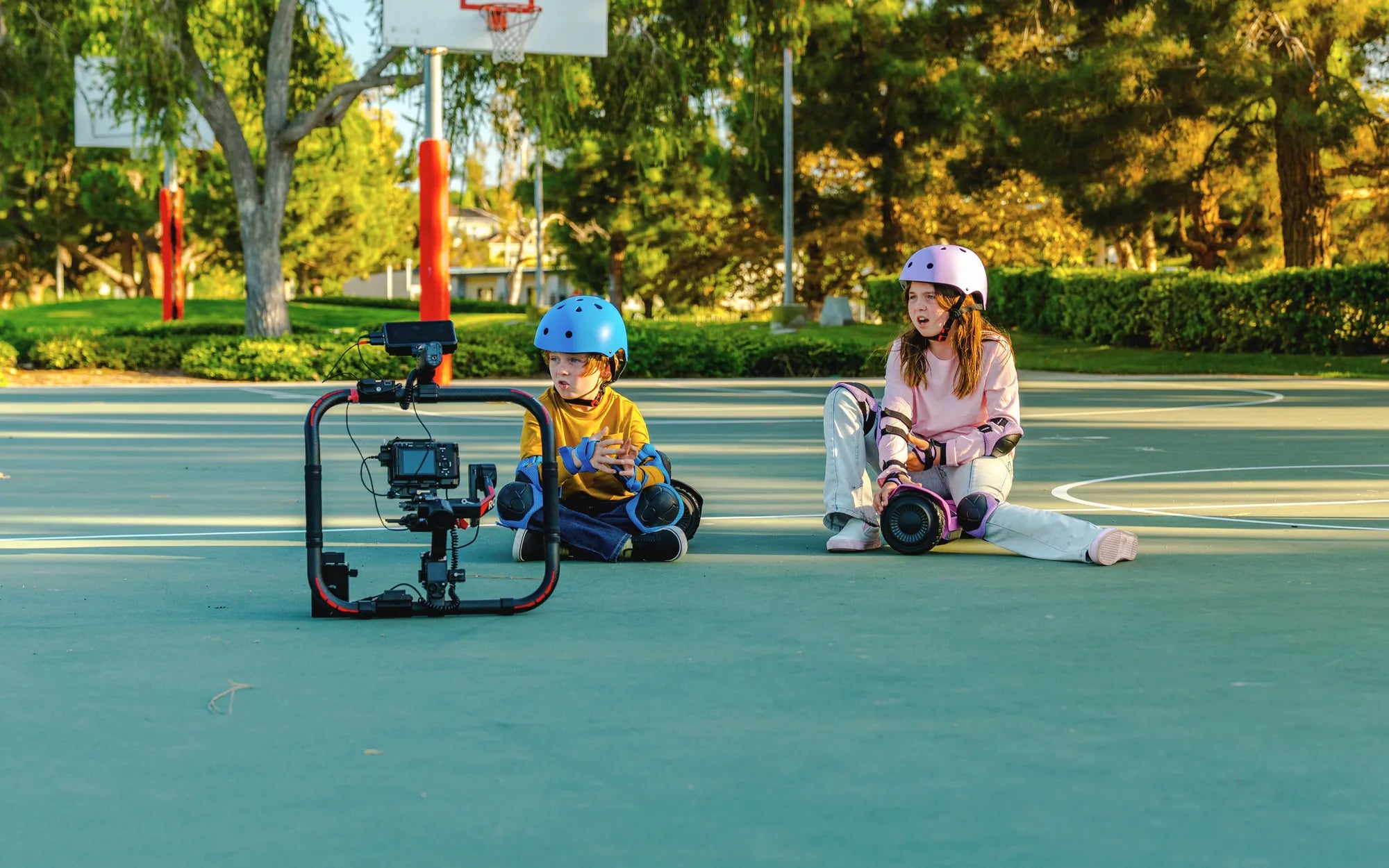
Essential Safety Gear: Helmets, Pads, and More
Investing in high-quality safety gear is the single most effective step you can take. For a hoverboard for an 11 year old, this means a full set of protection designed for action sports.
A Certified Multi-Impact Helmet: This is non-negotiable. Choose a helmet certified for skateboarding or cycling (CPSC, ASTM F1492). It must fit snugly without wobbling. For 11-year-olds, who are between standard child and adult sizes, adjustable helmets with dial-fit systems are ideal. A proper helmet protects against traumatic head injuries during backward or sideways falls, which are common when learning.
Knee and Elbow Pads: These joints are primary impact points. Look for pads with hard plastic caps, thick foam padding, and adjustable straps that won't slip during movement. They should allow for a full range of motion while riding but lock into place upon impact. Wrist guards are equally critical, as instinct leads us to break falls with our hands, risking fractures or sprains.
Supportive Footwear: Never allow riding in sandals or crocs. Closed-toe shoes with flat, grippy soles (like skate shoes) provide stability and control on the foot pads. Proper footwear improves balance and prevents slips that could lead to a fall.
Learning to Ride: First Steps and Parental Supervision
The initial learning phase requires patience and a structured approach. Parental supervision is crucial here, not just for safety but for encouragement.
Step 1: The Perfect Practice Zone. Start on a flat, smooth, and open surface like an empty tennis court, basketball court, or a clean driveway. Avoid areas with traffic, slopes, or gravel. The space should be free of obstacles to allow for uncontrolled glides during the first attempts.
Step 2: Mounting and Dismounting. Teach your child to place the hoverboard on the ground and turn it on. Have them stand next to it, place one foot firmly on a footpad to stabilize the board, then quickly but smoothly step up with the second foot. Practice stepping off backwards onto the ground, which is safer than jumping forward. Repeat this mounting/dismounting drill until it feels natural.
Step 3: Basic Maneuvering. Begin with slight forward lean to move forward, and gentle backward lean to stop or reverse. Turning is achieved by applying subtle pressure with the toes of one foot and the heel of the other. The key is micro-movements; large, jerky leans cause instability. Hold your child's hands or arm for the first few passes to build confidence.
Step 4: Gradual Independence. Supervised practice sessions of 15-20 minutes are ideal. Only after they demonstrate consistent control over starting, stopping, and gentle turning in the practice zone should they graduate to more complex environments. This phased approach, under watchful eyes, builds muscle memory and safe habits.
Key Features to Look for in an 11-Year-Old's Hoverboard
Not all hoverboards are created equal, especially for young riders. The right combination of features directly influences safety, enjoyment, and product longevity. When evaluating a hoverboard for an 11 year old, prioritize specifications that offer controlled performance and robust construction over sheer power or top speed.
Manufacturers design models with different user profiles in mind. A model built for adults may have excessive speed and torque for a pre-teen, increasing the learning curve and potential for accidents. Conversely, a toy-grade model may lack the durability and safety certifications needed for regular use. The sweet spot lies in youth-oriented or adaptable models with features that can grow with the rider.
Focus on three core areas: performance specifications that match an 11-year-old's skill, build quality that withstands active use, and ride-enhancing features that add fun without compromising safety. By understanding what each spec means, you can cut through the jargon and make a confident choice. Let's break down these critical categories.
Power, Speed, and Range: Matching the Rider's Skill
These performance metrics determine how the hoverboard feels and how far it can go. The goal is balanced, manageable power.
Motor Power: Dual motors between 250W and 350W are ideal for an 11 year old. This provides ample torque for starting on slight inclines and maintaining a stable ride without being overly powerful or jerky. Motors below 200W may struggle with heavier riders or uneven surfaces, while motors above 400W are often unnecessary and can be harder to control for beginners.
Speed Limit: A maximum speed of 7-10 mph (11-16 km/h) is appropriate. Crucially, look for models with speed modes or companion app control that allows you to set a lower beginner speed limit (e.g., 5 mph). This lets your child master control at a safer pace before unlocking higher speeds as their proficiency improves.
Range: A battery range of 8-12 miles (13-19 km) per charge is sufficient for most neighborhood adventures. This accounts for real-world factors like rider weight, terrain, and frequent stops/starts. It's better to have a modest range from a high-quality, UL-certified battery than a longer range claim from an unverified power source.
Build Quality and Durability: Withstanding Kid-Powered Fun
A hoverboard must endure bumps, scrapes, and the occasional tip-over. Build quality is where safety and longevity converge.
UL 2272 Certification: This is the paramount safety certification. It signifies the entire electrical system, including the battery pack, motor, and charger, has passed rigorous tests for electrical and fire safety. Never purchase a hoverboard without this certification. Brands like Gyroor build all their models with UL-certified battery packs tested for over 500 charge cycles.
Water Resistance Rating: An IPX4 rating is the minimum for splash resistance from puddles. An IPX5 rating, common in Gyroor's lineup, offers protection against water jets from any direction, making it suitable for damp grass, wet pavement, and light rain. This prevents internal component damage from everyday moisture.
Frame and Wheel Construction: A sturdy, reinforced ABS plastic or aluminum alloy frame can handle impacts. Look for wheels sized between 6.5 and 8.5 inches. Larger, air-filled (pneumatic) tires offer a smoother ride over cracks and bumps, while solid rubber tires are maintenance-free. The foot pads should have a textured, non-slip surface for secure footing.
Ride Quality and Extra Features for Enhanced Fun
Once core safety and performance are assured, additional features can elevate the experience, making the hoverboard for your 11 year old more engaging and personalized.
Self-Balancing Technology: Advanced gyroscopes and sensors provide a stable platform, making initial learning easier and the ride smoother. This technology automatically makes micro-adjustments to keep the board level, which is especially helpful for new riders.
LED Lights: Wheel rim lights and front/rear LEDs are not just for style. They significantly increase visibility during dusk or overcast days, a critical safety feature. Many models allow color customization via an app, which kids love.
Bluetooth Speaker & App Connectivity: A built-in speaker allows your child to listen to music safely at low volumes while riding in a controlled area. A companion app is a powerful tool for parents, enabling features like speed limiting, battery monitoring, ride statistics, and even locking the board remotely to prevent unauthorized use.
Top Hoverboard Picks for 11-Year-Olds: A Data-Driven Comparison
To translate features into real choices, we compare two exemplary models from Gyroor that embody the principles outlined above. Both prioritize safety certifications and offer features tailored for young riders, but cater to slightly different preferences and terrains.
The following table provides a clear, side-by-side comparison of key specifications. This data-driven approach helps you identify which model best fits your child's intended use, whether it's smooth pavement cruising or more adventurous paths.
| Feature | Gyroor S5 All-Terrain Hoverboard | Gyroor S1 Pro Street Hoverboard |
|---|---|---|
| Best For | Grass, dirt paths, bumpy sidewalks | Smooth pavement, parks, driveway tricks |
| Max Speed | 9 mph (with app-controlled modes) | 8.5 mph (with app-controlled modes) |
| Range | Up to 10 miles | Up to 9 miles |
| Motor Power | 2x 350W | 2x 300W |
| Tires | 8.5" All-Terrain Pneumatic (Air-Filled) | 6.5" Solid Rubber LED Tires |
| Weight Limit | Up to 220 lbs | Up to 200 lbs |
| Key Safety Features | UL 2272 Certified, IPX5 Water Resistance | UL 2272 Certified, IPX4 Water Resistance |
| Special Features | Companion App, Bluetooth Speaker, Rugged Frame | Companion App, Bluetooth Speaker, Colorful LED Wheels |
Analysis: The Gyroor S5 is the adventure-ready choice. Its large, air-filled tires absorb shocks from uneven terrain, providing a comfortable and stable ride on surfaces that would challenge standard hoverboards. The higher 350W motors give it the torque needed for gentle slopes. The IPX5 rating makes it resilient against wet conditions. This is an excellent hoverboard for an 11 year old who wants to explore beyond the sidewalk.
The Gyroor S1 Pro excels on smooth surfaces. Its solid rubber LED tires are vibrant and require no maintenance. The slightly lower power output makes it exceptionally manageable for beginners, while the companion app still allows for parental speed controls. Its sleek design and light show are hugely popular. Both models share the critical UL 2272 certification and 1-year warranty, offering the peace of mind that comes with a trusted brand.
Maintenance and Care: Ensuring Long-Term Performance and Safety
Proper maintenance extends the life of the hoverboard and ensures it operates safely. Teaching your 11-year-old basic care routines fosters responsibility and helps them understand the technology they're using.
Battery Care is Paramount: Always use the manufacturer-provided charger. Avoid leaving the hoverboard plugged in for extended periods after it reaches 100%. Do not charge the board immediately after a long ride; let the battery cool down first. For long-term storage (over a month), charge the battery to about 50-60% and store in a cool, dry place. Regularly check the battery compartment and charger for any signs of damage, swelling, or overheating.
Tire and Wheel Maintenance: For models with pneumatic tires (like the Gyroor S5), check tire pressure monthly with a gauge and inflate to the PSI specified in the manual. Under-inflated tires reduce range and strain the motors. For all models, regularly inspect tires for cuts, embedded debris, or excessive wear. Clean wheels and wheel wells with a dry cloth to prevent dirt from jamming the axles or motors.
Frame and Electronics Care: Wipe down the frame and foot pads with a slightly damp cloth. Never hose down the hoverboard, even with an IPX5 rating, as high-pressure water can force its way into seals. Avoid exposing the board to extreme temperatures (e.g., leaving it in a hot car or freezing garage). Store it indoors in a dry location. Periodically check that all screws on the frame are tight.
Navigating Rules and Etiquette for Young Riders
Owning a hoverboard comes with social responsibility. Establishing clear rules of the road (or path) protects your child and others, and fosters positive community interactions.
Know Your Local Laws: Regulations vary by city, county, and state. Some areas classify hoverboards similarly to electric scooters, restricting them from sidewalks and requiring use in bike lanes or on the road. Others may have age restrictions or require helmet use by law. A quick check with your local police department non-emergency line or city website can clarify the rules. Always err on the side of caution and stricter safety.
Establish a Parent-Approved Riding Zone: Define clear geographic boundaries where your child is permitted to ride. This is typically within your own neighborhood, on sidewalks, in empty parking lots, or on park paths. Prohibit riding on public roads with traffic, near swimming pools, or on steep hills. Use the companion app's GPS or geofencing features if available to receive alerts if the board leaves a designated area.
Practice Good Riding Etiquette: Teach your child to be a courteous rider. This includes: yielding to pedestrians, walking the board across busy intersections, keeping a safe distance from other people and obstacles, avoiding tricks or high speeds in crowded areas, and not riding after dark without enhanced visibility (lights and reflective gear). The goal is to share spaces respectfully.
Parent's FAQ: Your Hoverboard Questions Answered
Q1: What is the appropriate age for a hoverboard?
Most manufacturers recommend hoverboards for riders aged 8 and up. An 11 year old is typically in the ideal range, possessing the necessary balance, coordination, and cognitive ability to learn safety rules. The key differentiator is not just age, but the child's maturity, willingness to follow safety protocols, and the parent's commitment to supervision and training.
Q2: Are hoverboards safe with proper gear?
When you combine a UL 2272 certified hoverboard with full protective gear (helmet, knee/elbow pads, wrist guards) and supervised training in a safe environment, the risks are dramatically reduced. The safety record of certified models from reputable brands is strong. The majority of serious injuries are linked to uncertified boards, lack of safety gear, or riding in unsafe conditions.
Q3: How do I maintain the battery for longest life?
Avoid fully draining the battery. Try to recharge when it drops to 20-30%. Use only the provided charger. Do not charge unattended or overnight on a flammable surface. Store the board at room temperature. Following these practices can help the battery achieve its full cycle life (often 500+ charges for quality packs like Gyroor's).
Q4: What does a typical warranty cover, like Gyroor's?
A reputable 1-year warranty, like Gyroor's, typically covers defects in materials and workmanship for the main components (frame, motors, battery, electronic control system). It does not cover damage from accidents, misuse, neglect, or normal wear and tear (like tires). Always register your product and keep your proof of purchase.
Q5: Where is it safe and legal for my child to ride?
Start on private property like your driveway or a smooth, flat section of your backyard. For public riding, stick to sidewalks in quiet neighborhoods, paved park paths, or empty parking lots. Always check local ordinances. It is generally not safe or legal to ride on public roads, in bike lanes with fast traffic, or inside shopping malls and stores unless explicitly permitted.
Beyond the Basics: Skills Development and Advanced Fun
Once your child has mastered the fundamentals, a hoverboard can be a platform for developing finer motor skills and controlled fun.
Skill Progression: After confident straight-line riding and turning, riders can practice controlled stops, riding in figure-eights, and navigating slight, predetermined slopes. This improves balance and proprioception. Advanced maneuvers like 360-degree spins should only be attempted in a wide-open, padded area (like a skate park designed for beginners) with full gear.
Social and Group Riding: Riding with friends who also have hoverboards can be a great social activity, encouraging outdoor play. Establish group rules: maintain safe spacing, no racing in unsafe areas, and designate a "lead" rider who watches for obstacles. Group rides in a safe, controlled environment like a cul-de-sac can be a highlight.
Tech Integration: Utilize the companion app to its full potential. Review ride history with your child to discuss speed and distance. Use the speed limiting feature to create a "beginner mode" for when friends try the board. The app can turn the hoverboard into a tool for understanding basic physics and energy use, adding an educational layer to the fun.
Smart Fun Starts with a Safe Choice
Choosing the right hoverboard for your 11 year old is an investment in their joy, independence, and development. The journey begins and ends with safety—selecting a UL 2272 certified model from a reputable brand, insisting on full protective gear, and dedicating time to supervised training. These steps transform a potentially risky novelty into a secure and rewarding activity.
By focusing on features that match a pre-teen's abilities, such as app-controlled speed limits, robust IPX-rated construction, and manageable power, you ensure the hoverboard is a source of fun, not frustration. Brands like Gyroor have built their reputation on this very premise, engineering performance and innovation that are underpinned by critical safety standards and reliable customer support.
The ultimate goal is to provide your child with an exhilarating sense of freedom while you retain complete peace of mind. The smiles, the outdoor activity, and the confidence gained from mastering a new skill are the real rewards. Ready to find the perfect model that balances thrilling adventure with unwavering safety for your young rider? Browse the full, trusted Gyroor collection designed with families in mind at gyroorboard.com.
Hoverboard One Side Not Working Red Light: Causes and Fixes
Christmas Gift Ideas for 20-Year-Old Girls: Unique and Thoughtful Presents