


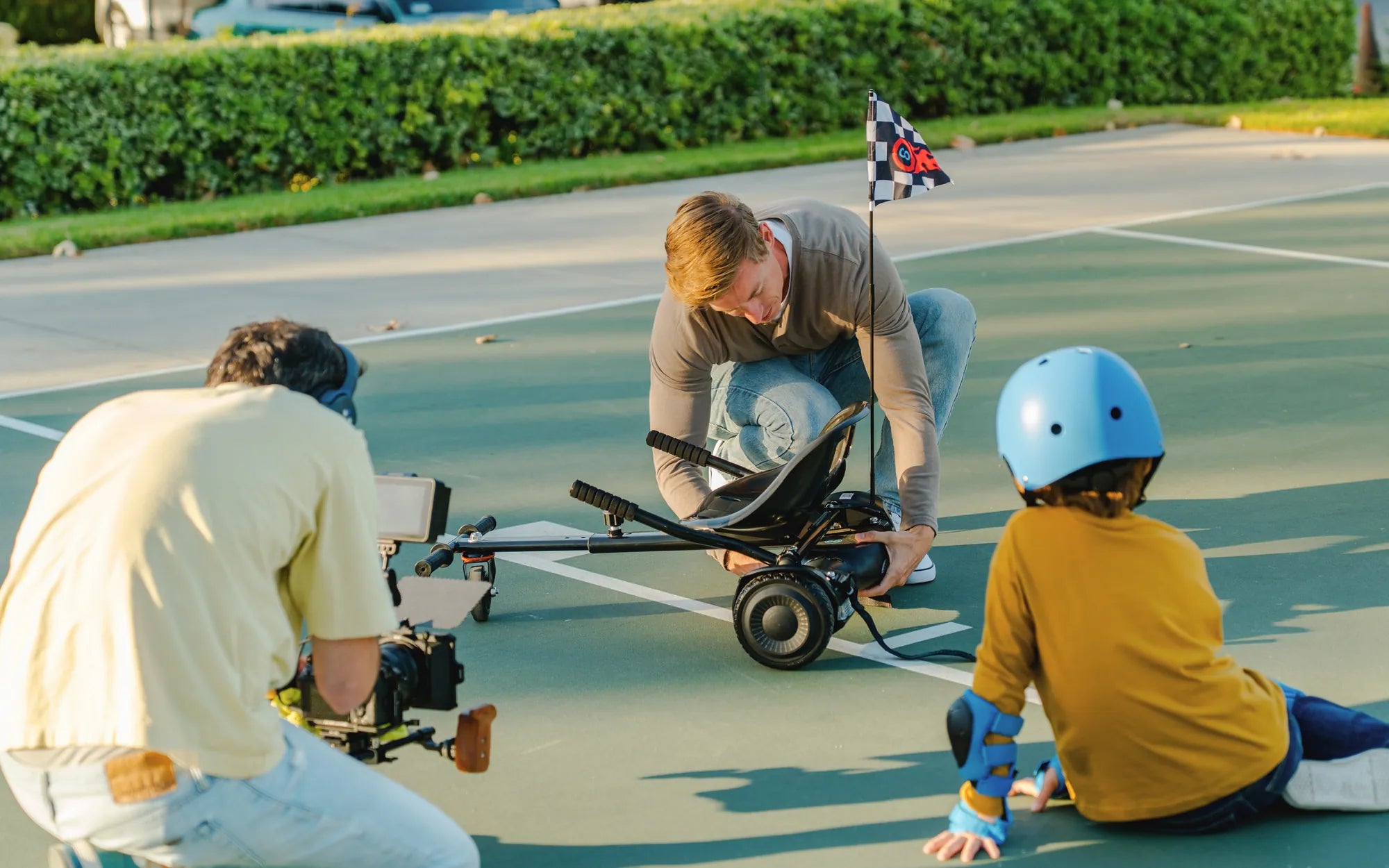
Introduction: Why a Hoverboard Can Be a Great Gift for Your 5-Year-Old
A hoverboard for a 5-year-old represents more than just a trendy toy. It's a tool for developing balance, coordination, and spatial awareness. The key to a positive experience lies in selecting an age-appropriate model and committing to proper safety protocols.
This guide provides the data-driven framework you need. We'll dissect the critical features that make a hoverboard suitable for kindergarten-aged children. You will learn how to evaluate safety, teach riding fundamentals, and ensure every ride is both secure and immensely enjoyable.
Brands like Gyroor, a leading electric scooter and e-bike brand trusted by over 100,000 riders, design with these principles in mind. Their focus on UL-certified batteries and robust construction offers a benchmark for what parents should seek.
Understanding the Basics: What Makes a Hoverboard "Kid-Friendly"?
A standard hoverboard is not designed for a young child's size, weight, or skill level. A kid-friendly model is engineered with specific constraints and safeguards. These features fundamentally alter the riding experience to prioritize control and stability over raw performance.
The core differentiators are hardware and software limits. Physically, the board must accommodate smaller feet and a lighter frame. Electronically, it must enforce strict speed caps and offer progressive learning modes. These aren't luxuries; they are necessities for safe operation.
Without these adaptations, a child can quickly become overwhelmed. Excessive speed or a deck too large for their stance compromises their ability to learn and react. The right model builds confidence from the first step.
Key Safety Features for Young Riders
Certain safety features are non-negotiable for this age group. A speed limiter is the most critical, capping maximum velocity between 5 and 7 mph. Many superior models include a beginner mode that restricts speed to a walking pace of 3-4 mph.
UL 2272 certification is an absolute must. This standard rigorously tests the battery pack, electrical system, and charger for fire and electrical hazards. Never consider a model without this certification. Additionally, a robust shell with integrated bumper protection helps absorb the inevitable tumbles and bumps.
The Right Size and Weight Capacity
Proportion is everything. Wheel sizes typically range from 4.5 inches to 6.5 inches. For a 5-year-old, 4.5" to 5.5" wheels offer a lower center of gravity and easier mounting. The deck should be narrow enough for a child's stance, allowing them to place their feet near the wheels for better leverage.
Weight capacity is equally important. A model rated for 44 to 120 pounds is ideal. It will be sensitive enough to respond to a lighter child's subtle leans while being durable. An excessively high weight limit can indicate a stiffer, less responsive board for a young rider.
Top Considerations When Choosing a Hoverboard for a 5-Year-Old
Selecting the right model requires a disciplined checklist. Move beyond flashy lights and colors to evaluate the underlying engineering and safety credentials. This decision directly impacts your child's safety and enjoyment.
Prioritize certifications and programmable features over aesthetic extras. A model with a proper learning mode and robust build will provide value long after the novelty of LED lights wears off. Consider this an investment in a developmental activity, not just a purchase.
The following criteria form the foundation of a smart buying decision. Use them to compare models and ask informed questions before you buy.
Safety Certifications: UL 2272 is Non-Negotiable
The UL 2272 standard is the industry benchmark for self-balancing scooters. It involves a battery of tests including overcharge, short circuit, and drop tests. A certified model has undergone this rigorous process, significantly reducing risks associated with battery failure.
This certification should be clearly listed on product specifications and packaging. Gyroor, for instance, utilizes UL-certified battery packs tested for over 500 charge cycles in their designs. This commitment provides a baseline of trust for parents concerned about electrical safety.
Speed and Control: The Importance of Training Modes
Multiple speed modes are essential. A true beginner mode should limit speed to 3-4 mph, allowing the child to focus on balance without fear. Intermediate and advanced modes can be unlocked with a passcode as their skills improve, typically capping at a safe 7-8 mph for kids.
This graduated system builds confidence. It transforms the learning curve from a daunting challenge into achievable milestones. Look for models where the speed modes are easily selectable and clearly indicated, often via an app or audible alerts.
Durability and Weather Resistance
Children are not gentle. The hoverboard must withstand drops, scrapes, and occasional collisions with curbs. A thick, ABS plastic shell with rubberized bumpers is a good sign. Internal components should be securely mounted to survive vibrations.
Weather resistance is crucial for outdoor play. An IPX5 rating, like that found on Gyroor hoverboards, means the unit is protected against water jets from any direction. This allows riding on damp pavement or wet grass without immediate concern, though submerging should always be avoided.
Battery Life and Charging Safety
For a child's use, range is less critical than safety. A realistic expectation is 6-10 miles per charge, which translates to plenty of playtime. Focus on the charger's safety features: it should be UL-listed and have automatic shut-off when the battery is full.
Always supervise charging. Charge the hoverboard on a hard, non-flammable surface away from bedding or curtains. Establish a rule that only an adult plugs in or unplugs the charger. These simple habits mitigate the primary risks associated with lithium-ion batteries.
Comparison: Key Features for a Child's Hoverboard
This table summarizes the essential features to compare when evaluating a hoverboard for a 5-year-old. Use it as a quick-reference guide during your research.
| Feature | Ideal Specification for a 5-Year-Old | Why It Matters |
|---|---|---|
| Max Speed | 7 mph or less, with a 3-4 mph beginner mode | Prevents loss of control; allows gradual skill progression. |
| Safety Certification | UL 2272 Certified | Ensures battery and electrical system meet rigorous fire/electrical safety standards. |
| Weight Capacity | 44 lbs - 120 lbs | Ensures proper responsiveness for a light rider and built-in durability. |
| Wheel Size | 4.5" - 5.5" | Lower center of gravity for stability; easier for small riders to mount/dismount. |
| Water Resistance | IPX4 (splash-proof) minimum; IPX5 preferred | Protects against wet grass, puddles, and light rain for versatile outdoor use. |
| Learning Modes | At least 2 (Beginner & Advanced), password-protected | Locks top speed until the child is ready; parent-controlled safety. |
The Parent's Guide to Safe Hoverboard Operation
Your role as a supervisor is the most critical safety feature. Active oversight, proper gear, and a controlled environment are paramount. This section outlines the practical steps to ensure safe riding from day one.
Establish clear rules before the first ride. These should cover where, when, and how the hoverboard can be used. Consistency in enforcement helps the child internalize safe riding as a non-negotiable habit, not an optional guideline.
Your involvement should be hands-on during the learning phase. This means walking alongside, offering verbal guidance, and being physically ready to assist. As competence grows, your role shifts to monitoring and reinforcing the established rules.
Essential Safety Gear: Never Ride Without It
Full protective gear is mandatory, not optional. The minimum kit includes a CPSC-certified bicycle helmet, knee pads, elbow pads, and wrist guards. Wrist guards are particularly important, as falling forward is common for beginners.
Invest in quality gear that fits properly. Loose pads can shift during a fall, offering no protection. Make putting on the gear part of the pre-ride ritual. This reinforces its importance and ensures it's never skipped in the excitement to ride.
Choosing the Perfect Practice Environment
Start on a flat, smooth, and private surface. An empty tennis court, a smooth driveway, or a quiet cul-de-sac are perfect. The surface should be free of gravel, sand, and significant cracks that could catch a small wheel.
Avoid any area with slopes, traffic, or pedestrian activity at the beginning. The goal is to eliminate external variables so the child can concentrate solely on balancing and controlling the board. Grass is not recommended for beginners as it requires more power and offers less stable footing.
Step-by-Step: Teaching Your Child to Ride
1. Mounting/Dismounting: Have the child place the board against a wall or hold your hands. Teach them to step on one foot at a time, finding the board's balance point before lifting the second foot. Practice stepping off backwards several times.
2. Finding Balance: With the board powered off, let them stand on it while you hold both hands. Rock gently to get a feel for the deck. Then power on in beginner mode. Hold their hands as they practice subtle forward and backward leans to move incrementally.
3. Steering and Stopping: Explain that turning is controlled by pressing one toe down more than the other. Practice gentle, wide turns. Emphasize that to stop, they simply need to level their feet and come to a neutral stance, then step off backwards.
Gyroor Hoverboards: Engineered with Young Riders in Mind
Gyroor's design philosophy aligns directly with the needs of young riders and concerned parents. Their models incorporate the specific safety and durability features outlined in this guide, providing a validated option in the marketplace.
With a community of over 100,000 riders across North America and Europe, Gyroor's focus on reliability is data-backed. Their 4.5/5 average customer rating often highlights the durability and kid-friendly nature of their personal transport products, from e-bikes to hoverboards.
Choosing a brand with this established reputation offers more than just a product. It provides access to dedicated support and warranty services, which are crucial for maintaining a hoverboard over time.
How Our Design Prioritizes Your Child's Safety
Gyroor integrates key safety features at the engineering level. Every battery pack is UL-certified, undergoing testing for 500+ charge cycles. The IPX5 water-resistant rating ensures the electronics are protected from everyday outdoor elements, a common concern for active kids.
Their hoverboards typically feature multiple speed modes accessible via a companion app, allowing parents to set a strict speed limit. The durable shell and wide, stable footpads are designed to inspire confidence in new riders, making that initial learning phase more manageable and less intimidating.
The Confidence of a Comprehensive Warranty and Support
A 1-year comprehensive warranty on all Gyroor products provides significant peace of mind. It protects against manufacturer defects in materials, workmanship, and the battery system. This warranty reflects confidence in the product's build quality.
Should any issues arise, US-based customer support is accessible. This is a critical advantage over brands that offer no real post-purchase service. For parents, knowing help is available simplifies ownership and ensures the hoverboard for a 5-year-old remains a source of fun, not frustration.
Frequently Asked Questions (FAQs) About Kids and Hoverboards
Q: Are hoverboards safe for a 5-year-old?
A: With the right precautions, yes. Safety requires a UL 2272 certified model with a speed limiter, mandatory full protective gear (helmet, knee/elbow pads, wrist guards), and constant adult supervision during the learning phase and active monitoring thereafter.
Q: What is the appropriate speed for a beginner child?
A: The ideal beginner speed is 3-4 mph, which is roughly a brisk walking pace. This allows the child to learn balance and control without the fear that comes with faster, uncontrollable movement. Look for models with a dedicated beginner mode that enforces this limit.
Q: How long does it typically take a child to learn?
A> Most children achieve basic balance and controlled forward/backward movement within 30-60 minutes of guided practice spread over 2-3 sessions. Mastery of confident turning and stopping usually takes a few weeks of regular, short practice rides.
Q: Can it be used indoors?
A: It is strongly discouraged. Hoverboards require space and can reach speeds that are dangerous in confined areas. Indoor use risks collisions with walls, furniture, and floor hazards (like rugs), and poses a higher risk of injury from falls onto hard surfaces.
Q: What maintenance does a kids' hoverboard need?
A> Regular maintenance includes checking tire pressure (for air-filled tires), ensuring all screws are tight, cleaning the deck and wheels of debris, and inspecting the body for cracks. Always follow the manufacturer's specific charging instructions to preserve battery health.
Conclusion: Fostering Fun, Confidence, and Responsibility
Choosing a hoverboard for a 5-year-old is a decision that merges excitement with responsibility. The right model, defined by UL 2272 certification, speed limits, and durable construction, lays the foundation for safe enjoyment. Your commitment to gear, supervision, and proper teaching transforms this device from a simple toy into a powerful tool for developing physical coordination and responsible play habits.
The journey from hesitant first steps to confident cruising is rewarding for both child and parent. It teaches perseverance, balance, and the importance of safety rules. By following the guidelines in this ultimate guide, you equip yourself to manage the risks and maximize the rewards, ensuring countless hours of healthy, outdoor fun.
Ready to explore hoverboards built with these safety-first principles? Browse the full Gyroor collection, featuring UL-certified, kid-considerate designs, at gyroorboard.com.
How Heavy Is a Hoverboard: A Complete Guide to Weight and Portability
Personalized Christmas Gift Ideas for Kids That Spark Joy: A Complete Guide