



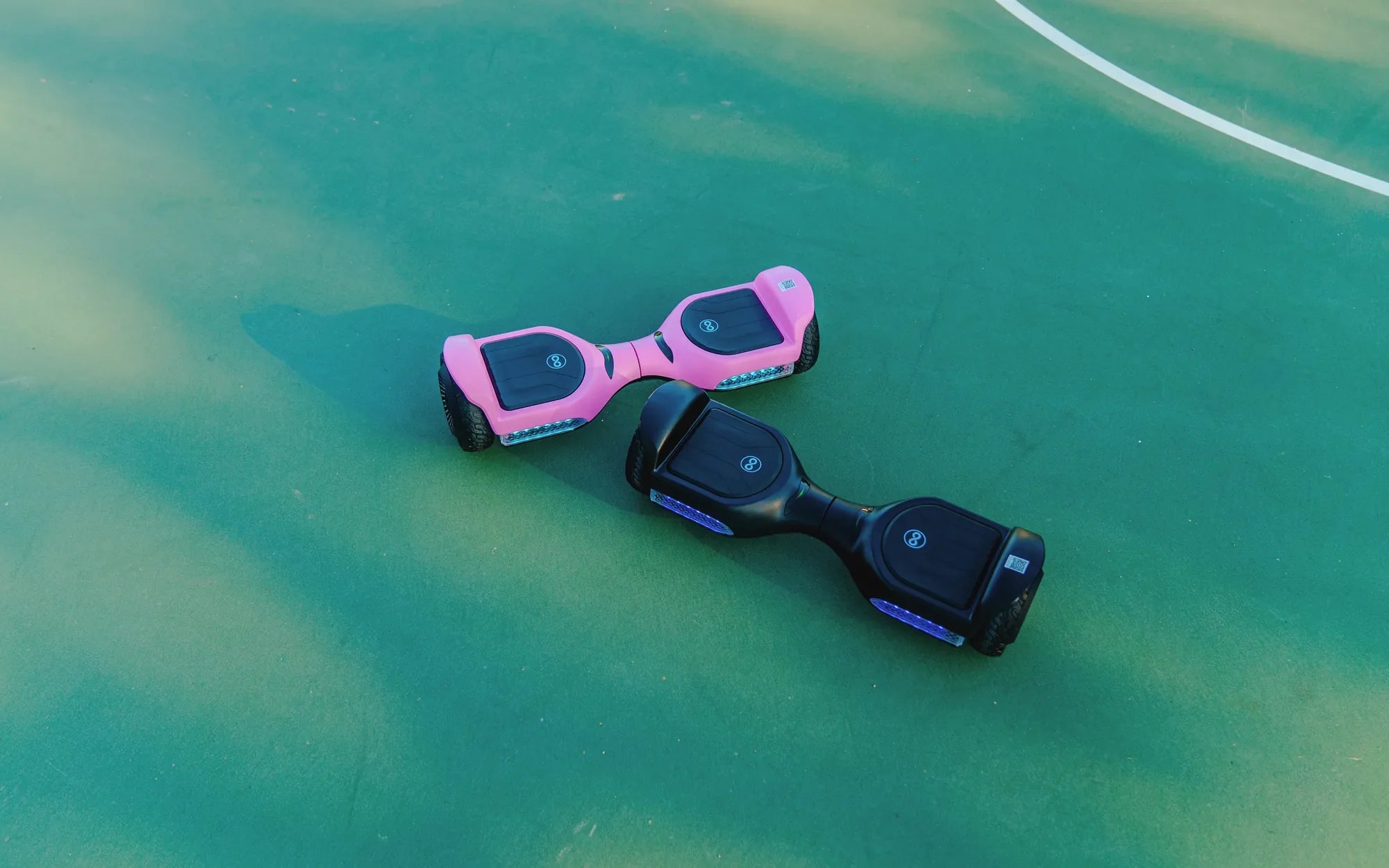
Choosing a hoverboard for your child is about unlocking a world of exciting, active play, but it must begin with an unwavering commitment to safety. This guide cuts through the noise to give you the facts, data, and practical steps needed to make an informed decision. You will learn how to decode critical safety certifications, match the perfect model to your child's age and environment, and discover the surprising developmental benefits of riding. We'll ground our advice in the engineering standards of leading brands like Gyroor, trusted by over 100,000 riders for their UL-certified batteries and robust safety features, ensuring your child's adventure is both thrilling and secure.
Introduction to Modern Hoverboards for Kids
Today's hoverboards represent a significant evolution from earlier models, with advanced engineering prioritizing stability, durability, and core safety. They are sophisticated self-balancing electric scooters that offer children a unique blend of outdoor activity, skill development, and pure fun. The key for parents is navigating this market with a focus on verified safety and quality.
Brands that have invested in rigorous testing and certification, such as Gyroor, have set a new benchmark. These models move past the initial industry growing pains by incorporating fire-resistant battery packs, improved gyroscopic sensors, and water-resistant designs. This transformation means parents can now access products where safety is engineered into the core design, not just an afterthought.
Understanding this landscape is crucial. A hoverboard for kids is more than a toy; it's a personal mobility device that, when chosen correctly, can provide years of enjoyment and developmental value. This guide serves as your comprehensive resource, translating technical specifications into practical parenting advice.
Our goal is to empower you with knowledge. From the non-negotiable safety standards to the nuances of wheel type and battery range, we provide the framework for a choice you can feel confident about. Let's begin with the most critical aspect: building a foundation of safety.
Why Safety is the Non-Negotiable First Step
Safety is the absolute prerequisite for hoverboard fun. It is not a feature but the foundation upon which all other benefits are built. Prioritizing certified safety mechanisms directly mitigates the primary risks associated with personal electric transport: fire hazards, electrical faults, and physical accidents due to mechanical failure.
The market's history underscores this necessity. Early, uncertified products sometimes failed dangerously, leading to well-publicized incidents. In response, stringent voluntary safety standards were developed. Choosing a hoverboard that meets or exceeds these standards is the single most important decision a parent can make.
This commitment to safety translates into specific, verifiable features on the product itself. Look for certification marks from nationally recognized testing laboratories. These are not marketing slogans but evidence of independent verification that the product has passed exhaustive tests for electrical, battery, and system safety.
Furthermore, a safety-first approach extends to the riding environment and rules you establish. The right hoverboard provides a stable, reliable platform, but adult supervision and proper gear complete the safety ecosystem. Think of it as a two-part system: a rigorously tested machine and an informed, proactive parenting strategy.
Key Safety Features Decoded: UL-Certification & Beyond
Understanding safety certifications demystifies product quality. The UL 2272 standard is paramount. Awarded by Underwriters Laboratories, it certifies that the entire electrical system—including the battery, charger, and motor—has passed rigorous tests for fire and electrical safety. A hoverboard for kids must have this certification; consider it a mandatory filter.
Beyond the base unit, the UL 2849 standard applies to the electrical systems of e-bikes and e-scooters, representing a related benchmark for quality and safety in personal electric mobility. While not for hoverboards specifically, it indicates a brand's broader commitment to high engineering standards across its product line.
Ingress Protection (IP) ratings are equally critical for durability and safety. An IPX5 rating, for example, means the hoverboard can withstand water jets from any direction. This protects the internal components from puddles, wet grass, or light rain, preventing short circuits and corrosion that could lead to failure.
Physical design features contribute directly to safe operation. High-quality, non-slip footpads provide essential grip. Bright LED headlights and taillights ensure visibility during dusk or dawn rides. A well-balanced frame with a low center of gravity enhances stability, making the hoverboard easier for a child to control and less prone to tipping.
The Essential Safety Gear and Riding Rules
Protective gear is non-negotiable, not optional. A properly fitted, multi-impact helmet is the most critical piece of equipment. It should be worn for every single ride, regardless of distance or perceived skill level. This one habit dramatically reduces the risk of serious head injury.
Complement the helmet with knee pads, elbow pads, and wrist guards. Wrist guards are particularly important, as falls often involve instinctive attempts to break the impact with hands. This gear transforms a potential scrape or sprain into a harmless slide, preserving your child's confidence to get back on and try again.
Establish clear riding rules from day one. These rules form a "safety contract" with your child. First, designate safe, supervised practice zones: smooth, flat, private driveways, empty parking lots, or park paths away from vehicle traffic. Public roads, streets with cars, and areas near steep slopes or bodies of water should be strictly off-limits.
Implement a pre-ride checklist: gear on, power adequate, area clear. Enforce safe charging practices: only use the manufacturer-provided charger, charge on a hard, non-flammable surface away from heat and fabrics, and never leave the hoverboard charging unattended or overnight. These disciplined habits are as important as the product's built-in safety features.
Choosing the Perfect Hoverboard: A Parent's Buying Guide
Selecting the right hoverboard is a matching exercise. The goal is to align the product's specifications with your child's age, size, skill level, and intended riding environment. A mismatch can lead to frustration, lack of use, or even increased safety risk. A well-matched hoverboard, however, feels intuitive and grows with your child.
Key decision factors include weight capacity, motor power, maximum speed, wheel size/type, and battery range. These are not just numbers on a box; they are indicators of performance and suitability. A model with a 44 lb weight limit won't suit a 12-year-old, just as a 10 mph top speed may bore a skilled teen.
Consider the hoverboard as a tool for specific conditions. Will it be used primarily on smooth pavement in your neighborhood, or on park paths with occasional grass and gravel? The answer dictates the necessary wheel type and motor torque. Similarly, estimating typical ride duration informs the required battery capacity.
Finally, factor in support. A reliable 1-year warranty, like that offered by Gyroor, is a safety net for your investment, covering defects in materials and workmanship. Accessible customer service and available replacement parts (like specific chargers) are signs of a brand that supports its products long-term.
Matching Model to Age & Skill: From Beginner to Pro
For young beginners (ages 6-8), prioritize stability and control. Look for models with a lower top speed (around 5-7 mph), a beginner or "learning" mode that limits speed and responsiveness, and a weight capacity that comfortably exceeds your child's current weight. These features allow them to build confidence in a controlled environment.
Intermediate riders (ages 9-12) are ready for more performance. Hoverboards in this range often feature dual 300W-400W motors, providing better torque for slight inclines and all-terrain capability. Top speeds of 7-10 mph are common. This is also the age to emphasize skill development, like controlled turns and safe stopping techniques.
Teenagers and advanced riders (13+) can handle full-performance models. These may have dual 400W+ motors, top speeds approaching 10-12 mph, and higher weight capacities. Features like Bluetooth speakers or app connectivity might also be appealing. At this stage, the hoverboard becomes a legitimate personal transport device for supervised campus or neighborhood travel.
Regardless of age, the rider's maturity and ability to follow safety rules are as important as physical size. A cautious 10-year-old might thrive on a beginner model longer than an adventurous 8-year-old. Always err on the side of a more controllable model; speed settings can often be increased as skill improves.
Terrain & Range: Picking the Right Wheels and Battery
Wheel choice defines where your child can ride safely. Standard 6.5-inch or 8.5-inch solid rubber wheels are perfect for smooth, hard surfaces like indoor floors, driveways, and sidewalks. They provide a smooth, quiet ride and are generally standard on most entry-level models.
For more adventurous riding, all-terrain hoverboards are essential. These feature larger, air-filled rubber tires (often 10 inches) with deep treads. They absorb bumps from cracks and gravel and provide traction on grass, dirt paths, and uneven surfaces. This versatility encourages outdoor exploration but requires more powerful motors (350W+) to drive the larger wheels.
Battery specifications determine ride time and range. Voltage (V) indicates power, with common ratings being 36V or 42V for higher-end models. Amp-hours (Ah) measure capacity. A simple rule: a higher Ah rating generally means a longer range. For example, a 4.4Ah battery may provide 7-9 miles of ride time, while a 6.5Ah battery could extend that to 10-12 miles, depending on rider weight and terrain.
Always verify the battery is UL-certified. This ensures the lithium-ion cells and battery management system are safe from overheating and thermal runaway. A quality battery from a brand like Gyroor, rated for 500+ charge cycles, will maintain its capacity for years, whereas uncertified batteries degrade quickly and pose a risk.
Beyond the Ride: Unexpected Benefits for Child Development
A hoverboard is often seen as a toy, but its impact can be profoundly developmental. It engages children in dynamic, full-body activity that challenges and enhances a suite of physical and cognitive skills. This positions it as a valuable tool for growth, especially in an age dominated by sedentary screen time.
The act of riding requires constant, minute adjustments in posture and balance. This is not passive play; it's active learning where the child receives immediate physical feedback. Success builds on itself, creating a positive reinforcement loop that encourages persistence and resilience when mastering new skills.
Furthermore, hoverboarding is inherently social. It's an activity children can do together, taking turns, creating games, and exploring their environment. This fosters communication, cooperation, and shared experience in the real world, counteracting the isolated nature of much digital entertainment.
By framing the hoverboard through this lens, parents can appreciate it as an investment in their child's holistic development. The fun is undeniable, but the underlying benefits to coordination, confidence, and social connection add significant, lasting value.
Boosting Physical Coordination and Confidence
Riding a hoverboard is a masterclass in proprioception—the body's ability to sense its position in space. To stay upright and steer, a child must continuously engage their core, leg, and ankle muscles. This dramatically improves static and dynamic balance, a foundational motor skill that benefits other sports and activities.
The steering mechanism—leaning toes or heels to go forward/backward and twisting to turn—requires sophisticated bilateral coordination. The brain must process input from the inner ear (balance), eyes (visual cues), and pressure sensors in the feet, then send precise commands to different muscle groups simultaneously. This enhances neural connectivity and motor planning.
Mastering this complex skill delivers a powerful confidence boost. The initial challenge of simply staying upright gives way to the triumph of controlled movement, then to the mastery of tricks and maneuvers. This process teaches goal-setting, patience, and the satisfaction of earned achievement, building self-efficacy that transfers to other areas of life.
It also promotes physical activity in an appealing package. An hour of hoverboarding can burn a significant number of calories and build lower-body strength, all while the child is focused on play rather than exercise. It gets them outside, moving, and developing a positive association with physical activity.
Encouraging Outdoor Play and Social Connection
In an era where children's leisure time is increasingly digital and indoor-based, a hoverboard acts as a compelling lure to the outdoors. It provides a reason to go outside, explore the neighborhood, visit a park, or simply play in the driveway. This exposure to fresh air and sunlight is beneficial for both physical and mental well-being.
As an outdoor activity, it naturally becomes social. Children hoverboard together, invent games like "follow the leader" or simple obstacle courses, and share tips and tricks. This peer-to-peer interaction builds social skills, including verbal communication, non-verbal cues, turn-taking, and collaborative play.
It can also be a family activity. Parents can learn alongside their children, creating shared goals and memories. This not only improves supervision but also strengthens family bonds through a fun, modern activity. It demonstrates a parent's willingness to engage in their child's world.
This social and outdoor component is a critical counterbalance to isolated screen time. It re-engages children with their physical environment and community, fostering a sense of independence and spatial awareness as they learn to navigate their surroundings safely and respectfully.
Performance Comparison: Key Hoverboard Specifications
To make an informed choice, comparing core specifications is vital. The table below outlines how different features align with rider profiles and use cases. This data-driven approach helps you move from general advice to a specific model that fits your child's needs.
| Feature / Specification | Beginner (Ages 6-8) | Intermediate (Ages 9-12) | Advanced/All-Terrain (Ages 13+) |
|---|---|---|---|
| Recommended Motor Power | Dual 200W - 250W | Dual 300W - 400W | Dual 400W+ |
| Typical Max Speed | 5 - 7 mph | 7 - 10 mph | 10 - 12 mph |
| Wheel Type & Size | 6.5" - 8.5" Solid Rubber | 8.5" Solid or Hybrid | 10" Air-Filled All-Terrain |
| Ideal Terrain | Smooth Indoor/Outdoor Hard Surfaces | Sidewalks, Pavement, Smooth Paths | Grass, Dirt, Gravel, Bumps |
| Battery & Approx. Range | 36V, 4.0Ah (6-8 miles) | 36V/42V, 4.4Ah (7-10 miles) | 42V, 6.5Ah+ (10-12+ miles) |
| Key Features | Beginner Mode, LED Lights, Lightweight Frame | Better Hill Climb, Bluetooth Speaker, App Connectivity | High Torque, Rugged Tires, Extended Range |
This comparison illustrates the progression in capability. A beginner model focuses on safety and controllability, while an all-terrain model prioritizes power and versatility. The intermediate category offers a balanced blend, suitable for most children as they build skills. Always cross-reference these specs with the mandatory safety certifications (UL 2272, IP Rating) for any model you consider.
FAQs: Answering Top Parent Questions on Hoverboards
Q: What is the right age for a hoverboard?
A: Most manufacturers recommend ages 8 and up, but the right age depends more on the child's size, coordination, maturity, and ability to follow safety rules. A lightweight, speed-limited model with training mode can be suitable for a responsible 6-7 year old with close supervision. Always check the specific model's minimum weight and age recommendation.
Q: Are Gyroor hoverboards safe for indoor use?
A> Yes, models with solid rubber wheels are designed for smooth indoor surfaces like hardwood or laminate floors. Their quiet operation and non-marking wheels make them suitable. However, always ensure ample space free of obstacles and fragile items. The IPX5 water resistance also protects against accidental spills, but riding on wet floors should be avoided.
Q: How long does the battery last, and how do I charge it safely?
A> A full charge typically takes 2-4 hours. Ride time varies from 1 to 2 hours (approx. 6-12 miles) based on battery capacity, rider weight, terrain, and speed. For safe charging: use only the provided UL-certified charger, plug directly into a wall outlet (not a power strip), charge on a hard, non-flammable surface, and never leave it charging unattended or overnight. Unplug once fully charged.
Q: What does the 1-year warranty cover?
A> A comprehensive warranty, like Gyroor's, typically covers defects in materials and workmanship for one year from the date of purchase. This includes the battery, motor, frame, and electronic components under normal use. It does not cover damage from accidents, misuse, neglect, or unauthorized modifications. Always register your product and keep your proof of purchase.
Q: Can it handle small hills or wet pavement?
A> Models with dual 300W+ motors can handle gentle slopes (up to about 15 degrees). For consistent hill use, seek higher wattage (400W+). For wet pavement, an IPX5 water-resistant rating is crucial as it protects the electronics from splashes. However, caution is always advised—reduce speed, avoid puddles that submerge the wheels, and remember that braking distance increases on wet surfaces. All-terrain tires provide better wet traction than solid street wheels.
Conclusion: Smart Fun Starts with Smart Choices
The journey to finding the perfect hoverboard for your child is defined by informed decisions. By prioritizing verified safety certifications like UL 2272, you build an unshakable foundation. By carefully matching motor power, wheel type, and battery range to your child's age and environment, you ensure the product is a source of joy, not frustration.
Recognizing the hoverboard's role in promoting physical coordination, confidence, and outdoor social play reframes it from a simple gadget to a valuable developmental tool. The combination of rigorous engineering from trusted brands and proactive, safety-conscious parenting creates the ideal conditions for fun, growth, and adventure.
Your choice empowers your child's exploration. It signals a commitment to their active, engaged childhood while providing the security of knowing you've selected a product designed with their well-being as the core principle. The right hoverboard opens up a new dimension of play, one where laughter and learning ride together.
Ready to explore models that combine certified safety with exceptional performance? Browse the full Gyroor collection at gyroorboard.com to find the hoverboard that matches your child's spirit for adventure, backed by the peace of mind that comes with UL-certified batteries, IPX5 water resistance, and a reliable 1-year warranty.
Ideal Christmas Gift for Kids: Fun, Educational, and Memorable Presents
Electric Hoverboard for Kids: The Ultimate Guide to Fun and Safety