



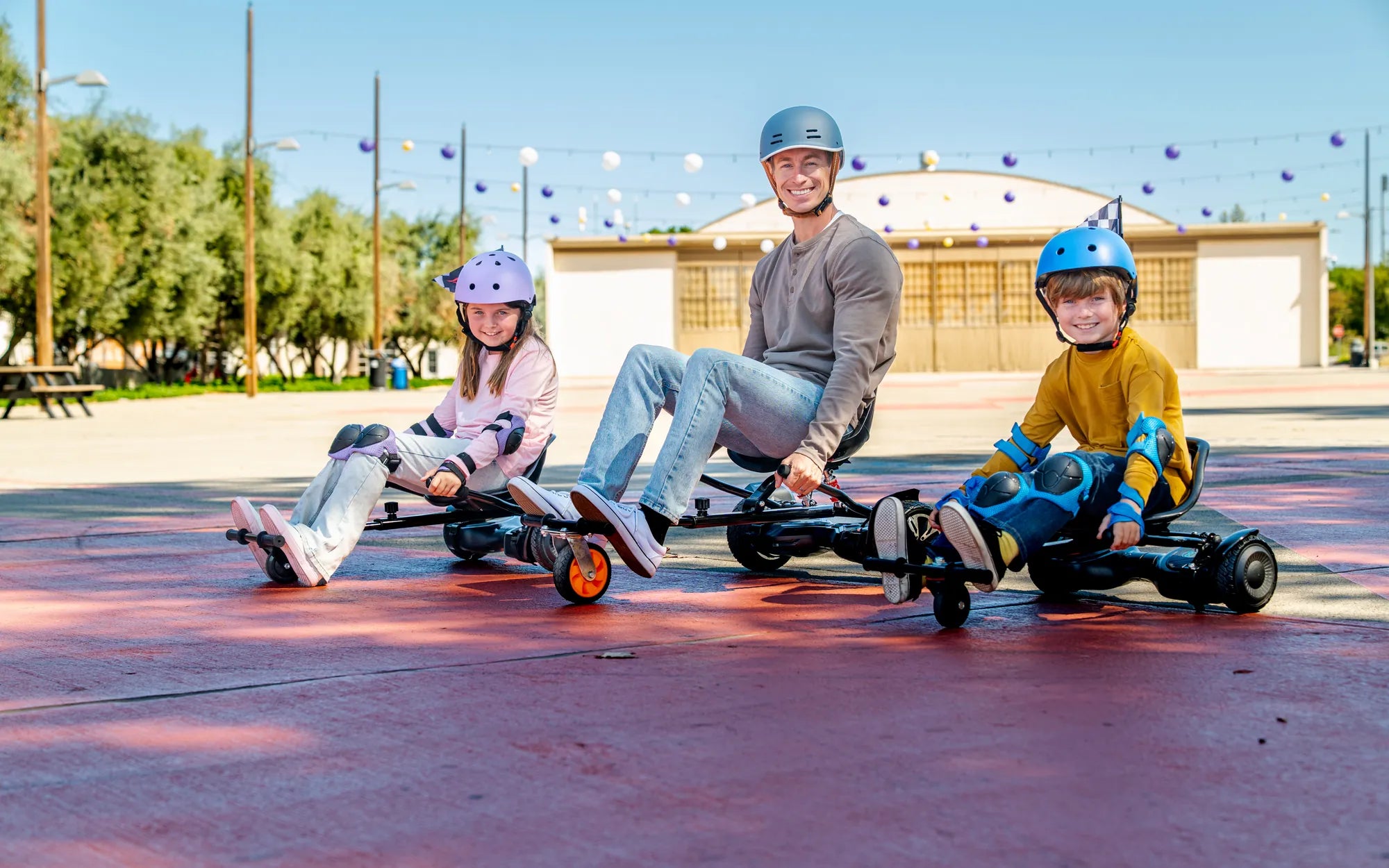
Hoverboard kid play represents one of the most exciting and engaging forms of modern outdoor activity for children, blending physical skill with digital-age fun. This guide is designed to transform that initial excitement into a lasting, positive experience by prioritizing safety as the fundamental enabler of enjoyment. You will learn how to choose the perfect hoverboard, equip your child with essential protection, master riding fundamentals, and establish rules that keep the fun going for years. As a leader in personal electric mobility, trusted by over 100,000 riders, Gyroor’s philosophy is that the best ride is a safe ride, built on UL-certified batteries, robust construction, and thoughtful design.
Introduction to Hoverboard Fun and Safety
Modern self-balancing scooters, commonly called hoverboards, have evolved from novelty gadgets into sophisticated toys that offer kids a unique blend of balance, coordination, and outdoor adventure. The thrill of gliding seamlessly is undeniable, but the foundation of all lasting fun is unwavering safety. This guide merges these two priorities, providing a structured path from unboxing to confident riding.
Understanding the mechanics is the first step. A hoverboard uses gyroscopic sensors and electric motors in each wheel to detect the rider's lean and translate it into movement. This requires practice and proper instruction. The goal is to build your child's confidence progressively, ensuring each new skill is cemented safely before advancing.
Choosing a reputable brand is not a minor detail; it is the most critical safety decision you will make. Brands like Gyroor engineer safety from the ground up, with features like UL 2272 certified fire-resistant battery packs, IPX5 water-resistant designs to handle splashes, and reliable warranty support. This proactive approach prevents hazards before they can occur.
Ultimately, hoverboard kid play should be about joy, freedom, and skill development. By following this guide, you equip yourself with the knowledge to mitigate risks, allowing your child to focus on the pure enjoyment of the ride. Safety protocols are not restrictions; they are the tools that unlock endless fun.
Choosing the Right Hoverboard for Your Child
Selecting a hoverboard is more than picking a color. It requires matching the device's specifications to your child's age, size, and skill level. An inappropriate choice can hinder the learning process and compromise safety. The key parameters are wheel size, speed, weight capacity, and, most importantly, built-in safety certifications.
Wheel size directly impacts stability and terrain handling. Smaller 6.5-inch wheels are best for very young beginners (ages 6-8) on perfectly smooth indoor surfaces. The popular 8-inch wheels offer a balance of stability and maneuverability for most kids (ages 8-12) on driveways and sidewalks. For older kids or those riding on rougher pavement, 10-inch wheels provide superior shock absorption and stability.
Speed limits and riding modes are crucial for safety. Many quality hoverboards, including those from Gyroor, feature beginner modes that cap speed at a safe 4-5 mph. As skills improve, parents can unlock higher speeds up to a maximum of 7-10 mph, which is a safe ceiling for younger riders. Always verify the board has a clear, easy-to-use speed limiting function.
Weight capacity is a non-negotiable specification. Exceeding the maximum weight stresses the motors, battery, and frame, leading to premature failure and potential loss of control. A standard hoverboard for kids typically supports riders between 44 and 165 lbs. Always check your child's weight against the manufacturer's stated limit.
The following table compares common hoverboard types based on key features for kid-centric use:
| Hoverboard Type | Best For Age | Wheel Size | Key Features for Safety/Fun | Ideal Use Case |
|---|---|---|---|---|
| Beginner/Standard | 6-10 years | 6.5" - 8" | Speed limit mode, LED lights, UL 2272 cert. | Smooth driveways, indoor playrooms, learning |
| All-Terrain Lite | 10+ years | 8.5" - 10" | Larger pneumatic tires, higher ground clearance, IP54/55 rating | Park paths, slightly rough pavement, grass fields |
| Performance/Fun | 12+ years | 8" - 10" | Bluetooth speakers, app connectivity, customizable LED lights | Supervised park play, showcasing skills |
Beyond specs, consider the user experience. Does the board have clear battery indicator lights? Are the foot pads textured and non-slip? Is the charger designed for safety with overcharge protection? These details, standard on Gyroor models, make daily use safer and more intuitive.
Key Safety Features to Look For
When evaluating a hoverboard for your child, certain safety features are absolute requirements, not luxuries. These technologies are your first line of defense against common hazards.
**UL 2272 Certification:** This is the single most important feature. This rigorous standard tests the entire electrical system—battery, charger, and circuitry—for fire and electrical safety. Never purchase a hoverboard without this certification. All Gyroor hoverboards utilize UL-certified battery packs tested for 500+ charge cycles.
**A Robust Battery Management System (BMS):** A quality BMS protects against overcharging, over-discharging, short circuits, and temperature extremes. It ensures each cell in the battery pack charges evenly, dramatically extending battery life and preventing thermal runaway.
**Non-Slip Foot Pads and Body Design:** The standing surface must have a pronounced, textured grip to keep feet securely in place during turns and stops. The body shell should be made of durable, impact-resistant ABS plastic to withstand the inevitable bumps and tumbles of learning.
**LED Safety Lights:** Front, rear, and side LED lights are essential for visibility. They make your child visible to others at dusk and communicate the board's direction of travel. Some models feature customizable light patterns, adding a fun element that encourages kids to use them.
**Learning/Beginner Mode:** A dedicated slow-speed mode is invaluable. It allows the child to focus on balance and basic controls without the fear of sudden, jerky acceleration. The ability for a parent to control this mode via a key, app, or button is a significant advantage.
Essential Safety Gear: Non-Negotiable Protection
A hoverboard is not a toy to be ridden without protection. The right safety gear is as critical as choosing the board itself. It minimizes injury from falls, which are a normal part of the learning process. Making gear non-negotiable from day one establishes a vital safety habit.
A properly fitted helmet is the cornerstone of protection. It must be a multi-impact sports helmet certified for skateboarding or cycling (CPSC, ASTM F1492). Ensure it sits level on the head, with the strap snug under the chin. Let your child choose the color or design to foster a sense of ownership.
Wrist guards are arguably the second most important piece of gear. When falling, the instinct is to put hands out, making wrists highly vulnerable to sprains or fractures. Quality guards have a rigid splint on the palm and back to support the joint. Knee and elbow pads complete the set, protecting the bony protrusions most likely to scrape during a slide.
Beyond the basics, consider high-visibility clothing or vests if riding near dawn or dusk. Sturdy, closed-toe shoes with flat soles (like skate shoes) are mandatory—never sandals or flip-flops. The right shoe provides grip on the foot pad and protects toes.
The key to consistent use is integration into the routine. Store the gear with the hoverboard. Make putting it on the first step before the board is turned on. Praise your child for gearing up. This reinforces that safety is an integral, non-optional part of the hoverboard kid play experience.
Mastering the Basics: A Step-by-Step Learning Guide
The journey to confident riding is built on a series of small, successful steps. Rushing leads to frustration and falls. Always supervise this learning phase in a safe, controlled environment like an empty garage, smooth driveway, or tennis court.
**Step 1: Pre-Ride Check and Mounting.** First, ensure the hoverboard is fully charged and powered off. Have your child stand next to it. The dominant foot should step on first, placing it near the wheel. The board will remain inert until both feet are on. Then, they should smoothly bring the second foot up. Practice mounting and dismounting onto a powered-off board repeatedly until it feels natural.
**Step 2: Finding Balance (Power-Assist).** Many boards, including Gyroor models, have a balance assist or learning mode. With this on, the board will beep and may not move until it senses balanced weight. Have your child place both feet on the powered-on board and focus on standing perfectly still, looking forward, not down. Hold their hands for support as they find their center of gravity.
**Step 3: Starting, Stopping, and Gentle Movement.** To move forward, they must ever-so-slightly lean forward from the ankles, not the waist. To stop, they should straighten up to a neutral stance. To go backward, a slight lean back. Drill starting and stopping in a straight line for 10 feet. The movement should come from subtle pressure on the toes or heels.
**Step 4: Basic Turning.** Turning is controlled by differential pressure. To turn right, press the toes of the right foot down slightly while applying light pressure with the left heel. It's a twisting motion. Start with wide, gradual turns, progressing to tighter ones. Mastering slow, controlled turns is more important than quick, sharp ones.
**Step 5: Dismounting Safely.** The safest dismount is the reverse of mounting: come to a complete stop, look down to orient yourself, and step backward off the board with one foot, followed by the other. Stepping off forward can cause the board to shoot out behind them. Practice this until it's automatic.
Advanced Maneuvers and Play (For Confident Riders)
Once your child has flawless control over starting, stopping, and turning at moderate speeds, they can explore more engaging activities. These should always be performed with full safety gear and on appropriate surfaces.
**Skill Drills:** Set up a simple slalom course using plastic cones or water bottles. Have them practice weaving through at a slow, controlled pace. This hones precision turning. Another drill is the "figure-8," which combines forward and backward movement with turns, greatly improving overall board control.
**Safe Play Games:** "Follow the Leader" on a safe path is a great supervised group activity. "Red Light, Green Light" is perfect for practicing instant, balanced stops. You can also create a simple, safe obstacle course that includes a straightaway, a turn, a stop zone, and a backward section.
**Smooth Surface Tricks:** Only on perfectly smooth, level pavement (like a basketball court) and with maximum protective gear, confident riders can try very basic tricks like a 180-degree spin (a slow, controlled pivot) or riding in a tight circle. Emphasize that speed is not the goal—control is. The flashy tricks seen online involve specialized boards and years of practice and are not recommended for kids.
The core principle of advanced play is that it builds on a rock-solid foundation. Never allow a child to attempt maneuvers that exceed their demonstrated skill level. The focus should remain on fun through mastery, not reckless daring.
Rules of the Ride: Where and How to Play Safely
Clear, consistent rules establish boundaries that keep hoverboard kid play safe and socially responsible. These rules should be discussed and agreed upon before the first ride and enforced every time.
**Location is Paramount:** Hoverboards are for sidewalks (where permitted by local law), bike paths, parks, and private driveways. They are never for public roads, streets, or anywhere with vehicular traffic. Avoid areas with heavy pedestrian traffic to prevent collisions. Steep hills, wet roads, gravel, and sand are hazardous and must be avoided entirely.
**Environmental Conditions:** Ride only in dry conditions and good daylight visibility. Water can damage electronics and make surfaces slick. Riding at dusk or night drastically increases the risk of being unseen, even with lights. Windy conditions can affect balance for newer riders.
**Supervision and Companionship:** For children under 12, active adult supervision is mandatory. For older kids, the "buddy system" is wise. Never allow headphones that block ambient noise—riders need to hear their surroundings, including cars, people, and other potential hazards.
**Respect and Etiquette:** The rider must yield to all pedestrians and cyclists. When approaching someone from behind, a polite verbal warning ("Passing on your left!") is essential. Ride at a speed appropriate for the environment—slowly near people, playgrounds, and driveways. Respect private property and local regulations regarding motorized personal transport devices.
Maintenance and Care for Long-Lasting Fun
Regular, simple maintenance ensures the hoverboard remains safe, reliable, and fun for its entire lifespan. Neglect can lead to performance issues and safety hazards.
**Charging Best Practices:** Use only the manufacturer-provided charger. Charge the board on a hard, non-flammable surface in a well-ventilated area, away from heat sources and direct sunlight. Do not leave it charging unattended for extended periods or overnight. Unplug it once the indicator shows a full charge. For long-term storage (over a month), charge the battery to about 50-60%.
**Cleaning and Inspection:** Wipe down the body with a slightly damp cloth; never hose it down or submerge it. Check the tire pressure monthly if you have a pneumatic tire model. Inspect the wheels for embedded debris or excessive wear. Ensure all screws on the frame are tight (but do not over-tighten).
**Battery Longevity:** Avoid completely draining the battery. Try to recharge before it drops below 20%. Extreme temperatures are a battery's enemy; never charge or store the board in a freezing garage or a hot car trunk. A well-cared-for UL-certified battery, like those in Gyroor products, should provide hundreds of charge cycles over years of use.
**Software and Troubleshooting:** Some models connect to apps for firmware updates. These can improve performance and safety. If the board develops issues—like failure to balance, beeping error codes, or uneven power—consult the manual first. For problems beyond basic troubleshooting, contact the manufacturer's support. Gyroor’s 1-year warranty provides peace of mind for such instances.
Frequently Asked Questions (FAQs)
Q1: What is the best age for a child to start using a hoverboard?
A: Most manufacturers recommend ages 6-8 as a starting point, but readiness depends more on the individual child's coordination, balance, ability to follow instructions, and maturity. A lightweight board (< 20 lbs) with a strong beginner mode is essential for younger riders. Always prioritize the child's physical capability over chronological age.
Q2: Are Gyroor hoverboards waterproof? Can my child ride through puddles?
A: Gyroor hoverboards carry an IPX5 water-resistance rating. This means they are protected against water jets from any direction, making them safe for riding on wet pavement or in light rain. However, they are not waterproof or submersible. Riding through deep puddles, through streams, or leaving the board out in a downpour is not advised, as water ingress can still damage electronics over time.
Q3: How long does the battery last on a single charge, and how far can it go?
A> Battery life varies by model, rider weight, terrain, and speed. A typical kids' hoverboard with a quality battery offers 1 to 1.5 hours of continuous ride time, translating to a range of 6-10 miles per charge. Teaching your child to check the battery indicator light and charge the board before it fully depletes is a good practice.
Q4: The hoverboard beeps and won't balance when my child steps on. What's wrong?
A> This is usually a self-protection feature. First, place the board on a perfectly level surface and turn it on. The most common causes are: the surface is uneven, one foot was placed on the board before it was powered on, or the rider is not centered. If the problem persists on a level surface, the board may need recalibration (see the manual) or could indicate a sensor issue requiring manufacturer support.
Q5: Is the warranty still valid if my child customizes the board or if I use a third-party charger?
A> No. Modifying the hoverboard in any way or using a non-OEM (Original Equipment Manufacturer) charger will almost certainly void the warranty. These actions introduce unknown variables that compromise the engineered safety systems. Gyroor’s 1-year warranty covers defects in materials and workmanship but requires the product to be used and maintained as specified in the user manual, with the provided accessories.
Building Confidence and Joy on Two Wheels
The world of hoverboard kid play is one of exhilarating freedom and skill development, a modern pastime that gets children outdoors and active. The thread that weaves through every aspect of this activity—from selection and gearing up to learning and maintenance—is a proactive commitment to safety. This commitment is what transforms a potentially risky novelty into a source of lasting confidence and joy.
By choosing a hoverboard from a responsible brand like Gyroor, with its foundational UL-certified safety, you invest in peace of mind. By insisting on full protective gear, you build an unbreakable safety habit. By teaching the fundamentals step-by-step, you foster real competence. And by setting clear rules, you ensure the fun is sustainable and respectful to others.
Watching your child progress from wobbly first steps to smooth, controlled gliding is a rewarding experience. It’s a journey that teaches patience, perseverance, and physical intelligence. The hoverboard becomes more than a toy; it's a tool for growth and a gateway to outdoor adventure.
Ready to start this journey with the safety and reliability that over 100,000 riders trust? Explore the full range of kid-friendly, feature-packed models designed for fun that lasts. Browse the full Gyroor collection at gyroorboard.com and find the perfect board to launch your child's riding adventure.
Hoverboard Combo Black Friday: The Ultimate Guide to Scoring the Best Deals
Hoverboard Combo Black Friday: The Ultimate Guide to Scoring the Best Deals