


Introduction: Understanding the "Spin-Out" Phenomenon
Imagine your hoverboard suddenly lurching forward, veering sharply to one side, or spinning wildly beneath your feet. This is the terrifying reality of a hoverboard spinning out of control, a sudden and unintended acceleration or catastrophic loss of stability that almost always leads to a crash. It's not just a minor wobble; it's a complete system failure where the rider becomes a passenger on an unpredictable machine. Understanding this hazard is the first critical step toward prevention.
This phenomenon stems from the complex interplay between the board's self-balancing technology, its power systems, and the riding environment. When one component fails, the results can be immediate and violent. The dangers extend far beyond simple embarrassment, posing serious risks of traumatic injury to riders and bystanders alike.
This article provides a data-driven analysis of why hoverboards fail, the specific injuries they can cause, and the comprehensive safety measures every rider must know. We'll contrast these dangers with the engineering principles behind stable, reliable models, such as those from Gyroor, a leading electric mobility brand trusted by over 100,000 riders, which prioritizes certified safety components to mitigate these very risks.
Your safety is non-negotiable. By the end of this guide, you will know how to identify a quality hoverboard, implement essential pre-ride checks, and react correctly if a spin-out begins.
The Root Causes: Why Hoverboards Spin Out
A hoverboard spinning out of control is typically the symptom of a deeper failure. These incidents are rarely random and are usually attributable to specific technical flaws or hazardous riding conditions. The primary culprits fall into two categories: component failure and user error.
At the technical level, the most common causes are malfunctioning gyroscopes and inertial sensors, unstable battery output from low-quality cells, and faulty motor controllers. From a user perspective, attempting to ride on unsuitable terrain—like wet grass, gravel, or steep inclines—can overwhelm the board's self-balancing algorithms, causing it to behave erratically.
Furthermore, physical damage from previous crashes, water ingress into the electronics, or using an incompatible, off-brand charger can create latent defects that manifest as a sudden loss of control. Recognizing these root causes is essential for both selecting a safe product and maintaining it properly.
The table below summarizes the primary causes and their direct effects on board stability:
| Root Cause Category | Specific Failure | Effect on Hoverboard |
|---|---|---|
| Sensor & Gyro Failure | Faulty calibration, physical damage, software bug | Incorrect tilt data sent to motors, causing sudden acceleration or spin |
| Power System Issues | Voltage sag from low-quality battery, faulty BMS, bad charger | Intermittent power to motors, leading to surges or cuts in power |
| Motor/Controller Fault | Overheating, water damage, manufacturing defect | One motor responds incorrectly or disengages, inducing a violent turn |
| Environmental Factors | Wet/slippery surfaces, steep slopes, obstructive debris | Sensors misinterpret rider input or wheels lose traction, causing a skid |
| Physical Damage | Cracked frame, loose wiring, damaged tire | Compromises structural integrity and sensor alignment, leading to instability |
The Critical Role of Gyroscopes and Sensors
The core technology preventing a hoverboard from spinning out of control is its array of gyroscopes and inertial measurement units (IMUs). These components act as the board's "inner ear," constantly measuring its angle, tilt, and rotational speed hundreds of times per second. This real-time data is processed by a central controller, which adjusts power to each wheel motor to maintain balance.
When these sensors fail or provide corrupted data, the consequences are immediate. A malfunctioning gyroscope might tell the controller the board is tilting forward when it's actually level, causing an unexpected and aggressive forward acceleration. Similarly, if one sensor fails entirely, the board may continuously spin in one direction as it tries to correct for a non-existent imbalance.
Calibration is also crucial. A poorly calibrated sensor, even in a new board, can lead to a persistent drift or a delayed response to rider movements, setting the stage for a loss of control. High-quality manufacturers perform precise factory calibration and design systems that allow for user recalibration if needed.
This is why the quality and redundancy of these components are paramount. Advanced boards use multiple sensor systems for cross-verification, ensuring that a single point of failure is less likely to result in a catastrophic spin-out.
Battery and Power System Failures
An unstable power supply is a leading mechanical cause for a hoverboard spinning out of control. The motors require consistent, clean power to respond accurately to the controller's commands. A sudden voltage drop or surge can cause a motor to stutter, over-accelerate, or shut off momentarily.
Low-quality, uncertified lithium-ion battery packs are the most common source of this problem. These batteries may have poor cell matching, lack a proper Battery Management System (BMS), or use inferior materials. As they discharge, their voltage can "sag" unpredictably under load. This sag can be misinterpreted by the controller, leading to erratic power delivery that feels like a lurch or a sudden loss of power in one wheel, inducing a spin.
Furthermore, batteries that are not UL-certified pose a significant fire risk in addition to a performance hazard. A UL certification, like those on all Gyroor battery packs, means the cells and BMS have been rigorously tested for stable output, overcharge protection, and short-circuit prevention across 500+ charge cycles.
Using an incorrect or damaged charger can also destabilize the power system, leading to improper charging that weakens the battery over time and increases the risk of a failure during a ride. Always use only the manufacturer-provided charger.
The Real-World Dangers: More Than Just a Fall
The phrase "hoverboard spinning out of control" often conjures an image of a comical fall. The reality is far more serious. The kinetic energy involved when a rider is thrown from a device moving at 10-15 mph can result in severe, life-altering injuries. The sudden, unpredictable nature of a spin-out deprives the rider of any chance to perform a controlled fall, greatly increasing injury severity.
Common traumatic injuries include concussions and other head injuries from impacting the ground without a helmet, fractures of the wrists, arms, and collarbones from instinctive bracing, and severe road rash or lacerations. The risk is compounded if the rider is thrown into traffic, down a slope, or into a stationary object like a curb or wall.
There is also significant liability and collateral danger. An uncontrolled hoverboard can become a projectile, striking pedestrians, cyclists, or causing a vehicular accident if it darts into a road. The financial and legal repercussions for the rider (or a minor rider's parents) can be substantial.
Therefore, preventing a hoverboard from spinning out of control is not just about personal safety; it's a matter of public safety and responsibility. The following data outlines the most common injury patterns from personal mobility device accidents, many of which involve loss of control.
The Heightened Risk for Young Riders
Children and teenagers are disproportionately vulnerable to incidents involving a hoverboard spinning out of control. Their lower body weight means they have less inertial stability on the board, making them more susceptible to being thrown off by sudden movements. Furthermore, their developing coordination and balance systems may not react as quickly to correct a minor wobble before it escalates.
Young riders may also engage in riskier behaviors, such as attempting tricks, riding at maximum speed, or using the hoverboard in crowded areas. They are less likely to consistently perform pre-ride safety checks or recognize the early warning signs of board malfunction, like unusual sounds or slight handling quirks.
This demographic is also the most common user of older, second-hand, or lower-quality hoverboards that may lack modern safety features and have worn-out components. Ensuring that a young rider's board is age-appropriate, from a reputable brand, and in excellent condition is a critical parental responsibility.
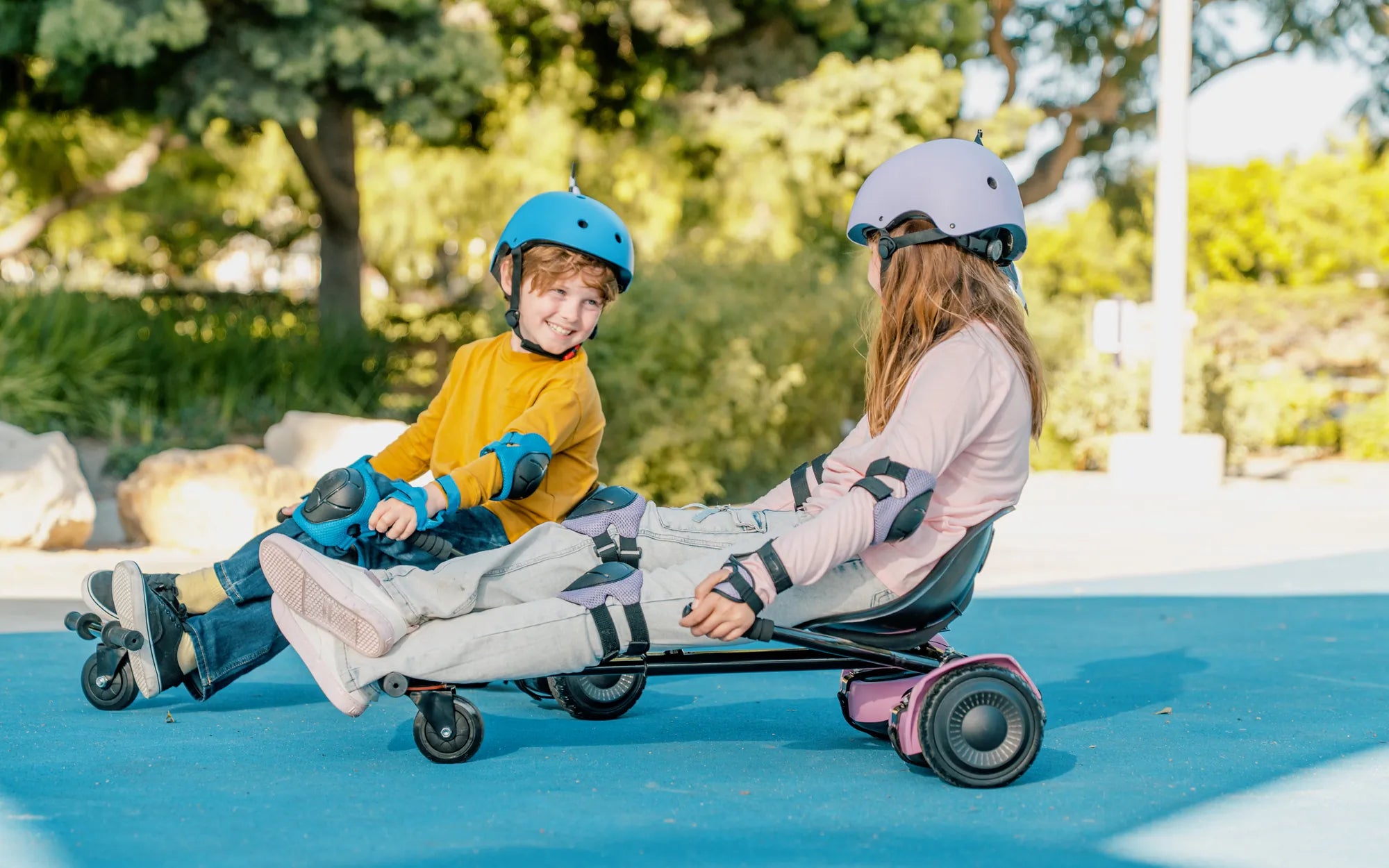
Mandating the use of a full safety kit—including a CPSC-certified helmet, wrist guards, knee pads, and elbow pads—is non-negotiable for young riders, as it can dramatically reduce the severity of injuries when a fall from a spin-out occurs.
Proactive Safety: Choosing a Hoverboard Designed for Stability
The most effective strategy to prevent a hoverboard spinning out of control begins before you even step on the board: choosing a model engineered for stability and safety. The market is saturated with options, but critical differences in component quality, certification, and design philosophy separate safe products from hazardous ones.
Look for brands that transparently list safety certifications, particularly UL 2272 certification for the entire electrical system and UL certification for the battery pack. This is your baseline assurance that the product has passed rigorous tests for electrical and fire safety. A robust warranty (1-year or more) and accessible customer support indicate the manufacturer stands behind their product's reliability.
Examine the specifications for features that enhance control. These include advanced self-balancing systems with redundant sensors, high-traction rubber tires appropriate for your riding surfaces, and a frame design that provides a stable, comfortable platform. Water resistance (with a rating like IPX4 or higher) is also crucial to protect internal electronics from moisture-related shorts.
Investing in a quality hoverboard from a reputable brand like Gyroor is not an extravagance; it's an investment in risk mitigation. The slightly higher initial cost is directly tied to the quality of the gyroscopes, battery management system, and motor controllers that keep the rider safe.
The Gyroor Safety Standard: Engineering for Control
Gyroor designs its electric mobility products, including hoverboards, with a foundational commitment to preventing the nightmare scenario of a hoverboard spinning out of control. This commitment is realized through specific engineering standards that address the root causes of failure directly.
First, every Gyroor model uses UL-certified battery packs with sophisticated Battery Management Systems. This ensures stable voltage output under all riding conditions, eliminating the power surges and sags that can cause erratic motor behavior. The batteries are tested for over 500 charge cycles, ensuring long-term reliability.
Second, Gyroor utilizes precisely calibrated, advanced gyroscopic systems. These systems undergo rigorous factory testing and are housed in a durable frame to protect against the physical shocks that can misalign sensitive components. This results in predictable, smooth acceleration and braking response.
Third, an IPX5 water-resistant rating on key models means the internal electronics are protected against low-pressure water jets from any direction. This prevents short circuits caused by riding through puddles or in light rain, a common trigger for sensor failure and subsequent loss of control. Combined with a reliable 1-year warranty and US-based support, these features create a holistic safety ecosystem for the rider.
Pre-Ride Checklist: Inspecting Your Hoverboard
A five-minute inspection before every ride can catch problems that might lead to a hoverboard spinning out of control. Make this checklist a non-negotiable habit.
1. Tire Inspection: Check tire pressure (if applicable) and look for significant wear, cuts, or embedded debris. Unevenly worn or under-inflated tires compromise traction and stability.
2. Battery & Power Check: Ensure the battery has an adequate charge (never start a ride with a critically low battery). Visually inspect the charging port for debris and ensure the power button functions correctly.
3. Frame and Structural Check: Look for new cracks, loose screws, or any damage to the frame. Gently rock the board side-to-side; it should feel solid with no unusual creaks or play.
4. Operational Test: In a safe, open area, power on the board. Listen for any unusual grinding, buzzing, or clicking sounds from the motors or internals. Test the basic lean-forward and lean-back response before mounting.
5. Safety Gear Verification: This is part of the "board" check. Ensure your helmet, wrist guards, and other protective gear are present, properly fitted, and in good condition.
Safe Riding Practices: How to Prevent and Handle a Spin-Out
Even with a well-maintained, high-quality hoverboard, safe riding practices are your final and most active layer of defense against a hoverboard spinning out of control. Your posture, choice of terrain, and awareness directly influence the board's stability and your ability to react to hazards.
Always start slowly to allow the board's gyroscopes to calibrate to your weight and stance. Keep your knees slightly bent; this acts as a natural shock absorber for bumps and provides you with a lower center of gravity and more control. Look ahead in the direction you want to travel, not down at your feet, to anticipate changes in the path.
Respect the board's limits. Avoid maximum speed, especially in unfamiliar areas. Do not attempt to ride over obstacles, deep cracks, or surfaces with loose material like sand or gravel that can cause wheel slip and confuse the sensors. Wet surfaces, including wet pavement, grass, and tiles, drastically reduce tire traction and increase the risk of a skid-induced spin-out.
By consciously managing these factors, you keep the board operating within its designed parameters, minimizing stress on its systems and maximizing your safety margin.
Proper Riding Posture and Environment
Your posture is the interface between you and the machine. Stand with your feet positioned symmetrically, near the wheel arches, for optimal control leverage. Avoid a stiff, straight-legged stance; flexible knees are crucial for maintaining balance and absorbing irregularities in the riding surface.
Environment selection is equally critical. The ideal terrain for hoverboarding is smooth, dry, paved surfaces like bike paths, sidewalks (where legal), and empty parking lots. Systematically avoid:
- Wet or Icy Surfaces: Guaranteed loss of traction.
- Steep Inclines: Can overdraw the battery and motors, causing failure.
- Grassy or Dirt Trails: Uneven terrain can trigger sudden corrective jerks from the motors.
- Heavily Cracked or Bumpy Pavement: Constant jostling can damage internal components over time.
Riding in a controlled environment not only prevents a hoverboard spinning out of control but also extends the lifespan of the product by reducing wear and tear on its core components.
The Emergency Dismount: What to Do If You Lose Control
If you feel the board begin to jerk, accelerate uncontrollably, or spin, do not try to "ride it out." Your immediate goal is to separate yourself from the malfunctioning device as safely and quickly as possible.
The Correct Technique: The Backward Step/Jump. Shift your weight slightly back and step or push off backwards, away from the board's direction of travel. Try to land on your feet with knees bent, and immediately move away from the board. Let the hoverboard crash on its own; do not attempt to catch it or stop it with your body.
What NOT to Do: Do not jump forward, as the board may accelerate into your legs. Do not try to turn it off while moving. Do not panic and freeze; decisive action is required. After a successful dismount, retrieve the board only after it has come to a complete stop, and do not attempt to ride it again until it has been professionally diagnosed.
Practicing a controlled dismount at low speed in a safe environment (like onto soft grass) can help muscle memory, making you more likely to react correctly during a real emergency involving a hoverboard spinning out of control.
Maintenance and Long-Term Care for Optimal Safety
Preventing a hoverboard from spinning out of control is an ongoing responsibility that extends far beyond the initial purchase. Regular, proactive maintenance is essential to ensure all components continue to function as designed and to identify wear before it leads to failure.
Establish a monthly maintenance routine. This should include a thorough cleaning of the board's exterior with a damp cloth (never hose it down), checking and tightening all visible screws on the frame and wheel hubs, and inspecting the tires for wear patterns. For models with air tires, maintain the recommended PSI.
Battery care is paramount. Follow the manufacturer's charging instructions precisely. Avoid leaving the board on the charger indefinitely after it reaches 100%. Store the board and battery in a cool, dry place, away from direct sunlight or extreme temperatures. If you plan to store the hoverboard for an extended period (e.g., over winter), leave the battery at approximately a 50% charge.
Be attentive to software. If your hoverboard model offers firmware updates via a mobile app, install them. These updates often include improvements to motor control algorithms and sensor calibration that can enhance stability and safety. A well-maintained hoverboard is a predictable and safe hoverboard.
Conclusion: Prioritizing Safety for Endless Fun
The thrill of gliding on a hoverboard should never come at the cost of personal safety. The risk of a hoverboard spinning out of control is a serious one, but it is largely manageable through informed choices and disciplined habits. Safety is a multi-layered system: it starts with selecting a well-engineered product from a reputable brand that uses certified components, is reinforced by consistent pre-ride inspections and proper maintenance, and is finalized by responsible riding practices.
Brands like Gyroor demonstrate that advanced safety features—UL-certified batteries, precision gyroscopes, and water-resistant construction—are not just marketing terms but essential engineering solutions to real-world hazards. By choosing quality and committing to safe operation, you transform a potential liability into a source of reliable, long-lasting enjoyment.
Don't compromise on the fundamentals that keep you upright and in control. Equip yourself with knowledge, gear, and a reliable machine. Your next ride should be defined by fun, not fear.
Ready to ride with confidence? Explore the full range of UL-certified, stability-engineered hoverboards, electric scooters, and e-bikes designed for safety and performance. Browse the full Gyroor collection at gyroorboard.com and invest in a ride you can trust.
FAQ: Hoverboard Safety Questions Answered
Q: Are hoverboard spin-outs common with modern boards?
A> Incidents of a hoverboard spinning out of control have decreased significantly since the implementation of mandatory safety standards like UL 2272. However, they are still frequently reported with older, uncertified models, counterfeit products, or boards that have been poorly maintained. Choosing a new, certified model from a reputable brand is the single most effective way to minimize this risk.
Q: Can a software update fix a hoverboard that spins out?
A> It is possible if the erratic behavior is caused by a bug in the motor control or sensor calibration algorithm. Manufacturers occasionally release firmware updates to address such issues. However, if the spin-out is due to physical damage (a cracked sensor), a failing battery, or water-damaged components, a software update will not resolve it. Professional inspection is required.
Q: What does a hoverboard's IP rating have to do with preventing spin-outs?
A> A high IP (Ingress Protection) rating is directly related to reliability. A rating like IPX5, found on Gyroor models, means the board is protected against low-pressure water jets from any direction. This prevents water from seeping into the casing and causing short circuits in the gyroscopes, control board, or wiring—a common cause of sudden, erratic behavior and loss of control.
Q: How does Gyroor's warranty support safety?
A> Gyroor's comprehensive 1-year warranty and accessible US-based customer support provide a direct safety net. If a defect related to stability, control, or battery performance arises, the warranty ensures riders have a clear path to repair or replacement. This prevents individuals from continuing to use a potentially dangerous product or attempting unsafe DIY fixes.
Q: Is it safe to buy a used hoverboard?
A> It carries significant risk. You cannot verify the battery's health or internal history of impacts. Wear on motors and sensors may not be visible. Critical safety certifications may be outdated or absent. If considering used, only purchase from a trusted source, insist on seeing it powered on and tested, and budget for an immediate professional safety inspection and potential battery replacement. For ultimate safety, a new, certified board is always recommended.
Is It Okay for Adults to Ride Kids Scooter? Safety and Practicality Explained
What Kind of Battery Does a Hoverboard Take: A Complete Guide to Power, Safety & Performance