



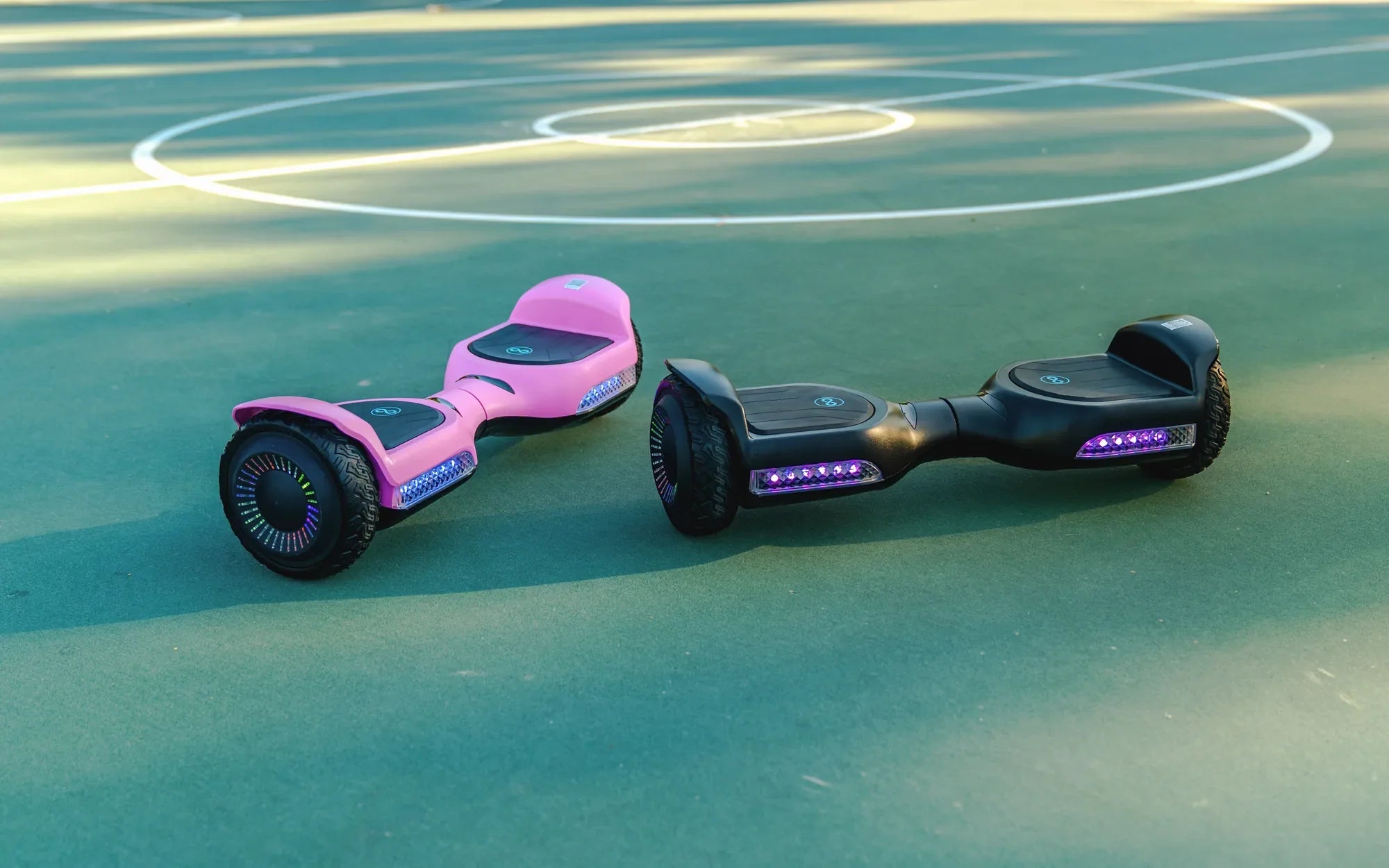
Introduction: The Allure and Reality of Affordable Hoverboards
The search for a hoverboard under $40 is a common one, driven by the desire for accessible, fun personal mobility. This price point promises affordable fun for everyone, from kids to casual riders. However, navigating this ultra-budget market requires a clear understanding of what that investment actually buys. This guide sets realistic expectations, distinguishes between product types, and prioritizes your safety. While leading brands like Gyroor focus on engineering premium, UL-certified electric scooters and e-bikes, understanding the budget segment empowers you to make an informed choice, whether for a simple toy or a stepping stone to more advanced personal transport.
It's crucial to state upfront that a $40 price tag is exceptionally low for any motorized, self-balancing vehicle. Products advertised at this cost demand careful scrutiny of their features, construction, and intended use. This article will help you decode marketing claims, identify potential risks, and shop intelligently. Our goal is to ensure your pursuit of affordable fun doesn't compromise on basic safety or lead to immediate disappointment.
Understanding the "Under $40" Hoverboard Market
The market for hoverboards under $40 is almost exclusively populated by non-motorized, manual balance boards. These are not the self-balancing electric scooters popularized in the last decade. Instead, they are simple, hand-cranked or kick-powered platforms with wheels, often called "hand operated hoverboards" or "manual scooters." They lack electric motors, rechargeable battery packs, gyroscopic sensors, and self-balancing technology.
Typical materials include molded ABS plastic, basic foam padding, and non-pneumatic (airless) rubber or plastic wheels. Weight limits are usually low, often between 44 to 66 pounds (20-30 kg), suiting younger children. The movement is entirely user-generated: you place one foot on the board and use the other to push off the ground, similar to a skateboard or scooter. Any lights or sound effects are usually powered by disposable batteries, not an integrated rechargeable system.
Recognizing this distinction is the first step to a satisfying purchase. Expecting the autonomous glide of an electric model from a $40 manual board will lead to frustration. This segment is defined by simplicity, making it a category of basic recreational toys rather than personal transportation devices.
What You're Actually Getting: Features vs. Expectations
Let's detail the standard features of a genuine product in this price range and contrast them with electric hoverboard capabilities. A typical hoverboard under $40 offers manual propulsion, basic LED wheel lights (often with replaceable coin cell batteries), a simple two-wheel design, and a lightweight plastic body. It may have a textured footpad for grip. These are its core, and often only, features.
In stark contrast, even entry-level electric hoverboards start at a significantly higher price point. They include features like dual electric hub motors, a self-balancing gyroscope system, a large rechargeable lithium-ion battery pack, LED indicator lights, Bluetooth speakers, and different speed modes. Most importantly, legitimate electric models should carry safety certifications like UL 2272, which covers electrical system and battery fire safety.
The absence of these certifications in the sub-$40 electric space is a major red flag. For a motorized device that carries a person, cutting corners on battery and motor quality isn't just about performance—it's a serious safety hazard. Therefore, when you see a hoverboard under $40 advertised as "self-balancing" or "electric," extreme caution is warranted, as it likely uses substandard, potentially dangerous components.
Critical Safety Considerations Before You Buy
Safety is the paramount concern when evaluating any product that supports a rider's weight, especially at a very low cost. For manual boards, the primary risks involve structural integrity. A cheap plastic frame can crack or snap under stress, especially if the rider exceeds the weight limit, leading to falls and injuries. Always check user reviews for mentions of broken parts or structural failures shortly after purchase.
For any product in this range claiming to be electric, the risks escalate dramatically. The most significant danger lies in the battery. Ultra-cheap, uncertified lithium-ion batteries are prone to overheating, catching fire, or even exploding during use or charging. Poor-quality motors can fail unexpectedly, causing sudden stops or loss of control. Weak solder points and thin wiring can short-circuit. Investing in a $40 electric device is not worth the risk of property damage or personal harm.
Protective gear is non-negotiable, even for a manual board. A properly fitted helmet, knee pads, and elbow pads are essential, especially for children. These products are for use on smooth, flat, dry surfaces away from roads and vehicular traffic. Adult supervision is mandatory for younger riders. Understanding these limitations is part of responsible ownership and ensures the "affordable fun" remains safe.
The Gyroor Standard: Why Certification and Quality Matter
While Gyroor does not manufacture products at the $40 price point, the brand's engineering philosophy highlights what to value in personal electric transport. Gyroor's commitment to safety and performance sets a benchmark. All Gyroor electric scooters and e-bikes use UL-certified battery packs, rigorously tested for over 500 charge cycles and engineered to prevent thermal runaway—the primary cause of battery fires.
Furthermore, Gyroor models feature IPX5 water-resistant designs, allowing them to safely navigate wet pavement and light rain. They are built with robust frames, reliable motors, and offer a comprehensive 1-year warranty, backed by a brand trusted by over 100,000 riders in North America and Europe. This level of quality, safety certification, and customer support is impossible to achieve at a $40 price for an electric vehicle.
This comparison isn't to disparage budget toys but to educate on value. For a fun, manual toy, a hoverboard under $40 may suffice. For any form of reliable, daily electric transportation, investing in certified technology from a reputable brand is the only safe and sensible path. It ensures durability, performance, and peace of mind.
Who Are Manual Hoverboards Under $40 Best For?
Identifying the ideal user helps determine if this product aligns with your needs. The primary demographic is young children (ages 6-10) under constant adult supervision. For them, a manual balance board provides an introduction to coordination and balance in a controlled, low-speed environment, like a driveway or smooth patio. It's a toy for imaginative play rather than transportation.
Secondly, they can suit adults or teens seeking a basic balance trainer. Used indoors on carpet or a smooth floor, it can provide light core engagement and balance practice. However, it is not a fitness device for cardio or strength training. Its utility is limited to brief, low-impact sessions.
Finally, it's for the extremely budget-conscious shopper who wants a novel, non-electric toy with minimal features. If expectations are set correctly—understanding it's a simple, manually-powered board—it can deliver moments of fun. It is categorically not for commuting, riding on public paths, tackling slopes, or for users seeking speed and thrill.
Top 5 Practical Tips for Shopping Smart
If you decide to explore the hoverboard under $40 market, these actionable strategies will help you avoid pitfalls.
1. Decipher the Product Description: Read the fine print. Look for keywords like "manual," "hand powered," "kick to go," or "no battery required." If it says "self-balancing" or "electric" at this price, be highly skeptical and assume it's either mislabeled or dangerously made.
2. Scrutinize Customer Reviews and Photos: Don't just look at the star rating. Read the 3-star reviews and look for patterns. Frequent mentions of broken wheels, cracked frames, or items arriving dead on arrival (DOA) are major red flags. User-uploaded photos often reveal the true build quality.
3. Prioritize Seller Reputation and Return Policy: Purchase from established online marketplaces with robust buyer protection programs. Ensure the seller offers a clear return or replacement policy for defective items. Avoid obscure websites with no customer service footprint.
4. Verify Weight Limits and Age Recommendations: Do not exceed the manufacturer's stated maximum weight capacity. Heed age recommendations, but remember they are guidelines; the child's size, coordination, and maturity are more important factors.
5. Plan for Safety Gear and Environment: Factor the cost of a helmet and pads into your total budget. Before purchase, identify a safe, flat, obstacle-free area for use. This preparation is as important as the purchase itself.
Manual vs. Electric Hoverboards: A Detailed Comparison
This table clearly outlines the fundamental differences between the products available under $40 and legitimate electric hoverboards.
| Feature | Manual Hoverboard (Under $40) | Entry-Level Electric Hoverboard |
|---|---|---|
| Propulsion | Manual (Kick/Push) | Electric Motor (Self-Balancing) |
| Power Source | User's leg power / Disposable batteries for lights | Rechargeable Lithium-ion Battery |
| Typical Speed | Walking/Jogging pace (user-dependent) | 6-10 mph |
| Key Safety Standard | General toy safety (e.g., ASTM F963) | UL 2272 (Fire & Electrical Safety) |
| Primary Use Case | Indoor/Controlled outdoor play, balance training | Recreational riding, short-distance travel |
| Terrain | Smooth, flat surfaces only | Pavement, smooth paths, slight inclines |
| Durability & Warranty | Low; rarely includes meaningful warranty | Higher; often includes 6-12 month warranty |
| Price Range | $20 - $40 | $150 - $300+ |
FAQ: Hoverboards Under $40
Q: Are there real self-balancing electric hoverboards under $40?
A: No. Genuine electric hoverboards with motors, gyroscopes, and rechargeable batteries have a minimum cost of components and safety testing that makes a $40 price point impossible for a responsibly made product. Ads claiming otherwise are either for manual boards or should be avoided due to severe safety concerns.
Q: Is a manual hoverboard good for fitness?
A> It can provide very light core stabilization and balance exercise, but it is not a tool for cardiovascular fitness, calorie burning, or muscle building. The effort required is minimal compared to activities like cycling, running, or even using a balance board designed for fitness.
Q: What age is appropriate for a manual hoverboard?
A: Most manufacturers suggest ages 6 and up, but this depends entirely on the child's individual coordination, strength, and maturity. Regardless of age, protective gear (helmet, knee/elbow pads) and direct, active adult supervision are mandatory during every use.
Q: Can I use it on the road or sidewalk?
A: It is strongly discouraged. Manual hoverboards are toys best suited for private, controlled environments like driveways, basements, or smooth patios. They lack the stability, visibility, and control for safe use on public sidewalks or roads, where collisions with pedestrians, cyclists, or vehicles could occur.
Q: Why does Gyroor not make products at this price point?
A> Gyroor is committed to safety, durability, and performance. Building a reliable, electric personal transporter requires high-cost components like UL-certified batteries, robust motors, and waterproof electronics. Meeting rigorous safety standards and offering a trustworthy warranty makes a $40 price point incompatible with Gyroor's mission to deliver quality and security to riders.
Conclusion: Making an Informed Choice for Fun and Safety
The search for a hoverboard under $40 can lead to affordable, simple fun if you understand you're purchasing a manual balance board—a toy with clear limitations. Success hinges on managed expectations, diligent research, and unwavering commitment to safety gear and supervision. For the right user, primarily a supervised child, it can be a source of enjoyment.
However, this exploration should also illuminate the vast quality gap between budget novelties and true personal electric vehicles. When you're ready for a device that offers independence, reliable performance, and safe construction for real-world use, the investment shifts. That's where trusted brands like Gyroor deliver value, engineering electric scooters and e-bikes with certified batteries, water resistance, and robust warranties designed for lasting enjoyment. For your safety and long-term satisfaction, recognize where a toy ends and a transportation device begins.
Ready to experience the difference that certified quality and performance make? Explore Gyroor's range of UL-certified electric scooters and e-bikes, designed for safety, durability, and real adventure. Browse the full Gyroor collection at gyroorboard.com.
The 20 Best Christmas Gift Ideas for Kids to Delight and Inspire
Hoverboard Deals: The Ultimate Guide to Finding the Best Discounts